
Events in Crimea have generated a lot of excitement not only in Washington, but in Tokyo too. “Crimea has changed the rules of the game. It’s not a salvo on some distant shore. An attempt by a rising power to change the status quo has taken place,” said Kunihiko Miyake, former adviser to Japanese Prime Minister Shindzo Abe. According to Miyake, the PRC may do the same thing [...]
So, how did it all begin? On 17 February 2008, the autonomous parliament of Kosovo issued a unilateral declaration of sovereignty. On 22 July 2010, the UN International Court recognized the legitimacy of the Kosovo authorities’ decision to declare independence from Serbia.
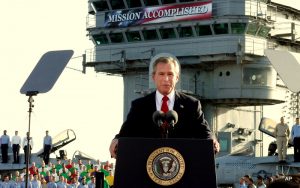
Was there really no-one around at that time who could predict, political sympathies aside, that the Kosovo precedent would lead only to regrettable results? There were in fact such people, and they warned the world. But President George W. Bush was deeply unmoved by such warnings; after all, he had followed the example of his great father in defeating Iraq, and named an aircraft carrier after him. If another member of this august family should ever come to power in the USA, then he will naturally lead another invasion of Iraq and, should the US budget allow it, will build something nice for the navy. That is the Bush family tradition – bombing Iraq and ravaging the US budget.
Only a few years ago America’s might was considered invincible, although many knew that NASA’s astronauts reached the International Space Station using Russian “Soyuz” spacecraft, and Atlas V rockets fly thanks to Russian RD-180 engines. Atlas V rockets deliver all kinds of satellites into orbit, including military ones.
Of course, it will not be a problem for America to switch to its own engines and build new manned spacecraft to replace obsolete, decommissioned shuttles. The White House is trying to impress upon people the vastness of President Obama’s power: “by sheer force of mental power, he can send an expedition to Mars, teleport billions of kiloliters of gas to Europe, and force President Putin to write a decree authorizing same-sex marriage in Russia.” Well, then, if Obama has decided to reinvigorate the US space program, one can only be glad for the country.
The problem has turned out to be that while the Obama administration was helping to establish sharia law in the countries of the Arab world, the Crimean parliament declared the republic’s independence from the Kiev junta, and the Russian bear decided to rub the Kosovo precedent in its face. It turns out that the cries of “Stop, don’t move, I’m going to use sanctions, requisitions, demonization and I can even pull the atomic trigger!” do not work on the Russian bear.
Washington has finally begun to acknowledge that what happened in Kosovo was only the first domino falling. What will happen next?
According to Gazeta.ru, the American administration has been urging Beijing officials not to adopt the Crimean situation as a model for action against their Asian neighbors. The sanctions imposed by the USA and the European Union on Russia should have a chilling effect on any fevered minds in the Chinese government who might have been thinking of using the model set forth by the Kremlin in Crimea, declared Daniel Russel, Assistant Secretary of State for East Asian and Pacific Affairs, in a Senate committee hearing.
All one can say is: “Wow”! So that turns out to be the pedagogic principle governing America’s sanctions against the Russian Federation. The only question is, where in China did Assistant Secretary Russel find these fevered minds? It would appear that he is projecting the clinical picture which is in fact typical of the US Senate and State Department onto the leadership of the PRC. “The net effect is to put more pressure on China to demonstrate that it remains committed to the peaceful resolution of the problems,” Russel stated.
So they were just loading up on popcorn in Beijing, preparing to watch the epic tragedy “America vs. Russia: The Sanctions,” when there came the hysterical cry from the State Department: “Don’t even think about it!” What’s with all of the shouting? Just send Samantha Power to Beijing.
Events in Crimea have generated a lot of excitement not only in Washington, but in Tokyo too. “Crimea has changed the rules of the game. It’s not a salvo on some distant shore. An attempt by a rising power to change the status quo has taken place,” said Kunihiko Miyake, former adviser to Japanese Prime Minister Shindzo Abe. According to Miyake, the PRC may do the same thing. The Japanese media have been vying to outdo each other in publishing stories about Beijing potentially following Moscow’s example by occupying the disputed Senkaku (Diaoyu) islands.
Here, the following facts should be noted. The company Square Enix does not want to have its well-known Final Fantasy series of games translated into Russian. Why? Because it is Tokyo’s sanction in response to Russia’s refusal to give the Kuril Islands back to Japan: “let the Russians suffer and play World of Warcraft.” If Square Enix were to have Final Fantasy translated into Russian, Moscow would enter the same parallel reality in which Tokyo now finds itself.
What is the actual existing reality of the situation?
In the first place, the population of Senkaku consists of exactly 0 (zero) persons; it has no parliament, no separatists, no terrorists, no national minorities, no gays, no US embassies, and so on. What on earth is this conversation supposed to be about? Furthermore, does China really need these islands or does it need a pretext to show the countries of Southeast Asia that the United States are far away and the Chinese dragon’s fangs have not lost their bite? Finally, Japan holds a trump card in its hands – Washington, to which the land of the rising sun is bound by an agreement on common defense.
So why did Tokyo get so frightened and go so far as to promise to give 1.44 billion dollars to the Kievan junta?
On 5 April, US Secretary of Defense Chuck Hagel flew to Tokyo. He calmed the overwrought ally’s nerves and declared that the US would show no hesitation and fulfill all its obligations according to the 1952 mutual security agreement between the US and Japan. Why did Tokyo demand Washington affirm its obligations to its allies, what happened?
Here is where the problem lies. The government in Tokyo is perfectly well aware that when the State Department and CIA special forces organized a Fascist putsch in Kiev, they did not hold back from giving the Maidan leadership generous pledges, promises, and guarantees. Hardly in vain did the heirs of the vestigial OUN shout “America is with us!” Suddenly Crimea separates from Ukraine and enters the structure of the Russian Federation. Obama, Merkel, and the others declare that Vladimir Putin will answer for this, will regret his actions, and the wrath of heaven will be forthcoming.
So where is this heavenly retribution?
Now in Tokyo they got to thinking. The fact is that any kind of treaty is really a gentleman’s agreement, and if one of the parties is not a gentleman, the treaty is not worth the paper it’s written on. The Japanese government understands this perfectly and, it seems, is also beginning to understand that the US is no guarantor, but merely a mass media phenomenon that dreamed up a scheme to take over the world by means of television.
And Beijing? In Beijing they have, all the same, loaded up on popcorn and are sitting back to watch the tragedy “America vs. Russia: The Sanctions” straight through to the end.
Originally published on 2014-04-13
About the author: Konstantin Penzev, writer and historian, is a staff writer for the online magazine “New Eastern Outlook”.
We would like to ask you to consider a small donation to help our team keep working. We accept no advertising and rely only on you, our readers, to keep us digging the truth on history, global politics and international relations.
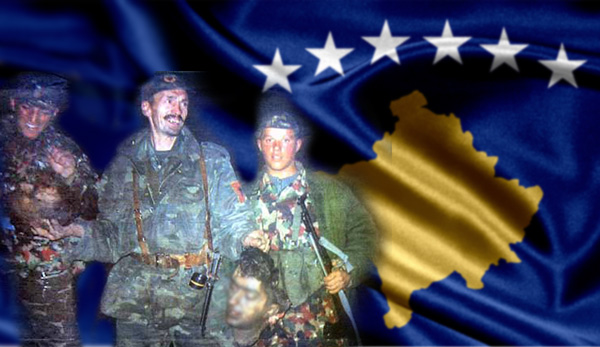
In the period before the 1999 NATO attack on Yugoslavia, the Kosovo Liberation Army (KLA) waged a campaign to secede and establish an independent Kosovo dominated by Albanians and purged of every other ethnic group. In October 1998, KLA spokesman Bardhyl Mahmuti spelled the KLA’s vision:“We will never change our position. The independence of Kosovo is the only solution…We cannot live together [with Serbs]. That is excluded.”Once NATO’s war came to an end, the KLA set about driving out of Kosovo every non-Albanian and every pro-Yugoslav Albanian it could lay its hands on. The KLA left in its wake thousands ...
On November 11, distinguished scholar, political economist, media analyst/critic, peace champion Ed Herman passed away at age 92.It was fittingly on the 99th anniversary of WW I’s end. Endless wars followed “the war to end all wars” – a legacy of mass slaughter and destruction Herman deplored, championing elusive world peace.Along with his friends and family, I mourn his passing, a valued friend and colleague, a contributor to my 2014 book, titled “Flashpoint in Ukraine: How the US Drive for Hegemony Risks World War III.”He and other distinguished contributors made the book successful, published in Russia and France.Ed Herman’s writing ...
For the Serbs as Christians, their loss of state independence and fall to the Ottoman Empire’s kind of theocratic state, was a terrible misfortune. With the advent of the Turks and establishment of their rule, the lands of Serbs were forcibly excluded from the circle of progressive European states wherein they occupied a prominent place precisely owing to the Byzantine civilization, which was enhanced by local qualities and strong influences of the neighboring Mediterranean states. Being Christians, the Serbs became second-class citizens in Islamic state. Apart from religious discrimination, which was evident in all spheres of everyday life, this status ...
Following the death of President Tito in 1980 the Federal Republic of Yugoslavia slid towards chaos. In the 1990s the plunge accelerated into civil war and one of the regions most affected was Kosovo from which Serbia withdrew after a NATO bomb and rocket offensive from 24 March to 11 June 1999. That blitz involved over 1,000 mainly American aircraft conducting some 38,000 airstrikes on Yugoslavia that killed approximately 500 civilians and destroyed much of the economic and social infrastructure of the region.NATO said its air bombardment was essential to halt repression of ethnic Albanians in Kosovo and justified the ...
IntroductionThe goals of this article are: 1) to investigate the role of the revived Patriarchate of Peć in Serbian and Balkan history?; and 2) to explore and present the results of investigation of the problems with respect to: a) the role of the Serbian Church during the first decades of the Ottoman occupation of Serbian lands in the process of the creation of a Serbian national identity; b) Serbian-Turkish relations in the second half of the 16th century; and c) the reasons for Serbian disloyalty towards the Ottoman government at the turn of the 17th century.The article addresses the reasons ...
Recently Crimea celebrated the 2nd anniversary of its reunification with Russia, marked on the day of the referendum that ended the Ukrainian occupation. Much has been written about the political and geopolitical aspects of the reunification as well as the social sentiments of the people, but little has been said about the economy. I want to lift the lid on that because the results of the economic transition are in fact quite impressive, especially considering the arduous hurdles that had to be overcome in the process.The transition from the Ukrainian economy to the Russian one meant a transfer from a ...
US President Theodore Roosevelt, a staunch imperialist and expansionist, engineered the illegal dismemberment of Colombia in 1903.The illegal US dismemberment and annexation of Serbian territory, the detachment, and dismemberment of Kosovo in 2008, parallels what occurred when the US illegally dismembered Columbia in 1903 in order to construct the Panama Canal.Outrage, shock, and uproar followed Roosevelt’s illegal detachment of Panama from Columbia in 1903. Many American leaders were outraged at the illegality, cynicism, and immorality of the dismemberment of Columbia.In the March 2, 1912 New York Times article “Hit at Roosevelt in Panama Inquiry; Senate Calls on Taft for All Records ...
The Western-backed myth of a Greater SerbiaMuch space, time and efforts have been devoted in the recent history of West Balkans, and in particular in the latest political upheavals, about the alleged project of a Greater Serbia especially by the Western authors either academic scholars or journalists.[1] The issue must be, however, considered together with its counterparts from Croatia (a Greater Croatia) and Albania (a Greater Albania). There are two focal questions that arose here:Were all these projects serious and what was the origin of this maximalist concept of forming the national states in the otherwise ethnically mixed area?Whose exact ...
I travel frequently to the countries which once made up the now defunct Socialist Federal Republic of Yugoslavia, satisfying a passion of mine that stems back to my childhood days. For me, the Balkans’ history, its people and its cultures are both enigmatic and magnetic, as they have been, too, for countless others, of many nationalities, over centuries gone by. Accounting for the enchantment of the Balkans, its captivating allure, is a challenge to put into writing. Because no words can truly embellish what is one of the most absorbing parts of the world. To understand and feel what it is ...
Kosovo Ethics, which are implanted in the national consciousness of the Serbian people, have not changed for 600 years – nor will they ever change. The basic values of those ethics, bequeathed to Serbians on Vidovdan in 1389, have not been chiseled on 2 stone tablets, but are impressed in the inmost being of every Serb.Every nation has 1 date in its history which it considers more important than any other. For the Serbs, the most important date in their history is June 15, by the old calendar – June 28, by the new calendar (Vidovdan). On that day, in ...
The United States and its NATO allies launched a military intervention in 1999 that helped the Kosovo Liberation Army (KLA) win its secessionist campaign against Serbia. U.S. officials justified that intervention on the grounds that Serbian security forces were committing pervasive war crimes against the Kosovar insurgents. American supporters of the KLA also asserted that the secessionists were staunch Western‐style democrats mounting a noble resistance against Slobodan Milosevic’s corrupt, brutal regime, and that America had a moral obligation to support them. Speaking at a pro‐Kosovo march in Washington D. C., Sen. Joseph Lieberman (D-CT) stated that the “United States of America and the Kosovo ...
“If the Nuremberg Laws were applied, then every post-war American President would have been hanged” Noam ChomskyEurasiaHenry Kissinger, one of the fundamental figures in creating and maintaining the US policy of global hegemony during the Cold War,[1] was quite clear and precise in his overviewing the issue of the American geopolitical position, national goals, and foreign policy. His remarks can be summarized in the following points:The US is an island off the shores of the large landmass of Eurasia.The resources and population of Eurasia far exceed the resources and population of the US.Any domination by any single state from Eurasia (either ...
Twenty-five years commemoration of NATO’s military intervention against the Federal Republic of Yugoslavia (the FRY) in March−June 1999 once again opened the question of the Western foundation for Kosovo’s secession from Serbia and its unilateral proclamation of a quasi-independence in February 2008. Kosovo became the first and only European state today that is ruled by the terroristic warlords as a party’s possession – the (Albanian) Kosovo Liberation Army (the KLA). This article aims to investigate the nature of NATO’s war on Yugoslavia in 1999 which has as an outcome the creation of the first terroristic state in Europe – the ...
Albin Kurti is on the verge of becoming the next Prime Minister of Kosovo after he and opposition chairman Isa Mustafa confirmed last week that the two rival political parties had made progress to create a coalition government. Mustafa said that Kurti can rightfully become the next Prime Minister if he can convince the three remaining parliamentarians, representing the Bosniak, Turkish and Roma minorities to enter a coalition – and it appears they will.What does the accession of Albin Kurti mean for the future of Kosovo?Kurti does not recognize the flag and anthem of Kosovo, as well as the Kosovar ...
Tito’s policy in the 1970s of the so-called “encourage and suppress” for the sake to struggle against politically undesirable and threatening ethnic nationalisms especially the Croat and the Serb ones appeared to be incoherent one. In another words, while some ethnic nationalisms and their ideologies were considered to be dangerous to the system and, therefore, were suppressed and their advocates were jailed or banned from employment[i] (the case, for instance, of the Serbian dissident professors from Belgrade University), other nationalisms, supposed to be non-dangerous for the regime were encouraged by the local Communist elites (for instance, the Albanian nationalism in ...
The NATO war on Yugoslavia which culminated in the 78-days bombing of historic cities and infrastructures – as usual under atrocity propaganda and pretexts – is on its 20th anniversary.The grim anniversary is admirably recognized by Science for Peace members to remember and to prevent who-knows-what NATO war crime next as “humanitarian intervention”.From Yugoslavia to Iraq to Libya, where does it stop? Observe that Trump is now seeking a NATO alliance with Bolsonaro Brazil (see image below) -to perhaps back the bombing of Venezuela, or any other society, including the Brazilian people, not bowing to US-led global corporate colonization. Socialist ...
Kacanik, KOSOVO – A plume of smoke hangs over our table in the corner of a dark, shabby café in this rugged town in southern Kosovo. The lanky 19-year-old sitting next to me is chain-smoking through half a pack of L&Ms, his hands trembling as he recalls how he joined one of the world's most brutal militant Islamist groups.Through his neatly trimmed beard, Adem, who asks me not to use his real name for fear of arrest, says he had never even left Kosovo. But two years ago, he found himself on the perilous and far-off Turkey-Syria border -- a ...
Bosnia and Kosovo are two of the biggest exporters of jihadists joining the Islamic State (ISIS) and al-Nusra Front (al-Qaeda’s affiliate in Syria) from the Balkans. As The Cipher Brief reported last month, legacies of the Communist era and the wars of the 1990s – presence of foreign fighters, economic and physical destruction, a lack of funding to rebuild, and the near eradication of moderate Islamic institutions – paved the way for Islamic extremist groups to establish a foothold in both countries. Now, ISIS recruiters are targeting Bosnia and Kosovo, and many Bosnians and Kosovars have left to fight in Syria and ...
Origins of images: Facebook, Twitter, Wikimedia, Wikipedia, Flickr, Google, Imageinjection, Public Domain & Pinterest.Read our Disclaimer/Legal Statement!Donate to Support UsWe would like to ask you to consider a small donation to help our team keep working. We accept no advertising and rely only on you, our readers, to keep us digging the truth on history, global politics and international relations.[wpedon id="4696" align="left"]SaveSave
The conflict that raged throughout the former Yugoslavia was met by a wall of silence when it came to important issues. These important issues apply to America and the United Kingdom supporting Islamists in a brutal civil war in Bosnia and then installing a new nation by ignoring international law in Kosovo. Also, is it credible to believe that the vast majority of major news agencies and national governments did not know about thousands of Islamists in Europe who were sent to slit the throats and behead Orthodox Christians?After all, if the reality of what really happened in Bosnia and ...