
Investment Оpportunities in Kosovo, America’s “Mafia State” in the Balkans
The economic motives of NATO’s military games are actually not a secret. Of interest here is the fact that in the middle of the 1990s, at the very height of the fratricidal war in Yugoslavia, the NATO countries’ citizens bought property in the Balkan republic. Buyers were making preparations for a new “post-Yugoslav” reality. And Kosovo was a good training ground, an expert with the Institute of Europe of the Russian Academy of Sciences, Pavel Kandel, said in an interview with the Voice of Russia [...]
True, the majority of investors are Americans who bore a relation to the “democratization” of Yugoslavia that was carried out at the end of the 90s of the last century. Among them is the former commander of NATO forces in Kosovo retired general Wesley Clark, who is determined to invest more than 5.5 billion dollars in the former Yugoslav republic. Experts say that Washington’s strategy could be characterized by the following slogan: “Conquer and plunder”.
His closest supporters say that Wesley Clark is a great strategist. He wrote the book “Winning Modern Wars” that was published in 2001. In his fundamental survey the author mentions the Pentagon’s list of countries that can be regarded as candidates for a quick change of leadership. On that list are Iraq, Iran, Syria, Lebanon, Libya, and Somalia. Yugoslavia was not mentioned there because by that time the undesirable regime of Slobodan Milosevic had been overthrown with the help of precision and carpet bombings.
By the way, shortly after the Kosovo operation the tired general – Wesley Clark – retired and immediately got involved in the banking business. As it appears, he invested all his savings that he had accumulated as general, receiving from 150 to 200,000 dollars annually, in the banking business. Because of that he had to earn additional money, working as a military analyst on U.S. TV channels. However, he did not lose his contacts with Kosovo, where, following the previously mentioned democratization, entrepreneurship, especially, in the field of medicine, was on the rise. And now the Envidity Company that is in Clark’s ownership has filed a request for coal mining to the Kosovo authorities. Serbia that does not recognize Kosovo’s independence says that it is determined to demand protection for the natural resources belonging to it. Nobody wants to ask for Belgrade’s permission though as was the case many times before.
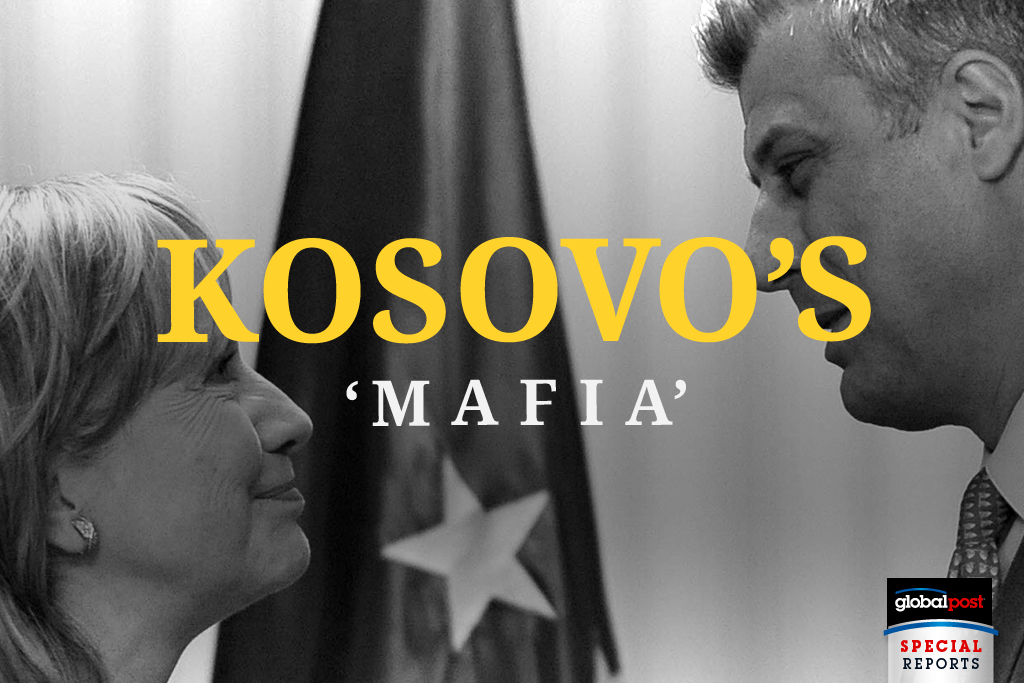
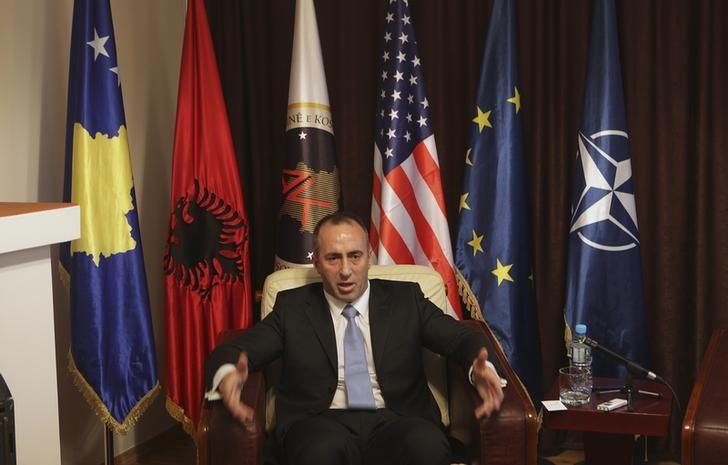
Wesley Clark always had good contacts with the Kosovo “government” and its “prime minister” – the former militant Hashim Thaci. There is even a street in Pristina named after Wesley Clark. By the way, a Russian political analyst and retired colonel-general Leonid Ivashov at the trial of Slobodan Milosevic mentioned the allied character of relations between the NATO troops and the militants of the Kosovo Liberation Army (KLA). As we can see, this cooperation has borne fruit, including both political and economic benefits, a Serbian journalist, Nikola Vrzic, says.
“It is clear that during their “cooperation” that started in 1998, they concluded business agreements. Now it is absolutely clear that the bombings of Kosovo pursued both political and economic objectives: they were aimed not only at annexing Kosovo from Serbia, but also at depriving Kosovo of its extensive natural resources. As it appears, coal is Kosovo’s main resource. Geologists say that there are other minerals there too. More prospecting for natural resources is needed there.”
Against the background of instability on the oil market, experts talk more and more often about good prospects for the development of synthetic fuel, including obtaining synthetic fuel from coal. Clark’s firm believes that it is possible to produce up to 100,000 barrels of the new source of energy daily.
The economic motives of NATO’s military games are actually not a secret. Of interest here is the fact that in the middle of the 1990s, at the very height of the fratricidal war in Yugoslavia, the NATO countries’ citizens bought property in the Balkan republic. Buyers were making preparations for a new “post-Yugoslav” reality. And Kosovo was a good training ground, an expert with the Institute of Europe of the Russian Academy of Sciences, Pavel Kandel, said in an interview with the Voice of Russia.
“Kosovo created a precedent. It was the first link in the strategy of the “humanitarian” interventions of the NATO countries led by the USA. Shortly before the Kosovo operation, at the urgent request of Washington, NATO adopted a new doctrine, which set a number of tasks beyond defence limits before the member-states of the formerly defensive bloc. To be more exact, the possibility of interference in other regions of the world under this or that pretext became possible.”
The strategy that was used earlier can be used again. Coal mining is very good but oil still has a good price. So everything continued, following the former format: Iraq, Somalia, and Libya. Something has gone wrong with Syria though. Damascus wants to develop democracy without humanitarian aid from the West. There are problems with Iran too. But economic strategists have enough patience: investor-generals are ready for investing at any time.
The original source of this article is Voice of Russia and Stop NATO
We would like to ask you to consider a small donation to help our team keep working. We accept no advertising and rely only on you, our readers, to keep us digging the truth on history, global politics and international relations.
During the final years of the Cold War, the Soviet Union and the US reached a verbal agreement whereby Moscow would allow for the reunification of Germany in exchange for the US agreeing to never expand NATO further East. As history attests, the US shamelessly reneged on its guarantee the moment the Soviet Union collapsed and was powerless to effectively stop it, swallowing up almost the entirety of Eastern Europe (save for Belarus, Moldova, and Ukraine) and all the Baltic States by 2004. What’s less studied by observers is NATO’s “Drang Nach Suden” (Drive to the South), which represents one ...
The Battle and the Nation The consciousness of a distinct Serbian ethnic identity had been present among the Serbs since the times of the founder of an independent medieval Serbian state, veliki župan (Grand Duke) Stefan Nemanja (1166−1196).[1] These consciousnesses were further strengthened by both when Serbia became a kingdom in 1217 and with the establishment of an autocephalous archbishopric in 1219 as a national independent (Christian Orthodox) church.[2] However, the Battle of Kosovo (on the morning of June 28th, 1389)[3] which the Serbs de facto lost to the Ottoman Turks and the death of a Serbian ruler, Prince Lazar Hrebeljanović ...
The U.N. Organization was established in 1945 for the very security reason – to preserve the peace in the world. We believe that the governmental bodies and administrative structures of the U.N. have to be composed by the proved democratically oriented politicians and magistrates but above all this requirement has to be applied to the post and function of the U.N. Secretary-General. Nevertheless, in the history of the U.N. there is at least one (extremely) problematic appointment to the post of the U.N. Secretary-General: Kurt Waldheim from Austria.On the official website of the U.N. about its fourth Secretary-General one can ...
IntroductionBelow are TENC's October 1999 interviews with three Serbian women from the Kosovo town of Orahovac. They recount how, prior to the June 1999 NATO-UN takeover of Kosovo, they believed NATO's promise that it would institute multi-ethnic harmony. They discovered too late that for NATO multi-ethnic meant rule by the Kosovo Liberation Army (KLA).In September, TENC had published its first interview with an eye-witness to the NATO-UN Kosovo takeover: Cedomir Prlincevic, President of the Jewish community and Chief Archivist in Pristina, capital of Kosovo.Mr. Prlincevic described how he and the rest of the small Jewish community were driven from their ...
Over the past several years, analysts and commentators have noticed a rising tide of domestic support for the Croatian homegrown Nazi movement of the Second World War, the Ustashe, which actively exterminated Serbs, Jews, and Roma in the territory it controlled from 1941-45. Far from condemning this alarming development, the Croatian government, the European Union, and non-state actors within it have tacitly and actively supported the rising tide of sympathy towards the Ustashe.This disconnect between the ostensible “European values” of human rights and tolerance that the European Union claims to represent, and its tacit support of trends towards extremist politics ...
During the early 1960s, apartheid South African diplomats were increasingly concerned their country’s plummeting reputation would affect relations with America. In one notorious incident, of March 1960, South African police shot dead 69 black protesters in Sharpeville, a township about 40 miles from Johannesburg.Such atrocities sparked protests against the racist regime on the streets of England, America’s great ally, which surely did not go unnoticed in Washington. Aware of the changing climate, South Africa’s dignitaries pleaded with their American counterparts for continued assistance. They need not have worried that the earth’s dominant power would desert them.As long as the United ...
In the recent decades, several groups of people in Bosnia, Kosovo, Serbia, Albania and Macedonia have appeared under the name “Salafi”. These religious activists, who practice completely different religious rules from the traditional ones of the Islamic religion, are distinguished from other believers by the characteristic way of praying (religious prayers), by their long beards, short mustaches and their characteristic clothes. These people do not claim to be “Wahhabis” but “Salafists” which means “ancestors”. They even oppose their appointment by others as “Wahhabis”, explaining that such a designation is made only by opponents of the Islamic religion, who want to ...
The rapacious conduct of the big hyenas is being replicated by their camp followers. Not to be outdone, Kosovo Albanians are laying claim to Serbian cultural monuments in Kosovo.A controversy has recently erupted in Mexico, of the type that may quite often be seen in other similarly defrauded countries. Its focus is the magnificent quetzal-plumed headdress of the last Aztec emperor Moctezuma which, contrary to the misleading impression encouraged by the Museum of Anthropology in Mexico City, is not displayed there at all. It is actually located, of all places, in the Ethnological Museum in Vienna, Austria.The impression is misleading ...
‘Blowing from a Gun’ depicted by Vasily Vereshchagin in his painting ‘Suppression of the Indian Revolt by the English’ on the rebellion of 1857. Queen Victoria’s agent bought this painting, in an attempt to suppress it. ‘Blowing from the Gun’ was a means of execution where the prisoner is tied to the muzzle of a cannon, which is then fired, popping the victim’s head about 15 meters (50 feet) into the air, apparently a sort of juvenile entertainment for the colonizers.Following colonization, along came ‘decolonization’ and what do you suppose happened with colonial borders? They mostly remained as laid down ...
IntroductionSome have tried to debunk the view that the West implicitly or explicitly promised Soviet leader Mikhail Gorbachev that NATO would not expand east after German reunification and dissolution of the Warsaw Pact). These claims are misleading and obfuscate the historical record of at least a clear understanding, if not promise that there should be no NATO expansion eastward in any way, shape or form. At the very least the West made a implied commitment not to expand NATO east. It is more precise to say, however, that the West gave an explicit verbal, that is, unwritten guarantee not to ...
Recently, the West and the Middle East pundits and analysts have been trying to analyze the provisions of the new draft constitution proposed by the Russian side as a solution to the Syrian conflict.Naturally, analyzing the provisions, any of the sides involved in the conflict is trying to present itself as the legitimate government. That raises the question of whether to adopt such a draft or not, because a newly appointed government would have to comply with a new constitution. Not surprisingly, not only the moderate opposition and illegal armed groups, but the official Syrian authorities as well subject the ...
Many of us go through life searching for our purpose, for something that we are passionate about. After years of searching finally I stumbled upon mine a few years ago. Having the world hear Syrians telling their side of the story while living through this imposed war is what ignited that fire in me. As a Syrian American that was born in Syria and lived in both countries my entire life, I feel a strong link to my heritage, my birth country, my culture, my language, my customs, my nationality, and my history.We have been bombarded with lies and propaganda ...
15 June 2015 marks the 800th anniversary of the signing of Magna Carta by King John at Runnymede. Magna Carta notably gave English “free men” freedom from arbitrary, non-judicial imprisonment, dispossession, outlawing, banishment or destruction by the ruler, a freedom that was variously progressively extended to all citizens and subjects in the Anglosphere over the next 8 centuries. However the US, UK, Apartheid Israel, and Australia have continued to grossly violate this freedom in the 21st century.King John I of England reluctantly granted the Magna Carta ("the Great Charter") on 15 June 1215 after leading Barons had insisted on formal ...
Congratulations to Craig Murray for getting there first. The colorful former British ambassador to Uzbekistan, turned anti-establishment dissident after he was sacked from the Foreign Office in 2004, has published on his blog some key texts by authoritative scientists which cast serious doubt on the British government's claims about what happened to the former double agent, Sergei Skripal, and why.Murray – and his sources – have unearthed texts from 2016, 2013 and 1995 by, respectively, a scientist at Porton Down, the secret British military chemical weapons installations which is 20 minutes from Salisbury where Skripal was found last week; a scientist at ...
One of the claims of Albanian historiography is that the Central Balkan tribe – Dardanians, who settled in the southern portion of the territory of the Roman Province of Moesia Superior and northwestern part of the Roman Province of Macedonia, should be considered as one of the Illyrian tribes and an ancestor of the Albanians. With respect to this point, Albanian historians refer to the German linguist Norbert Jokl who wrote, according to the research of historical toponomastics, that the ancient cradle of the Albanians was Dardania, from where they moved westward to their present territories in late Roman times.[1] ...
The path of the Balkans to the Mediterranean geographically goes through three countries – Italy, Greece and Turkey. Of these three countries, Italy is the most important for the Balkans in the European context, because it is the third strongest country in the EU (a country that until recently held the position of Governor of the European Central Bank, Mario Draghi, which is currently, as the current Italian Prime Minister, a “new” hope of European politics), while the influence of Greece within the EU is still weaker than the Italian one, and Turkey is not an EU member at all. ...
Origins of images: Facebook, Twitter, Wikimedia, Wikipedia, Flickr, Google, Imageinjection, Public Domain & Pinterest.Read our Disclaimer/Legal Statement!Donate to Support UsWe would like to ask you to consider a small donation to help our team keep working. We accept no advertising and rely only on you, our readers, to keep us digging the truth on history, global politics and international relations.[wpedon id="4696" align="left"]
Both before and after Crimea left Ukraine and joined Russia in a public referendum on 16 March 2014, the Gallup Organization polled Crimeans on behalf of the U.S. Government, and found them to be extremely pro-Russian and anti-American, and also anti-Ukrainian. (Neither poll was subsequently publicized, because the results of each were the opposite of what the sponsor had wished.) Both polls were done on behalf of the U.S. Government, in order to find Crimeans’ attitudes toward the United States and toward Russia, and also toward Ukraine, not only before but also after the planned U.S. coup in Ukraine, which occurred ...
PrefaceIt is the 30th anniversary of the first post-WWII democratic elections in Serbia and the rest of the ex-Yugoslavia.My aim in this article is to elaborate on the feature of the multi-party elections in Serbia in 1990 and to give an answer to the crucial question why did Slobodan Miloshevic with his SPS party win? After the investigation of the case we found that critical reasons for Miloshevic’s/SPS absolute electoral parliamentary and presidential victory in 1990 have been: 1) The countryside and small urban settlements voted for SPS due to the informative blockade; 2) Old population voted for SPS; 3) ...
In 1999, when he was the President of Finland, Marti Ahtisaari’s government wanted to honor and to commemorate the 3,000 Finnish Nazi Waffen SS volunteers that served in Heinrich Himmler’s SS. Why would any government, indeed, why would anyone, want to honor and commemorate SS troops? Why would anyone want to honor and commemorate Nazis and Nazism? This is the question that has remained unanswered in the US and Western media about Marti Ahtisaari. As a sock puppet for the US, NATO, and EU, Ahtisaari’s role in honoring and commemorating the Nazi Waffen SS has been suppressed. As a Chairman ...