
Israel has been brilliant over the years in shaping and misdirecting the public discourse on the future of Palestine. Among its earliest achievement along these lines was the crucial propaganda victory by having the 1948 War known internationally as the ‘War of Independence.’ Such a designation erases the Palestinians from political consciousness, and distorts the deeper human and political consequences of the war. Language matters, especially in vital circumstances where there are winners and losers, a reality that applies above all to a war of displacement.
It took decades for the Palestinians to elevate their experience of the 1948 war to even the consciousness of those on an international level who supported the Palestinian national struggle for self-determination. Even now more than 50 years after the war, the ‘Nakba’ by which the 1948 war is known to Palestinians remains internationally obscure. The word signifies ‘catastrophe,’ which is associated principally with the dispossession of at least 700,000 non-Jewish residents of Palestine, what became the state of Israel after 1948, and subsequently, with the denial by Israel of any right of return for those Palestinians who abandoned their homes and villages out of fear or as a result of Israeli coercion. This double process of dispossession and erasure was reinforced powerfully by the bulldozing and utter destruction of 400-600 Palestinian villages in the new state of Israel.
Even those who have this revisionist awareness rarely convey a sense of the Nakba as a process, not just a calamitous event. For those Palestinians dispossessed of home, property, community, employment, and dignity, their life, that of their families, and that of subsequent generations has been generally ‘a living hell’ as a consequence of either enduring the misery and humiliation of long-term residence in refugee camps or experiencing the various vulnerabilities and rootlessness of involuntary and permanent exile. In other words, the tragedy of the Nakba began and did not end with the traumas of dispossession, but rather continued in the ordeals that followed, which must be considered as inseparable from the originating catastrophe.
The UN Partition Resolution
For many reflective Palestinians, the decades since 1948 have intensified the ordeal that followed from the struggle for control of territory and elemental rights that followed from GA Resolution 181 adopted by a vote of 33-13 (with ten abstentions, one absent), in November 29, 1947. The Israeli mastery of the public international discourse was expressed by dramatizing the Zionist acceptance (as represented by the Jewish Agency for Palestine) of the proposed partition of historic Palestine while the Palestinians, their Arab neighbors, as well as India and Pakistan, rejected it declaring above all that partition without the consent of the inhabitants of Palestine was a flagrant violation of the UN Charter promise of the right of self-determination, entailing peoples choosing their own political destiny.
This clash of attitudes was then interpreted in the West as demonstrating the reasonableness of the Zionist approach to the complexities associated with two contradictory claims of right regarding self-determination and territorial sovereignty. The Zionist/Israeli spin claimed a readiness to resolve the conflict by way of political compromise while contrasting and denigrating the Palestinian approach to the future of the country as exclusivist and rejectionist, even as genocidal, implying an alleged Arab resolve to throw Jews into the sea, a contention that naturally agitated an extremely sensitive post-Holocaust Western liberal political consciousness. A more objective rendering of the opposed viewpoints of the two sides supports a set of conclusions almost totally the opposite of what has been sold to the world by an Israeli narrative of the UN partition initiative and its aftermath that despite these contrary considerations remains dominant.
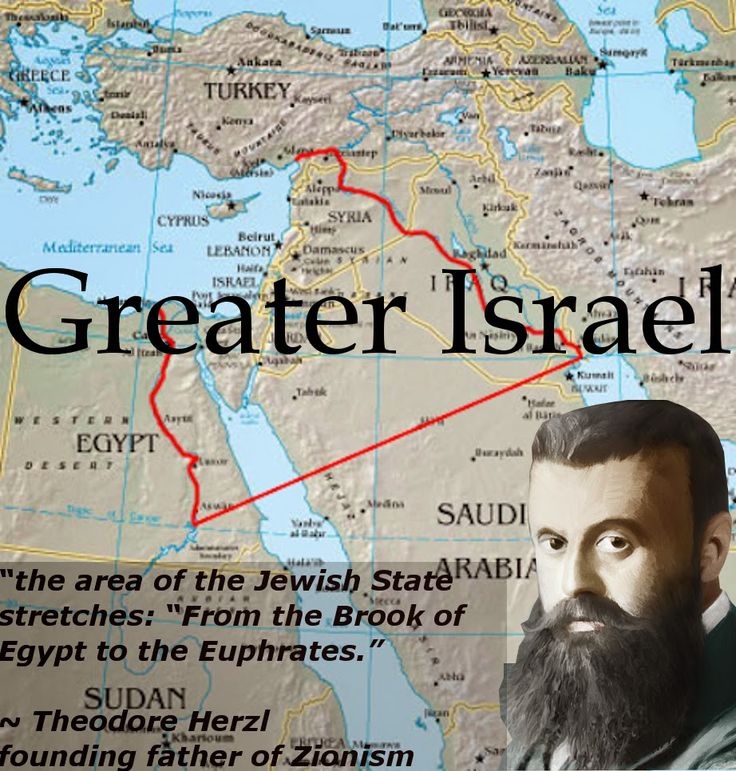
After an understandable initial Palestinian reflex to repel Jewish intruders intent on occupying and dividing their homeland of centuries, it has been the Palestinians, not the Israelis, who have been proposing a comprensive compromise and it is the Israelis who, by and large, subscribe to the view that the Jewish ‘promised land’ incorporates the West Bank and the unified city of Jerusalem, and any dilution of these goals would be a fundamental betrayal of the Zionist project to restore fully a mythic ‘biblical Israel’ in the form of a sovereign state. The more ideological Israelis, including Menachem Begin, (commander of the Zvai Leumi Irgun, 6th prime minister of Israel, 1977-83) were outspoken critics of partition in 1947, anticipating correctly that it would produce violence, and believing that Israel would only achieve its security and complete the Zionist Project by engaging in military operations with the object of territorial expansion. David Ben-Gurion, the master Zionist tactician and the first and foremost Israeli leader, shared Begin’s skepticism about partition, but favored it for pragmatic reasons as a step toward the fulfillment of the Zionist Project, but not the end of it. Partition was provisional, to be followed by seeking to complete the Zionist agenda, which is precisely what unfolded ever since 1947.
Partition was a familiar British colonial tactic that complemented their ‘divide and rule’ strategy of occupation was proposed for Palestine as early as 1937 in the report of the Peel Commission, but in view of the desire for Arab cooperation in World War II, the UK uncharacteristically backed away from their advocacy of partition for Palestine. In a later white paper the British declared partition to be ‘impractical’ as applied to Palestine, and somewhat surprisingly abstained from the vote on GA Res. 181.
Prolonging the Palestinian Ordeal
At least since the PLO decision in 1988 to accept Israel as a legitimate state and offer normalization of relations if Israel followed the prescriptive provisions of UN Security Council Resolution 242, that is, withdrawing to the 1967 green line borders and agreeing on arrangements for an effective resolution of the refugee issue. The Arab Peace Initiative of 2002 added regional inducements to the PLO offer of political compromise, and this too was met by Israeli silence and a lackluster response in the West. The Oslo diplomacy was a one-sided failure. It never produced proposals on the disputed issues in ways that contained any reasonable prospect of bringing the conflict to a sustainable end while allowing Israel valuable time to keep expanding their network of unlawful settlements, a form of creeping annexation that served, as well, to make the two-state mantra more and more of a cruel chimera, useful to pacify international public opinion that sought a sustainable peace for both peoples and an end to the conflict..
More objectively considered, these dual reactions to the partition solution can be deconstructed. The Zionist movement at every stage took what it could get, and then went about creating conditions on the ground and diplomatically for getting more, by expanding their political demands and expectations, or as sometimes observed, ‘shifting the goalposts.’ Reliance on such ‘salami tactics’ can be traced back at least as far as the Balfour Declaration when Zionists accepted the terminology of ’national home’ despite their aspirations from the outset to establish a Jewish state that disregarded Palestinian moral, legal, and political rights. Recent archival research has made it increasingly clear that the real Zionist goal all along was the imagined Israel of biblical tradition, ‘the promised land’ that deemed to encompass all of the city of Jerusalem, as well as the area known internationally as ‘the West Bank’ and in Israel as ‘Judea and Samaria.’
And with respect to the Palestinian response, initially ardently supported by the entire Arab world, as well as most countries with majority Muslim populations, rejection of the UN approach was based on the extent to which partition bisected Palestine without any process of consent by, or even consultation with, the majority resident population. It was an arrogant effort by the UN, then under Western control, to dictate a solution that was not sensitive to Palestinian concerns or in keeping with the spirit or letter of its own Charter. To treat Palestinian rejection of GA Res. 181 as indicative of anti-Semitism or even rejectionism is to accept an explanation of the disastrous legacy of partition that conforms to the Israeli narrative that misses the real dynamic at work that has kept the conflict alive all these decades. To this day Israel continues to create conditions that diminish Palestinian prospects while subtly depicting the Zionist Project as in reasonable pursuit of previously undisclosed ambitions with greater clarity.
This leads to the central question that also includes reasons why the Israelis did also not want partition, but felt correctly that its provisional and temporary acceptance was a way of gaining more political space both for maneuvering and for showing the world its reasonable face that included a commitment to peace. In contract, the Palestinians felt shut out and humiliated by the way the future of their society was treated by the UN and the West, and yet didn’t want to alienate the international community, especially Washington. This kind of attitude meant lending credence to the 1993 Oslo Framework of Principles, and acting as if the ‘peace process’ had something to do with ‘peace.’ This accommodationist mode of diplomacy practiced by the Palestinian Authority over the course of the last 25 years while Israel annexed and Judaized East Jerusalem and penetrated more and deeply into the West Bank created the impression in many circles, including Palestinian and others, that the Palestinian Authority was not nearly rejectionist enough, and either naively playing a losing hand or completely failing to understand the real Zionist game plan.
‘The Partition War’
To circle back to the contention that language is itself a site of struggle, it become desirable, even now, more than 70 years later, to call the 1948 War by a name that reveals more clearly its essential and flawed character, and this name is The Partition War. Only by such a linguistic move can we begin to understand the extent to which the international community, as embodied in the UN, was guilty of original sin with respect to the Palestinian people, and their natural rights, as well as their legal entitlements and reasonable political expectations. Endorsing the partition of Palestine was what I would describe as a ‘geopolitical crime.’
Originally published on 2018-03-24
About the author: Richard Falk is an international law and international relations scholar who taught at Princeton University for forty years. Since 2002 he has lived in Santa Barbara, California, and taught at the local campus of the University of California in Global and International Studies and since 2005 chaired the Board of the Nuclear Age Peace Foundation.
Origins of images: Facebook, Twitter, Wikimedia, Wikipedia, Flickr, Google, Imageinjection, Public Domain & Pinterest.
Read our Disclaimer/Legal Statement!
Donate to Support Us
We would like to ask you to consider a small donation to help our team keep working. We accept no advertising and rely only on you, our readers, to keep us digging the truth on history, global politics, and international relations.
The superhighway to disaster is already being paved.From Donald Trump’s first days in office, news of the damage to America’s international stature has come hard and fast. As if guided by some malign design, the new president seemed to identify the key pillars that have supported U.S. global power for the past 70 years and set out to topple each of them in turn. By degrading NATO, alienating Asian allies, cancelling trade treaties, and slashing critical scientific research, the Trump White House is already in the process of demolishing the delicately balanced architecture that has sustained Washington’s world leadership since ...
IntroductionToday it is quite obvious that the Western-backed process of creation of a Greater Albania is not any propaganda myth but rather visible reality. South Serbia’s province of Kosovo-Metochia is already, de facto, part of “united” Albania from June 1999 and current political situation in the Former Yugoslav Republic of Macedonia is surely going to the direction of the separation of North-West Macedonia mainly populated by Albanians who succeeded with the crucial Western support to promulgate a new language law in Macedonia’s Parliament according to which, the Albanian language is going to be a second state language (i. e., together ...
Several years ago two very distinguished American scholars wrote a book, The Israel Lobby.The book made a very understated case that the Israel Lobby has far more power over the US government and media than is good for America or Israel, as it silences constructive critics who are Israel’s friends. The two scholars were demonized by the Israel Lobby as advocating the return of the Holocaust.The Israel Lobby presented itself as just a poor little weak thing unable to stand up to all the Nazis assailing Israel. Meanwhile the US Congress was unanimously passing outrageous resolutions handed to it by ...
When the Warsaw Pact ended, after the collapse of communism, some optimists might have expected Nato to be broken up too.After all, the Labour Party in Britain had been opposed to Nato in the mid-1980s. But that was not to be. The US, which had always dominated Nato, quickly began to reinvent Nato and furthermore to expand it.Following the end of the Warsaw Pact many central and east European governments wanted to join Nato.This of course was music to the ears of the US military manufacturers. Indeed, the chair of the expand Nato committee, Bruce Jackson, was technical director of ...
The negotiations on Brexit are attracting a lot of attention. In particular, the possible erosion of the rights of around three million EU-27 citizens living in Britain is a major cause for concern.The European Parliament resolution adopted on 3 October states that “the withdrawal agreement must incorporate the full set of rights citizens currently enjoy, such that there is no material change in their position”.The main author of this text, Mr Guy Verhofstadt, the EP Brexit Coordinator, argues that such an approach – not to lower the level of citizens’ rights – is “the goal of democracy”. But why was ...
Hypocrisy may be the only consistent guiding principle of US foreign policy. Here's a prime example of the "do as we say, not as we do" that is the core of how Washington does business overseas: In the same week that the the US Justice Department demanded that the Russian-backed RT America network register as a foreign propaganda entity or face arrest, the US State Department's Bureau of Democracy, Human Rights and Labor (DNL) has announced that it is launching a program to massively interfere in NATO-partner Hungary's internal media.So the US Justice Department is cracking down on RT America for what ...
Hardly any knowledgeable person doubts that Zionist ideology is the purest form of racism. Zionism is Jewish disguised racism as a raison d’etat. Israel comes right after the U. S., as far as racism is concerned. That is why the U. S. donates to this racist regime $ 3.8 bn per year in order to keep this occupation regime going. Should anybody doubt the racism of the Israeli leadership, read the following article.[1]Racism among the Israeli leadership is legendary. It started out with the founder of Zionism, Theodor Herzl, saying: “Spirit the penniless population across the frontier by denying it ...
The history behind Palestine and Israel is a history of Jewish European settler-colonialism — i.e., Zionism. And since racism is a symptom and a tool of settler-colonialism, Zionism is also viewed as anti-Semitism, and as ethno-supremacy or Jewish supremacy, Arabophobia and Islamophobia.The triangulation of anti-Semitism, Islamophobia and Arabophobia in the history of Palestine and Israel is part of the settler-colonial movement of Zionism and is not a “new history” in the sense of the term as introduced by Israeli historian Benny Morris in 1980 to humanize, in Israeli academic discourse, the victims of Zionism. It simply reflects modern terminology and ...
Origins of images: Facebook, Twitter, Wikimedia, Wikipedia, Flickr, Google, Imageinjection, Public Domain & Pinterest.Read our Disclaimer/Legal Statement!Donate to Support UsWe would like to ask you to consider a small donation to help our team keep working. We accept no advertising and rely only on you, our readers, to keep us digging the truth on history, global politics and international relations.[wpedon id="4696" align="left"]Save
America is a warrior state, a serial aggressor, unaccountable for unparalleled high crimes against peace because of public ignorance and indifference.Americans are sublimely unaware of their nation’s history. Its so-called war of independence substituted new management for old. Everything changed but stayed the same.Civil war had nothing to do with freeing slaves, everything to do with keeping the nation intact, maintaining business as usual.Imperial America enslaved Black Africans, exterminated its native people, stole their land and resources, stole half of Mexico, followed by Cuba, the Philippines, Guam, Samoa, Hawaii, Haiti, the Dominican Republic, Canal Zone, Puerto Rico and other territories.Peace ...
Louis XVI needed a revolution, Napoleon needed two historic military defeats, the Spanish Empire in the New World needed multiple revolutions, the Russian Czar needed a communist revolution, the Austro-Hungarian and Ottoman Empires needed World War I, Nazi Germany needed World War II, Imperial Japan needed two atomic bombs, the Portuguese Empire in Africa needed a military coup at home, the Soviet Empire needed Mikhail Gorbachev … What will the American Empire need?I don’t believe anyone will consciously launch World War III. The situation now is more like the eve of World War I, when great powers were armed and ...
The meaning of intifadaThe Arabic word intifada means “shaking off” but in the political language as a term, it means “uprising”. More precisely, this term refers to the two Palestinian uprisings on both territories of the West Bank and the Gaza Strip. These two territories were occupied by Israel during The 1967 Six-Day War between Israel and the coalition of the Arab states in the region of the Middle East.[1] Both intifadas lasted from 1987 to 2005.[2]The First IntifadaThe First Intifada was, in fact, the spontaneous uprising in 1987 which lasted until 1993. It began as a revolt of the ...
Author’s note and UpdateThe following article was first published in September 2014 at the outset of the air campaign “against the ISIS”. In recent developments Russia has officially joined the campaign against the Islamic State (ISIS). What are the implications?Amply documented but rarely mentioned in news reports, the ISIS is a creation of US intelligence, recruited, trained and financed by the US and its allies including Saudi Arabia, Qatar, Turkey, Israel and Jordan. What this means is that the ISIS terrorists are the foot soldiers of the Western alliance. While America claims to be targeting the ISIS, in reality it is protecting the ISIS. The air campaign is intent upon ...
“We could become the first country to go fascist through free elections.” — William Shirer, The Rise and Fall of the Third ReichGenerally, we avoid using the word “fascism” in polite company, and until recently, a person pointing out parallels between Nazi Germany and the current United States would invite elevated eyelids along with the outworn charge of sounding like a “conspiracy theorist“. The current electoral cycle seems to be changing that, so I will trust that now is the right time to convey some ideas I’ve been marinating regarding fascism in my US Homeland. The ruling plutocrats are clearly ferrying the ...
This Remembrance Day will doubtless see strenuous efforts by some to justify the fruitless bloodbath that was the First World War. Revisionist commentators have long attempted to rehabilitate the conflict as necessary and just, but the arguments do not stand up. It does no service to the memory of the dead to allow any illusions in the justice or necessity of war, particularly so when the precedents will be used to argue for the next ‘necessary’ conflict. From the causes of the war, to its prosecution and its results, here are the counter-arguments to ten common pro-war ploys.1. The war ...
In Arabic TV interview, Labour’s ex-London mayor blames Israel for IS attacks in Europe and mass expulsion of Jews from Arab world, again claims Hitler supported ZionismFormer London mayor Ken Livingstone on Wednesday called the creation of Israel “fundamentally wrong,” and “a great catastrophe.” The existence of the Jewish state in the Middle East, he said, could ultimately lead to nuclear war.“The creation of the state of Israel was fundamentally wrong, because there had been a Palestinian community there for 2,000 years,” Livingstone told an Arabic language TV station based in London, in a clip posted and translated by the ...
Some of those currently advocating bombing Syria turn for justification to their old faithful friend “humanitarian intervention”, one of the earliest examples of which was the 1999 US and NATO bombing campaign to stop ethnic cleansing and drive Serbian forces from Kosovo. However, a collective amnesia appears to have afflicted countless intelligent, well-meaning people, who are convinced that the US/NATO bombing took place after the mass forced deportation of ethnic Albanians from Kosovo was well underway; which is to say that the bombing was launched to stop this “ethnic cleansing”. In actuality, the systematic forced deportations of large numbers of people from Kosovo ...
Rising tensions in the global relations and hotbeds of old and new crises call for unity and efforts of all peace forces for closing foreign military bases, particularly U.S. and NATO foreign military bases, around the globe. The peace forces are obligated to send a clear message that U.S. and NATO foreign military bases represent the tools of hegemonism, aggression, occupation and that as such must be closed.Peace and inclusive development, elimination of hunger and misery require redistribution of spending for maintenance of military bases in favor of development needs, education, and health services. After the end of the Cold ...
The world is at a dangerous crossroads. The United States and its allies have launched a military adventure which threatens the future of humanity. Major military and covert intelligence operations are being undertaken simultaneously in the Middle East, Eastern Europe, sub-Saharan Africa, Central Asia and the Far East. The US-NATO military agenda combines both major theater operations as well as covert actions geared towards destabilizing sovereign states.America’s hegemonic project is to destabilize and destroy countries through acts of war, covert operations in support of terrorist organizations, regime change and economic warfare. The latter includes the imposition of deadly macro-economic reforms ...
Video documentary movie on the first ISIS in Europe in the Islamic Caliphate of Bosnia-Herzegovina, 1992-1995.This movie is made by the British SKY NEWS after the civil war in Bosnia-Herzegovina.Similar documentary movies on the ISIS Bosnia-Herzegovina made by the Bosnian Serbs were never shown to the Western audience.The duration of the movie is 8 min. and 17 sec.In the movie are presented and future Al-Qaeda Mujahedeen holy fighters.From the movie is clear what was the real nature of the civil war in Bosnia-Herzegovina in the 1990s.All copyrights reserved by the SKY NEWS.Origins of images: Facebook, Twitter, Wikimedia, Wikipedia, Flickr, Google, ...
Towards the Creation of a “Greater Albania”: Historical Roots & Imperial Ambitions
Zionist Israel Hides its Crimes Behind its Smears of Truth-Tellers
NATO – A Dangerous Alliance
The “Non-Citizens” of the Baltic States: Α European Scandal Nobody Speaks about!
Manipulation: The US State Department’s New Program to Take On Hungarian Media
Zionism is Racism
The More Plausible and Reasonable History of Palestine and Israel
A Boomerang Policy: From Paris to Paris
Memorial Day Hypocrisy
A Collection of Thoughts about American Foreign Policy
From the History of Israeli−Palestinian Conflict: The First Palestinian Intifada against the State of Israel (1987−1993) and its Political Consequences
“Going After” the Islamic State: Guess Who is Behind the Caliphate Project?
A Brief History of Fascism in the United States
Ten Lies Told about World War I
Ken Livingstone: Creation of Israel was a ‘Great Catastrophe’
The Myth of NATO’s “Humanitarian Intervention” in Kosovo (in 1999)
Close Bondsteel in Kosovo!
Neoliberalism and The Globalization of War. America’s Hegemonic Project
Bosnia-Herzegovina ISIS in the 1990s: A Short Documentary Movie by the SKY News