
Syria and the Project to Balkanize the Middle East
A coalition of the US, Saudi Arabia, the Gulf states, Turkey and Israel exploited those initial challenges to the Syrian regime, seeing them as an opening. They did not do so to help democracy activists but to advance their own, largely shared agendas [...]
A decade ago I published a book, Israel and the Clash of Civilisations, that examined Israel’s desire to Balkanize the Middle East, using methods it had refined over many decades in the occupied Palestinian territories. The goal was to unleash anarchy across much of the region, destabilising key enemy states: Iran, Iraq, Syria and Lebanon.
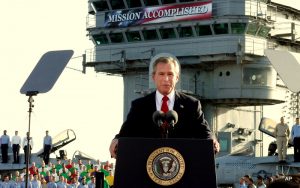
The book further noted how Israel’s strategy had influenced the neoconservative agenda in Washington that found favour under George Bush’s administration. The neocons’ destabilisation campaign started in Iraq, with consequences that are only too apparent today.
My book was published when efforts by Israel and the neocons to move the Balkanisation campaign forward into Iran, Syria and Lebanon were stumbling, and before it was clear that other actors, such as ISIS, would emerge out of the mayhem. But I predicted – correctly – that Israel and the neocons would continue to push for more destabilisation, targeting Syria next, with disastrous consequences.
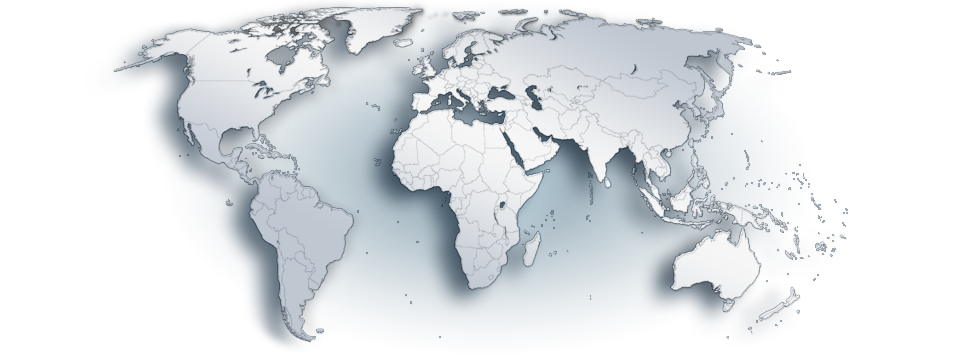
Today, Israel’s vision of the region is shared by other key actors, including Saudi Arabia, the Gulf states, and Turkey. The current arena for destabilisation, as I predicted, is Syria. But if successful, the Balkanisation process will undoubtedly move on and intensify against Lebanon and Iran.
Although commentators tend to focus on the “evil monsters” who lead the states targeted for destruction, it is worth remembering that before their disintegration most were also oases of secularism in a region dominated by medieval sectarian ideologies, whether the Wahhabism of Saudi Arabia or the Orthodox Judaism of Israel.
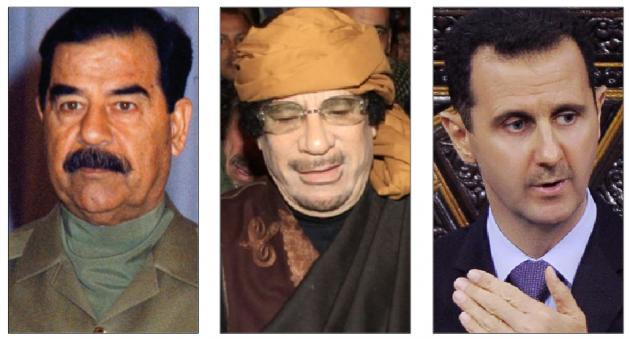
Syria’s Bashar Assad, Iraq’s Saddam Hussein and Libya’s Muammar Gaddafi are or were ruthless and brutal in the way all dictators are, against opponents who threaten the regime. But before their states were targeted for “intervention”, they also oversaw societies in which there were high levels of education and literacy, well-established welfare states, and low levels of sectarianism. These were not insignificant achievements (even if they are largely overlooked now) – achievements that large sections of their populations appreciated, even more so when they were destroyed through outside intervention.
These achievements were not unrelated to the fact that the regimes were or are more independent of the US than the US and Israel desire. The rulers of these states, which comprise disparate sectarian groups, had an interest in maintaining internal stability through a carrot and stick approach: benefits for those who submitted to the regime, and repression for those who resisted. They also made strong alliances with similar regimes to limit moves by Israel and the US to dominate the region. Balkanisation has been a powerful way to isolate and weaken them, so the process can be expanded to other renegade states.
This is not to excuse human rights violations by dictatorial regimes. But it is to concentrate on an even more important issue. What we have seen unfolding over the past 15 years is part of a lengthy process – often described in the West as a “war on terror” – that is not designed to “liberate” or “democratise” Middle Eastern states. If that were the case, Saudi Arabia would have been the first state targeted for “intervention”.
Rather, the “war on terror” is part of efforts to violently break apart states that reject US-Israeli hegemony in the region, so as to maintain US control over the region’s resources in an age of diminishing access to cheap oil.
Although it is tempting to prioritise human rights as the yardstick for which sides we prefer, by now there should be little doubt that the conflicts unfolding in the Middle East are not about the promotion of rights.
Syria offers all the clues we need.
The agents trying to overthrow Assad in Syria are no longer civil society groups and democracy activists. They were too small in number and too weak to bring about change or threaten the Assad regime. Instead, whatever civil war there may initially have been has transformed into a proxy war. (In a closed society like Syria, it is of course almost impossible to know what drove the initial opposition – was it a fight for greater human rights, or growing dissatisfaction with the regime concerning other issues, such as food shortages and population displacements that were themselves a consequence of long-term processes triggered by climate change?)
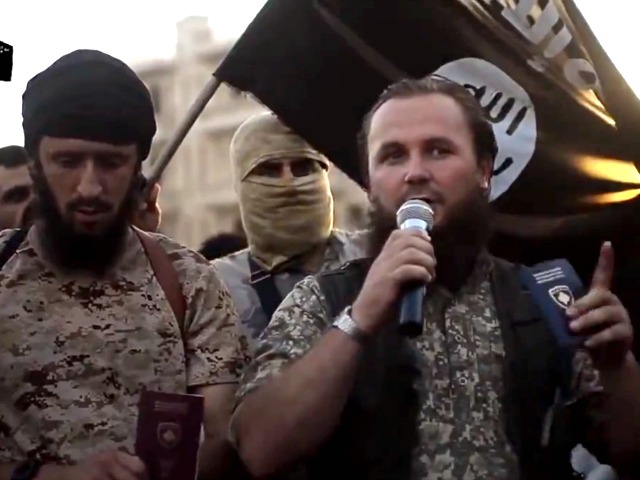
A coalition of the US, Saudi Arabia, the Gulf states, Turkey and Israel exploited those initial challenges to the Syrian regime, seeing them as an opening. They did not do so to help democracy activists but to advance their own, largely shared agendas. They used Sunni jihadist groups like al-Qaeda and ISIS to advance their interests, which depend on the break-up of the Syrian state and its replacement by an anarchy that empowers them while disempowering their enemies in the region.
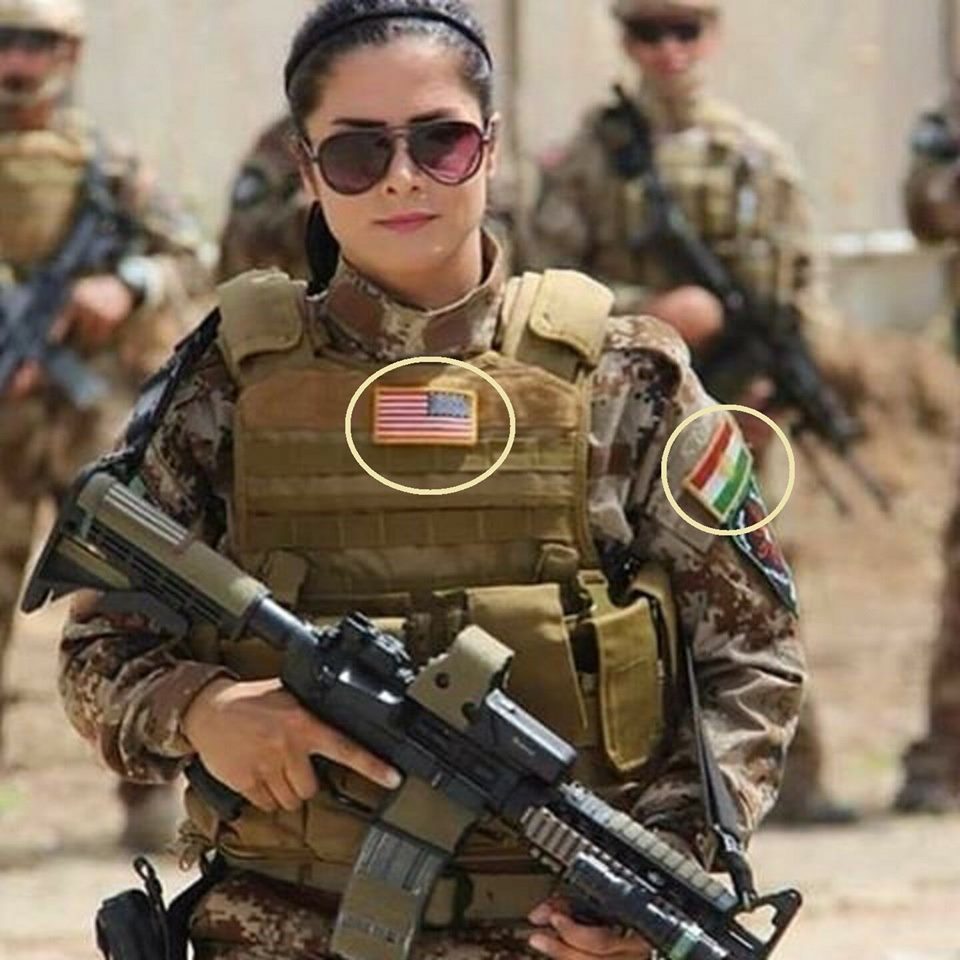
Saudi Arabia and the Gulf states want Iran and its Shia allies weakened; Turkey wants a freer hand against Kurdish dissident groups in Syria and elsewhere; and Israel wants to foster the forces of sectarianism in the Middle East to undermine pan-Arab nationalism, thereby ensuring its regional hegemony will go unchallenged.
The agents trying to stabilise Syria are the regime itself, Russia, Iran and Hizbollah. Their concern is to use whatever force is necessary to repel the agents of anarchy and restore the regime’s dominance.
Neither side can be characterised as “good”. There are no “white hats” in this gunfight. But there is clearly a side to prefer if the yardstick is minimising not only the current suffering in Syria but also future suffering in the region.
The agents of stability want to rebuild Syria and strengthen it as part of a wider Shia bloc. In practice, their policy would achieve – even if it does not directly aim for – a regional balance of forces, similar to the stand-off between the US and Russia in the Cold War. It is not ideal, but it is far preferable to the alternative policy pursued by the agents of anarchy. They want key states in the Middle East to implode, as has already happened in Iraq and Libya and has been partially achieved in Syria.
We know the consequences of this policy: massive sectarian bloodspilling, huge internal population displacement and the creation of waves of refugees who head towards the relative stability of Europe, the seizure and dispersal of military arsenals that spur yet more fighting, and the inspiration of more militant and reactionary ideologies like that of ISIS.
If Syria falls, it will not become Switzerland. And if it falls, it will not be the end of the “war on terror”. Next, these agents of anarchy will move on to Lebanon and Iran, spreading yet more death and destruction.
We would like to ask you to consider a small donation to help our team keep working. We accept no advertising and rely only on you, our readers, to keep us digging the truth on history, global politics and international relations.
In this photo taken on Sunday, April 20, 2014, and released on the official Facebook page of the Syrian Presidency, Syrian President Bashar Assad, right, checks a damaged church during his visit to the Christian village of Maaloula, near Damascus, Syria. Assad visited on Sunday a historic Christian village his forces recently captured from rebels, state media said, as the country’s Greek Orthodox Patriarch vowed that Christians in the war-ravaged country “will not submit and yield” to extremists. The rebels, including fighters from the al-Qaida-affiliated Nusra Front, took Maaloula several times late last year. (AP Photo/Syrian Presidency via Facebook)
I don’t want to discuss the musical merits of who should have won the recent Eurovision amateur song contest in Stockholm. It’s brazenly clear that the Ukrainian ethnic Tatar Jamala won in a rigged contest to make a political intervention. As she subsequently openly admitted, it was between the actions of Stalin in World War II against Crimean Tatars and the actions of Moscow in 2014 in Crimea. The song of Jamala was blatantly political and by Eurovision, rules ought to be grounds to strip her of the title regardless of her singing talent or lack of the same. What ...
On the 30th September 2016, formal negotiations related to the creation of free trade zone between Serbia and Eurasian Economic Union started. Lasting throughout the entire 2017, indications of progress were given by Marko Čadež, president of the Serbian Chamber of Commerce and Industry, during his participation in the St. Petersburg International Economic Forum (SPIEF). This new free trade agreement is supposed to replace older bilateral FTAs which Serbia has with Russian Federation, Belarus, and Kazakhstan and expand the market for its products to Armenia and Kyrgyzstan.Vietnam is an illustrative example of benefits which free trade agreement with EAEU can ...
The latest issue of Foreign Policy magazine, one of the leading journals in its field, offers a two-page photo essay on “what to see, do, and buy” in Lviv, a picturesque city in the Western Ukraine. “Amid the turmoil that has rocked Ukraine over the past two years,” the article gushes, “Lviv has stood firmly as a stronghold of national culture, language, and identity.”That’s one way of putting it. Another, less charitable way would be to note that Lviv has for nearly a century been a breeding ground of extreme Ukrainian nationalism, spawning terrorist movements, rabid anti-Semitism, and outright pro-Nazi ...
Today the Old (dying out) Continent is under multi-faced crises pressure some of them having older roots but the others are the product of current political decisions and moves by the European decision-makers (and those who are behind them across the Ocean).The European oldest and mostly painful crisis-problem is a biological declination of the whole continent what from the economic point of view means, at least for the western countries, an import of a huge number of the „outsiders“ in order just to keep the same level of the economic production and national GDP. This solution of course produces a ...
Origins of images: Facebook, Twitter, Wikimedia, Wikipedia, Flickr, Google, Imageinjection, Public Domain & Pinterest.Read our Disclaimer/Legal Statement!Donate to Support UsWe would like to ask you to consider a small donation to help our team keep working. We accept no advertising and rely only on you, our readers, to keep us digging the truth on history, global politics and international relations.[wpedon id="4696" align="left"]Save
Once NATO’s 1999 war on Yugoslavia came to an end, units of the Kosovo Liberation Army (KLA) poured across the border. The KLA wasted little time in implementing its dream of an independent Kosovo purged of all other nationalities. Among those bearing the brunt of ethnic hatred were the Roma, commonly known in the West as Gypsies. Under the protective umbrella of NATO’s Kosovo Force (KFOR), the KLA was free to launch a pogrom in which they beat, tortured, murdered and drove out every non-Albanian and every non-secessionist Albanian they could lay their hands on.Not long after the war, I ...
Hypocrisy may be the only consistent guiding principle of US foreign policy. Here's a prime example of the "do as we say, not as we do" that is the core of how Washington does business overseas: In the same week that the the US Justice Department demanded that the Russian-backed RT America network register as a foreign propaganda entity or face arrest, the US State Department's Bureau of Democracy, Human Rights and Labor (DNL) has announced that it is launching a program to massively interfere in NATO-partner Hungary's internal media.So the US Justice Department is cracking down on RT America for what ...
Saudi Arabia believes that the talks in the Kazakh capital Astana could lead to a stable ceasefire, according to the statement made by the Saudi Foreign Minister Adel al-Jubeir. He expressed hope for reaching a ceasefire saying that the Astana talks are worth testing. He also confessed that so far the negotiation process has not resulted in the halt of fighting and transition to a peaceful settlement.Al-Jubeir also mentioned that if the talks succeed, the way of political means should be studied more closely. He refused to comment on the agenda of the talks, pointing out that its possible success ...
Russia and its President, Vladimir Putin, a little more than a year ago, in July 2014 were the focus of attention in Europe and North America, accused, without a shred of forensic evidence, of shooting down an unarmed civilian Malaysian airliner over eastern Ukraine. The Russians were deemed out to restore the Soviet Union with their agreement to the popular referendum of Crimean citizens to annex into the Russian Federation and not Ukraine. Western sanctions were being thrown at Russia by both Washington and the EU. People spoke of a new Cold War. Today the picture is changing, and profoundly. ...
The 2004 “March Pogrom” in Kosovo: A book of photo evidence! (Making ISIL of a Greater Muslim Albania). Such books you will not find at any kind of the Western mass-media or university teaching programme's reading list.Origins of images: Facebook, Twitter, Wikimedia, Wikipedia, Flickr, Google, Imageinjection, Public Domain & Pinterest.Read our Disclaimer/Legal Statement!Donate to Support UsWe would like to ask you to consider a small donation to help our team keep working. We accept no advertising and rely only on you, our readers, to keep us digging the truth on history, global politics, and international relations.Save
The presidential campaign has mortified millions of Americans in part because the presidency has become far more dangerous in recent times. Since 9/11, we have lived in a perpetual emergency which supposedly justifies trampling the law and Constitution. And the illegalities will not end after Tuesday’s vote count. Both Donald Trump and Hillary Clinton have signaled that they will perpetuate power grabs in the next four years.For generations, politicians have touted voting as a magical process which almost automatically protects the rights of everyone within a 50 mile radius of the polling booth. But the ballots Americans have cast in ...
RT: Kosovo wants to establish an army and has received several Humvee armoured vehicles from the USA. Although there was official NATO restraint, how much is the establishment of a Kosovo Army a fixed development?Marcus Papadopoulos: Kosovo is, effectively, a NATO protectorate today – and has been ever since Belgrade lost control of this Serbian province in 1999. It follows, therefore, that the illegal entity which is the Republic of Kosovo will begin the process of creating its own armed forces so that, in time, Kosovo will gain entry into NATO.RT: The EU has rejected the introduction of Kosovo sanctions ...
The US marines in the mission of democratization of the Afghan Talibans.An authentic video clip.No comment, except: Can you imagine reaction by the CNN in the case of the Russian marines are doing the same in Syria with the fighters of the ISIL?Enjoy 38 sec. of the documentary clip on democratization of Afghanistan.Origins of images: Facebook, Twitter, Wikimedia, Wikipedia, Flickr, Google, Imageinjection, Public Domain & Pinterest.Read our Disclaimer/Legal Statement!Donate to Support UsWe would like to ask you to consider a small donation to help our team keep working. We accept no advertising and rely only on you, our readers, to ...
President Bill Clinton’s favorite freedom fighter just got indicted for mass murder, torture, kidnapping, and other crimes against humanity. In 1999, the Clinton administration launched a 78-day bombing campaign that killed up to 1500 civilians in Serbia and Kosovo in what the American media proudly portrayed as a crusade against ethnic bias. That war, like most of the pretenses of U.S. foreign policy, was always a sham.Kosovo President Hashim Thaci was charged with ten counts of war crimes and crimes against humanity by an international tribunal in The Hague in the Netherlands. It charged Thaci and nine other men with ...
This video is part of the Council on Foreign Relations’ InfoGuide Presentation, “The Time of the Kurds”: http://www.cfr.org/kurdsThe Kurds are one of the world’s largest peoples without a state, making up sizable minorities in Iran, Iraq, Syria, and Turkey. Their history is marked by marginalization and persecution. Yet some Kurds may be on the verge of achieving their century-old quest for independence in the Middle East undergoing the convulsions of Syria’s civil war, Iraq’s destabilization, and conflict with the self-proclaimed Islamic State.Watch the video here: THE TIME OF THE KURDSDuration: 10 min.Origins of images: Facebook, Twitter, Wikimedia, Wikipedia, Flickr, Google, ...
What is global politics? It is when a white man sends a black man 20.000 km. far away from home to kill a yellow man, while at home this white man is living on the land occupied from a red man From 1989 onward, as a consequence of the dissolution of the bipolar world in global politics, Security Studies as an academic discipline re-born again its political importance. From the very traditional point of view, it was only the national-state to be considered as the reference object of the security issue that was usually to be obtained by military power[1] and diplomatic ...
Two months ago, hundreds of thousands of Chileans somberly marked the 40thanniversary of their nation’s September 11th terrorist event. It was on that date in 1973 that the Chilean military, armed with a generous supply of funds and weapons from the United States, and assisted by the CIA and other operatives, overthrew the democratically-elected government of the moderate socialist Salvador Allende. Sixteen years of repression, torture and death followed under the fascist Augusto Pinochet, while the flow of hefty profits to US multinationals – IT&T, Anaconda Copper and the like – resumed. Profits, along with concern that people in other ...
The Deal of the Century proposed by acting US President Donald Trump once again opened a Pandora Box of the Israeli-Palestinian relations in the Middle East.[1] It is very rational to predict that the Palestinian answer to the Deal of the Century is going to be in the form of intifada’s uprisings which can return back the region for several decades back in the past. Therefore, it is worth to remind ourselves about the main causes and timeline of the Isreali-Palestinian conflict. What is conflict about?The Zionist Israeli-Arab Palestinian conflict today is one of if not the most significant global security ...
As the recent PBS documentary on the American War in Vietnam acknowledged, few American officials ever believed that the United States could win the war, neither those advising Johnson as he committed hundreds of thousands of U.S. troops, nor those advising Nixon as he escalated a brutal aerial bombardment that had already killed millions of people.As conversations tape-recorded in the White House reveal, and as other writers have documented, the reasons for wading into the Big Muddy, as Pete Seeger satirized it, and then pushing on regardless, all came down to “credibility”: the domestic political credibility of the politicians involved ...
Origins of images: Facebook, Twitter, Wikimedia, Wikipedia, Flickr, Google, Imageinjection, Public Domain & Pinterest.Read our Disclaimer/Legal Statement!Donate to Support UsWe would like to ask you to consider a small donation to help our team keep working. We accept no advertising and rely only on you, our readers, to keep us digging the truth on history, global politics and international relations.[wpedon id="4696" align="left"]SaveSave