
1. The operation conducted by the USA and NATO in Ukraine began in 1991 after the Soviet Union collapsed and the Warsaw Pact, which was a part of the Soviet Union, also disintegrated. The United States and its European allies moved immediately to take full advantage of the new geopolitical situation.
2. Ukraine – whose territory acts as a buffer between NATO and Russia and is crossed by energy corridors between Russia and the EU – did not enter NATO directly. However, within the framework of NATO, it joined the “Partnership for Peace” contributing to “peacekeeping” operations in the Balkans.
3. The “NATO-Ukraine Action Plan” was adopted in 2002, and President Kuchma announced his intention to join NATO. In 2005, in the wake of the “Orange Revolution” (orchestrated and financed by the US and European powers), President Yushchenko was invited to a NATO summit in Brussels. Immediately afterwards, an “intensified dialogue on the aspiration of Ukraine to become a member of NATO” was launched, and in 2008 the Bucharest summit gave a green light to its entry.
4. That same year, the Georgian army, which had been fighting South Ossetia that wanted to become independent from Georgia since 1991 (when the Soviet Union disintegrated), was trained and armed by the United States and at the same time by Israel through “private” military contractors. On the night of 8 August 2008, Georgia, backed by NATO, launched a military offensive to regain control of the disputed region. A few hours later Russia intervened militarily, rejecting the Georgian invasion, and South Ossetia effectively became independent of Georgia. It was the first sign of the offensive that NATO, under US command, was preparing on the eastern front to force Russia to react.
5. In Ukraine, in 2009, Kiev signed an agreement that allowed the transit from its territory of supplies for NATO forces in Afghanistan. Membership now seemed certain but, in 2010, the newly elected president Yanukovych announced that, while continuing cooperation, NATO membership was not on his government’s agenda. Meanwhile, however, since 1991, NATO had woven a network of ties within the Ukrainian armed forces. Senior officers had been attending courses at the NATO Defense College in Rome and in Oberammergau (Germany) for years. Also contributing to the network of ties was the establishment, at the Ukrainian Military Academy, of a new “multinational faculty” with NATO professors. The scientific and technical cooperation in the field of armaments had also been greatly developed to facilitate the participation of Ukrainian armed forces in NATO-led “joint peace operations”.
6. Since there were other ties beyond what we could see, it was clear that NATO was building a network of connections in military and civilian environments much larger than it appeared. Through the CIA and other secret services, neo-Nazi militants had been recruited, financed, trained and armed for years. A photographic record showed young Ukrainian UN-UNSO neo-Nazi militants being trained in Estonia in 2006 by NATO instructors, who taught them urban combat techniques and the use of explosives for sabotage and attacks.
7. The same methods were used by NATO during the Cold War to form the secret paramilitary structure “Gladio”. It was also active in Italy where, at Camp Darby and other bases, neo-fascist groups were trained, preparing them for attacks and possible coup d’états.
8. The paramilitary structure of the Ukrainian neo-Nazi groups came into action in 2014 in Maidan Square in Kiev. An anti-government demonstration, which began with just claims against the rampant corruption and the worsening of living conditions, was rapidly transformed into a real battlefield. While armed groups attacked the government buildings, snipers (purposely brought into Kiev from Georgia) used the same sniper rifles on both demonstrators and policemen.
9. On 20 February 2014, the NATO Secretary General addressed the Ukrainian armed forces with a commanding tone, warning them to “remain neutral” on pain of “serious negative consequences for our relations”. Abandoned by the leaders of the armed forces and much of the government apparatus, President Viktor Yanukovych was forced to flee. Andriy Parubiy – co-founder of the National Social Party, established in 1991 on the model of the National Socialist Party of Adolf Hitler, and head of the neo-Nazi paramilitary groups – was put in charge of the “National Security and Defense Council”.
10. The Maidan Square putsch was accompanied by a persecutory campaign, directed in particular against the Communist Party and the unions, similar to those that marked the advent of fascism in Italy and of Nazism in Germany. Party headquarters were destroyed, leaders were lynched and tortured, and journalists murdered; activists were burned alive in the Odessa Chamber of Labor; unarmed inhabitants of eastern Ukraine of Russian origin were massacred in Mariupol and bombarded with white phosphorus in Slaviansk, Lugansk, Donetsk.
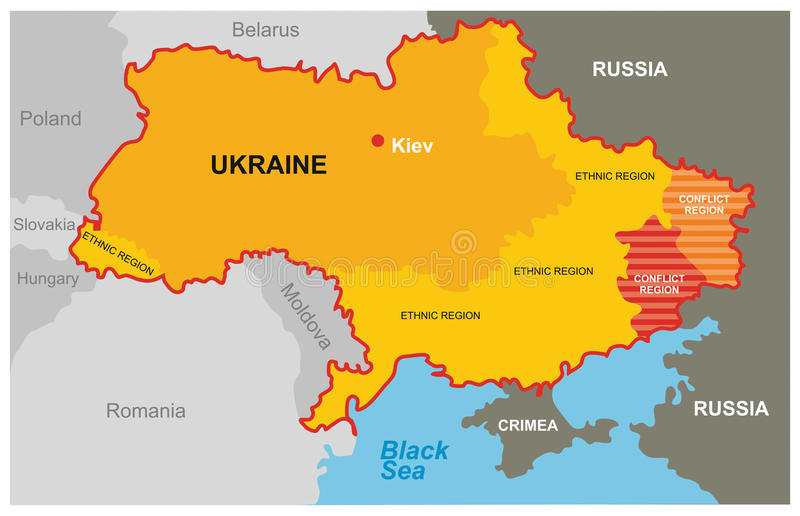
11. A real coup under US/NATO direction was underway with the strategic aim of provoking a new cold war in Europe to strike and isolate Russia and at the same time strengthen the influence and military presence of the United States in Europe. Faced with the coup d’état and the offensive against the Russians of Ukraine, the Supreme Council of the Autonomous Republic of Crimea – Russian territory that was given to Ukraine during the Soviet period in 1954 – voted to secede from Kiev and requested to be re-connected to the Russian Federation, a decision that was confirmed with 97% of the votes in favor by a popular referendum. On March 18, 2014, President Putin signed the treaty for the accession of Crimea to the Russian Federation with the status of an autonomous republic. At this point Russia was accused by NATO and the EU of illegally annexing Crimea and was subjected to sanctions. Russia responded with counter-sanctions that mainly affected the economies of the EU, including the Italian economy.
12. While in Donbass, the self-proclaimed Popular Republics of Donetsk and Lugansk, supported by Russia, resisted the Kiev offensive that caused thousands of civilian deaths. A roadmap for NATO-Ukraine technical-military cooperation was signed in December 2015, which, in fact, integrated the armed forces and the arms industry of Kiev into those of the US-led Alliance.
13. In 2019, Ukraine took an unprecedented step: it included in its constitution the commitment to officially enter NATO and, at the same time, into the European Union. On February 7, at the suggestion of President Petro Poroshenko – the oligarch enriched from the looting of state property and who was returned to the presidency – the Kiev parliament approved (with 334 votes against 35 and 16 absent) the amendments to the Constitution to implement these steps. The Preamble states “the irreversible course of Ukraine towards Euro-Atlantic integration”: Articles 85 and 116 decree that the fundamental task of parliament and the government is “to obtain the full membership of Ukraine into NATO and the EU”; Article 102 states that “the president of Ukraine is the guarantor of the strategic course of the state to obtain full membership in NATO and the EU”.
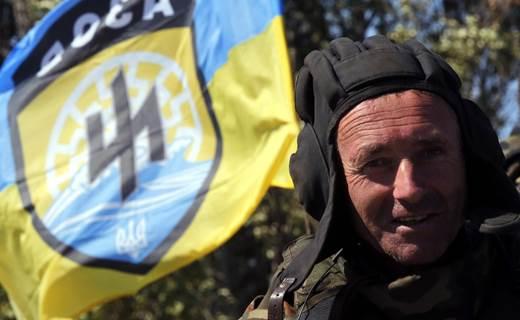
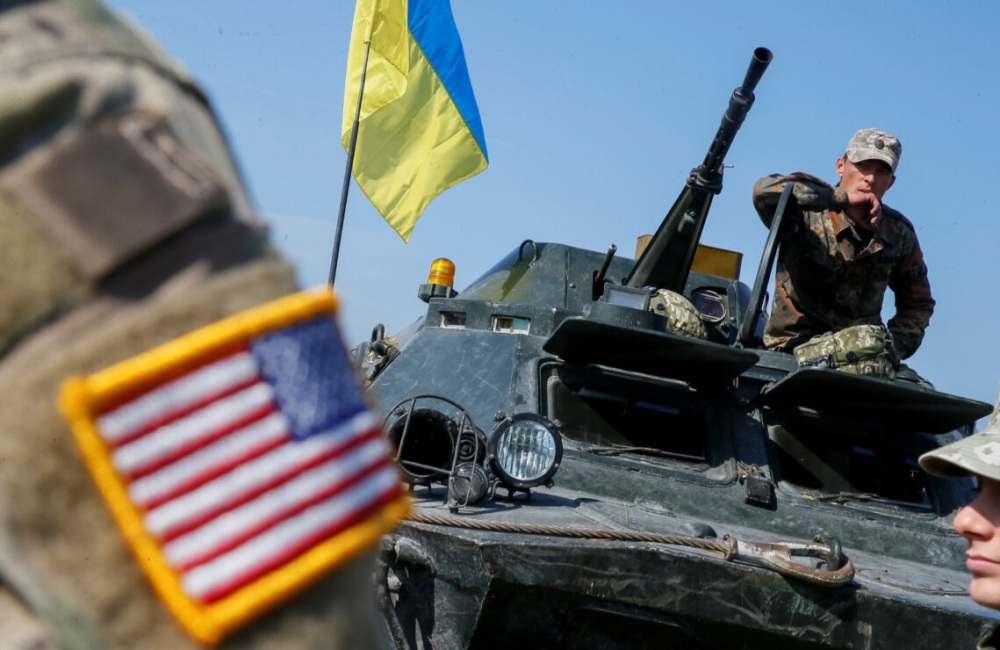
14. The inclusion in the Constitution of the commitment to officially enter NATO involves very serious consequences. Internally, it binds the future of Ukraine to this choice, excluding any alternative, and effectively makes it illegal for any party or person to oppose the choice. On the international level, it should be kept in mind that Ukraine is already in fact in NATO, of which it is a partner country. For example, the Azov battalion, whose Nazi imprint is represented by the emblem modeled on that of the SS Das Reich, has been transformed into a special operations regiment, equipped with armored vehicles and trained by US instructors of the 173th Airborne Division, transferred from Vicenza to Ukraine and flanked by others from NATO. Because Russia is accused of illegally annexing Crimea and carrying out military actions against Ukraine, if Ukraine officially joined NATO, the other 30 members of the Alliance, according to Art. 5, should “assist the attacked party by taking action deemed necessary, including the use of armed force”. In other words, they should go to war against Russia. On these dangerous implications of the modification of the Ukrainian Constitution – behind which there are certainly the long hands of US/NATO strategists – political and media silence has fallen over Europe.
We would like to ask you to consider a small donation to help our team keep working. We accept no advertising and rely only on you, our readers, to keep us digging the truth on history, global politics and international relations.
Historical research into the Nazi era rarely throws up many surprises any more. German historian Stefan Ihrig, however, is an exception to this rule. By studying long-published sources, he has uncovered the fascination that Ataturk's modern Turkey held for the German far right, which has been seriously underestimated until now and which set an example for Hitler and the National Socialists.From a right-wing viewpoint, what Ataturk had achieved was an unattainable goal for Weimar-era Germany. Using force of arms, he had managed to reverse the Treaty of Sevres, which had been forced on his country by the Entente in 1920, ...
If the focus of this article was slightly shifted, the above title could very well read, “The ‘Montenegrinization’ of Ukraine.” For we are essentially talking about analogous processes: the artificial, hostile, (geo)politically driven, outside-induced denationalization (the stripping away or systematic dilution of ethnic identity, status, characteristics, historical, spiritual or cultural attachments, etc.) of a targeted state’s peripheral area(s)/frontier, or of a population in a neighboring state that nationally/ethnically identifies or is closely nationally/ethnically tied with the targeted state’s dominant, state-defining nationality/ethnicity. The ultimate goal of the project is the creation of not just a new national/ethnic identity, but one hostile ...
Russian literature fans will recall a moving spectacle from Dostoevsky’s novel “The House of the Dead”. As political prisoners are marched off under guard to Siberia, village folk are handing them food and other provisions that they will need on their long journey. The poor villagers are probably scraping the bottom of their own barrel in order to show Christian Orthodox compassion to those unfortunates. The allegedly nasty czarist guards do nothing to thwart these poignant expressions of humanity. Chances are (and Dostoevsky strongly suggests it) that they themselves feel considerable sympathy for their pitiful charges. Now, fast forward.Albeit depicted ...
On May 18th, Britain’s Guardian headlined “West and Russia on course for war, says ex-Nato deputy commander” and reported that the former deputy commander of NATO, the former British general Sir Alexander Richard Shirreff (who was Supreme Allied Commander in Europe from 2011-2014), expressed outrage that Britain isn’t urgently preparing for war against Russia, and also reported that “He describes Russia as now the west’s most dangerous adversary and says Putin’s course can only be stopped if the west wakes up to the real possibility of war and takes urgent action. … In a chilling scenario, he predicts that Russia, in order to escape what it believes to be ...
Not satisfied with having sponsored the artificial creation of Kosovo, the United States has now decided to ram the mafia state through NATO and the European Union. A new member with such characteristics is the last thing that Europe needs right now. However, it should work wonders for the consolidation of U.S. political and military agenda in the region, not to speak of the flourishing heroin trade from Afghanistan…both of which, as Engdahl points out in this sharp analysis, pose a threat to Russia and may backfire in the end.In one of the more bizarre foreign policy announcements of a ...
Strange things happen in civil wars: During the Russian Civil War in 1919, 13,000 U.S. troops were dispatched by President Woodrow Wilson to occupy the cities of Archangelsk in the Arctic and Vladivostok on the Pacific.Half a century earlier, thousands of Imperial Russian Navy sailors and their officers flooded the cities of San Francisco and New York. But the circumstances were very different. They were there to defend the United States from foreign invasion – not to threaten it and they brilliantly succeeded in their tasks.The incredible story is well told in “Friends in Peace and War: The Russian Navy’s ...
The United States and its NATO allies launched a military intervention in 1999 that helped the Kosovo Liberation Army (KLA) win its secessionist campaign against Serbia. U.S. officials justified that intervention on the grounds that Serbian security forces were committing pervasive war crimes against the Kosovar insurgents. American supporters of the KLA also asserted that the secessionists were staunch Western‐style democrats mounting a noble resistance against Slobodan Milosevic’s corrupt, brutal regime, and that America had a moral obligation to support them. Speaking at a pro‐Kosovo march in Washington D. C., Sen. Joseph Lieberman (D-CT) stated that the “United States of America and the Kosovo ...
Because this article states so many things that might be likely to contradict what most people in Western countries have been led to believe, readers here are especially strongly encouraged to click onto any allegation which seems at all questionable, in order to get to the sources behind any given questionable allegation. And wherever a clicked-onto source turns out to be another article, one is encouraged similarly to do the same there, so that the reader will be able, in this way, to probe down to the ultimate sources, which are the sources upon which this article is finally based.After ...
“Ethnic affiliation has never been forgotten in the territories of the former Yugoslavia. It did play a certain role, and it did influence decisions even during the Tito's era of strict ‘Brotherhood and Unity’”[Várady T., “Minorities, Majorities, Law and Ethnicity: Reflections of the Yugoslav Case”, Human Rights Quarterly, Vol. 19, 1997, p. 42]People, nation and stateI agree that “in Yugoslavia, all political problems are intimately linked with the issue of nationalism”.[i] Indeed, the fixing of inner or administrative borders between Yugoslavia’s nations and nationalities became one of the main issues that forged nationalism after the Second World War onward and ...
Origins of images: Facebook, Twitter, Wikimedia, Wikipedia, Flickr, Google, Imageinjection, Public Domain & Pinterest.Read our Disclaimer/Legal Statement!Donate to Support UsWe would like to ask you to consider a small donation to help our team keep working. We accept no advertising and rely only on you, our readers, to keep us digging the truth on history, global politics and international relations.[wpedon id="4696" align="left"]Save
With American military personnel now entering service who were not even alive on 9/11, this seems an appropriate time to reexamine the events of September 11, 2001 – the opaque motives for the attacks, the equally opaque motives for the counter-offensive by the United States and its allies known as the Global War on Terror, and the domestic fall-out for Americans concerned about the erosion of their civil liberties on the homefront.Before venturing further, it’s worth noting that our appraisal is not among the most common explanations. Osama bin Laden, his lieutenants at Al-Qaeda, and the men who carried out ...
With the recent failed bid by Palestinian President Mahmoud Abbas and the Arab League at the UN security council, to try and end Israelis’ occupation of Palestinian land and to create a Palestinian State within the 1967 borders, it seems an appropriate moment to review the situation for Palestinians since 1915.What is the background to the demonization and brutalization of Palestinians? Most of all, why is the international community was assisting properly and why has it not assisted the Palestinians in protecting or restoring their inalienable rights over decades? Why is their situation so brutally upside-down almost a century after ...
Adolf Heusinger was far from being the only Nazi war criminal who would later serve at a top position in NATOOnce again this March, the Belgrade Forum for a World of Equals, the Club of Generals and Admirals of Serbia and other independent non-party associations in Serbia pay tribute to the victims of NATO’s 1999 aggression on Serbia (FRY).This aggression took lives of more than thousand defenders, military and the police and their officers, and also of thousands of civilians, including 87 children.Regrettably, the final list of the civilian casualties has not been determined as yet, although the number is ...
They came as slaves; vast human cargo transported on tall British ships bound for the Americas. They were shipped by the hundreds of thousands and included men, women, and even the youngest of children.Whenever they rebelled or even disobeyed an order, they were punished in the harshest ways. Slave owners would hang their human property by their hands and set their hands or feet on fire as one form of punishment. They were burned alive and had their heads placed on pikes in the marketplace as a warning to other captives.We don’t really need to go through all of the ...
Here we go again. In yet another Pentagon precision strike, a residential building in Achin district of Nangarhar province was hit as a crowd welcomed home a tribal leader returning from the Hajj.At least 13 civilians were turned into «collateral damage». The Pentagon of course does not «discuss the details of counter-terror operations», but it’s «currently reviewing all materials related to this strike».Nothing obviously will come out of it – adding the civilian dead to the non-stop mounting toll of Operation Enduring Freedom (Forever).Someone that actually is bound to endure his freedom in full splendor is former warlord, head of ...
The Senate Report’s revelations of CIA torture of suspects following the 9/11 bombing is only the tip of the iceberg. The Report omits the history and wider scope of violent activity in which the CIA has been and continues to be involved. CIA organized large scale death squad activities and extreme torture in Vietnam (Phoenix Project); multiple assassinations of political leaders in the Congo, Chile, Dominican Republic, Vietnam, the Middle East, Central America and elsewhere; the kidnapping and disappearance of suspected activists in Iraq and Afghanistan; massive drug-running and narco-trafficking in the “Golden Triangle” in Southeast Asia and Central America (the Iran-Contra war).The Senate Report fails to locate ...
SHARMINI PERIES, EXEC. PRODUCER, TRNN: Welcome to The Real News Network. I'm Sharmini Peries, coming to you from Baltimore. Prime Minister Benjamin Netanyahu is elating after his right-wing Likud Party secured a firm victory in the Israeli elections on March 17. It was a very close race against the Zionist Union Party, led by Isaac Herzog. Our next guest, Shir Hever, in an interview he did with us last month, predicted that Prime Minister Netanyahu would win in spite of many strikes against him at the time. So, defying election polls leading up to the election, Prime Minister Netanyahu has ...
Why Does America Keep “Losing” Its Wars?Below, we demonstrate that the U.S. keeps “losing” war after war.There are 3 potential reasons this might be happening: Is this chaos an intentional way to implement regime change and grab resources? Or is this a sign of the decline of the American empire … and we just can’t win a war anymore? Or do those in charge just not really give a damn about winning … and are they just focusing on one short-term goal after another?We’ll let you decide why you think this keeps happening. But if you don’t believe that the ...
The Great European Powers and the BalkansThe Balkans is a term connoting peoples, cultures, and states that make up a peninsula of South-East Europe between the Black Sea, the Adriatic Sea, the Aegean Sea, and the Mediterranean Sea. There are three crucial points of the Balkan’s significance from the geostrategic point of view: The territory of the Balkans is an important connection between West and Central Europe and the Near and the Middle East. Wealthy of the region’s natural resources. The region which is located betwixt the Danube River, the Black Sea and East Mediterranean is an important part of ...
Preface The European Union (the EU) is characterized by a purposeful diffusion of political authority between supranational and intergovernmental institutions. Based on the idea of shared leadership, it relies on a delicate institutional balance guarding declared equality between its ever more diverse members and managing potential and real tensions between the more and less populated states. Such tensions are present in any federal construct and have been a key concern since the ‘original six’ founded the (West) European Coal and Steel Community (the ECSC) in 1951 (the Benelux, West Germany, France, and Italy).The formal facts and official EU’s propaganda about ...