
The ignorant attitude towards the provisions of international public law relevant to the Balkan case resulted, therefore, in the break-up of the Socialist Federal Republic of Yugoslavia, the long wars in its two former federal units (Croatia and Bosnia-Herzegovina) that took about 150,000 lives, produced more than two million displaced people and left behind a region to this day, almost three decades later, it has not politically stabilized and consolidated [...]
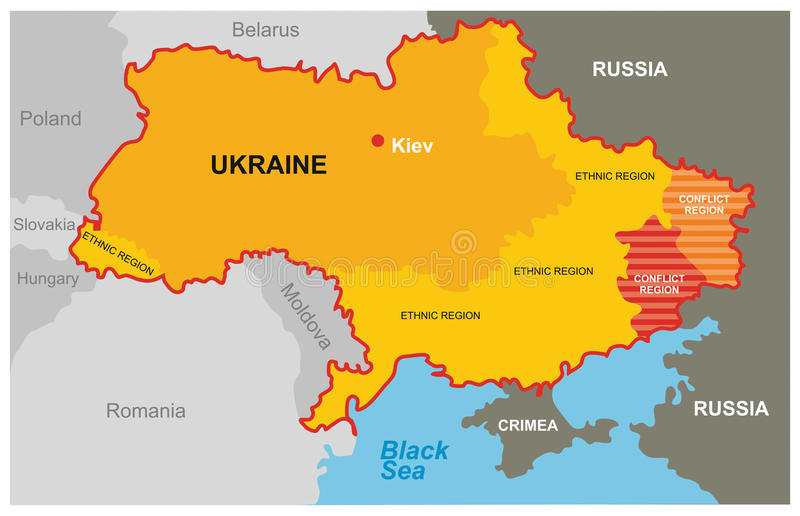
The long-term crisis in the relations between the Russian Federation and Ukraine entered its final – war phase on February 24th, 2022. The official reactions to the latest dramatic events in East Europe, which come from the Westerners, including the most important overseas Western political address, are usually dominated by two phrases: “flagrant violation of international public law” and “violation of the territorial integrity of an internationally recognized state”. The perpetrator of the acts is, of course, Russia, and, as it is claimed, the innocent victim is neighboring Ukraine. However, the same Westerners do not want to see either flagrant violations by the Kiev regime of human rights in the Donbass Region since 2014 onward or flagrant violations of international public law and territorial integrity of the internationally recognized state in the case of the Balkans (Yugoslavia) in the 1990s.
The ignorant attitude towards the provisions of international public law relevant to the Balkan case resulted, therefore, in the break-up of the Socialist Federal Republic of Yugoslavia, the long wars in its two former federal units (Croatia and Bosnia-Herzegovina) that took about 150,000 lives, produced more than two million displaced people and left behind a region to this day, almost three decades later, it has not politically stabilized and consolidated. The West demonstrated an identical attitude towards the branch of law that it is ardently calling for these days concerning Ukraine, several years after the end of those wars, when it decided to actively engage in “protecting the endangered human rights of Kosovo Albanians” and “stopping the humanitarian catastrophe to which they were exposed”, as the official Western narrative was, explaining 78 days of the barbaric campaign of bombing Serbia and Montenegro in the spring of 1999. As we know, it ended with the complete physical destruction of the country and the de facto exclusion of Kosovo from its constitutional and legal framework of the Republic of Serbia. The self-proclaimed independence of Kosovo in February 2008 was, as well as the aggression against Serbia and Montenegro in 1999 contrary to all relevant customs of international public law. However, Western countries that today are leading in condemning similar Russian acts in Ukraine, were among the first to recognize the self-proclaimed independence of Kosovo.
The policy of “double standards” in international relations and global politics used by great powers is not unknown and unrecorded in history. However, after the Cold War 1.0 (1949−1989) up today, the absence of any Western standards in the practice of generally accepted and binding rules of the international “game”, however, is one of the focal dimensions of the international relations in the world politics. The well-known dictum that sums up that insight – “The strong do what they can, and the weak suffer what they have to” – came from the pen of the famous ancient Greek historian and military leader from Athens – Thucydides (c. 460−c. 400 BC). Thus, almost two and a half millennia ago, the great historian taught that justice and rights, as its codified forms, exist in international relations and can only be among equals (inter pares). Major disagreements in this regard, which are the basis of what is happening today in Ukraine with potentially catastrophic consequences, occur when this “equal”, in this case, the great and powerful Russia, is not recognized as such and is not as such respected. Today, the Western policymakers made a crucial mistake with Russia as thinking this is the same state as it was in the 1990s during the wars of the Yugoslav succession. Unfortunately for them, today’s Russian Federation is not a Western puppet state from the Yeltzin’s period – it is today at least equal with the Western great powers including NATO as well. Those Western actors in global politics who would continue to overlook this “hard” fact concerning Russia and her role in the politics of the contemporary world, would lead the world to the dangerous edge of the abyss and push the world into it very quickly with their indolence and old policy of gangsterism in international relations.
Dr. Vladislav B. Sotirovic
Ex-University Professor
Research Fellow at Centre for Geostrategic Studies
Personal disclaimer: The author writes for this publication in a private capacity which is unrepresentative of anyone or any organization except for his own personal views. Nothing written by the author should ever be conflated with the editorial views or official positions of any other media outlet or institution.
Origins of images: Facebook, Twitter, Wikimedia, Wikipedia, Flickr, Google, Imageinjection, Public Domain & Pinterest.
Read our Disclaimer/LegalStatement!
DonatetoSupportUs
We would like to ask you to consider a small donation to help our team keep working. We accept no advertising and rely only on you, our readers, to keep us digging the truth on history, global politics, and international relations.
Abstract: This article investigates the Russian foreign politics at the region of the Balkan Peninsula after the dissolution of the Soviet Union at the time of the North Atlantic Treaty Organization’s (NATO) World Order in relation to the Pan-Slavic ideals of intra-Slavic solidarity, reciprocity and brotherhood. The particular stresses are put on four main research topics: 1. The Pan-Slavism and Russia; 2. Relations between pro-Western and pro-Orthodox approaches of the Russian national interests on Russia’s domestic political scene; 3. Different attitudes towards the Balkans in Russia; and 4. Historical ties and future perspectives between Russia and the Serbs. A research ...
On March 11, 2006, President Slobodan Milosevic died in a NATO prison. No one has been held accountable for his death. In the 12 years since the end of his lonely struggle to defend himself and his country against the false charges invented by the NATO powers, the only country to demand a public inquiry into the circumstances of his death came from Russia when Foreign Minister, Serge Lavrov, stated that Russia did not accept the Hague tribunal’s denial of responsibility and demanded that an impartial and international investigation be conducted. Instead, The NATO tribunal made its own investigation, known ...
While the numbers are not as high as Auschwitz or Treblinka, Jasenovac was notorious for its cruelty and the high number of young children who were victims.April 22 is a date that binds two groups of people who shared the same tragic fate. It is the date that commemorates the revolt of the prisoners of Jasenovac, the death camp that claimed the lives of hundreds of thousands of Jews, Serbs and Roma.While the numbers are not as high as Auschwitz or Treblinka, Jasenovac was notorious for its cruelty and the high number of young children who were victims. The saddest ...
The negotiations on Brexit are attracting a lot of attention. In particular, the possible erosion of the rights of around three million EU-27 citizens living in Britain is a major cause for concern.The European Parliament resolution adopted on 3 October states that “the withdrawal agreement must incorporate the full set of rights citizens currently enjoy, such that there is no material change in their position”.The main author of this text, Mr Guy Verhofstadt, the EP Brexit Coordinator, argues that such an approach – not to lower the level of citizens’ rights – is “the goal of democracy”. But why was ...
Both before and after Crimea left Ukraine and joined Russia in a public referendum on 16 March 2014, the Gallup Organization polled Crimeans on behalf of the U.S. Government, and found them to be extremely pro-Russian and anti-American, and also anti-Ukrainian. (Neither poll was subsequently publicized, because the results of each were the opposite of what the sponsor had wished.) Both polls were done on behalf of the U.S. Government, in order to find Crimeans’ attitudes toward the United States and toward Russia, and also toward Ukraine, not only before but also after the planned U.S. coup in Ukraine, which occurred ...
While the typical narrative of American history positions the United States as a supporter of democracy and opponent of fascism which helped to defeat the Nazis, key figures in Washington also supported dangerous dictators in Italy and Germany in their early days of power.Noam Chomsky, the renowned political philosopher, historian and scholar, examined the flip side of U.S. opposition to dictatorship in a conversation with Zain Raza, a senior editor at the independent media outlet acTVism Munich. An excerpt from the conversation was published Sept. 30 as part of acTVism Munich’s “Reexamining History” series.Speaking to Raza about Italian dictator Benito ...
A billboard at a construction site, with a photo of an Ottoman-style mosque with four minarets and the flag of Turkey, was erected recently in the center of Pristina, the capital of Kosovo. With less than 2 million people, Kosovo, which declared its independence from Serbia in 2008, is the home of over 800 mosques. Now the Islamic Community of Kosovo is building the “Central Mosque” at an estimated cost of $35- $40 million. Turkey’s Directorate of Religious Affairs (Diyanet) is financing the project.The Diyanet also financed the building of a similar mosque on a 10,000-square-meter parcel of land on ...
Author’s noteThe following article focussing on the jihadist terrorist insurgency in Macedonia was first published by antiwar.com in July 2001, barely two months before the September 11, 2001 attacks on the WTC and the Pentagon.Known and documented, since the Soviet-Afghan war, recruiting Mujahedin (“holy warriors”) to fight covert wars on Washington’s behest had become an integral part of US foreign policy. A report of the US Congress had revealed how the US administration – under advice from the National Security Council headed by Anthony Lake – had “helped turn Bosnia into a militant Islamic base” leading to the recruitment through ...
For the approximately 200 Canadian military trainers currently deployed to Ukraine, it is likely that on the first of January they would have witnessed a torch lit procession. Throughout Kiev and numerous other towns in Western Ukraine, thousands of civilians took to the streets – not to usher in the New Year – but to celebrate the 110th anniversary of the birth of a man named Stepan Bandera.This was not the first time Ukrainian nationalists marched with torches to celebrate Bandera’s birthday, but it was the first time such a spectacle was an officially sanctioned affair.On December 28, 2018, Ukrainian ...
IntroductionThe last open armed conflict in the Former Yugoslav Republic of Macedonia – FYROM (former Socialist Republic of Macedonia as one of six federal republics of the Socialist Federal Republic of Yugoslavia) in May 2015 was just an expected continuation of constant tensions between the ethnic Albanians and the Macedonian Slavs during the last quarter of a century.[i] However, these tensions are time to time transformed into the open armed conflicts of the Albanian extremists, usually coming from Kosovo, with the Macedonian security forces.The most notable conflict incidents in Macedonia after the Kosovo War in 1998−1999, when the Kosovo Albanians ...
Backdrop To The BalkansThe tiny South-Central Balkan country of the Republic of Macedonia is in dire straits right now, but most of Europe – let alone the rest of the world – has no idea that this is the case because the Mainstream Media narrative is that the state’s two-year-long political crisis was “resolved” when the patriotic VMRO-DPMNE government of Nikola Gruevski was replaced in a “constitutional/electoral coup” that followed Color Revolution and even Hybrid War provocations. The author wrote about this in a Sputnik piece at the time from May 2017 titled “The Macedonian Crisis Isn’t Over, and a ...
The Balkans has always been cursed by a recurring theme: that each entity within it can, at some point, become greater and more consuming in territory than the next neighbour. Each nation has, and in some instances continues, to nurse dreams of enlargement, pecking away at borders and assuming that few will notice.Strategies of expansion tend to have one problem: they are hard to evaluate in the way of conventional agreement, contract or conspiracy. For decades, historians of various shades would attribute to Imperial Germany a conscious, global goal of conquest, mistaking the plans of contingent invasion with actual policy.In ...
Several years ago two very distinguished American scholars wrote a book, The Israel Lobby.The book made a very understated case that the Israel Lobby has far more power over the US government and media than is good for America or Israel, as it silences constructive critics who are Israel’s friends. The two scholars were demonized by the Israel Lobby as advocating the return of the Holocaust.The Israel Lobby presented itself as just a poor little weak thing unable to stand up to all the Nazis assailing Israel. Meanwhile the US Congress was unanimously passing outrageous resolutions handed to it by ...
Because the request for its membership is a serious breach of the international law, the Constitution of UNESCO, the legally binding UN Security Council resolution 1244 (1999) and the Charter of the UN whose Article 25 says that „The Members of the UN agree to accept and carry out the decisions of the Security Council in accordance with the present Charter”.Because according to the UN Security Council resolution 1244, which reaffirms the sovereignty and territorial integrity of the Federal Republic of Yugoslavia (now Serbia), Kosovo and Metohija is an integral part of the Republic of Serbia, under the administration of ...
What is global politics? It is when a white man sends a black man 20.000 km. far away from home to kill a yellow man, while at home this white man is living on the land occupied from a red man From 1989 onward, as a consequence of the dissolution of the bipolar world in global politics, Security Studies as an academic discipline re-born again its political importance. From the very traditional point of view, it was only the national-state to be considered as the reference object of the security issue that was usually to be obtained by military power[1] and diplomatic ...
The topic to be addressed in this text is the basic misconception on the question of the Balkan Albanian ethnogenesis and national identity that was framed by extremely geo-politically coloured German-based “Illyrian” theory of the Albanian ethnic and cultural origin. This (quasi)theory, unfortunately, has very deep and negative regional political-security consequences. The implementation of the “Illyrian” theory of the Albanian ethnogenesis was accepted firstly by the Rilindja, (the Renaissance) – the Albanian nationalistic and chauvinistic political movement in 1878–1913 for the sake to create the ethnically pure Greater Albania as a national state of all Balkan Albanians composed by self-interpreted ...
The Great European Powers and the BalkansThe Balkans is a term connoting peoples, cultures, and states that make up a peninsula of South-East Europe between the Black Sea, the Adriatic Sea, the Aegean Sea, and the Mediterranean Sea. There are three crucial points of the Balkan’s significance from the geostrategic point of view: The territory of the Balkans is an important connection between West and Central Europe and the Near and the Middle East. Wealthy of the region’s natural resources. The region which is located betwixt the Danube River, the Black Sea and East Mediterranean is an important part of ...
President Obama is still considering arming Ukraine in case the latest ceasefire is breached and the conflict escalates; but political analyst Stephen Lendman told Sputnik in an exclusive interview that the US leader is lying, and that the US has been supplying arms to Kiev from the very start of the military operation.The ceasefire between Kiev forces and independence supporters of Donetsk and Luhansk is generally holding, shelling in Donbas has stopped as the truce came in force on midnight, a spokesperson at the Kiev special operations headquarters said Sunday. But a day earlier Ukrainian President Petro Poroshenko and US ...
Part IEthnolinguistic SerbdomSerbia’s Prince Miloš’s schemes to solve the „Serbian Question“ were based exclusively on the historical (state) rights of the Serbs. However, during his reign, a new and cardinal dimension on an understanding of Serbian national identity and, therefore, the idea of the creation of the national state of the Serbs was introduced into Serbian political thought by Vuk Stefanović Karadžić (1787–1864) who framed the concept of a linguistic Serbdom.In his brief essay “Срби сви и свуда” (“Serbs All and Everywhere”),[1] V. S. Karadžić established the linguistic criteria for determining Serbian national self-identity and reformulation of the whole concept ...
"In fourteen hundred and ninety-two, Columbus sailed the ocean blue…."Today, Christopher Columbus is celebrated as a mythical hero by some – complete with songs, poems, and fictional tales about his great adventure across the Atlantic to explore the majestic land that would eventually be known as the Americas. There are fifty-four communities named after the explorer in the United States, including the District of Columbia. “Hail, Columbia” was the United States’ unofficial national anthem until 1931. A federal holiday, “Columbus Day,” is celebrated every second Monday in October.Despite all of this, historians have begun to tear down the Columbus myth: ...
The magazine is covering the research gaps uncovered by global Western hoax mainstream media platforms and academic teaching & research institutions.
This is an alternative information & academic research digest platform with the purpose to offer an alternative “another side of the truth”.
The magazine is independent, private, and free of any influence by any institution, organization, government, or pressure group. URL: www.global-politics.eu