
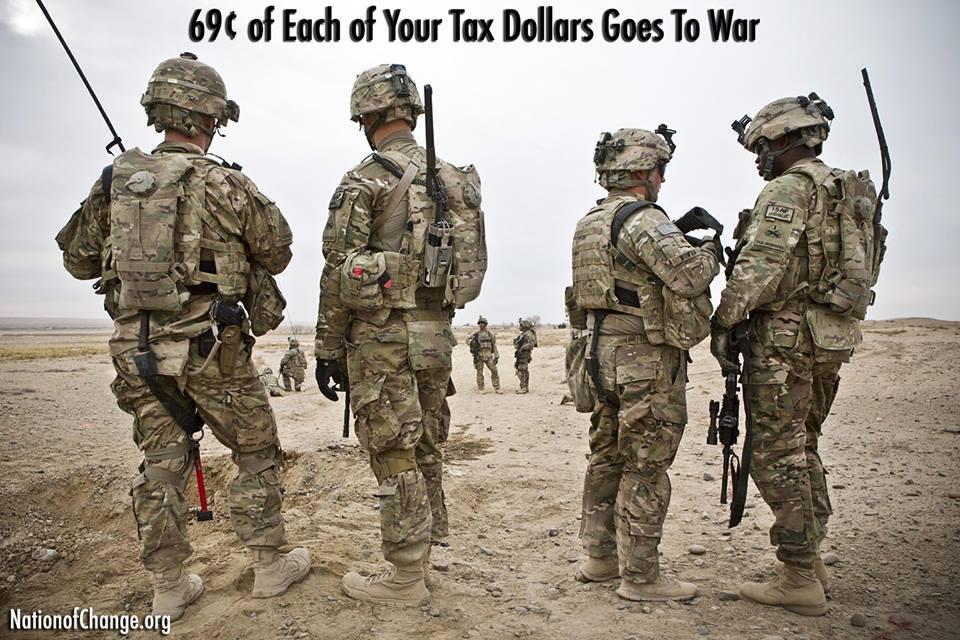
Despite having the biggest military budget in the world, five times larger than the next six countries, the largest number of military bases – over 180 – in the world and the most expensive military industrial complex, the US has failed to win a single war in the 21st century [...]
Despite having the biggest military budget in the world, five times larger than the next six countries, the largest number of military bases – over 180 – in the world and the most expensive military industrial complex, the US has failed to win a single war in the 21st century.
In this paper we will enumerate the wars and proceed to analyze why, despite the powerful material basis for wars, it has led to failures.
The Lost Wars
The US has been engaged in multiple wars and coups since the beginning of the 21st century.These include Afghanistan, Iraq, Libya, Syria, Somalia, Palestine, Venezuela and the Ukraine. Besides Washington’s secret intelligence agencies have financed five surrogate terrorist groups in Pakistan, China, Russia, Serbia and Nicaragua.
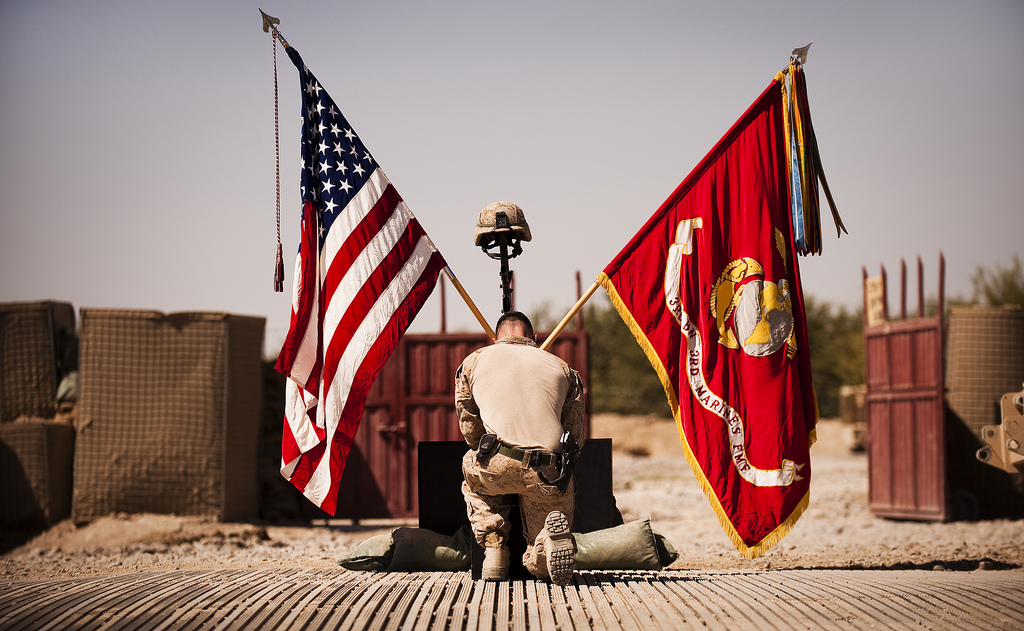
The US has invaded countries, declared victories and subsequently faced resistance and prolonged warfare which required a large US military presence to merely protect garrison outposts.
The US has suffered hundreds of thousands of casualties – dead, maimed and deranged soldiers. The more the Pentagon spends, the greater the losses and subsequent retreats.
The more numerous the vassal regimes, the greater the corruption and incompetence flourishes.
Every regime subject to US tutelage has failed to accomplish the objectives designed by its US military advisers.
The more spent on recruiting mercenary armies the greater the rate of defection and the transfer of arms to US adversaries.
Success in Starting Wars and Failures in Finishing Them
The US invaded Afghanistan, captured the capital (Kabul) defeated the standing army …and then spent the next two decades engaged in losingirregularwarfare.
The initial victories laid the groundwork for future defeats. Bombings drove millions of peasants and farmers, shopkeepers and artisans into the local militia. The invaders were defeated by the forces of nationalism and religion linked to families and communities.The indigenous insurgents overcame arms and dollars in many of the villages, towns and provinces.
Similar outcomes were repeated in Iraq and Libya. The US invaded, defeated the standing armies, occupied the capital and imposed its clients—- which set the terrain for long-term, large-scale warfare by local insurgent armies.
The more frequent the western bombings, the greater the opposition forcing theretreat of the proxy army.
Somalia has been bombed frequently. Special Forces have recruited, trained, and armed thelocal puppet soldiers, sustained by mercenary African armies but they have remained holed up in the capital city, Mogadishu, surrounded and attacked by poorly armed but highly motivated and disciplined Islamic insurgents.
Syria is targeted by a US financed and armed mercenary army.In the beginning they advanced, uprooted millions, destroyed cities and homes and seized territory.All of which impressed their US – EU warlords.Once the Syrian army united the populace, with their Russian, Lebanese (Hezbollah) and Iranian allies, Damascus routed the mercenaries.
After the better part of a decade the separatist Kurds, alongside the Islamic terrorists and other western surrogates retreated, and made a last stand along the northern borders–the remaining bastions of Western surrogates.
The Ukraine coup of 2014 was financed and directed by the US and EU. They seized the capital (Kiev) but failed to conquer the Eastern Ukraine and Crimea.Corruption among the US ruling kleptocrats devastated the country – over three million fled abroad to Poland, Russia and elsewhere in search of a livelihood.The war continues, the corrupt US clients are discredited and will suffer electoral defeat unless they rig the vote .
Surrogate uprisings in Venezuela and Nicaragua were bankrolled by the US National Endowment for Democracy (NED). They ruined economies but lost the street wars.
Conclusion
Wars are not won by arms alone.In fact, heavy bombing and extended military occupations ensure prolonged popular resistance, ultimate retreats and defeats.
The US major and minor wars of the 21st century have failed to incorporate targeted countries into the empire.
Imperial occupations are not military victories.They merely change the nature of the war, the protagonists of resistance, the scope and depth of the national struggle.
The US has been successful in defeating standing armies as was the case in Libya, Iraq, Afghanistan, Somalia, and the Ukraine.However, the conquest was limited in time and space.New armed resistance movements led by former officers, religious activists and grass roots activists took charge…
The imperial wars slaughtered millions, savaged traditional family, workplace and neighborhood relations and set in motion a new constellation of anti-imperialist leaders and militia fighters.
The imperial forces beheaded established leaders and decimated their followers.They raided and pillaged ancient treasures.The resistance followed by recruiting thousands of uprooted volunteers who served as human bombs, challenging missiles and drones.
The US imperial forces lack the ties to the occupied land and people. They are ‘aliens’ serving time; they seek to survive, secure promotions and exit with a bonus and an honorable discharge.
In contrast, the resistance fighters are there for the duration. As they advance, they target and demolish the imperial surrogates and mercenaries.They expose the corrupt client rulers who deny the subject people the elementary conditions of existence – employment, potable water, electricity etc.
The imperial vassals are not present at weddings, sacred holidays or funerals, unlike the resistance fighters.The presence of the latter signals a pledge of loyalty unto death.The resistance circulates freely in cities, towns and villages with the protection of the local people; and by night they rule enemy terrain, under cover of their own people, who share intelligence and logistics.
Inspiration, solidarity and light arms are more than a match for the drones, missiles and helicopter gunships.
Even the mercenary soldiers, trained by the Special Forces, defect from and betray their imperial masters.Temporary imperial advances serve only to allow the resistance forces to regroup and counter-attack.They view surrender as a betrayal of their traditional way of life, submission to the boot of western occupation forces and their corrupt officials.
Afghanistan is a prime example of an imperial ‘lost war’.After two decades of warfare and one trillion dollars in military spending, tens of thousands of casualties, the Taliban controls most of the countryside and towns; enters and takes over provincial capitals and bombs Kabul.They will take full control the day after the US departs.
The US military defeats are products of a fatal flaw:imperial planners cannot successfully replace indigenous people with colonial rulers and their local look-alikes.
Wars are not won by high tech weapons directed by absentee officials divorced from the people: they do not share their sense of peace and justice.
Exploited people informed by a spirit of communal resistance and self-sacrifice have demonstrated greater cohesion then rotating soldiers eager to return home andmercenary soldiers with dollar signs in their eyes.
The lessons of lost wars have not been learned by those who preach the power of the military–industrial complex, which makes, sells and profits from weapons but lack the mass of humanity with lesser arms but with great conviction who have demonstrated their capacity to defeat imperial armies.
The Stars and Stripes fly in Washington but remain folded in Embassy offices in Kabul, Tripoli, Damascus and in other lost battlegrounds.

We would like to ask you to consider a small donation to help our team keep working. We accept no advertising and rely only on you, our readers, to keep us digging the truth on history, global politics and international relations.
As the recent PBS documentary on the American War in Vietnam acknowledged, few American officials ever believed that the United States could win the war, neither those advising Johnson as he committed hundreds of thousands of U.S. troops, nor those advising Nixon as he escalated a brutal aerial bombardment that had already killed millions of people.As conversations tape-recorded in the White House reveal, and as other writers have documented, the reasons for wading into the Big Muddy, as Pete Seeger satirized it, and then pushing on regardless, all came down to “credibility”: the domestic political credibility of the politicians involved ...
Paul Atwood, a Senior Lecturer in American Studies at the University of Massachusetts Boston, provides a concise summary of the history that informs North Korea’s “relations with the United States” and “drives its determination never to submit to any American diktat”.Excerpts from Atwood’s summary are here used as a framework, with other sources where indicated.Atwood notes it is an American “myth” that the “North Korean Army suddenly attacked without warning, overwhelming surprised ROK defenders.” In fact, the North/South border “had been progressively militarized and there had been numerous cross border incursions by both sides going back to 1949.”Part of what ...
The American Israel Public Affairs Committee (AIPAC) concluded its annual conference late last month, triggering the usual debate in various alternative media outlets. Why does so much U.S. taxpayer money go to a small and not particularly useful client state that has a vibrant European-level economy and is already a regional military colossus?Those who support the cash flow argue that Israel is threatened, most notably by Iran; they claim the assistance, which has been largely but not completely used to buy American-made weapons, is required to maintain a qualitative edge over the country's potential enemies. Those who oppose the aid ...
Here it comes again. As the enemies of peace continue to pressure a new US President into deeper war commitments overseas, and as Washington’s Deep State works relentlessly opposing Russian moves in Syria at every turn, the war drums have started again – beating harder than ever now, clamouring for a new US-led attack on Syria. This morning we saw the familiar theme emerge, and just in time to provide a convenient backdrop to this week’s Brussels’ ‘Peace Talks’ and conference on “Syria’s Future”.The US-led ‘Coalition’ prepares to make its end-run into Syria to ‘Retake Raqqa,’ and impose its Safe Zones in order ...
The worst mistake in U.S. history was the conversion after World War II of the U.S. government from a constitutional, limited-government republic to a national-security state. Nothing has done more to warp and distort the conscience, principles, and values of the American people, including those who serve in the U.S. military.A good example of how the national-security state has adversely affected the thinking of U.S. soldiers was reflected in an op-ed entitled “What We’re Fighting For” that appeared in the February 10, 2017, issue of the New York Times. Authored by an Iraq War veteran named Phil Klay, the article ...
In one of the more bizarre foreign policy announcements of a bizarre Obama Administration, US Secretary of State Hillary Clinton has announced that Washington will “help” Kosovo to join NATO as well as the European Union. She made the pledge after a recent Washington meeting with Kosovan Prime Minister Hashim Thaci in Washington where she praised the progress of the Thaci government in its progress in “European integration and economic development.”1Her announcement no doubt caused serious gas pains among government and military officials in the various capitals of European NATO. Few people appreciate just how mad Clinton’s plan to push ...
Can the world wake up?On September 19, 2000, going on 16 years ago, Ambrose Evans-Pritchard of the London Telegraph reported:Declassified American government documents show that the US intelligence community ran a campaign in the Fifties and Sixties to build momentum for a united Europe. It funded and directed the European federalist movement.The documents confirm suspicions voiced at the time that America was working aggressively behind the scenes to push Britain into a European state. One memorandum, dated July 26, 1950, gives instructions for a campaign to promote a fully fledged European parliament. It is signed by Gen. William J. Donovan, ...
PRISTINA, Kosovo — It was the fall of 2000, just over a year after the end of the war in Kosovo, when two NATO military intelligence officers produced the first known report on local organized crime, painting the former political leader of the Kosovo Liberation Army (KLA), Hashim Thaci, as having “established influence on local criminal organizations, which control [a] large part of Kosovo.”The report, the existence of which has not been previously reported, was widely distributed among all NATO countries, according to former NATO sources interviewed by GlobalPost. And year after year as the nascent democracy of Kosovo struggled ...
Five days before the celebration of the 71th anniversary of Nazi Germany’s capitulation to the Soviet and allied troops in the WWII, the new NATO Supreme Commander in Europe Curtis Scaparrotti announced that he came to beat the drums of war again. Ignoring the historic facts and legitimate Russian interests in its around, in his first speech after assuming office he condemned alleged “Russian aggressive behavior that challenges international norms” and called the bloc members to “fight tonight if deterrence fails.”This commonplace declaration fairly correlates with the military and media strategy the Western ruling class adopted decades ago. Even putting aside the ...
Hypocrisy may be the only consistent guiding principle of US foreign policy. Here's a prime example of the "do as we say, not as we do" that is the core of how Washington does business overseas: In the same week that the the US Justice Department demanded that the Russian-backed RT America network register as a foreign propaganda entity or face arrest, the US State Department's Bureau of Democracy, Human Rights and Labor (DNL) has announced that it is launching a program to massively interfere in NATO-partner Hungary's internal media.So the US Justice Department is cracking down on RT America for what ...
Michigan-based filmmaker Michael Moore makes the connection between Kosovo and the Columbine shooting in his Academy Award-winning documentary Bowling for Columbine (2002). Moore puts Kosovo in the context of a broader U.S. foreign policy agenda and a domestic culture of violence. Moore asks: “Are we a nation of gun nuts or are we just nuts?”In the first scene, Moore walks into the North Country Bank in Michigan to open an account. He saw an ad in the newspaper that the bank would give out free guns to those who open accounts there. Moore walks into the bank and tells the ...
During the 1990s, the United States planned to break up Yugoslavia and build America’s largest military base in Kosovo (Camp Bondsteel) a strategic location giving the US access to the oil-rich Caspian Sea, which would also threaten Russia’s defence capabilities. In order to achieve their goals, the CIA imported fighters from Afghanistan who went on a rampage of killing and destruction. A mass media disinformation campaign blamed a proportion of the crimes of the CIA-backed fighters on their victims – mostly Serbs.Between 1992 and 1995, CIA terrorists murdered 2383 Serbs in Srebrenica. When the Bosnian Serb army finally arrived in ...
Introduction: The Missing LinkWhy did the US support the separatist and terrorist so-called Kosovo Liberation Army (KLA, or UCK in Shqip), which sought to create an ethnically pure Albanian Kosovo based on ethnicity? Why did the US sponsor a criminal and illegal separatist movement that sought to ethnically cleanse non-Albanians and create an independent state of Kosova? Why was the US supporting and sponsoring the re-establishment of a fascist-Nazi Greater Albania that Adolf Hitler and Benito Mussolini had initially created?When did the US begin to play a role in Kosovo? Did the US role in Kosovo begin with the arming ...
In years before 2014, the Afghan think tanks would opine that the US may wind down Afghanistan’s conflict through the end of this year, inferring that the goal of founding the nine large military bases across the country is almost accomplished. Many would delightfully say that Afghanistan is phasing into a new chapter with the flames of war quelled as the US government insisted on troop withdrawal.Entrenching military headquarters in strangers’ territories has no excuse or legal ground under any circumstances. The Afghan nation would cast aside objection to this permanent military foothold thanks in most part to the bitter ...
There is a reason that most countries polled in December 2013 by Gallup called the United States the greatest threat to peace in the world, and why Pew found that viewpoint increased in 2017.But it is a reason that eludes that strain of U.S. academia that first defines war as something that nations and groups other than the United States do, and then concludes that war has nearly vanished from the earth.Since World War II, during a supposed golden age of peace, the United States military has killed or helped kill some 20 million people, overthrown at least 36 governments, ...
To understand Trump’s policy reversal in recognizing Jerusalem as the capital of Israel requires understanding the character of Zionism and Jerusalem as part of a “messianic” “Greater Israel”, as well as the historical relationship between this ancient pre-Israelite city and the many peoples of the region.Donald Trump was elected on the wave of a populist backlash. Like his predecessor, Barack Obama, he promised to roll back the USA’s global intervention, which does, after all, have more in common with Wilsonian Democratic internationalism than traditional Republican—Robert Taft—“America First” non-intervention. Indeed, Trump’s slogan of “America First” got the oligarchic and liberal cabals ...
The words “possible criminal actions” by CIA employees are used in the report.The terms unethical and immoral are mentioned. The criminality of those who ordered these actions at the highest levels of government, however, is not acknowledged.The actions directed against alleged jihadists are categorized as ineffective in the process of revealing intelligence. This in itself is a red herring. The objective of torture was not to reveal intelligence.What of course is not acknowledged is that the alleged terrorists who were tortured were framed by the CIA.Known and documented the Al Qaeda network is a creation of US intelligence.The jihadists are ...
The U.S. public loves fascists; they elect them, constantly. Donald Trump, who “says he would raise the minimum wage and stop the endless efforts at regime change,” is called a fascist by some. But Hillary Clinton “is happy to bomb Libya or Syria or any other country,” and played a major role in mass Black incarceration. Barack Obama is the war-maker and deporter-in-chief. “All of the major party candidates fit the F word description in some way.”“No one comes into office with any intention of undoing America’s leadership as the world’s worst jailer.”Donald Trump is the ill spoken, boorish, graceless ...
Many of the world’s most repressive dictators have been friends of America. Tyrants, torturers, killers, and sundry dictators and corrupt puppet-presidents have been aided, supported, and rewarded handsomely for their loyalty to US interests. Traditional dictators seize control through force, while constitutional dictators hold office through voting fraud or severely restricted elections, and are frequently puppets and apologists for the military juntas which control the ballot boxes. In any case, none have been democratically elected by the majority of their people in fair and open elections.They are democratic America’s undemocratic allies. They may rise to power through bloody ClA-backed coups ...
Andrew Bacevich has written a series of books on the topic of U.S. imperialism and U.S. military power. His latest work, America’s War for the Greater Middle East [the GME War] is the latest in this series and as with the previous works is clearly written and logically presented. It covers more narrowly than the previous works the military aspects of U.S. military endeavours in the Middle East (greater – as in including East Africa and Afghanistan et al). Generally he succeeds well and this work is a good ‘primer’ for anyone interested in a quick historical overview of U.S. ...