
Americans have Forgotten What We did to North Korea
But while today's North Korean anti-American rhetoric is so often filled with obvious distortions and lies and thus easy to dismiss, this piece of anti-American rhetoric is chillingly real. That makes the cable jarring to read even beyond the sheer awful suffering it describes. It was a moment when the official North Korean characterization of America, one that we today rightly consider propagandistic nonsense, had a lot of truth to it [...]
Perhaps no country on Earth is more misunderstood by Americans than North Korea. Though the country’s leaders are typically portrayed as buffoonish, even silly, in fact they are deadly serious in their cruelty and skill at retaining power. Though the country is seen as Soviet-style communist, in fact it is better understood as a holdover of Japanese fascism.
And there is another misconception, one that Americans might not want to hear but that is important for understanding the hermit kingdom: Yes, much of its anti-Americanism is cynically manufactured as a propaganda tool, and yes, it is often based on lies. But no, it is not all lies. The US did in fact do something terrible, even evil to North Korea, and while that act does not explain, much less forgive, North Korea’s many abuses since, it is not totally irrelevant either.
That act was this: In the early 1950s, during the Korean War, the US dropped more bombs on North Korea than it had dropped in the entire Pacific theater during World War II. This carpet bombing, which included 32,000 tons of napalm, often deliberately targeted civilian as well as military targets, devastating the country far beyond what was necessary to fight the war. Whole cities were destroyed, with many thousands of innocent civilians killed and many more left homeless and hungry.
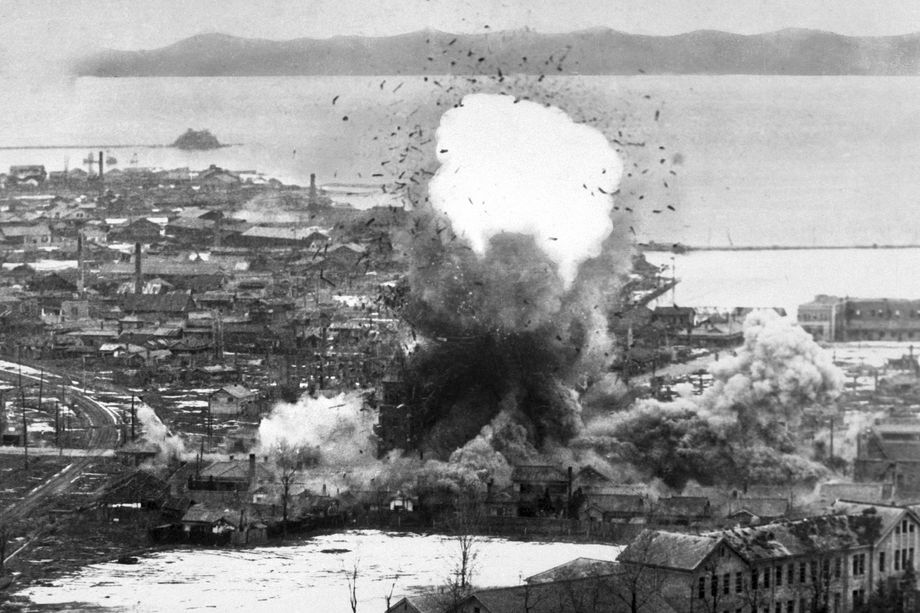
A US B-26 bomber drops a bomb on the North Korean city of Wonsan in 1951. Interim Archives/Getty Images
For Americans, the journalist Blaine Harden has written, this bombing was “perhaps the most forgotten part of a forgotten war,” even though it was almost certainly “a major war crime.” Yet it shows that North Korea’s hatred of America “is not all manufactured,” he wrote. “It is rooted in a fact-based narrative, one that North Korea obsessively remembers and the United States blithely forgets.”
And the US, as Harden recounted in a column earlier this year, knew exactly what it was doing:
“Over a period of three years or so, we killed off — what — 20 percent of the population,” Air Force Gen. Curtis LeMay, head of the Strategic Air Command during the Korean War, told the Office of Air Force History in 1984. Dean Rusk, a supporter of the war and later secretary of state, said the United States bombed “everything that moved in North Korea, every brick standing on top of another.” After running low on urban targets, U.S. bombers destroyed hydroelectric and irrigation dams in the later stages of the war, flooding farmland and destroying crops.
Historians dispute just how important this bombing really was in making North Korea the country that it is today; some say it was formative in shaping the young nation’s history, others that North Korea was already on its way to becoming the hermit kingdom and that its leaders merely exploited the bombing to get there.
As the North Korea scholar B. R. Myers points out in The Cleanest Race, perhaps the definitive study of the North Korean worldview, anti-American propaganda was already in full swing before the bombing began. Since then, it has not focused as much on the American bombing (which Myers, like most scholars, considers a war crime) as you might expect:
As might be expected, the Korean War occupies a central place in anti-American propaganda, but the [propaganda] dwells less on the US Air Force’s extensive bombing campaign (which is hard to reconcile with the myth of the protective leader) than on village massacres and other isolated outrages.
Yet even if the bombing did not cause North Korea’s obsessive hatred of America and Americans, it did help to focus it. The effects of the bombing were felt nearly universally, the suffering it caused among the first shared experiences for North Koreans. Unlike the propaganda, which only recounted supposed American crimes, here was a real American crime that everyone could see for themselves, and indeed had likely affected them personally. How could it not be formative?
American bombing, to be clear, did not transform North Korea from a nice country into a bad one; the seeds of the country’s generations-long fascist rule had already taken root by the early 1950s, and indeed it is worth remembering that the North had launched the war in the first place. But that bombing did end up abetting, however unintentionally, the Kim family project of creating a paranoid, volatile, and oppressive bunker state.
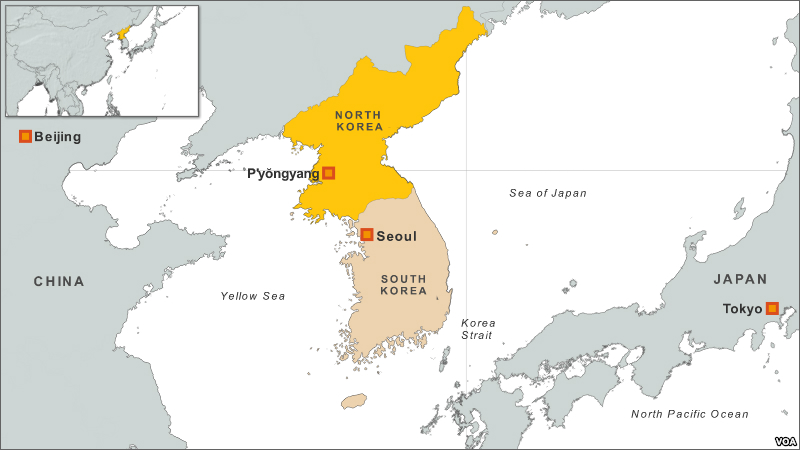
You can see this, for example, in Pyongyang, the North Korean capital, which was all but razed by American bombing. As Myers points out, “The destruction of the original city by American bombs enabled the regime to re-design it from scratch as a grand and enduring work of propaganda in its own right.”
The North Korean capital of Pyongyang. At bottom, the city in 1953, after an estimated 75 percent of it was destroyed by US bombing. At top, the city in 1964 after reconstruction. (Keystone-France/Gamma-Keystone via Getty)
The symbolism of this is haunting: The US, in its ruthless destruction, made it easier for the North Korean leaders to rebuild their shattered city into a physical embodiment of Orwellian dystopia. The blame for the North Korean project still rests fully with those leaders, who knew exactly what they were doing. But it is a reminder that the United States once lent those leaders a helping hand in converting their nation into a fascist holdover.
In the rare moments when we do talk about the US bombing of North Korea, it can be easy to get lost in debating its long-term political consequences. But the bombing primarily mattered at the time, and still matters today, not because it was politically counterproductive, but because it was horrific and unjust.
You can glimpse both the humanitarian and political consequences in an alarmed diplomatic cable that North Korea’s foreign minister sent to the United Nations, which was nominally leading the war effort, in January 1951. Scholar Adam Cathcart dug up the cable a few days ago, which is what got me thinking again about the bombing that America has largely forgotten. Here are some excerpts from the cable, haunting to read today:
ON JANUARY 3 AT 10:30 AM, AN ARMADE OF 82 FLYING FORTRESSES LOOSED THEIR DEATH-DEALING LOAD ON THE CITY OF PYONGYANG. …
HUNDREDS OF TONS OF BOMBS AND INCENDIARY COMPOUND WERE SIMULTANEOUSLY DROPPED THROUGHOUT THE CITY, CAUSING ANNIHILATING FIRES. IN ORDER TO PREVENT THE EXTINCTION OF THESE FIRES, THE TRANS-ATLANTIC BARBARIANS BOMBED THE CITY WITH DELAYED-ACTION HIGH-EXPLOSIVE BOMBS WHICH EXPLODED AT INTERVALS THROUGHOUT FOR A WHOLE DAY, MAKING IT IMPOSSIBLE FOR THE PEOPLE TO COME OUT ONTO THE STREETS. THE ENTIRE CITY HAS NOW BEEN BURNING, ENVELOPED IN FLAMES, FOR TWO DAYS. BY THE SECOND DAY 7,812 CIVILIANS’ HOUSES HAD BEEN BURNT DOWN. THE AMERICANS WERE WELL AWARE THAT THERE WERE NO MILITARY OBJECTIVES LEFT IN PYONGYANG. …
THE NUMBER OF INHABITANTS OF PYONGYANG KILLED BY BOMB SPLINTERS, BURNT ALIVE AND SUFFOCATED BY SMOKE IS INCALCULABLE, SINCE NO COMPUTATION IS POSSIBLE. SOME FIFTY THOUSAND INHABITANTS REMAIN IN THE CITY, WHICH BEFORE THE WAR HAD A POPULATION OF FIVE HUNDRED THOUSAND.
Even in the English translation from the original Russian, the seeds of North Korea’s now famously vituperative and conspiratorial rhetoric are easy to see; there is an odd reference to “Wall Street bosses” supposedly driving the war.
But while today’s North Korean anti-American rhetoric is so often filled with obvious distortions and lies and thus easy to dismiss, this piece of anti-American rhetoric is chillingly real. That makes the cable jarring to read even beyond the sheer awful suffering it describes. It was a moment when the official North Korean characterization of America, one that we today rightly consider propagandistic nonsense, had a lot of truth to it.
We would like to ask you to consider a small donation to help our team keep working. We accept no advertising and rely only on you, our readers, to keep us digging the truth on history, global politics and international relations.
Since World War II most of the world’s conflicts have revolved around struggles for independence against Western and Japanese colonial/imperial regimes.Following formal independence, a new type of imperial domination was imposed – neo-colonial regimes, in which the US and its European allies imposed vassal rulers acting as proxies for economic exploitation. With the rise of US unipolar global domination, following the demise of the USSR (1990), the West established hegemony over the East European states. Some were subject to fragmentation and sub-divided into new NATO dominated statelets.The quest for a unipolar empire set in motion a series of wars and ...
There is no significant anti-war movement in America because there’s no war to protest. Let me explain. In February 2003, millions of people took to the streets around the world to protest America’s march to war against Iraq. That mass movement failed. The administration of George W. Bush and Dick Cheney had a radical plan for reshaping the Middle East and no protesters, no matter how principled or sensible or determined, were going to stop them in their march of folly. The Iraq War soon joined the Afghan invasion of 2001 as a quagmire and disaster, yet the antiwar movement ...
My work documenting how the law was lost began about a quarter of a century ago. A close friend and distinguished attorney, Dean Booth, first brought to my attention the erosion of the legal principles on which rests the rule of law in the United States. My columns on the subject got the attention of an educational institution that invited me to give a lecture on the subject. Subsequently, I was invited to give a lecture on “How The Law Was Lost” at the Benjamin Cardozo School of Law in New York City.The work coalesced into a book, The Tyranny Of ...
Preface The European Union (the EU) is characterized by a purposeful diffusion of political authority between supranational and intergovernmental institutions. Based on the idea of shared leadership, it relies on a delicate institutional balance guarding declared equality between its ever more diverse members and managing potential and real tensions between the more and less populated states. Such tensions are present in any federal construct and have been a key concern since the ‘original six’ founded the (West) European Coal and Steel Community (the ECSC) in 1951 (the Benelux, West Germany, France, and Italy).The formal facts and official EU’s propaganda about ...
With a critical public increasingly turning to social media to scrutinize the claims of the mainstream as well as the credibility of the assertions made by the various NGOs and government-funded human rights organisations, it’s arguably becoming more difficult for the corporate press to pass their propaganda off as legitimate news.This is particularly the case during periods when the establishment pushes for military conflicts. One salutary lesson from the Iraq debacle, is that the public appear not to be so readily fooled. Or are they?It’s a measure of the extent to which the mass media barely stray from their paymasters ...
Origins of images: Facebook, Twitter, Wikimedia, Wikipedia, Flickr, Google, Imageinjection, Public Domain & Pinterest.Read our Disclaimer/Legal Statement!Donate to Support UsWe would like to ask you to consider a small donation to help our team keep working. We accept no advertising and rely only on you, our readers, to keep us digging the truth on history, global politics and international relations.[wpedon id="4696" align="left"]SaveSave
If you wanted to identify, with confidence, the very worst president in American history, how would you go about it? One approach would be to consult the various academic polls on presidential rankings that have been conducted from time to time since Harvard’s Arthur M. Schlesinger Sr. pioneered this particular survey scholarship in 1948. Bad idea.Most of those surveys identify Warren G. Harding of Ohio as the worst ever. This is ridiculous. Harding presided over very robust economic times. Not only that, but he inherited a devastating economic recession when he was elected in 1920 and quickly turned bad times ...
With the recent failed bid by Palestinian President Mahmoud Abbas and the Arab League at the UN security council, to try and end Israelis’ occupation of Palestinian land and to create a Palestinian State within the 1967 borders, it seems an appropriate moment to review the situation for Palestinians since 1915.What is the background to the demonization and brutalization of Palestinians? Most of all, why is the international community was assisting properly and why has it not assisted the Palestinians in protecting or restoring their inalienable rights over decades? Why is their situation so brutally upside-down almost a century after ...
A newly-released Hilary Clinton email confirmed that the Obama administration has deliberately provoked the civil war in Syria as the “best way to help Israel.”In an indication of her murderous and psychopathic nature, Clinton also wrote that it was the “right thing” to personally threaten Bashar Assad’s family with death.In the email, released by Wikileaks, then Secretary of State Clinton says that the “best way to help Israel” is to “use force” in Syria to overthrow the government.The document was one of many unclassified by the US Department of State under case number F-2014-20439, Doc No. C05794498, following the uproar ...
Though intelligence documents from the 1973 coup period have been declassified since 1999, the CIA continues to censor them.The CIA continues to withhold information on its involvement in the Sept. 11, 1973 coup that led to the death of President Salvador Allende in Chile, followed by adeadly dictatorship, according to documents posted Friday by the National Security Archive.In the list of published documents, the section regarding Chile is censored. The President’s Daily Briefs, the intelligence reports given daily to the U.S. president, in particular former President Richard Nixon days before Allende’s death, were among those censored.According to Peter Kornbluh, director ...
“Rooted in a story of generosity and partnership, Thanksgiving offers an opportunity for us to express our gratitude for the gifts we have and to show our appreciation for all we hold dear….”So begins the official Presidential Proclamation of Thanksgiving Day, 2015, signed and issued by Barack Obama.While it hearkens back to earlier Thanksgivings in St. Augustine in 1565 and Plymouth in 1621, this is an essentially imperial document that gives only vague lip service to giving “thanks for the many blessings bestowed upon us.” When his proclamation gets specific, in the third sentence, the President gives the highest place of ...
Due to the international media’s continued claims about the «annexation of Crimea», it’s been difficult for the citizens of the US and Europe to make sense of the details of the peninsula’s recent history. Exactly three years ago, on March 16, 2014, the Crimeans were offered a choice: to rejoin Russia or to return to the constitution of 1992 that proclaimed Crimea a legal, democratic, secular state whose relationship with Ukraine was based on bilateral agreements. That constitution was unilaterally abolished by Kiev on March 17, 1995, and here’s what’s surprising: no one at that time in the West demanded that the Ukrainian ...
Russia, Oil and RevolutionBy the 1870s, John D. Rockefeller’s Standard Oil Empire had a virtual monopoly over the United States, and even many foreign countries. In 1890, the King of Holland gave his blessing for the creation of an international oil company called Royal Dutch Oil Company, which was mainly founded to refine and sell kerosene from Indonesia, a Dutch colony. Also in 1890, a British company was founded with the intended purpose of shipping oil, the Shell Transport and Trading Company, and it “began transporting Royal Dutch oil from Sumatra to destinations everywhere,” and eventually, “the two companies merged ...
“Ethnic affiliation has never been forgotten in the territories of the former Yugoslavia. It did play a certain role, and it did influence decisions even during the Tito's era of strict ‘Brotherhood and Unity’”[Várady T., “Minorities, Majorities, Law and Ethnicity: Reflections of the Yugoslav Case”, Human Rights Quarterly, Vol. 19, 1997, p. 42]People, nation and stateI agree that “in Yugoslavia, all political problems are intimately linked with the issue of nationalism”.[i] Indeed, the fixing of inner or administrative borders between Yugoslavia’s nations and nationalities became one of the main issues that forged nationalism after the Second World War onward and ...
More than 20 years after the Srebrenica massacre, Bosnian Serb General Ratko Mladić was found guilty of war crimes by the International Criminal Tribunal for the former Yugoslavia this past November.Along with Mladić, the ICTY convicted the other so-called “Butcher of Bosnia”, the Bosnian Serb and former Republika Sprska leader Radovan Karadžić in 2016. Meanwhile, it fully exonerated the Bosnian Muslim army commander Naser Orić of similar charges which outraged the people of Serbia. Yet, it was the same court that posthumously exonerated former Serbian President Slobodan Milošević in 2016. If you weren’t aware of the latter, it’s because it ...
Unless We Learn Our History, We’re Doomed to Repeat ItPreface: I am a patriotic American who loves my country. I was born here, and lived here my entire life.So why do I frequently point out America’s warts? Because – as the Founding Fathers and Supreme Court judges have explained – we can only make America better if we honestly examine her shortcomings. After all:“Dissent is the highest form of patriotism.”Only when Americans can honestly look at our weaknesses can we become stronger. If we fail to do so, history will repeat …While Americans rightly condemn the Nazis as monstrous people, ...
The American political theorist and Sterling Professor of Political Science at Yale University, Robert A. Dahl (1917−2014) left in his immense scientific writing opus considerable remarks on democracy. Here, I would like to summarize his theoretical approaches to democracy.Historical development of democracyAccording to him, democracy was created there, where existed the best conditions for its development. R. A. Dahl assumes, that this happened already in the time when people lived in a system of tribal bonds. He thinks, that democracy was the standard and universal form of the government in prehistoric society. Later, democracy was replaced by other political systems and ...
The role of Jewish figures and that of the State of Israel in the Ukrainian crisis has not gone unnoticed considering that this community represents less than 1 percent of the population. However, a secret report in the hands of the Netanyahu administration confirms that Ashkenazi Jews do not originate from the Levant, but are the descendants of the Khazars. This little-known population founded a Jewish empire in the tenth century on the banks of the Black Sea. Therefore, some Zionists see in Ukraine a possible second Israel.The Times of Israel, an independent Israeli newspaper that counts among its staff ...
As recounted in the unjustly neglected German television report “It Began with a Lie,” in April 1999, in the midst of NATO’s illegal bombing campaign against what had remained of Yugoslavia, then German Defense Minister Rudolf Scharping repeatedly accused the Serbian side of installing a Nazi-style “concentration camp” in the soccer stadium in Pristina, the capital of Serbia’s Kosovo and Metohija province. Pressed by the media for proof, Scharping offered “witness testimony” – which he never subsequently produced.A month earlier, just as the bombing had started, Scharping stated that “we never would have taken military action if there weren’t this ...
With criminal corporate monopoly media masking the US created prosecutable genocide ongoing in Yemen, Somalia, South Sudan, Syria, Iraq and Afghanistan by focusing attention on Russia, fantasized as a dangerous enemy needing military confrontation, it might be a good time to review past US planned, facilitated and at times perpetrated genocidal crimes in Russia. History in context kind of puts to rest all the hype about evil Russia seeking to expand when it already is the largest country in the world spanning nine time zones with only half the population of the US to fill it.In 1900, Russia and America ...