
We are living in a world where the facts “who makes” and “where it is made” are much more important than the “what for” issue.
Nowadays the world political scene is divided between superpowers supported by their allies. In order to punish each other for having opposite views, the sides criticize any step made by the opponent. Unfortunately, this happens even in case of evident necessity. It is not a secret that the modern system of international security is unable to perform all demanded functions anymore. It needs to be reformed. Another question is who and where will decide.
The most likely political platforms for this are the United Nations Organization and OSCE. But the preparatory stage for any new decision should become different forums and conferences, such as the Munich Security Conference and the Moscow International Conference on Security.
This year the Munich Security Conference took place on February 16-18. More than 30 heads of state and government and over 100 cabinet ministers from across the globe came together at the forum for discussions on major international security challenges. As far as the Baltic States’ concerns, the President of Estonia, as well as Lithuanian and Latvian ministers of defense did not miss the event because it was of great importance for the future of their countries and all of Europe.
Just another situation developed in March. In Moscow, an annual International Conference on Security was held on April 4-5. The fight against terrorism and other pressing security challenges were on the agenda. There is not a single person who is not affected by the discussed topics.
Many European countries considered it unnecessary to visit the event. It makes no sense to blame them for this choice. They have a strong and common view of what is happening in the world. But if abstract from the current geopolitical situation and confrontation between Russia and the West, politicians should see such kind of forums as a chance to find even weak possibilities to make the world safer. Probably the main reason for not attending the event is the fact that politicians forgot how to listen to each other. They forgot that only discussing controversial issues make it possible to reach a consensus.
Another issue that deserves attention is the list of participants, which is of great interest to the analysts. According to Russia’s Defense Ministry, representatives from at least 95 countries, three deputy prime ministers, 30 defense ministers, 15 chiefs of staff, 10 international organizations and military delegations have come to participate in the International Conference on Security. They include defense ministers of India, South Africa, Iran, Iraq, Pakistan, Vietnam, Azerbaijan, Belarus, China, Armenia, Mozambique, Serbia, and Israel. Thus, almost half of the UN member-states (total number is 193) sent representatives to the Conference.
It becomes evident that Russia really has powerful partners and allies that are ready to discuss even difficult questions and find mutually beneficial solutions. Those who came do not necessarily agree with Moscow and support its foreign policy but they clearly understand that unfortunately without Russia it is impossible to improve the International Security system.
This fact admitted Thomas Greminger, secretary-general for the Organization for Security and Co-operation in Europe. He stressed that Russia is a key partner in issues of European security. But the Baltic States blinded by hatred for Russia ignore ignored the event thus putting political ambitions higher than common sense.
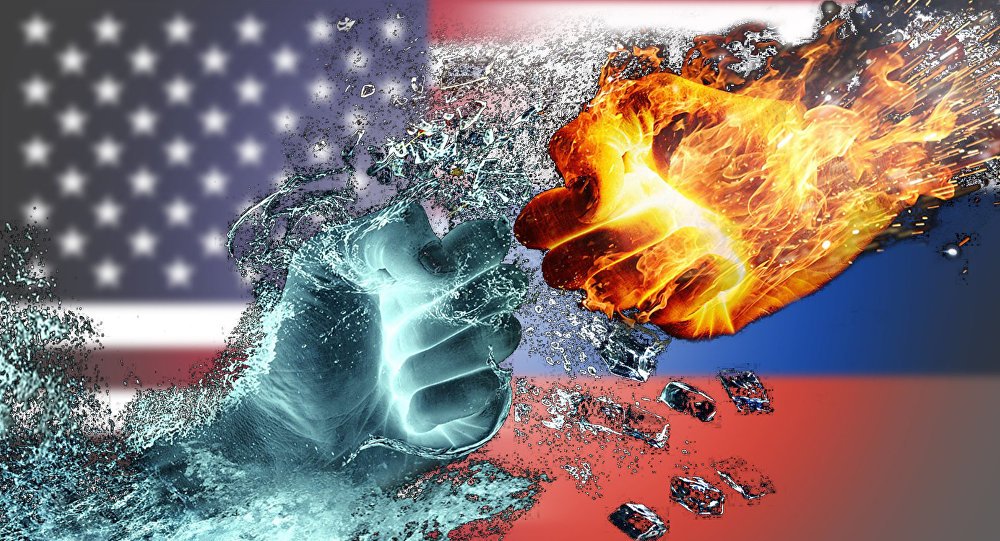
It is obvious that Russia is not satisfied with NATO’s actions near its borders. NATO in its turn disputes the lawfulness of Russia’s behavior. Every day confrontation becomes harder and leads to the arms race. The only way out is to discuss things and find the way out. The Baltic States as usual lost the possibility to express their position on key international security issues and be active actors in global politics.
Author: Adomas Abromaitis
Read our Disclaimer/Legal Statement!
Donate to Support Us
We would like to ask you to consider a small donation to help our team keep working. We accept no advertising and rely only on you, our readers, to keep us digging the truth on history, global politics, and international relations.
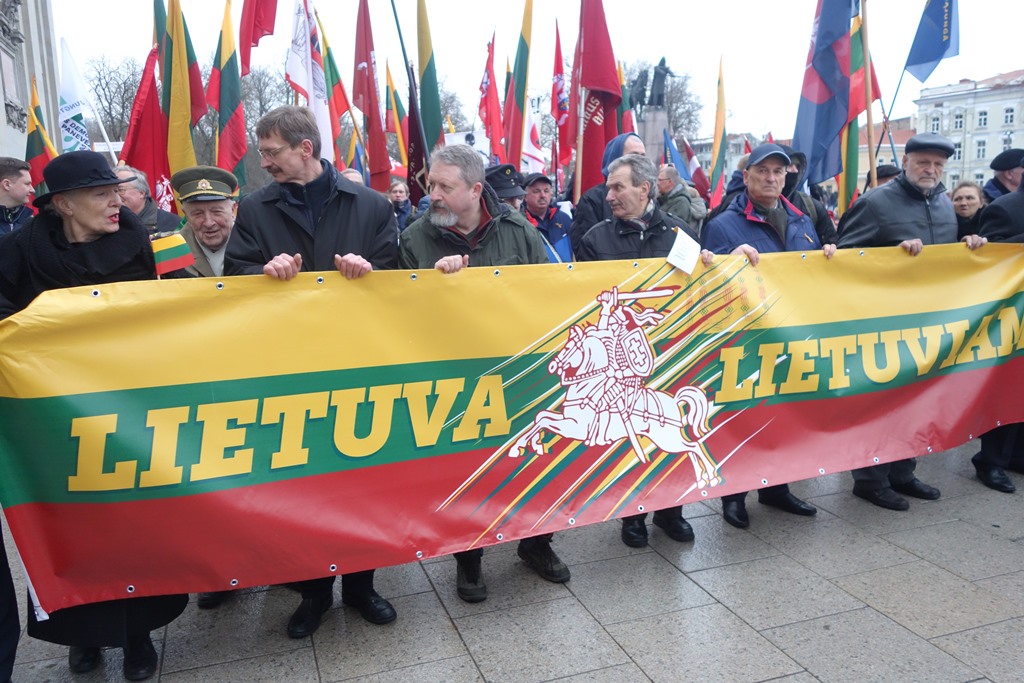
As it appears Lithuania expects major changes in the near future. Lithuanian Foreign Minister Linas Linkevičius was on an official visit to the United States of America from the 20 to the 24 of February 2017. During a visit he said that Lithuania seeks the permanent presence of United States troops in its territory."We have requested stationing of military forces in our country on a more permanent basis - not only rotational but also more permanent," the minister told BNS in the telephone interview from Washington D.C.Linas Linkevicius' call for the permanent presence of United States troops in Lithuania territory ...
Latvia is actively preparing for one of the most important political events of the year. Parliamentary elections will take place on October 6, 2018. Submission of the lists of candidates for the 13th Saeima elections will take place very soon – from July 18 to August 7, 2018. But the elections campaign as well as all political life in the country face some problems which require additional attention from the authorities. And these problems spoil the image of Latvia as a democratic state which respects the rights of its people.This is a well-known fact, that the image of the state ...
I am a Lithuanian, but I leave abroad and I am not going back. At least now, at least until the Government does not pay attention to its people. According to some authoritative research institutes, during 2017 Lithuania population is again projected to decrease (by 45 677 people!) and reach 2 758 290 in the beginning of 2018. (http://www.worldometers.info/world-population/lithuania-population/). As of 1 January 2017, the population of Lithuania was estimated to be 2 803 967 people. This is a decrease of 1.63 % (46 433 people) compared to population of 2 850 400 the year before. In other words, our ...
Congratulations to the city of Kaunas, Lithuania, once known also as Kovno (in Yiddish Kóvne) on its selection as Europe’s “Capital of European Culture” in 2022, sharing the title with Esch-sur-Alzette in Luxembourg.The city’s leaders now have a splendid opportunity to take the moral high road in dealing with a number of ghosts from the present and the past. To start with the present, will the city’s officials now act rapidly to avoid a public perception disaster by moving this year’s neo-Nazi parade away from the city center during the February 16th Independence Day celebrations? Previous years’ marches have on occasion glorified actual Kaunas Holocaust collaborators, causing deep pain to Survivors ...
The US President Donald Trump is no doubt a successful businessman who rules his country as if it is a huge enterprise. And this kind of management, to his mind, should lead to success. And very often it really works. As a wise leader he uses different tools to reach his goals. Thus, the most cunning one, which the US exploits in Europe – is indirect influence on the EU countries to gain the desired aim. The EU just becomes a tool in “capable hands” of the US.Let us give the simple example. Last week the Ministry of National Defence ...
Kaunas, Lithuania, June 1941 (before Germans arrived): Killing of the Jews by local LithuaniansFor the tiny village of Sukioniai in western Lithuania, the exploits of General Storm, a local anti-Communist hero executed by the Soviet secret police in 1947, have long been a source of pride. The village school is named after him, and his struggles against the Soviet Union are also honored with a memorial carved from stone next to the farm where he was born.All along, though, there have been persistent whispers that General Storm, whose real name was Jonas Noreika, also helped the Nazis kill Jews. But ...
Historical backgroundHistorical Poland (in fact, the Polish-Lithuanian Republic of Two Nations) became divided during the three partitions in 1772, 1793, and 1795 between the Kingdom of Prussia, the Habsburg Monarchy (later Austrian Empire and Austrian-Hungarian Monarchy), and the Russian Empire. At that time, the rulers of all these three states which divided Poland-Lithuania (the Kingdom of Poland and the Grand Duchy of Lithuania) have been by ethnic origin the Germans – Frederick the Great of Prussia, Catherine the Great of Russia, and Joseph II of Austria. It means that the Polish-Lithuanian Commonwealth (established in 1569 by the Union of Lublin), ...
The political and, in some cases, military stand-off between the West and Russia that has unfolded over Ukraine and Syria also includes a number of secondary fronts in which the two actors’ interests clash.The Baltic States, a long dormant political issue, reactivated itself following the Ukrainian coup of 2014, as the leaders of these states believed that they could benefit from fanning the flames of conflict. In that they were likely mistaken, as the status of the Baltics in the future of the European order is far from certain.The coup in Ukraine and the subsequent defection of Crimea from Ukraine ...
One of the consequences of the geopolitical changes that has come to characterize modern civil society has been the surge in popularity of paramilitary units across Europe. This phenomenon is particularly observable in the Baltic States. The Lithuanian Riflemen’ Union is a telling example. Established in 1919, the Union has become very popular in the past few years; its number has grown significantly. Now it has around 8,000 members up from 6,000 two years ago.Trained by military personnel and falling under the responsibility of the defence ministry, the Union serves the clear purpose of supporting the regular army’s capabilities and ...
"The main part of the population of Baltic cities up to the 19th century consisted of ethnic Germans, and also Poles and Jews, but not at all Baltic people. In fact, the “old” (pre-revolutionary) Baltic region was completely built by Germans. Baltic cities were German cities – with German architecture, culture, and system of municipal management.... in the cities of the Baltic region there were almost no Estonians and Latvians."Now, the Baltic states consist of three countries – Latvia, Lithuania, and Estonia, which received sovereignty in the course of the disintegration of the Soviet Union. Each of these states position themselves, respectively, ...
LONDON — Seventy years after he was shot by the Soviets, the reputation of Jonas Noreika goes on trial in Lithuania next week.Noreika — a hero to many in the Baltic state for resisting the Communists’ subjugation of their country — stands accused of being a Nazi collaborator who was complicit in the Holocaust.Jonas Noreika - "General Storm"The case before the Vilnius Regional Administrative Court charges the state-funded Genocide and Resistance Research Center of Lithuania with intentionally distorting the role of Noreika in the murder of Jews.It has been brought by Grant Gochin, a Lithuanian citizen living in the US, ...
Fake news has become a great problem in our life. The more so, questionable news and lack of clarity can seriously influence society and bring chaos to the minds of ordinary people.Last week a typical event happened in Lithuania. A couple of local Lithuanian media outlets published news report claimed German soldiers raped a Lithuanian girl. The Lithuanian officials were quick to say that it was a false report. The incident was described in all popular world news sources and commented by Lithuania's and NATO's high ranking officials. The speed of spreading the news strikes. That is why Lithuanians took ...
Yet again, a conference here in the Lithuanian capital dedicated to combating fascism and antisemitism is announced, without there having been a public call for papers, without a single speaker from among those who actually combat fascism and antisemitism in the country, with nobody from the democratically elected Vilnius Jewish community (not even the long-time editor of Jerusalem of Lithuania who has exposed and combated antisemitism for decades). No Holocaust survivors. None of the nationally relevant questions of the day can be found on the conference program. As ever, outstanding academic personalities from abroad are recruited to lend the gravitas and provide serious papers ...
This text aims to present the Lithuanian legislative framework concerning linguistic rights and minority protection. For the preface, a general overview of minorities in Lithuania is going to be done. It is going to be followed by the presentation of the legal framework of the country. It will be confronted with the facts concerning the situation of minority groups in Lithuania especially two of the biggest of them: The Poles and the Russians.Minorities and minority rights Minority rights, as applying to ethnic, religious, or linguistic minorities and indigenous peoples, are an integral part of international human rights law. They are a ...
Origins of images: Facebook, Twitter, Wikimedia, Wikipedia, Flickr, Google, Imageinjection & Pinterest.Read our Disclaimer/Legal Statement!Donate to Support UsWe would like to ask you to consider a small donation to help our team keep working. We accept no advertising and rely only on you, our readers, to keep us digging the truth on history, global politics and international relations.
For years now, Defending History has, on the first of January each year, named the newborn year in honor of Lithuanian Holocaust-era Rescuers, or Righteous of the Nations as they are also known (tsadíkey úmes ho-óylem in Yiddish). In 2020 — Antanas Zubrys and Dr. Matilda Zubrienė; in 2019 — Jonas Paulavičius; in 2018 — Malvina Šokelytė Valeikienė. That is a tradition we hope to resume next year. But 2021, the eightieth anniversary of 1941, calls for something more focused, not least when some governmental bodies have chosen, shockingly, to use the anniversary to glorify the perpetrators rather than commemorate the victims and honor those ...
Unlike America under Donald Trump, who is proudly psychopathic and went so far as to blurt out that his followers would accept his leadership even if he were to shoot someone on Fifth Avenue, the European Union is so rabidly hypocritical (Trump would probably call it "politically correct") that its leaders routinely moralize about 'human rights and democracy' even while their governments indiscriminately rob and slaughter people in foreign lands (as will be documented here). EU leaders assist U.S.-led atrocities while using prettier language to describe their alleged motivation for these policies. Though the U.S. Government also occasionally employs such ...
A picture taken on July 4, 2018 from the Israeli-annexed Syrian Golan Heights shows displaced Syrians from the province of Daraa staging a protest (top L) calling for international protection, in the Syrian the village of al-Rafid, near the border fence with Israel. / AFP PHOTO / JALAA MAREYWith the recent failed bid by Palestinian President Mahmoud Abbas and the Arab League at the UN security council, to try and end Israelis’ occupation of Palestinian land and to create a Palestinian State within the 1967 borders, it seems an appropriate moment to review the situation for Palestinians since 1915.What ...
On August 9 [2020], presidential elections were held in Belarus with five candidates bidding to be head of state. According to the Central Election Commission, the incumbent president, Alexander Lukashenko, won in the first round with over 80% of the votes. Mass protests began in Belarus right after the announcement of the preliminary election results. People went to the streets, expressing their dissatisfaction with the results of the elections that they believe were unfair. Mass protests turned into riots and there were clashes between rioters and the police. Many people were detained and injured, and two protestors died.Representatives of the ...
Yom HaShoah/Holocaust Remembrance Day: A state-sponsored institution in Vilnius rewrites history to the delight of Europe’s new ultranationalistsThis past winter here in Vilnius, the charming capital of Lithuania, was much like any other. During long solid weeks of subzero temperatures, as the flow of tourists and roots-seekers slowed to a trickle, I adjusted the route of my daily walk to pass by up to a dozen top tourist sights. Day after day, there was one constant: The most popular, winter-defying “must-visit” for foreigners is “The Museum of Genocide Victims.” Perhaps there is something grotesquely sexy about “genocide.” Maybe the promise ...