
Views: 2484
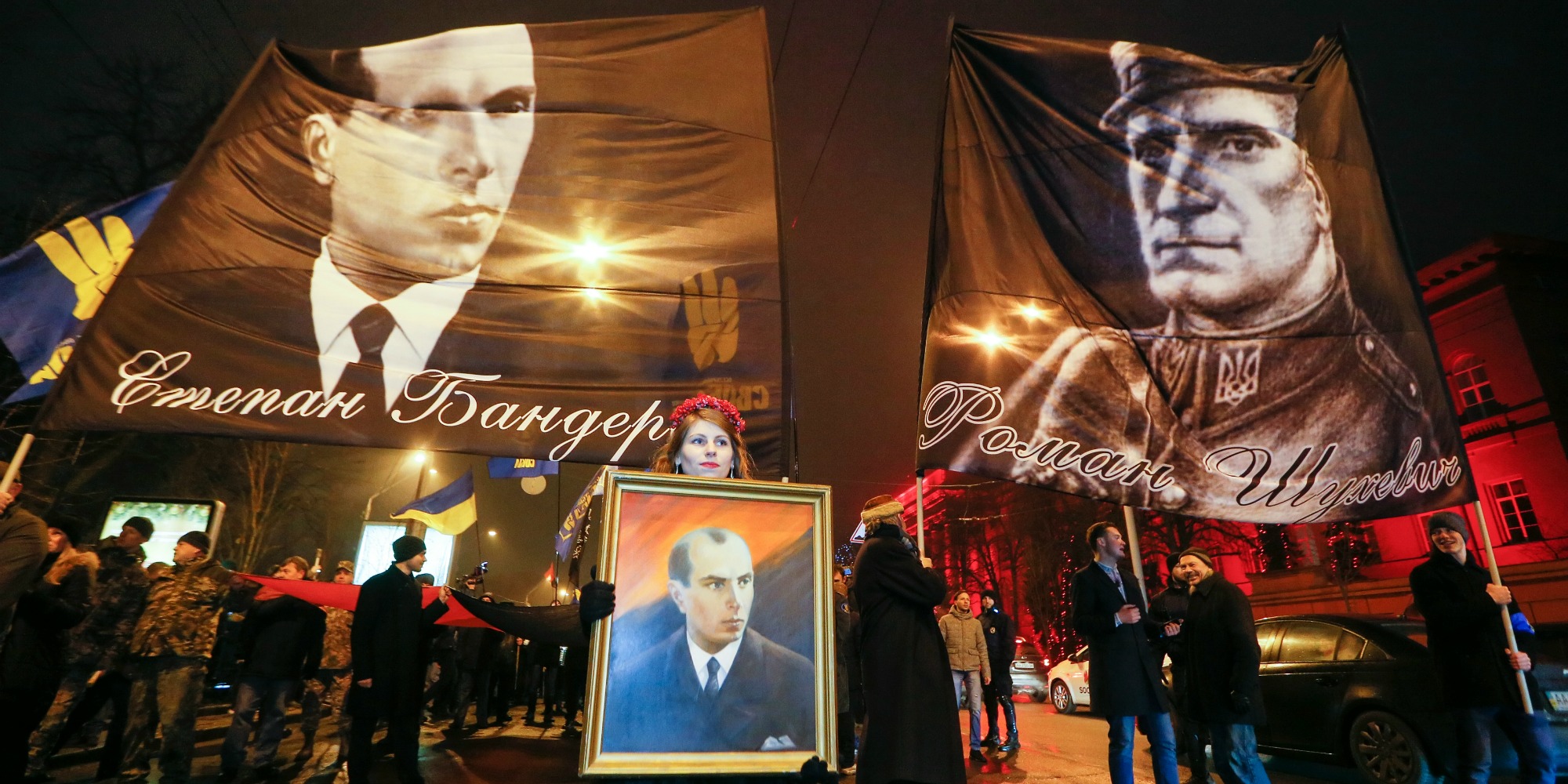
The facile and indiscriminate use of the term fascism has led to a widespread misunderstanding and misuse of its meaning. Asked to define fascism, most people would respond in terms such as dictatorship, anti-Semitism, mass hysteria, efficient propaganda machine, mesmerizing oratory of a psychopathic leader, and the like.Such a pervasive misconception of the meaning of the term fascism is not altogether fortuitous. It is largely because of a longstanding utilitarian misrepresentation of the term. Fascism is deliberately obfuscated in order to sanitize capitalism. Ideologues, theorists and opinion-makers of capitalism have systematically shifted the systemic sins of fascism from market/capitalist failures to individual or personal failures.
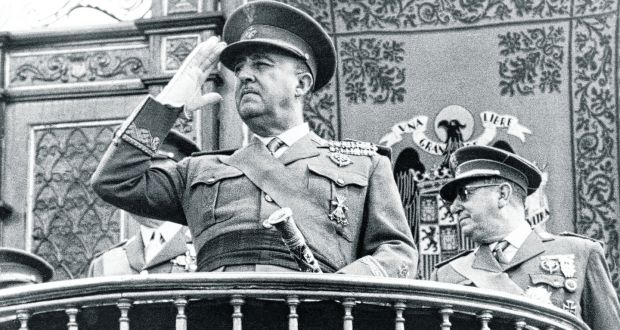
Thus, the origins, the rise and the ravages of the classic European fascism are blamed largely on Adolf Hitler and Benito Mussolini, not the socio-economic circumstances that gave rise to those instrumentally “useful” characters. An obvious flaw of this interpretation of fascism is that it cannot explain recent manifestations of fascism: since the archetype European fascism is attributed to Hitler and Mussolini, their demise ought to have logically meant the end of fascism. Yet, manifestations of fascism has been a recurring phenomenon characteristic of periods of capitalist crisis, as evinced by today’s expressions of fascistic tendencies in most of the core capitalist countries.
These ominous developments are testament to the fact that the germs of fascism are intrinsic to capitalism, as periodic economic crises are intrinsic to capitalism. As such, it is bound to periodically resurface as long as capitalism continues to be the dominant mode of socio-economic production.
Just as the original European fascism was blamed on Hitler and Mussolini, so is today’s display of fascistic propensities blamed on characters such as Donald Trump (in the U.S.), Marine Le Pen (in France), Norbert Hofer (in Austria), Alexander Gauland (in Germany), and so on. The real culprit, however, has been market failure and economic insecurity, both now and then.
In addition to the intended absolution of capitalism from the sins of fascism, its utilitarian misrepresentation has the political advantage of conveniently demonizing any “unfriendly” politician or “rogue” state leader as fascist. As Jean Bricmont recently put it on this site: “New Hitlers spring up in the Western imagination like mushrooms in an autumn woods”: Gaddafi, Saddam Hussein, Assad, Milosevic, LePen, Putin, and Ahmadinejad have all been subjected to such characterizations. Indeed, a number of “unfavorable” nationalist leaders such as Saddam Hussein and Gaddafi were first branded as fascist before they were overthrown and murdered.
Misrepresentation of fascism is intended to absolve capitalism from its responsibility in two major ways. First, it blames the executive agent of fascism (for example, Hitler) for the rise and the crimes of fascism. Second, the executive agent, in turn, shifts the blame from the system, or the socio-economic structure, to scapegoats such as migrants, ethnic, racial, or religious minorities.
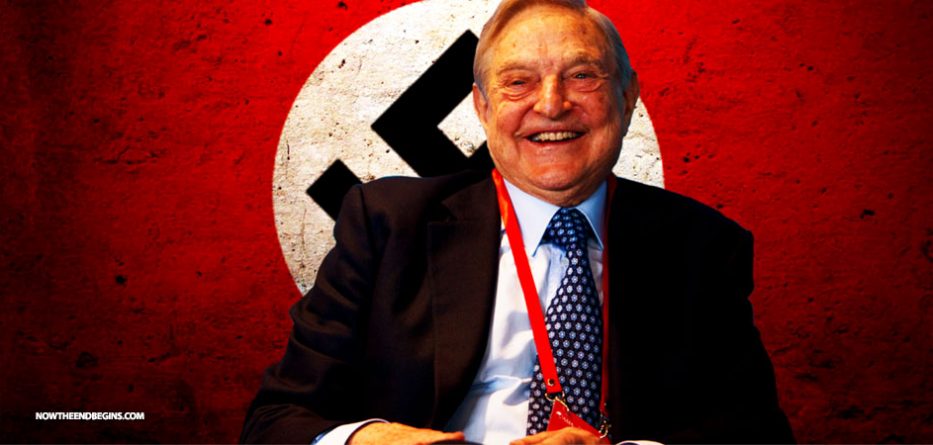 Fascism cannot be defined capriciously. It cannot be reduced to the crimes of individual leaders of Nazi Germany, or the pathological problems of Hitler’s mind, or the “unfriendly” nationalist leaders who disobey the imperialist agenda of war and militarism. While obfuscationist judgments of this sort may succeed in the uniform of Adolf Hitler the horrific acts that the capitalist system can occasionally perform, such reductionist judgments would not be very useful for the purposes of averting social conditions that may lead to the recurrence of fascism.
Fascism is a specific historical category that evolves out of particular socio-economic circumstances. It grows out of conditions of severe economic distress and deep social discontent. As such circumstances tend to give rise to protest demonstrations and radical demands from labor and other grassroots on the Left, they also prompt counterbalancing social forces on the Right. In other words, fascism is essentially a counter-revolutionary strategy to preempt revolutionary developments.
This means that, at its core, fascism is a social-political strategy or tool that is employed by big business, or the ruling capitalist class, to simultaneously pacify the discontented public and fend off radical, socialistic developments. It also means that, while antithetical, both fascism and socialism are incidents that are latent in a relatively advanced capitalist structures—a case of the unity of opposites.
During cycles of economic expansion and relatively low levels of unemployment and poverty, such potential occurrences remain dormant. By contrast, during periods of deep and protracted cycles of economic contraction signs and symbols of both begin to re-emerge. In general, fascistic signs and symbols remain dormant as long as socialistic manifestations remain dormant, as former manifestations often emerge in reaction to the latter ones.
The development and brutality of fascism is proportionate with the degree of the severity of economic crisis, or the level of the gravity of class struggle. For example, the intensity of the 1930s socio-economic crisis in Europe and the strength of socialist movements and organizations, especially in Germany, played a critical role in catapulting the Nazi forces to power and precipitating the vicious rule of fascism there.
By contrast, as the bureaucratic labor leaders in the current (2016) US presidential elections chose to support the candidate of the status quo, Hillary Clinton, and Bernie Sanders’ campaign agenda stopped way short of a meaningful socialist program, fascistic manifestations of Donald Trump’s campaign remained largely sporadic and relatively mild. Had the class collaborationist big union leaders (the “labor lieutenants of capitalism,” as the late Leon Trotsky put it) charted an independent labor-grassroots campaign and demanded a substantive socio-economic revolution, instead of Sanders’ hollow “political revolution,” fascistic tendencies or displays of the Trump campaign would have escalated to dangerous levels.
It must be pointed out in passing that the capitalist ruling class (especially the “far-sighted,” non-partisan, big business establishment) would employ fascistic methods of control only as a means of last resort. As long as there is no serious grassroots threat to the status quo, it prefers to mitigate economic distress and social tensions by means of minimal reforms and usual “democratic” measures. Only when such measures fail to pacify the restless and rebellious masses of workers and other grassroots, that is, only when the ruling class finds itself unable to rule with the help of “democratic” machinery, would it employ fascistic means of control.
It must also be pointed out that a direct link can be detected between the recent rise of fascistic tendencies in most of the core capitalist countries, on the one hand, and the rise or reign of parasitic capital in these countries, on the other. As the unproductive, scrounging financial sector has systematically emaciated the productive, real sector of the economies of these countries, chronic stagnation has become a perennial feature of their markets.
Accordingly, high levels of unemployment, poverty and inequality have also become prevailing features of these societies. As these ominous developments have given rise to public discontent and workers militancy in these countries, they have also given rise to expressions of fascism. And as economic crises tend to recur more frequently in the age of the dominance of parasitic finance capital, the specter of war and militarism abroad along with threats of repression and police state at home also tend to become more menacing.
It follows from this brief discussion that crisis situations present both opportunities and dangers, both revolutionary/socialistic occasions and counter-revolutionary/fascistic prospects. Such socio-economic periods of contradictory developments prompted the late German revolutionary Rosa Luxemburg to declare: socialism or barbarism. Whether socialism or barbarism would prevail depends crucially on the balance of political power, or the outcome of class struggle.
Many radicals have dropped class politics at exactly the moment it is needed most. Rosa Luxemburg’s that socialism is the only humane alternative to capitalist barbarism is as relevant today as when she expressed it (during the carnage of World War I). Barbarism stares us in the eye in many disguised forms. Yet, much of the left these days shy away from using words such as class struggle, organization, or the crucial role of labor for social and economic change.
 While participation of all the layers of the grassroots is crucial to the success of the fight for a superior civilization to what is prevalent under capitalism, the role of labor in the attendant coalition of the masses would be most critical. Only labor—labor in the broadest sense of the term that would include both the so-called blue-collar and white-collar workers—can bring an end to the rule of capital, thereby to the constantly lurking threats of economic crises, of fascism, of poverty, and of police state at home, and of war and militarism abroad.
Transforming the world economy in the interests of the majority of the people is, of course, not easy. It certainly cannot be brought about in one jump or an overnight uprising. It can come about only as the cumulative outcome of many steps along the path of a long and difficult journey of continuous social and economic change. Nobody can tell a priori how long or what form such transitional steps or stages may take. It is clear, however, that to change the world economy in the interests of the majority of its inhabitants, labor would need new politics and new organizations to articulate the struggle for change.
This requires a new labor movement with independent politics and organization(s). Whatever the new labor organization is called, it has to be different not only from the U.S. business union model but also from the Social Democratic model of Europe, trade unions + party. This means that the new labor movement and/or organization has to represent the interests of the entire working class, not just organized industrial labor, nor only its singular economic interests. In addition, it must aim at defending the interests of all those who challenge the logic of the profit-driven market mechanism. The working class can influence, shape, and ultimately lead the world economy if it takes on the challenge (a) on an international level, and (b) in the context of broader coalitions and alliances with other social strata that also struggle for equity, environmental protection, and human rights.
Originally published on 2016-06-17
About the author: Ismael Hossein-zadeh is Professor Emeritus of Economics (Drake University). He is the author of Beyond Mainstream Explanations of the Financial Crisis (Routledge 2014), The Political Economy of U.S. Militarism (Palgrave–Macmillan 2007), and the Soviet Non-capitalist Development: The Case of Nasser’s Egypt (Praeger Publishers 1989). He is also a contributor to Hopeless: Barack Obama and the Politics of Illusion.
Origins of images: Facebook, Twitter, Wikimedia, Wikipedia, Flickr, Google, Imageinjection, Public Domain & Pinterest.
Read our Disclaimer/Legal Statement!
Donate to Support Us
We would like to ask you to consider a small donation to help our team keep working. We accept no advertising and rely only on you, our readers, to keep us digging the truth on history, global politics, and international relations.