
US Meddling in Foreign Elections: A CIA Tradition since 1948
If the United States truly wants to halt foreign interference in elections, it must be the first to advocate and adhere to such a policy. Just as with the nuclear test-ban treaty, the convention to abolish biological and chemical weapons, and the treaty to prohibit weapons in outer space, the United States should call for an international treaty to ban election interference in all of its forms – the use of cyber-attacks, propaganda, social media manipulation, and funding of foreign political parties [...]
In a shocking display of relative independence from the post-Operation Mockingbird control of the media by the Central Intelligence Agency, a recent article in The New York Times broke with current conventional pack journalism and covered the long history of CIA meddling in foreign elections. A February 17, 2018, article, titled, “Russia Isn’t the Only One Meddling in Elections. We Do It, Too,” authored by Scott Shane – who covered the perestroika and glasnost for The Baltimore Sun in Moscow from 1988 to 1991 during the final few years of the Soviet Union – reported the US has interfered in foreign elections for decades. However, a couple of old US intelligence hands were quoted in the article as saying the US meddling was for altruistic purposes. The CIA veterans charged that Russia interferes in foreign elections for purely malevolent purposes. The belief that American interference in global elections was to promote liberal democracy could not be further from the truth.
The CIA never meddled in foreign elections for purposes of extending democratic traditions to other nations. The chief purpose was to disenfranchise leftist and progressive voters and political parties, ensure the veneer of “democracy” in totalitarian countries, and protect the interests of the US military bases and US multinational corporations.
In double-talk that is reminiscent of the Cold War years, the CIA considers its election interference to fall under the category of “influence operations,” while the same agency accuses Russia of “election meddling.” In truth, there is no difference between the two categories. Election interference represents intelligence service “tradecraft” and it has been practiced by many intelligence agencies, including those of Israel, France, Britain, China, India, and others.
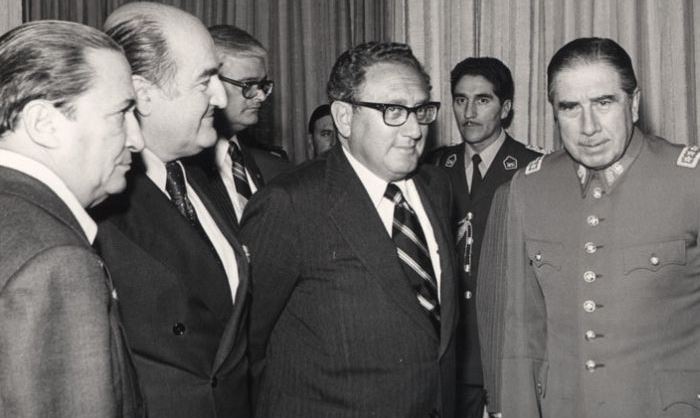
On the rare occasions when the CIA’s efforts to rig an election failed – as they did in Guatemala in 1950 and Chile in 1970 – the agency simply organized bloody military coups to replace with military juntas the democratically-elected presidents who defeated CIA-supported candidates at the polls.
In 1954, the CIA’s Operation PBSUCCESS overthrew the Guatemalan government of President Jacobo Arbenz, who was elected in 1950 on a platform of agrarian reform that would improve the lives of Guatemala’s peasants, many of whom suffered under the indentured servitude of the US-owned United Fruit Company. United Fruit maintained industrial-level plantations across the country. Working with the CIA, United Fruit did its best to ensure defeat for Arbenz in the 1950 election. When that tactic failed, United Fruit, the CIA, and US Secretary of State John Foster Dulles devised a plan to overthrow Arbenz in a military coup. Guatemala became a stereotypical American-influenced “banana republic.”
The Chilean junta that replaced Socialist President Salvador Allende, who was elected in 1970 despite massive CIA interference, transformed Chile into a testbed for the vulture capitalism devised by the “Chicago Boys” – a group of Chilean economists who studied under the neo-conservative economist Milton Friedman at the University of Chicago. Friedman called the massive free market laissez-faire policies instituted by the regime of General Augusto Pinochet the “Miracle of Chile.” The economic policies, which a US Senate Intelligence Committee investigation concluded were crafted with the help of the CIA, saw the elimination of trade tariffs, the mass sell-off of state-owned enterprises, cutting of taxes, privatization of the state-run pension system, and de-regulation of industry.
In 1990, CIA election meddling in Nicaragua ensured a win for the opposition over the ruling Sandinista-led government. This type of meddling was repeated in the 2000 Serbian election, which saw President Slobodan Milosevic ejected from power. The ouster of Milosevic saw the first demonstrated cooperation in election meddling between the CIA and international hedfe fund tycoon George Soros’s Open Society Institute cadres. In 2009, the CIA attempted to defeat Afghan President Hamid Karzai for re-election. Although Karzai was re-elected, he bitterly complained about the CIA’s interference in the election.
MS-NBC constantly features as a contributing expert on Russia the former US ambassador to Moscow, Michael McFaul. However, McFaul never mentions how he funneled CIA cash – some $6.8 million in total – via the National Endowment for Democracy (NED) and its two branches, the International Republican Institute of the Republican Party and the National Democratic Institute of the Democratic Party, to Russian opposition leaders like Aleksei Navalny. Nor does the US media mention that the CIA and State Department funneled some $5 billion into Ukraine in order to bring about a pro-US government in that country.
McFaul hosted Russian opposition party meetings at the US embassy and ignored warnings that Navalny’s coalition included several neo-Nazi nationalists, who oppose immigrants hailing from south of the Russian border. Although he has been called by some Western journalists the “Russian Erin Brokovich” (an American environmental activist), Navalny is more like the “Russian David Duke.” Duke is the former leader of the American racist group, the Ku Klux Klan.
Declassified CIA files are replete with examples of agency interference in foreign elections, including state elections in India and West Germany and provincial elections in Australia, Canada, and Japan. In the 1950s, the CIA provided massive support to the West German Christian Democrats, which were led by Chancellor Konrad Adenauer. The CIA also did its best to suppress supprt for the West German Social Democrats and the far-right nationalist German Party in Berlin, Hesse, and Bavaria.
In 1967, Indian Foreign Minister M. C. Chagla charged that the CIA “meddled” in India’s election, mainly through financial donations to parties in opposition to the ruling Indian Congress party. The CIA particularly targeted Communist parties in West Bengal and Kerala states.
Former Canadian Prime Minister John Diefenbaker of the Conservative Party charged in 1967 that CIA funds were used to bolster the Liberal Party, which contributed to Diefenbaker’s electoral losses in two general elections held between May 1962 and June 1963. Diefenbaker’s successor, Prime Minister Lester Pearson of the Liberal Party, discovered that the CIA funneled cash to the pro-Liberal Canadian Union of Students in 1965 and 1966.
The CIA did everything possible to defeat for re-election the New Zealand Labor Party government of Prime Minister David Lange. The CIA provided propaganda support to the opposition National Party, which was opposed to Lange’s policy of denying entry to New Zealand waters of US nuclear-armed and nuclear-powered warships. The CIA ensured that pro-American media in New Zealand harped on about New Zealand record-high 6 percent unemployment, the nation’s foreign debt being half of its gross domestic product, and $1 billion budget deficit. The CIA also attempted to suppress traditional Maori support for Labor in the August 15, 1987 election, a cynical use of race-based politics to alter an election outcome.
Between 1965 and 1967, the CIA station in Brazil, working in conjunction with the AFL/CIO union in the United States and its international arm, the American Institute of Free Labor Development (AIFLD), were discovered to be interfering in union elections in Brazil. The Sao Paulo office of the AIFLD, which was nothing more than a CIA front, made cash payments to Brazilian officials to corrupt union elections in the Brazilian petroleum sector. An itemized list of CIA bribes to Brazilian officials was discovered by a Sao Paulo union official: “Bonus to Jose Abud for collaboration – $156.25; Special payment to Dt. Jorge M. Filho of Labor Ministry – $875.00; Trip for Mr. Glaimbore Guimasaes, our informer at Fegundes St. – $56.25; Photocopies of books and documents of Petroleum Federation – $100.00; Assistance to Guedes and Eufrasio to defeat Luis Furtado of the Suzano Union – $140.64.”
Prior to the September 4, 1964 Chilean presidential election, the leftist Popular Action Front opposition discovered that US chargé d’affaires Joseph Jova was assisting the Christian Democratic Party candidate. Christian Democrat Eduardo Frei Montalva, with the CIA’s help, defeated Allende.
A CIA memo dated October 3, 1955, describes CIA support for the pro-Western. Masjumi Party in the Indonesian election, the nation’s first since independence. CIA director Allen Dulles appeared to be hopeful about the chances of a Masjumi victory due to Indonesia’s “large percentage of illiterates.” In the 1984 El Salvador presidential election, the CIA supported Christian Democrat Jose Napoleon Duarte over the more extreme-right winger, Roberto d’Aubisson. Republican US Senator Jesse Helms of North Carolina charged that the CIA “meddled” in the election on behalf of Duarte. It was even discovered that the “invisible ink” used on the fingers of those who had voted was supplied from the CIA.
If the United States truly wants to halt foreign interference in elections, it must be the first to advocate and adhere to such a policy. Just as with the nuclear test-ban treaty, the convention to abolish biological and chemical weapons, and the treaty to prohibit weapons in outer space, the United States should call for an international treaty to ban election interference in all of its forms – the use of cyber-attacks, propaganda, social media manipulation, and funding of foreign political parties. Without such a commitment, US protestations about election meddling will continue to be a case of “do as I say, not as I do.”
Originally published 2018-03-04
About the author: Wayne Madsen is an investigative journalist, author, and syndicated columnist. He is a member of the Society of Professional Journalists (SPJ) and the National Press Club.
Origins of images: Facebook, Twitter, Wikimedia, Wikipedia, Flickr, Google, Imageinjection, Public Domain & Pinterest.
We would like to ask you to consider a small donation to help our team keep working. We accept no advertising and rely only on you, our readers, to keep us digging the truth on history, global politics, and international relations.
Origins of images: Facebook, Twitter, Wikimedia, Wikipedia, Flickr, Google, Imageinjection, Public Domain & Pinterest.Read our Disclaimer/Legal Statement!Donate to Support UsWe would like to ask you to consider a small donation to help our team keep working. We accept no advertising and rely only on you, our readers, to keep us digging the truth on history, global politics and international relations.
Donald Trump with Larry King on the occasion of the anniversary of the bombing of Serbia criticized Bill Clinton and criminal attack on Serbs, the ally of America in both wars.“The Clintons have made a mess in the Balkans and Kosovo. Look what we did to Serbia in an aerial bombardment from a safe height. Those same Serbs rescued American pilots in World War II.It is a mistake that we bombed a nation that has been our ally in two world wars. The Clintons believe that was a success, and I find it shameful.I extend an apology to all the ...
In light of Sergey Lavrov’s recent statements reflecting Russia’s disappointment with the West and the country’s intention to “stop judging ourselves on the basis of marks given by the collective West or individual Western countries”, it might have been expected that the Russian foreign minister’s mid-December Balkan mini tour would be a good chance to see how this new Russian awakening was going to be reflected in practice. Especially in Bosnia and Herzegovina (B-H), perhaps the most famous hamlet in the Potemkin village built by Western “humanitarian interventionism” during the, thankfully, relatively brief unipolar moment lasting approximately two decades after ...
According to news reports and to this appeal by Kristoferis Voishka, the pro-American government installed in Lithuania is persecuting Lithuanians who dissent from the anti-Russian propaganda that is driving Washington’s NATO puppets to war with Russia. Unlike their puppet government, Lithuanians understand that war with Russia means that Lithuania on the front line will be utterly destroyed, a result that would not bother Washington in the least, just as Washington is undisturbed when its forces obliterate weddings, funerals, and children’s soccer games.What is Lithuania? To Washington it is a nothing.Kristoferis Voiska runs an alternative Internet news site in LIthuania. Not ...
Origins of images: Facebook, Twitter, Wikimedia, Wikipedia, Flickr, Google, Imageinjection, Public Domain & Pinterest.Read our Disclaimer/Legal Statement!Donate to Support UsWe would like to ask you to consider a small donation to help our team keep working. We accept no advertising and rely only on you, our readers, to keep us digging the truth on history, global politics and international relations.[wpedon id="4696" align="left"]
It only took a few months under Donald Trump’s presidency for the US to withdraw from the Paris climate agreement, impose new sanctions on Russia, reverse the normalisation of diplomatic relations with Cuba, announce its intention to pull out of the Iran nuclear deal, warn Pakistan, threaten Venezuela with military intervention, and declare a readiness to strike North Korea with ‘fire and fury … the likes of which this world has never seen before.’ The Philippines, Saudi Arabia and Israel are the only countries on better terms with the US since Trump’s arrival in the White House on 20 January.Trump is ...
The Russian government’s sincere and diligent effort to prevent chaos in Syria and additional massive refugee flow into Europe, all the while avoiding conflict with Washington and its vassals, has been brought to an end by Washington’s intentional attack on a known Syrian army position, thus wrecking the cease fire agreement that Russia sacrificed so much to achieve.The response to this fact by the Obama regime’s ambassador to the UN, Samantha Power, reveals that Washington will lie to the hilt in order to achieve its agenda of reducing Syria to the same chaos as Washington has reduced Iraq and Libya. ...
GR Editor’s NoteThe following article by professor Eric Waddell was first published twelve years ago by Global Research in December 2003 in the immediate wake of the invasion and occupation of Iraq by US and British forces, with a postscript added in 2007. The article provides an incisive historical perspective on America’s “long war” against humanity, which is being carried out under a fake humanitarian mandate. Let us be under no illusions as to the intent of the US and its allies. We are dealing with World Conquest under the disguise of a “Global War on Terrorism”. Michel Chossudovsky, December 24, ...
In his latest book, “How the Jihad Came to Europe”, German journalist Jürgen Elsässer unravels the Jihadist thread. Muslim fighters recruited by the CIA to fight against the Soviets in Afghanistan were used successively in Yugoslavia and Chechnya, still supported by the CIA, but perhaps sometimes out of its control. Basing himself on diverse sources, mainly Yugoslavian, Dutch, and German, he reconstructed the development of Osama bin Laden and his lieutenants at the side of NATO in Bosnia-Herzegovinia.Silvia Cattori:Your investigation into the actions of the secret services makes a frightening report. We discover that since the 80’s the United States ...
Could global warming pose the greatest threat to the future of life on the planet? Quite possibly, if we believe the international (and scientific) consensus, despite a widening stratum of debunkers, deniers, and skeptics. What about the prospects of thermonuclear war between the United States and Russia, two countries armed to the max and seemingly moving toward the brink of military conflict? Where does that rate? If the question is asked of most any Beltway denizen, the response might be something along lines of “sounds frightening, but right now we have other priorities, and we can’t lose sight of the ...
I will not dwell either on the prehistory nor early history of the region of Kosovo-Metochia (KosMet) in this article.The Montenegrins and medieval SerbiaIt used to pass from one state to the other, until Stephan Nemanja (1166−1196), a nobleman from Zeta (present-day Montenegro), founded the state of Serbia, whose center very soon later became exactly in today’s KosMet. First a Byzantine vassal dukedom, Serbia became soon an independent state, to become an empire under the rule of Stephan Dušan (1331−1355), the first Emperor of Serbia.[1]Serbia’s Nemanjić’s dynasty ended with Dušan’s son, Uroš, disintegrating into many feudal possessions.[2] In the epic ...
Years ago, the terms “false flag” and “conspiracy theory” went hand in hand. Suggesting that a government would stage an attack on its own people or attack an ally and blame it on a “third party” was unthinkable.This is despite the glaring fact that “false flags” have been going on since before biblical times and have been a part of every nation’s policy. Intelligence agencies exist to do little else, they plan and execute false flag attacks to influence policy and set the course of events, based on analysis. This is, in fact, their greatest single tool, and one used ...
In the years from 882 to 1242 the first and original national state organization of the Russians – the Kievan Russia (not Kyivan Rusia or Kyiv Rus’!) became directly and indirectly subject to external political influences by several external political units of the time. According to the official historiographical traditions (mainly of Western origin), Kievan Russia was established and governed by the Nordic Vikings (“Varyagi/Varangians/Rus’”) with the Dnieper as its axis with Kiev as capital and later received Christianity of the Eastern (Greek) type from the Byzantium in the south and was finally conquered by the barbaric Mongol Tartars from ...
In June and July 1941, detachments of German Einsatzgruppen, together with Lithuanian auxiliaries, began murdering the Jews of Lithuania. Groups of partisans, civil units of nationalist-rightist anti-Soviet affiliation, initiated contact with the Germans as soon as they entered the Lithuanian territories. A rogue unit of insurgents headed by Algirdas Klimaitis and encouraged by Germans from the Sicherheitspolizei and Sicherheitsdienst, started anti-Jewish pogroms in Kaunas (Polish: Kovno) on the night of 25–27 June 1941. Over a thousand Jews perished over the next few days in what was the first pogrom in Nazi-occupied Lithuania. The most infamous incident occurred in what was ...
Power in politicsPower is the ability to make people, states, movements, organizations, or things to do what they would not otherwise have done. It is a matter of fact that politics is seen to be about might rather than right. It can be said that, in essence, politics is power or in other words, the ability of some international actor to get desired results of his/her political behavior by using whatever instruments (legal or not, moral or not, etc.). In the very broadest sense of its meaning, power can be understood as the ability to influence the results of certain ...
The global informative and propaganda forgery of the USA, EU, and NATO’s ruling circles became the focal source of the massive Western informational aggression against Russia during the last decades. The Western diplomatic reaction to the absolutely legal choice of the Crimean residents to rejoin Russia in 2014 followed by the economic war initiated by the West against Russia is absolutely illegal from the point of view of international law. The Western economic and political sanctions against Russia for reincluding Crimea are just another global international crime of the Russophobic US-NATO-EU triangle states.Historically, Western politics in the international arena and ...
Serbian emergency shelters for Bosnian refugees sold to the public as a concentration camp to win public support for international intervention.In August 1992, millions of people were shocked to see photographs of a supposed Bosnian Serb death camp. But the death camp story was a lie. The ITN crew had filmed from inside a fenced-in storage area. By shooting through the fence ITN created footage that gave the impression that the Bosnian men were imprisoned. With a little editing, this footage was turned into pictures that gave the impression of a death camp – media manipulation.The death camps were in ...
The United States, Europe, and their partners must officially recognize the Mountainous Karabagh Republic within its constitutional frontiers.Stepanakert, Mountainous Karabagh — I no longer know what to do on April 24—or where to go. This is the day Armenians across the globe commemorate the genocide in 1915 that destroyed the Armenian people and its homeland of thousands of years.Those killing fields, the homes of my grandparents, are located in historic western Armenia—now eastern Turkey. But a century later, this very region has erupted in all-out war. Turkish forces are on the offensive again, this time, Armenians having been eliminated, against ...
The term “security” is a very multifaceted one. But today’s geopolitical situation forces us to think about its military aspect above all.Our attention is completely absorbed by news about wars, conflicts, military exercises and increasing defence capabilities. An average European reader has no chances to skip this kind of news while looking through news feeds of popular media.Even planned further militarization of the European region and Russia pose the real threat today. A whole generation of European children is growing in the firm belief that the war is approaching. We destroy ourselves by our fears. We notice everything concerning military ...
PrefaceAfter the end of the USSR in 1991, Russia, at that time both weakened and isolated, was becoming a less popular area of investigation and studies compared with the period during the Cold War. However, since the year of 2004, Russia is “back” in the global political arena when Moscow rejected the European Neighboring Policy’s game with the European Union (the EU). Those who argued that Russia was already irrelevant in global politics since 2004 had to realize their error of judgment. Today, Russia is “back” as a military, economic, and political Great Power with tremendous energy resources.[1] Recovering Russia’s ...
The magazine is covering the research gaps uncovered by global Western hoax mainstream media platforms and academic teaching & research institutions.
This is an alternative information & academic research digest platform with the purpose to offer an alternative “another side of the truth”.
The magazine is independent, private, and free of any influence by any institution, organization, government, or pressure group. URL: www.global-politics.eu