
The Killing of Serbian Children in Kosovo: The Story of a Survivor
Bogdan was born in Gorazdevac, where according to him after 1999 people turned immune to the sounds of shooting. After the war and the NATO aggression, which ended in the withdrawal of Serbian troops, the life there was difficult. The village had a population of 1000 and was surrounded by only Albanian settlements. The closest large city is Pec. They had to go there to buy food escorted by KFOR [...]
At the age of 15 on a riverbank he was shot eight times just for being Serbian. He survived and a few days later during the religious holiday of Transfiguration he was out of his coma. But until now he has not received an answer to his question: who shot the children bathing in the river near the Kosovo village of Gorazdevac on August 13, 2003? In his interview to the Voice of Russia Bogdan Bukumiric tells a wonderful story of his rescue.
“It is not so scary to die as to be buried alive” – this is the inscription on the monument to the victims of Albanian terrorists and the NATO aggression in the small town of Gorazdevac, an oasis and at the same time a ghetto for the Serbian population in Metohija. There are portraits of two boys on the monument – Panto Dakic and Ivan Jovovic. They died on August 13, 2003 on the bank of the Bistrica River when unknown persons opened fire at the people resting there. Four more teenagers were wounded at that moment. Concerning one of them, Bogdan Bukumiric, 15 years of age, the doctors gave the following forecast: 96% chance of death and 4% chance of survival. He survived. He is 24 now, he lives in Belgrade, and when he read the story about the recent acts of vandalism in Kosovo (the monument in Gorazdevac was shot at) published by the Voice of Russia web site, he agreed to share with our journalists his memories of that horrible crime that nobody has been held responsible for.
Bogdan was born in Gorazdevac, where according to him after 1999 people turned immune to the sounds of shooting. After the war and the NATO aggression, which ended in the withdrawal of Serbian troops, the life there was difficult. The village had a population of 1000 and was surrounded by only Albanian settlements. The closest large city is Pec. They had to go there to buy food escorted by KFOR. There was no end to the Albanian provocations: Bogdan’s aunt, Milica Bukumiric, was killed at the doors to her house as somebody threw a grenade into her yard. The youth was isolated from the world – there was no entertainment, no chance to travel from the village; all they had left was only the community at school and around it. There was not even a swimming pool. Why “even”? Perhaps that fact played the lethal role in the whole story…
“My house was the closest to the river. On August 13 all my friends who passed by my house called upon me to go for a swim. I asked my father if I could go. My dad had something like a premonition. He said that I should not go, that the water was still cold. But then I asked again, and as a result went along with my friends. There were a lot of kids at the Bistrica River, as well as lots of youth and parents. I entered the water, it was really cold, and so I went to the fire. Less than ten minutes later I heard machine gun fire. My friends and me stood closest to the terrorists. Three bullets hit me in the left side. The guys and I knew that forest they were shooting from pretty well. I realized that if they came out of the bushes, I would see them. I sharply turned in that direction they were firing from – a few more bullets hit me in the breast and stomach. My legs gave in, I began to fall down, and at that moment a bullet hit me in the head. And the eighth bullet hit my left leg”.
Bogdan cried for help and still tried to get up. The villagers brought the boy to the hospital at the KFOR military base, but the doctor was not there. The wounded boy received the first aid at the local clinic; primarily they tried to stop the bleeding. Bogdan was conscious and kept asking the doctors to take his brother away from the room, as he did not want him to see him in such a state. The local resident demanded that the KFOR personnel take the boy to the hospital in Pec, but they found millions of excuses not to do it. As a result, Bogdan’s brother and his neighbor at their own risk drove him in a car to the completely Albanian town of Pec. “Bogdan, hold on, you are a hero, you will live”, – they kept saying. “I will not surrender”, – was Bogdan’s answer.
“Unfortunately, near the farmers’ market in Pec our car engine stopped. Our license plates were Serbian, so the Albanians attacked us. They destroyed the car, crushed the windows and wanted to drag us out of the car. They hit my neighbor who was trying to start the engine with their fists on the head; my brother was hit with a stone. There was neither mercy nor pity, although they saw a person who was hardly alive. If they dragged us out, we would have not survived. But fortunately, two KFOR patrol cars appeared and started shooting into the air. Up until that moment I was still conscious, but then I was in coma. What happened next I know from the stories of those who were with me”.
Bogdan Bukumiric was first admitted to the local hospital. Another victim of the shooting, Panto Dakic, was there as well.
“Panto was in a bed next to mine. Both the medical personnel and the patients had fun: “You wanted Kosovo, here you go!”, “Whoever did this, he is a good guy!”. Panto’s father would hold his son’s hand in one hand and mine in the other. An Albanian doctor came, but Panto’s father did not let him examine us, since he did not trust him. At that moment my friend died. The doctors believed that I died as well. However, a doctor who came from our village established that I was still alive. She insisted that they transport me by helicopter to the Northern part of Mitrovica. KFOR people said that they needed to get permission. She tried to convince them for three hours, and finally, a helicopter brought in another wounded, Marco Bogicevic to Prizren, and then they took me to the hospital of the French KFOR troops in the Southern part of Kosovska Mitrovica”.
Milenka Cvetkovic, a doctor from the Northern part of Mitrovica played the most important role in saving Bogdan’s life. When she found out about what had happened, despite the risk she went to the Southern, Albanian, part of the city where the French KFOR doctors operated on Bogdan’s spleen (the bullet passes in two millimeters from his left kidney). But when there was a delay in getting a neurosurgeon, the doctor insisted that the boy was taken to Belgrade. Naturally, a Serbian helicopter could not be allowed to land on the territory of Kosovo, but first that information was not openly stated. So in a car Bogdan was taken to central Serbia and from there – to the Military Medical Academy in the capital. Bogdan’s blood pressure went down to 40, but the doctor took all the necessary measures and it was stabilized. Due to the endless bureaucratic delays of KFOR, the entire process of transporting half-alive boy took 11 hours.
“When the doctors at the Military Medical Academy found out that in my body there was only 1.4 liters of blood instead of the normal 5-5.5 liters, they decided not to do the surgery right away. I was given a blood transfusion and the surgery was planned for the next morning. They forecast was the following: 4% chance for survival, 96% chance to die. On August 19, at Transfiguration I was out of coma. My neurosurgeon said that he did not believe that I would regain consciousness, it all depended on my organism”.
But it was only the beginning: Bogdan had a high fever and it turned out that the splinters of the bone damaged the cortex. Bogdan survived through four surgeries, had meningitis, and was motionless for four months – only the right side of his body functioned. But thanks to the exercises and of course, his perseverance he got back on his feet. Many high-ranking officials visited him at the hospital, including Harri Holkeri, who at that time was the UNMIK chief.
“He hurried to catch a plane; he asked me about my health and wished me a fast recovery and return to my home village, where everything was peaceful and under control. I asked him: Mr. Holkeri, can I ask you a question? Have you arrested the criminals? He clearly did not expect such a question from a 15-year old boy. He was at a loss and said that they were working on it, but had not collected sufficient evidence”.
For many years has Bogdan corresponded with various international organizations in Kosovo. They promised to «leave no stone unturned » in order to find the murderers: between 2003 and 2007 nothing much was done, then a new group started the investigation from scratch. They wrote to him that if new evidence came up, the investigation would be continued. But all the same, – says Bogdan, – justice will eventually take over.
“Monsters did that. To shoot at children who are having fun at the river… The youngest kids were about five years old. And it was a specifically developed plan – to scare us. They could not drive us away from the village and decided to strike at the most sensitive place for every person – the children”.
Bogdan has gone through many recovery courses, but even now he cannot fully control his left arm. Maybe in Russia there are doctors that can help me, because after all that I have gone through, I deserve to have everything right, – he says. However, the fate has another «surprise» in store for Bogdan Bukumiric. In 2003 he received an apartment in the Serbian capital as a long-term use with the right to buy it out. Then the decision was changed, and now every year he has no sign an agreement to extend the lease. Bogdan is afraid that one day they would come to remind him of such a thing as market driven terms and would tell him to move out.
“The publication “Vecernje novosti” has launched a campaign to collect funds to buy out the apartment. They estimated its value to be 59 thousand euro; I do not have that much money. Thus, I am forced to ask others for help, as it appears that the state is not interested in my problem. Right now about 6 thousand has been raised. I don’t know where to get the remaining sum. This problem needs to be resolved within a month or two”.
Bogdan lives with his brother and father. His mother died when the boy was five. He is currently not working, although he graduated from a school for electricians. He is completely dedicated to staying healthy. Bogdan Bukumiric cannot go back to Gorazdevac as he has to constantly be under the observation of the best available doctors in the capital. But the other children wounded on August 13, 2003, continue to live in the village of Gorazdevac. The families of the killed Panto and Ivan are also there.
“At the Gorazdevac cemetery there is a church that is the oldest in the Balkans. It was built without a single nail eight centuries ago. And I believe it protects my homeland. Gorazdevac was not burned down during World War I, it was not abandoned in World War II, or in the 1999 war or during all the events that followed; my village lived through all that”.
Irina Antanasijevic, the teacher of the Russian language and literature, who has lived in Kosovo for any years wrote in her memoires about the early 2000s: “The disarmament of Kosovo was the disarmament of the Serbian peasants, the shooting of who then turned into a sport of some sort. It was not even an extreme kind of sport. There was no danger. Go… shoot… leave, and then soldiers would arrive who would deal with the evacuation of the dead bodies and turning the stones…”
We would like to ask you to consider a small donation to help our team keep working. We accept no advertising and rely only on you, our readers, to keep us digging the truth on history, global politics and international relations.
The truth about Kosovo and Metochia.This documentary film was made by the Czech Republic TV and banned in all mainstream globalist media in western countries.It will reveal to you the horrifying story of Kosovo that nobody ever wanted to tell you and debunking all hoaxes, lies, and propaganda NATO used for trigger events...In 1999 NATO bombed Serbia for 78 days and destroyed everything on its way bridges, hospitals, schools, telecommunication buildings, military bases...killing more than 2.500 and wound more than 5.000 civilians.One of the reasons why NATO bombed Serbia is to build the biggest military base in Albania, so they ...
Projections and Projective IdentificationsMartti Ahtisaari, the Chairman Emeritus of the International Crisis Group (ICG), a globalist think tank sponsored by the US, asserted that all Serbs were “guilty as a nation” for seeking to prevent the secessionist/separatist Greater Albania movement launched by Albanian ultra-nationalist terrorists in 1998. He told the Serbian Kosovo negotiating team that “you are guilty as a nation.” This is an example of the racist concept of “collective guilt” typically applied to a group of people based on shared characteristics to punish that group. It is one of the most primitive and barbaric human conceptions ever devised. ...
More than 20 years after the Srebrenica massacre, Bosnian Serb General Ratko Mladić was found guilty of war crimes by the International Criminal Tribunal for the former Yugoslavia this past November.Along with Mladić, the ICTY convicted the other so-called “Butcher of Bosnia”, the Bosnian Serb and former Republika Sprska leader Radovan Karadžić in 2016. Meanwhile, it fully exonerated the Bosnian Muslim army commander Naser Orić of similar charges which outraged the people of Serbia. Yet, it was the same court that posthumously exonerated former Serbian President Slobodan Milošević in 2016. If you weren’t aware of the latter, it’s because it ...
Autism as the political driving forceAs a matter of very historical fact, Kosovo-Metochia’s ethnic Albanians never accepted the state of Yugoslavia as their own state, nor did they ever recognize the country of Serbia as their homeland. Nevertheless, two important points have to be noticed in regard to this phenomenon. As it is quite known, it is a common feature of the highlanders in general. The Yugoslav and Albanian Dinaric highlanders, in fact, never historically accepted fully any kind of state as their own, for which they would feel any sincere responsibility. It concerns, for instance, the Montenegrins regarding the ...
Two Kosovo Albanian Muslim muhajedeens (with the passports of Republic of Kosovo) as members of ISIL in Syria in 2015 (Official ISIL’s video material)After the 9/11, a worldwide “War on terror” begun in order to disband and neutralize Islamic terrorist networks across the globe. The main focus of the largest anti-terrorist campaign in history is focused in the Middle East area, as well as in Afghanistan.The Balkan Peninsula is the European area where this campaign has also taken place, with numerous arrests and a continuous effort into riding the fundamentalist out of the area. The question arising though, is how ...
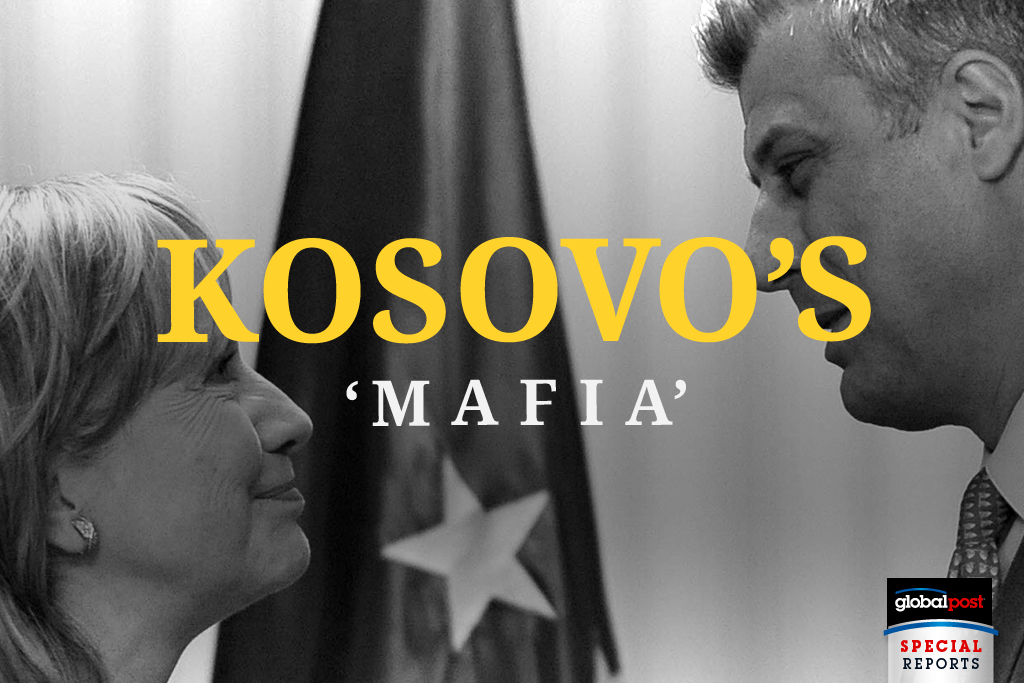
PRISTINA, Kosovo — It was the fall of 2000, just over a year after the end of the war in Kosovo, when two NATO military intelligence officers produced the first known report on local organized crime, painting the former political leader of the Kosovo Liberation Army (KLA), Hashim Thaci, as having “established influence on local criminal organizations, which control [a] large part of Kosovo.”The report, the existence of which has not been previously reported, was widely distributed among all NATO countries, according to former NATO sources interviewed by GlobalPost. And year after year as the nascent democracy of Kosovo struggled ...
Every now and then we are being bombed by some terms in order to get used to them and accept them as something regular, accurate and correct. Such a thing happened with the toponym of Kosovo.The same method was applied in Bosnia and Herzegovina, i.e with the toponym of Bosnia, which once was an Orthodox Christian medieval kingdom, meanwhile global media portrays it as it’s exclusively Bosnian Muslim land regardless the fact that history, old books speak differently. In that sense here are the facts easy to check:Encyclopedia Britannica, Edition 1971Reference: EB, Edition 1971, Volume 3, page 983, Entry: Bosnia, ...
South-East Serbia's province of Kosovo-Metochia (KosMet) is an autochthonous Slavic, in particular Serb, land. Now, the focal question became how this province became “disputed land”, and, in particular, what it has to do with ethnic-Albanians? In the following text, this issue is going to be considered in more details, from the geographical, (pre)historic, anthropologic, religious, and political points of view. We start with the geography, in particular, the physical geography of West Balkans.Kosovo Liberation Army, August 1998, Klechka village, KosMetThe region of Dinaric Alps It is known that physical and mental structures of a particular population are determined by many ...
The U.S. military base in Kosovo was constructed in 1999 without consulting with the government of Serbia and is the largest U.S. military base built outside of the U.S. since the Vietnam War. The site was apparently used for extraordinary renditions and has been referred to as a “little Guantanamo”. This is a very little known fact as NATO, the U.S., the European Union and the West are in the process of forcing Serbia to effectively give up Kosovo, and indicates the real motive for the West’s support of the Kosovo Liberation Army which it had deemed a terrorist organization ...
From the onset of NATO’s aggression from March 24 to June 11, 1999, the North Atlantic Treaty Alliance (NATO) flew over 35,000 combat missions over the Federal Republic of Yugoslavia. Over 1,000 warplanes (among others F-15, F-16, F-117) and 206 helicopters were used in the air strikes. More than 20,000 laser or satellite-guided weapons were launched and over 79,000 tons of explosives were dropped, including 152 containers with 35,450 cluster bombs, thermo-visual and graphite bombs, which are prohibited under international conventions.1The NATO forces justified the bombing of civilian targets as either “mistakes” or essential to the destruction of Milosevic and ...
The DEBKA website, close to Israeli military intelligence, knows well all the behind the curtain details of regional politics. A few days ago it reported about basically new turns of the way the events unfold in Syria. According to it, the Syrian extremists received a load of heavy weapons for the first time since the war started. The senders are the groups from Kosovo and the Republic of Bosnia and Herzegovina linked to Al Qaeda. The package includes Kornet and Fagot anti-tank systems delivered by the Soviet Union to former Yugoslavia in the past. The weapons ended up in the ...
Since World War II most of the world’s conflicts have revolved around struggles for independence against Western and Japanese colonial/imperial regimes.Following formal independence, a new type of imperial domination was imposed – neo-colonial regimes, in which the US and its European allies imposed vassal rulers acting as proxies for economic exploitation. With the rise of US unipolar global domination, following the demise of the USSR (1990), the West established hegemony over the East European states. Some were subject to fragmentation and sub-divided into new NATO dominated statelets.The quest for a unipolar empire set in motion a series of wars and ...
Greater Albania under Nazi GermanyDuring World War II, 35,000 to 40,000 Kosovo Albanians were recruited by Nazi Germany as part of the German occupation forces and security formations in Greater Albania, a state created by Adolf Hitler and Benito Mussolini that included Kosovo-Metohija, western Macedonia, and territory from Serbia and Montenegro. In Albania, there were 30,000 Albanians who were in the German occupation forces. In 1941, the German occupation forces created a Kosovo Albanian Gendarmerie with headquarters in Kosovska Mitrovica. In 1944, these forces were incorporated into the Skanderbeg Nazi SS Division. In 1942, Balli Kombetar organization battalions were established ...
Origins of images: Facebook, Twitter, Wikimedia, Wikipedia, Flickr, Google, Imageinjection, Public Domain & Pinterest.Read our Disclaimer/Legal Statement!Donate to Support UsWe would like to ask you to consider a small donation to help our team keep working. We accept no advertising and rely only on you, our readers, to keep us digging the truth on history, global politics and international relations.[wpedon id="4696" align="left"]SaveSave
The assassination of Kosovo’s Serb leader Oliver Ivanović on January 16th, 2018 in the northern (the Serb) part of the divided city of Kosovska Mitrovica once again put on the agenda both the issue of contested land of Kosovo and Serbia’s policy toward the West, in particular, the EU.The Western (the USA/EU) client Serbia’s government is a quite long time under the direct pressure from Brussels to recognize an independence of the narco-mafia Kosovo’s quasi-state for the exchange to join the EU but not before 2025. It is only a question of time that a Western colony of Serbia has ...
The NATO occupation was seen by Arab/Muslim countries as an opportunity to transform Kosovo-Metohija into a Muslim state. Terry Boyd in the Stars and Stripes article “In Kosovo, Islamic groups work to rebuild country, attract followers,” September 21, 2001, examined how Muslim countries were seeking the Islamization of Kosovo. The US State Department listed Kosovo as having active cells of al-Qaeda, Ossama bin Laden’s terrorist network. Al-Qaeda and Ossama bin Laden were aiding the UCK jihad in Kosovo. Iran was also active in Kosovo and Bosnia. Boyd reported that an Iranian Islamic group offered 120-300 German marks a month for ...
Southern Serbia’s autonomous province of Kosovo and Metochia (KosMet) has been subject to a gradual, but a permanent change of its demographic content during the time of Titoslavia (Socialist Yugoslavia, 1945−1991). Three principal factors were crucial to the drastic demographic change in this Serbian province in favor of ethnic (Muslim) Albanians and at the expense of ethnic (Christian Orthodox) Serbs and Montenegrins.Demographic explosionFirst and the most important has been the demographic explosion, due to the enormous birth rate of Albanians. In the situation when this trend on the global scale was in the opposite direction, with even African countries diminishing ...
Figure 1. Ethnic Albanian refugees at the Lion airport, April 18, 1999 A French magazine published a couple of photos from the Lion airport on April 18th, 1999, at the time when NATO bombers were pouring their lethal burden over Serbia (and partly over Montenegro), in the course of their “preventing humanitarian catastrophe” at Kosovo. One picture showed the French weaponry ready to be transported to Kosovo, the other presented an ethnic-Albanian family from Kosovo, refugees just arrived to France. The photo deserves well our attention, for it speaks very much indeed; it exposes vividly the very crux of the ...
There was international jubilation when Montenegro seceded from its union with Serbia in 2006 after a controversial referendum. The Referendum Law prevented Montenegrins living and registered in Serbia from voting in the referendum, ensuring that tens of thousands of Montenegrins, in a country of only 622,000, who would have voted to remain the union could not vote in favour of maintaining it.It must be remembered that state-paid workers like teachers and police were told by the Democratic Party of Socialists (DPS) leader Miodrag Vuković before the referendum May 2006, that someone “cannot work for the state and vote against it,” something objectively ...
The Great Powers installed a German army officer, a German Prince William, Wilhelm of Wied, Germany, as the first recognized ruler of an “independent” Albania, a puppet or proxy regime or government set up by the Great Powers.In many ways, the conflict between the Great Powers and Serbia over Albania in 1912-1913 prefigured and foreshadowed and was the precursor of the open conflict over Kosovo beginning in 1998. Albania achieved independence only because Serbia and the other Balkan League powers were able to defeat Ottoman Turkey militarily. The Great Powers immediately established a protectorate in Albania and planned to use ...