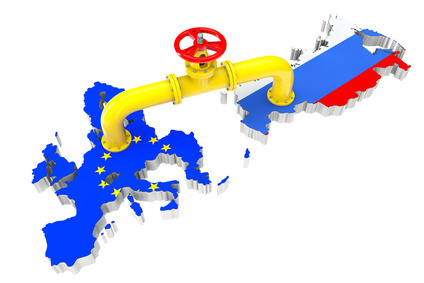

The main topic of recent publications in the European media has been the discussion of record gas prices. As a result, the population of the European Union countries is facing a real shock threat, and the European industry is approaching a critical point. Gas and electricity prices break new records every day, and some energy-intensive companies are shutting down production because it is becoming too expensive to maintain them. The situation could worsen if the energy crisis goes from a price shock to a deficit, and then more industries would have to make a decisive move by using the switch.
The discussion of rising energy prices was a hot topic at the meeting of EU finance ministers, which began on October 4 in Luxembourg. Against this background, a geographical split has already emerged in the EU: Eastern Europe fears a fuel crisis, while renewable energy sources are becoming more expensive in Western European countries. Northern Europe is calling for a drastic reduction in carbon dioxide emissions. Countries more dependent on fossil fuels fear that energy from renewable sources will also become too expensive.
As The Independent notes, some gas-consuming companies in Europe and Asia have gone bankrupt because of rising prices. Four energy companies in Britain alone have not withstood price rises in recent weeks, and heavy industry is suffering.
British market analyst Bill Blain is confident that Britons will be dying of cold this winter. As energy prices continue to rise, costs will place a disproportionate burden on the poorest members of society. Under these conditions, the problem of income inequality will manifest itself in full, as the most vulnerable citizens will face a stark choice: heat or food. So Britain is likely to be on its knees this winter, begging for energy wherever it can. The situation in Europe will be no better. The Middle East will raise prices as much as it can.
On October 7, one of London’s most prominent think tanks, Capital Economics, presented its research on Europe’s current energy challenges, indicating that natural gas prices in Europe will remain at historic highs over the next year. The extraordinary increase in gas prices increases the likelihood that European governments will be forced to impose restrictive regulations in electricity and natural gas supply to industry and households, leading to marked economic losses in the eurozone economy.
Moreover, millions of European families use natural gas for home heating and cooking. If they do not secure themselves with long-term supply contracts at a fixed price or are not helped by the national authorities, they could face a severe price shock.
In France, the government has already promised a one-time subsidy of 100 euros to 5.8 million low-income households to cover some of the increased energy costs. In Spain, the country’s authorities have announced a reduction in consumer energy prices to 2018 levels. In addition, the government called on the European Commission to “immediately respond to the price hike.”
Europe’s energy price shock could be further exacerbated if Algeria implements a threat to shut down the Algerian gas pipeline to Spain, Portugal, and Morocco. Algeria had already announced the pipeline’s closure on October 30 because of the escalating conflict between Algeria and Morocco over Western Sahara, which Morocco claims. After the European Commission stressed the importance of the strategic partnership with Morocco, Algeria threatened to close the gas pipeline through Morocco to Europe.
Amid Europe’s energy crisis, France, Spain, the Czech Republic, Romania, and Greece have proposed an investigation into the causes of the record gas price hike, the five EU countries said in a joint statement released by Bloomberg.
Nurtured in recent years by Washington’s Russophobic propaganda, certain political circles in Europe did not fail to strengthen their unjustified attacks on Russia, accusing it of being responsible for the considerable increases in gas prices in the recent period. Thus, on April 17, 42 non-partisan MPs sent a letter to the European Commission calling for an investigation into suspected price manipulation by Russian Gazprom, which exports gas to Europe. On September 22, State Department’s Senior Advisor for Energy Security Amos Hochstein criticized Russia in a televised interview for refusing to supply gas when there are sufficient reserves.
The other day, US Secretary of State Antony Blinken, in an interview with Bloomberg, urged Russia not to use energy supplies to promote its foreign policy interests or as a “weapon of its foreign policy.” In doing so, he deliberately failed to mention the considerable role played by the US in aggravation of the energy crisis in Europe, a provocative price policy of Washington in supplying its LNG to the European market. It was using Ukraine, Poland, and other “US minions” to slow down Russia’s construction of the Nord Stream-2 gas pipeline. If the pipeline had been put into operation, it would have prevented a gas deficit in Europe long ago.
However, all of these regular slanderous Russophobic campaigns have been shattered by the convincing conclusions of several German politicians and international experts. Thus, the International Energy Agency (IEA) published a statement on September 21 in which it commented on the gas price hike and provably refuted fake accusations of Russia. As the Japanese publication Yahoo News Japan emphasizes, all the factors of price increases cited by the IEA are economical, and there is no evidence that Russia’s political or geopolitical intentions are behind supply cuts or price manipulation. On September 22, a representative of the German Economy and Energy Ministry also said that Russia was fulfilling its contractual obligations. German utility Uniper, which buys Russian gas, confirmed on September 22 that it receives gas from Gazprom in accordance with the contract.
It was possible to stop and even reduce the rise in energy prices for Europe only after Russian President Putin became involved in resolving this issue. As Bloomberg admits, “After the Russian president said the other day that Russia is ready to help stabilize global energy markets, Putin is literally saving Europe.”
Therefore, after World War II, history has repeated itself, and once again, Russia is rescuing Europe and Europeans from collapse. Here’s hoping that Europeans will keep this in mind and will not throw themselves, as in the 1950s, “in return” for this into another “cold war” with Russia and a Russophobic information campaign.
Origins of images: Facebook, Twitter, Wikimedia, Wikipedia, Flickr, Google, Imageinjection, Public Domain & Pinterest.
Read our Disclaimer/LegalStatement!
DonatetoSupportUs
We would like to ask you to consider a small donation to help our team keep working. We accept no advertising and rely only on you, our readers, to keep us digging the truth on history, global politics, and international relations.
Back in the 1990s something happened in central Bosnia-Herzegovina that inspired people to this day and helps explain why that country now has more men fighting in Syria and Iraq (over 300), as a proportion of its population, than most in Europe.The formation of a "Mujahideen Battalion" in 1992, composed mainly of Arab volunteers in central Bosnia, was a landmark. Today the dynamic of jihad has been reversed and it is Bosnians who are travelling to Arab lands."There is a war between the West and Islam," says Aimen Dean, who, as a young Saudi Arabian volunteer, travelled to fight in ...
War is evil; permanent war is permanent evil. It is evil to humans but also to other species and the planet; the weapons used destroy us but also contaminate and destroy nature.Despite a general knowledge of the evils of war and acceptance of peace and the rule of law, war has become a permanent feature of the 21st century -destructive, cruel, dehumanizing and vindictive. Its message: those who can kill and destroy the most have the upper hand. Major General Smedley Butler said it in a speech in 1933: “war is a racket.” Butler, who had joined the Marine Corps ...
Over the past several years, analysts and commentators have noticed a rising tide of domestic support for the Croatian homegrown Nazi movement of the Second World War, the Ustashe, which actively exterminated Serbs, Jews, and Roma in the territory it controlled from 1941-45. Far from condemning this alarming development, the Croatian government, the European Union, and non-state actors within it have tacitly and actively supported the rising tide of sympathy towards the Ustashe.This disconnect between the ostensible “European values” of human rights and tolerance that the European Union claims to represent, and its tacit support of trends towards extremist politics ...
Ukraine is a virtual US colony – the way it’s been since the Obama regime’s February 2014 coup, replacing democratic governance with fascist tyranny in Europe’s heartland.Ukraine shares a near-1,500 mile land and sea border with the Russian Federation, the longest Western frontier with the country.The regime running things is a hotbed of militarized extremism, waging war on its own people, committing appalling human rights abuses – with full support and encouragement from Washington and key NATO countries.Stop NATO’s Rick Rozoff earlier explained that Ukraine is “the decisive linchpin in plans by the US and its NATO allies to effect ...
General Adolf Heusinger (August 4, 1897 – November 30, 1982) was a German general officer who briefly served as Adolf Hitler’s Chief of the General Staff of the Army during World War II and served as the first Inspector General of the Bundeswehr, the West German armed forces, from 1957 to 1961. Heusinger served as Chairman of the NATO Military Committee from 1961 to 1964.Heusinger was born in Holzminden, in the Duchy of Brunswick, German Empire. He entered the Imperial German Army on June 17, 1915, and was assigned to 7. Thüringisches Infanterie-Regiment Nr. 96, an infantry regiment raised in ...
There are more questions than answers to the Crimean ‘question’.After more than two decades belonging to an independent Ukraine, the Crimean peninsula has become part of Russia, which has thereby gained an extra 27,000 km2 of territory and over two million new citizens. Ukraine and the West see this unprecedented event as annexation and a sign of the Kremlin’s neo-imperial ambitions. To countries not directly involved in the Ukrainian crisis, it is a dangerous violation of the Eurasian status quo that could cause widespread destabilisation in the area, while in Moscow’s eyes it is ‘the return of Crimea and Sevastopol ...
On the eve of President Obama's April 2016 visit to Saudi Arabia, the U.S. Congress began debating the Justice Against Sponsors of Terrorism Act (JASTA), that would, inter alia, allow the families of victims of the September 11 attacks to sue the Saudi government for damages. Also in April 2016, the New York Times published that a 2002 congressional inquiry into the 9/11 attacks had found that Saudi officials living in the United States at the time had a hand in the plot. The commission's conclusions, said the paper, were specified in a report that has not been released publicly.[1] ...
President Bill Clinton’s favorite freedom fighter just got indicted for mass murder, torture, kidnapping, and other crimes against humanity. In 1999, the Clinton administration launched a 78-day bombing campaign that killed up to 1500 civilians in Serbia and Kosovo in what the American media proudly portrayed as a crusade against ethnic bias. That war, like most of the pretenses of U.S. foreign policy, was always a sham.Kosovo President Hashim Thaci was charged with ten counts of war crimes and crimes against humanity by an international tribunal in The Hague in the Netherlands. It charged Thaci and nine other men with ...
How did Russia and the West slip back into what seems like the Cold War all over again? How dangerous is the current confrontation? Should the world be ready to face a nuclear war? We ask somebody who’s renowned for his insights. World-famous academic, linguist, philosopher and political commentator Noam Chomsky is on Sophie&Co today.Follow @SophieCo_RTSophie Shevardnadze: World-renowned academic Noam Chomsky, Professor Noam Chomsky, welcome to the show, it’s a great pleasure to have you with us today. Now, today U.S.-Russia relations are at a Cold War low. Rhetoric resembles what we heard in the 80-s. What is the worst-case ...
The interesting detail of the Lockerbie bombing was the extent of how far the plotters went to divert blame to Libya.There can be no better example of the old saying “a lie can travel half way around the world before the truth is even putting its shoes on” than Lockerbie. This tragic story of a U.S. passenger flight brought down by a bomb over the small Scottish village just a few days before Christmas in 1988 is heartbreaking on a number of levels. But the main one is that even to this day, the Americans continue to keep the huge ...
In British mainstream commentary, the 1999 NATO bombing campaign against Slobodan Milosevic’s Yugoslavia is seen as a ‘humanitarian intervention’. Tony Blair still receives much praise for coming to the defence of the ethnic Albanians in Kosovo, whose plight was surely serious as they were subject to increasingly brutal abuses by the Yugoslav army towards the end of 1998 and early 1999. Yet the NATO bombing that began in March 1999 had the effect of deepening, not preventing, the humanitarian disaster that Milosevic’s forces inflicted on Kosovo. The bulk of the atrocities committed by Yugoslav forces took place after the NATO ...
Serbia organized an exhibition of cultural and historical heritage of Kosovo and Metohija in Paris, the headquarters of UNESCO, to serve as a reminder to the West of how they let it be destroyed since the 2000s.There is a lot of Serbian cultural heritage in Kosovo and Metohija. Now, Kosovo is an independent state, partially recognized by Western countries. But the world was shocked by anti-Serbian riots organized by Albanians during the Kosovo unrest in 2004. Many Serbian monuments were damaged in the chaos.Albanian extremists living in Kosovo, since the 2000s, have continued to raid and damage Serbian cultural heritage ...
2006-Present07 February 2018: Israel advances a plan to build a walkway though the Mount of Olives in East Jerusalem to connect two settler residential compounds in the Palestinian At-Tur neighbourhood07 February 2018: During a Knesset report on the policy of refusing to return the bodies of Palestinians killed by Israeli forces to their families for burial, officials are urged to ‘throw it into the sea’, ‘we should not return bodies. We should demolish homes’, others say05 February 2018: A number of Israeli politicians, including coalition government members, call for ‘practical moves’ to be taken to annex settlements in the occupied West Bank while Donald ...
Belarus is a land known also as Belorussia (White Russia, Weißrussland) in East Europe which was for centuries occupied by a Polish-Lithuanian common state until it became included in Tsarist Russia in the late 18th century.[1] Belarus is facing many identity problems but the most important is the ethnolinguistic challenge to a separate Belarussian[2] national feature.National identityA common national identity is a focal element for the creation of a national state as without a common identity that is based on a fundamental element of group’s identity a psychological sense of common solidarity cannot be developed. However, such solidarity is a ...
IntroductionThe article deals with the Great Economic Depression of 1929-1933 and its negative consequences on the economy of the German Weimar Republic. The aim of the article is to present the main causes and consequences of the global economic and financial crises known as the Great Economic Depression and to investigate how this depression influences the economy and finance of the newly democratic post-war German state called the Weimar Republic. The particular importance of this research subject is the fact that among all European states at the time it was exactly the Weimar Republic to be mostly affected by the ...
Why Does America Keep “Losing” Its Wars?Below, we demonstrate that the U.S. keeps “losing” war after war.There are 3 potential reasons this might be happening: Is this chaos an intentional way to implement regime change and grab resources? Or is this a sign of the decline of the American empire … and we just can’t win a war anymore? Or do those in charge just not really give a damn about winning … and are they just focusing on one short-term goal after another?We’ll let you decide why you think this keeps happening. But if you don’t believe that the ...
Today the Old (dying out) Continent is under multi-faced crises pressure some of them having older roots but the others are the product of current political decisions and moves by the European decision-makers (and those who are behind them across the Ocean).The European oldest and mostly painful crisis-problem is a biological declination of the whole continent what from the economic point of view means, at least for the western countries, an import of a huge number of the „outsiders“ in order just to keep the same level of the economic production and national GDP. This solution of course produces a ...
The official end of the Cold War era in 1989 brought during the first coming years a kind of international optimism that the idea of the „end of history“ really could be realized as it was a belief in no reason for the geopolitical struggles between the most powerful states. The New World Order, spoken out firstly by M. Gorbachev in his address to the UN on December 7th, 1988 was originally seen as the order of equal partnership in world politics reflecting „radically different international circumstances after the Cold War“.[1]Unfortunately, the Cold War era finished without the „end of ...
The corporate media presents Russia as militaristic but ignores Canada’s invasion of that country.100 years ago today a popular revolt ousted the Russian monarchy. Enraged at Nicholas II’s brutality and the horror of World War I, protests and strikes swept the capital of Petrograd (Saint Petersburg). Within a week the czar abdicated. Later in the year the Bolsheviks rose to power in large part by committing to withdraw from the war.The English, French and US responded to the Bolshevik’s rise by supporting the Russian monarchists (the whites) in their fight to maintain power. Six thousand Canadian troops also invaded. According ...
Genocide accusations are, it would seem, the latest fashion spreading out of the Balkans. On December 5, a former minister in the “government” of NATO occupied and administered Kosovo, Ivan Todosijević, who happens to be an otherwise occupation friendly and cooperative ethnic Serb, was sentenced to a two-year prison term. The court found him guilty of making what it considered the outrageous claim that the so-called genocidal “Račak massacre,” which in 1999 triggered NATO aggression against Yugoslavia, was an imposture. Since the trial began just two days before, by Balkan standards the swiftly reached verdict was remarkably expeditious, suggesting the ...