
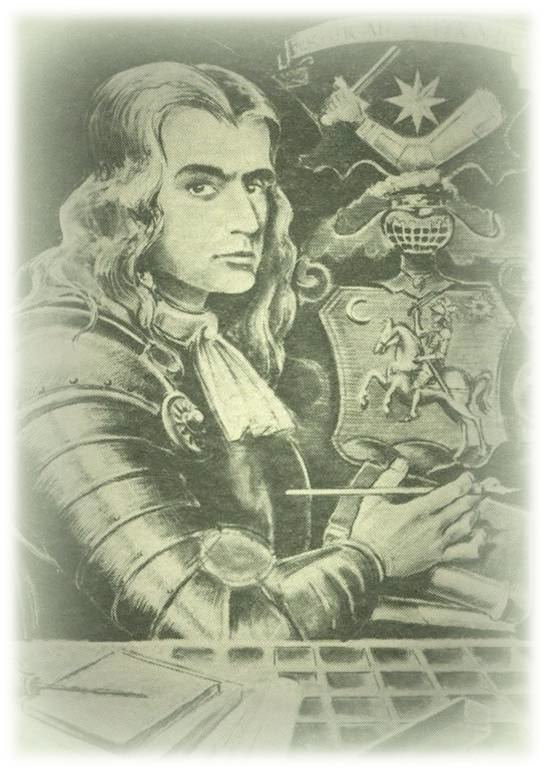
As a matter of fact, many ethnic Slavs have participated in the armies led by the Iranian-Sarmatian Croats and Serbs and have migrated to the Balkans with their Iranian-Sarmatian military leaders and lords [...]
Contemporary historiography and the Slavonic studies upon the question of the ethnolinguistic origin of the Croats and the Serbs more and more incline on the side of those authors who support the linguistic theory of the Indo-Sarmatian (the Iranian) origins of proto-Croats and proto-Serbs.
The Indo-European Iranian origin
According to this contemporary explanation, Croats and Serbs were the people of the Iranian (the Sarmatian) origin, who migrated into the Balkans in the 7th century and subjected the Slavs there. However, in the course of time, they became totally slavicized (like proto-Turkic Bulgars who were settled on the Balkans between the Danube River and the Balkan Range) but gave their own ethnic name to the Balkan Slavic subjects. At least from the beginning of the 9th century, both Croats and Serbs are clearly a Slavic people. For those authors, linguists proved that words Croat and Serb are not of the Slavic language at all. They believe that name Croat is similar to the Iranian-Sarmatian place name Choroathos, on the lower Don River, or that name Croat originated in the Iranian Chrovatosa, a prominent chieftain who gave his own personal name to the tribe (people) ruled by him.
Some scholars argue that the Iranian name Croat can be found as a personal name in the inscriptions from Tanais from the 2nd and 3rd centuries, or that words haurvatar means in the Iranian – “cattle-breeder”, and huurvatha – “friend”. In addition, there are two Greek inscriptions in the area of the Azov Sea around the mouth of the Don River related to the personal names – Horóathos and Horúathos, which are considered to be of the Iranian-Sarmatian origin. Around the time of Jesus Christ, there was the Iranian-Sarmatian tribe on the lower Don River that was known to the Greek geographers as Serboi. In the 10th century, one Arab geographer noted a Sarban tribe in the Caucasus. These two tribes are clearly not of the Slavic origin.
As a matter of fact, many ethnic Slavs have participated in the armies led by the Iranian-Sarmatian Croats and Serbs and have migrated to the Balkans with their Iranian-Sarmatian military leaders and lords. The sources are speaking in this matter about Indo-European Slaveni – a Slavic people living north of the Danube River in the 5th and 6th centuries which basically provided the crucial part of the manpower which occupied the Balkan Peninsula in the 6th and early 7th centuries (more precisely, from around 580 to 626, according to the Byzantine sources). Assimilation, i.e. Slavization, of the Iranian-Sarmatian “Croats” and “Serbs” started already beyond the Carpathian Mountains. The Iranian-Sarmatian Croats and Serbs have been relatively few in number, but as warrior horsemen, they became greatly superior over conquered Slavs. They came to the Balkans in the second wave of the Slavic settlement on the peninsula where they met and subjugated already settled Slavic tribes from the first wave of migration to the Balkans. The newcomers, led by the Iranian-Sarmatian Croats and Serbs, provided a general name for all Slavs under their sway, which are known today as the ethnic Croats and Serbs. In other words, since the Slavs were the vast majority, and as the Iranian-Sarmatian Croats and Serbs intermarried and mixed with them, in the course of time the conquerors came to speak Slavic too and ultimately the Slavic language they came to speak and which had been spoken by the earlier arriving Slavs (from the first migration) came to be named after the Iranian-Sarmatian newcomers (from the second migration to the Balkans). Finally, this process of assimilation was identical with that one of the Turkic Bulgars who conquered the Seven Slavic tribes on the territory of present-day North Bulgaria. They came to be slavicized in the course of time but provided the ethnic name for the Slavic people, language, and state established in Bulgaria. Those Seven Slavic Tribes have been a group of Slavic tribes who formed a kind of political confederation before the Turkic Bulgars crossed the Danube River in 671 (under the Khan Asparuh) and occupied them. However, the Slavic tribe Severi in present-day North Bulgaria succeeded even after the arrival of the Turkic Bulgars to maintain considerable sovereignty in the 8th century.
In general, the early medieval Serbs and Croats were a people of most probably Iranian ethnolinguistic origin, who migrated into what was the territory of ex-Yugoslavia at the turn of the 7th century and subjected the autochtonous Slavs settled there. In the course of time, they became slavicized but gave their ethnic names to the subjected Slavic people and its language. Both proto-Croats and proto-Serbs became at least from the 9th century, if not earlier, clearly a Slavic people. According to the Byzantine source of the Emperor Constantine VII Porphyrogenitus (913−959) De administrando imperio, the Balkan Croats arrived from the territory of White Croatia north of the Carpathians.
There is an opinion by many experts in the Slavic studies that ancient Sarmatians, Scythians, and Antes were the Slavs and, therefore, proto-Croats and proto-Serbs maybe parts of them. The Scythians were an Iranian people which dominated Central Asian steppes up to the Caucasus and the Danube River during the first millennium B.C. The Sarmatians also have been an Iranian people originating in Central Asian steppes but settled in the territory north of the Danube River in the 3rd−5th centuries. The Antes were an ancient Iranian tribe but in the course of time came into contact with the Byzantine Empire by absorbing the Slavs and, therefore, became the Slavic speaking population. They came from Central Asian steppes in the 5th century occupying the territories of present-day East Romania and Moldova (Bessarabia). In addition, most probably that ancient Balkan Illyrians of the Indo-European origin, dominating the Central and West Balkans, have been, in fact, autochtonous Slavs (but not Albanians) of South-East Europe. They became conquered by Rome before the Slavic (Croat and Serb) second migration.
The Turkic peoples at South-East Europe
The Turkic peoples have been a linguistic group of people originating in Central Asia whose majority swept across Central Asian steppes. Some of them migrated as far as the present-day Great Hungarian Plain (Hungarians or Magyars). They had historically a great influence on the Balkan Serbs and Croats as raiders or even as overlords of the Slavs settled on the Balkan Peninsula. For instance, the Croats became governed by the Hungarians from 1102 to 1918. The Turkic people being in direct interaction with the Balkan Serbs and Croats were the authentic Bulgars, Avars, Khazars, Pechenegs, Cumans, and Ghuzz (Uze). It is important to mention that in the Byzantine sources the term Turk was usually used for the Hungarians (Magyars), although they have not been really a Turkic people (as they are of the Mongol origin). The Bulgars could be found it their original homeland north of the Black Sea and the Sea of Azov. Some of them in the second half of the 7th century migrated across the Danube River into present-day northern part of Bulgaria between the Danube River and the Mt. Balkans (ancient Mt. Haemus) where they conquered already settled Slavs there. However, by the early 9th century the Turkic Bulgars had become fully slavicized but their ethnic name was given to the Slavic people and their language. Nevertheless, in the sources from the 10th century onward the term Bulgarian refers to a Slavic people.
Božić I., Ćirković S., Ekmečić M., Dedijer V., 1973: Istorija Jugoslavije. Beograd.
Conte F., 1986: Les Slaves. Aux origines, des civilisations d’ Europe centrale et orientale (VI–XIII siècles). Paris.
Fine J., 1994: The Early Medieval Balkans. A Critical Survey from the Sixth to the Late Twelfth Century. Ann Arbor.
Gregoire H., 1944–1945: L’origine et le nom des Croates et des Serbes, Byzantion, XVII. 88–118.
Macan T., 1992: Povijest hrvatskoga naroda. Zagreb.
Pavličević D., 2000: Povijest Hrvatske. Drugo, izmijenjeno i prošireno izdanje. Zagreb.
Perić I., 1997: Povijest Hrvata. Zagreb.
Shaffarik J. P., 1872: Uber die Abknuft der Slawen. Ofen.
Stipčević A., 1989: Iliri. Zagreb.
Vasiliev A. A., 1952: History of the Byzantine Empire 324−1453. Wisconsine.
Бајић Ј., 2003: Блажени Јероним, Солинска црква и Србо-Далмати. Шабац.
Византијски извори, I−III, 1966: Београд.
Влајић-Земљанички Б., 1999: Срби староседеоци Балкана и Паноније у војним и цивилним догађајима са Римљанима и Хеленима од I до X века. Београд.
Деретић И. Ј., Антић П. Д., Јарчевић М. С., 2009: Измишљено досељавање Срба. Београд.
Јиречек К., 1922: Историја Срба. Београд.
Јовић М., 2003: Срби пре Срба. Краљево.
Луковић-Пјановић О., 1990: Срби, народ најстарији. I−II. Београд.
Милановић М., 2011: Историјско порекло Срба. Друго допуњено и проширено издање. Београд.
Никић М., 2006: Порекло Срба Словена Скита. Београд.
Новаковић Р., 1995: Срби. Београд.
Пешић Р., 1995: Винчанско писмо. Београд.
Пипер П., 1998: Увод у славистику. 1. Београд.
Трбуховић В., 2006: Индоевропљани. Београд.
Ћоровић В., 1993: Историја Срба. Београд.
Serbian lands around 1200
Personal disclaimer: The author writes for this publication in a private capacity which is unrepresentative of anyone or any organization except for his own personal views. Nothing written by the author should ever be conflated with the editorial views or official positions of any other media outlet or institution.
We would like to ask you to consider a small donation to help our team keep working. We accept no advertising and rely only on you, our readers, to keep us digging the truth on history, global politics and international relations.
Back in February, we warned about the prospect of Israel selling F-16s to Croatia, a state in which WWII revisionism and Holocaust denial are running rampant, and memories of the Nazi puppet Independent State of Croatia are routinely glorified. In the meantime, that has become a done deal. But there is more. Not only will Israel sell half a billion dollars worth of fighter jets to Croatia, but on August 5, three Israeli F-16s, crewed by Israeli pilots, took part in a parade to celebrate the 23rd anniversary of the “Operation Storm,” in which more than 2,300 Serbs were killed, including more than 1,200 civilians, among which more ...
Or Yugoslavia’s for that matter. The level of western cynicism on “territorial integrity” is far greater than you probably know. The Kosovo-Crimea discrepancy is just the tip of the icebergEarlier this month Obama gave an earful to Putin (from a G7 meeting held 2,000 kilometres away from Moscow) complaining that this day and age you just can’t go around violating the “territorial integrity” and “sovereignty” of other countries:“Does he continue to wreck his country’s economy and continue Russia’s isolation in pursuit of a wrong-headed desire to recreate the glories of the Soviet empire? Or does he recognize that Russia’s greatness does not ...
,Gavrilo Princip was first buried in secret in an unmarked grave at the Theresienstadt or Terezin prison following his death on April 28, 1918. His remains were exhumed and transferred to Sarajevo on July 7, 1920. This was Gavrilo Princip’s grave until 1939 when a Chapel was built to replace the grave.The other conspirators were also interred in this grave. Bogdan Zerajic’s remains were also reburied here.The assassination occurred on the Orthodox holiday, Vidovdan or St. Vitus’ Day, Sunday, on June 28, 1914. For this reason the conspirators were called the “Vidovdan Heroes” and the Chapel memorial was named “The ...
After the April War of 6−18th, 1941, the Germans, Italians, Bulgarians, and Hungarians occupied and divided the territory of the Kingdom of Yugoslavia into several parts. The Germans annexed North Slovenia and put under their direct occupation the Yugoslav part of Banat and Central Serbia with Kosovska Mitrovica. The Italians occupied South Slovenia, established their marionette regime in Montenegro, and annexed the Gulf of Boka Kotorska, parts of Konavli and Dalmatia. The Hungarians annexed Prekomurje, Baranja and Bachka. The Bulgarians occupied East and Central Vardar Macedonia and South-East Serbia. The Italians established their own marionette state of Greater Albania with ...
Ema Miljkovic-Bojanic, M. A.Institute of History ofSerbian Academy of Sciences and ArtsBelgrade, 2000Malcolm’s Apology of the “Pax Ottomana” (Ab)using of historiography and historical facts for political ends is not a novelty introduced towards the end of the twentieth century. Its instances have been known throughout history, so that “practically there is not a single epoch of human history that was not controlled – by the Church, state, nation, party, leadership…” But precisely at a time when historiography seemed to be getting rid, at least partly, of the grip of “supervision” and when a critical approach was getting the upper hand, the ...
In Kukavica village near Rogatica (nowadays Bosnia and Herzegovina), today was marked 27 years since crimes against Serbian civilians committed by Bosnian Muslims, members of the so-called Army of Bosnia and Herzegovina on August 27, 1992.In an attack on a column of Serbian civilians, involving about 1,000 elderly people, women and children on tractors and passenger vehicles, Bosnian Muslim extremists killed 26 and injured 80 Serbs.Rogatica Mayor Milorad Jagodic called this a monstrous crime as among the victims are a child of 11 and 82 years old man.“This was a column of innocent people who were looking for refuge and ...
Jasenovac in Croatia was the third largest World War II concentration camp in Europe by number of victims. It was operated by the Catholic and Nazi-allied Ustasha government. Wartime Croatia has been called “one great slaughterhouse.”The prisoners – mostly Serbs, Jews and Roma had their throats cut with specially designed knives, or they were killed with axes, mallets and hammers; they were also shot, or they were hung from trees or light poles. Some were burned alive in hot furnaces, boiled in cauldrons, or drowned in the River Sava.Here the most varied forms of torture were used. Finger and toe nails were pulled out with ...
After the Russian military victory over the Ottoman Empire in the 1877−1878 Russo-Ottoman War it was signed the San Stefano Treaty between these two states on March 3rd, 1878. According to the treaty, a Greater “San Stefano” Bulgaria, under the direct protection by Russia, had to be established within the borders of the Ottoman Empire. However, an idea of “San Stefano Bulgaria” directly affected three Balkan nations: the Serbs, Greeks and Albanians as some of their ethnic and historical territories had to become part of a Greater Bulgaria. The “San Stefano Bulgaria” was projected by the Russian authorities to cover ...
Contrary to the popular belief, the bloodiest trade in history (when organs were taken away from captured and imprisoned Kosovo Serbs), did not begin in Kosovo, but in Croatia.As reported by the Serbian media in the process conducted by EULEX mission in Kosovo , ” one of the accused confessed about participating in human organ sale”.Driton Jiljta pleaded guilty to the indictment charging him with “abuse of authority and illegal medical activity.” This case is apart of larger process and the prosecution has charged seven Albanians and two foreigners for trafficking , organized crime and transplantation formulized as “illegal medical ...
On November 21st, 2015 it was the 20th anniversary of the 1995 Dayton Peace Accord – a treaty signed by four Presidents (the USA, Croatia, Serbia and Bosnia-Herzegovina) that led to an end of the civil war in Bosnia-Herzegovina. As a result of the Dayton Peace Accord a new “independent and internationally recognized state” emerged: Bosnia-Herzegovina as a confederation of two political entities (the Republic of Srpska and the Muslim-Croat Federation) but ethnically strictly divided into three segments composed by the Serb, Croat and Muslim (today Boshnjak) controlled territories. In contrast to the Republic of Srpska (49% of the territory ...
A Greater Croatia according to the advocates of Illyrian Movement's ideologyPart IThe Illyrian Movement until the creation of political parties (1841)Certainly, publishing of Lj. Gaj’s Kratka osnova horvatsko-slavenskoga pravopisanja/Die Kleine Kroatische-Slavischen Orthographie in 1830 marked the beginning of the Croatian national revival movement and made Ljudevit Gaj to be a leading figure of it. The essential political-national value of the book was that Gaj proposed the creation of one literal language for all Croats. It was a revolutionary act at that time, which was done, according to Gaj and other leaders of the movement, for the ultimate political-national purpose to ...
Greater Albania under Nazi GermanyDuring World War II, 35,000 to 40,000 Kosovo Albanians were recruited by Nazi Germany as part of the German occupation forces and security formations in Greater Albania, a state created by Adolf Hitler and Benito Mussolini that included Kosovo-Metohija, western Macedonia, and territory from Serbia and Montenegro. In Albania, there were 30,000 Albanians who were in the German occupation forces. In 1941, the German occupation forces created a Kosovo Albanian Gendarmerie with headquarters in Kosovska Mitrovica. In 1944, these forces were incorporated into the Skanderbeg Nazi SS Division. In 1942, Balli Kombetar organization battalions were established ...
A project for Greater Albania – conspiracy or legitimate? According to a 2010 Gallup Balkan Monitor report, 83% of Albanians in Albania supported the idea of a Greater Albania, with 81% and 53% of Albanians in Kosovo and North Macedonia respectively supporting such an ambition.The ultimate goal? To have Kosovo and the Preševo Valley in Serbia, southern Montenegro, Epirus in Greece and western North Macedonia into a single Greater Albanian state. Although this may not be official policy of the Albanian Republic, it is ingrained into the Albanian mythos. The very idea of a Greater Albania has roots in the 1913 Treaty of London that left roughly 40% ...
Unfathomable as that may appear, yes, it was quite possible for the second-ranking slaughterhouse in Europe in recent memory to have slipped off the radar screen. Even such a renowned authority as Professor Gideon Greif is having an exceptionally difficult time of it in trying to put it back on.Precisely because it has not been the theme of any Hollywood spectaculars, Jasenovac does not attract any school excursions and textbooks are largely silent about it. Some background information on Jasenovac therefore seems like a good place to start.The Jasenovac death camp (1941 – 1945) is inextricably bound up with the ...
Since World War II most of the world’s conflicts have revolved around struggles for independence against Western and Japanese colonial/imperial regimes.Following formal independence, a new type of imperial domination was imposed – neo-colonial regimes, in which the US and its European allies imposed vassal rulers acting as proxies for economic exploitation. With the rise of US unipolar global domination, following the demise of the USSR (1990), the West established hegemony over the East European states. Some were subject to fragmentation and sub-divided into new NATO dominated statelets.The quest for a unipolar empire set in motion a series of wars and ...
Serbian emergency shelters for Bosnian refugees sold to the public as a concentration camp to win public support for international intervention.In August 1992, millions of people were shocked to see photographs of a supposed Bosnian Serb death camp. But the death camp story was a lie. The ITN crew had filmed from inside a fenced-in storage area. By shooting through the fence ITN created footage that gave the impression that the Bosnian men were imprisoned. With a little editing, this footage was turned into pictures that gave the impression of a death camp – media manipulation.The death camps were in ...
What constitutes water can be scientifically proven beyond any doubt, now what constitutes a nation-state is a far more organic question than it would seem. Each of us is very used to seeing maps with the same countries and lines on it throughout the years and take their existence as a given. But depending on where a map comes from its borders may actually look very different. One of these countries to some and non-countries to others is Kosovo which gradually continues to lose the support of the states that recognized it into existence. Furthermore, this sheds light on how ...
The Slavic CongressesThe idea of South Slavic political unification was surely a part of a broader pan-Slavic movement and ideology. If from nothing else, it can be proved from a very fact that the official flag of all kind of Yugoslavia (from 1918 to 2003) was, in fact, an insignia of the 19th century pan-Slavic movement, whose anthem was also used as an official state’s anthem of Socialist Yugoslavia (“Hey Slavs”).The first clear political expression of an idea of pan-Slavic reciprocity, solidarity, and possible unification was done at the First Slavic Congress held in Prague from May 5th to June ...
On January 19th, 2016 on the bilateral meeting between Russia’s President Vladimir Putin and the official representatives of the European Jewish Congress the latter applied to Putin to take necessary steps for the sake to improve the generally bad position of the Jewish community on the Old Continent. Surprisingly, the President, not so much as a joke, invited both all the present-day European Jews and those Jews who left the USSR simply to immigrate to Russia.At the first glance, one can say – very gentle and even democratic move by the President. However, lets a little bit to analyze the ...
United Nations Security Council Resolution 1244 (1999) guaranteeing sovereignty and territorial integrity of Serbia and the autonomy of Kosovo and Metohija within Serbia, is the highest binding legal document that obliges all UN members, including the member states of the EU, NATO, the OSCE, the OIC, the African Union.Resolution 1244 is the only reliable basis and the framework for any negotiations concerning status. Owing to grave mistakes made by the former Serbian authorities, the UN system has produced certain damaging documents of advisory and non-binding character. It is vital that no similar or even greater mistakes are made either presently ...