
The Black Sea, once a Soviet lake, now had on its north shore a pro-Western Ukraine, on its eastern shore a hostile Georgia, and on its western shore two former Warsaw Pact allies, Bulgaria and Romania, being taken into NATO [...]
Friday, a Russian SU-27 did a barrel roll over a U.S. RC-135 over the Baltic, the second time in two weeks.
Also in April, the U.S. destroyer Donald Cook, off Russia’s Baltic enclave of Kaliningrad, was twice buzzed by Russian planes.
Vladimir Putin’s message: Keep your spy planes and ships a respectable distance away from us. Apparently, we have not received it.
Friday, Deputy Secretary of Defense Robert Work announced that 4,000 NATO troops, including two U.S. battalions, will be moved into Poland and the Baltic States, right on Russia’s border.
“The Russians have been doing a lot of snap exercises right up against the border with a lot of troops,” says Work, who calls this “extraordinarily provocative behavior.”
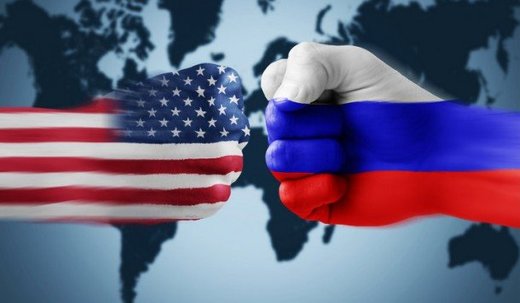
But how are Russian troops deploying inside Russia “provocative,” while U.S. troops on Russia’s front porch are not? And before we ride this escalator up to a clash, we had best check our hole card.
Germany is to provide one of four battalions to be sent to the Baltic.
But a Bertelsmann Foundation poll last week found that only 31 percent of Germans favor sending their troops to resist a Russian move in the Baltic States or Poland, while 57 percent oppose it, though the NATO treaty requires it.
Last year, a Pew poll found majorities in Italy and France also oppose military action against Russia if she moves into Lithuania, Latvia, Estonia or Poland. If it comes to war in the Baltic, our European allies prefer that we Americans fight it.
Asked on his retirement as Army chief of staff what was the greatest strategic threat to the United States, Gen. Ray Odierno echoed Marine Corps Gen. Joseph Dunford, “I believe that Russia is.”
He mentioned threats to Estonia, Latvia, Lithuania and Ukraine.
Yet, when Gen. Odierno entered the service, all four were part of the Soviet Union, and no Cold War president ever thought any was worth a war.
The independence of the Baltic States was one of the great peace dividends after the Cold War. But when did that become so vital a U.S. interest we would go to war with Russia to guarantee it?
Putin may top the enemies list of the Beltway establishment, but we should try to see the world from his point of view.
When Ronald Reagan met Mikhail Gorbachev in Reykjavik in 1986, Putin was in his mid-30s, and the Soviet Empire stretched from the Elbe to the Bering Strait and from the Arctic to Afghanistan.
Russians were all over Africa and had penetrated the Caribbean and Central America. The Soviet Union was a global superpower that had attained strategic parity with the United States.
Now consider how the world has changed for Putin, and Russia.
By the time he turned 40, the Red Army had begun its Napoleonic retreat from Europe and his country had splintered into 15 nations.
By the time he came to power, the USSR had lost one-third of its territory and half its population. Kazakhstan, Kyrgyzstan, Tajikistan, Uzbekistan, Turkmenistan, Georgia, Armenia and Azerbaijan were gone.
The Black Sea, once a Soviet lake, now had on its north shore a pro-Western Ukraine, on its eastern shore a hostile Georgia, and on its western shore two former Warsaw Pact allies, Bulgaria and Romania, being taken into NATO.
For Russian warships in Leningrad, the trip out to the Atlantic now meant cruising past the coastline of eight NATO nations: Estonia, Latvia, Lithuania, Poland, Germany, Denmark, Norway and Great Britain.
Putin has seen NATO, despite solemn U.S. assurances given to Gorbachev, incorporate all of Eastern Europe that Russia had vacated, and three former republics of the USSR itself.
He now hears a clamor from American hawks to bring three more former Soviet republics — Moldova, Georgia and Ukraine — into a NATO alliance directed against Russia.
After persuading Kiev to join a Moscow-led economic union, Putin saw Ukraine’s pro-Russian government overthrown in a U.S.-backed coup.
He has seen U.S.-funded “color-coded” revolutions try to dump over friendly regimes all across his “near abroad.”
“Russia has not accepted the hand of partnership,” says NATO commander, Gen. Philip Breedlove, “but has chosen a path of belligerence.”
But why should Putin see NATO’s inexorable eastward march as an extended “hand of partnership”?
Had we lost the Cold War and Russian spy planes began to patrol off Pensacola, Norfolk and San Diego, how would U.S. F-16 pilots have reacted?
If we awoke to find Mexico, Canada, Cuba, and most of South America in a military alliance against us, welcoming Russian bases and troops, would we regard that as “the hand of partnership”?
We are reaping the understandable rage and resentment of the Russian people over how we exploited Moscow’s retreat from empire.
Did we not ourselves slap aside the hand of Russian friendship, when proffered, when we chose to embrace our “unipolar moment,” to play the “great game” of empire and seek “benevolent global hegemony”?
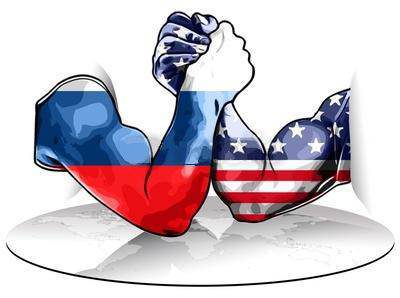
If there is a second Cold War, did Russia really start it?
Origins of images: Facebook, Twitter, Wikimedia, Wikipedia, Flickr, Google, Imageinjection, Public Domain & Pinterest.
Read our Disclaimer/Legal Statement!
Donate to Support Us
We would like to ask you to consider a small donation to help our team keep working. We accept no advertising and rely only on you, our readers, to keep us digging the truth on history, global politics and international relations.
Origins of images: Facebook, Twitter, Wikimedia, Wikipedia, Flickr, Google, Imageinjection & Pinterest.Read our Disclaimer/Legal Statement!Donate to Support UsWe would like to ask you to consider a small donation to help our team keep working. We accept no advertising and rely only on you, our readers, to keep us digging the truth on history, global politics, and international relations.
The Conservative party released its plan to scrap the Human Rights Act if it won the General Election. Secretary of State Chris Grayling said they’d also be prepared to withdraw from the European Convention on Human Rights, unless they were allowed to veto judgements from the European Court of Human Rights (ECHR).They won and the plan is going ahead.Included in the Human Rights Act are fundamental rights and freedoms that all individuals within the UK have access to – such as the right to life, the freedom from torture and inhuman or degrading treatment, and the right to a fair ...
When I was a schoolchild in the US a couple of short decades ago, I spent my time acquiring important life skills, ranging from how to fake a wrist fracture in order to obtain a purple cast, to how to craft a teepee replica out of a paper bag.The latter art was perfected in accordance with the holiday of Thanksgiving, which arrived each November to great fanfare, and which, in addition to teepee replication, required my classmates and I to mass-produce turkey drawings, paper Pilgrim hats, and modified, feathered headdresses.These materials were then incorporated into our reenactments of the "original" ...
Over the past several years, analysts and commentators have noticed a rising tide of domestic support for the Croatian homegrown Nazi movement of the Second World War, the Ustashe, which actively exterminated Serbs, Jews, and Roma in the territory it controlled from 1941-45. Far from condemning this alarming development, the Croatian government, the European Union, and non-state actors within it have tacitly and actively supported the rising tide of sympathy towards the Ustashe.This disconnect between the ostensible “European values” of human rights and tolerance that the European Union claims to represent, and its tacit support of trends towards extremist politics ...
Later this month, Barack Obama will become the first sitting US president to visit the city of Hiroshima, Japan. The dropping of an atomic bomb on Hiroshima by the American military on August 6, 1945, and the destruction three days later of the Japanese city of Nagasaki, rank among the greatest war crimes of the 20th century.One would think that after 71 years, the United States would finally be prepared to acknowledge that the incineration of two defenseless Japanese cities, causing some 200,000 deaths, was a militarily unnecessary act.Nothing of the sort will happen. Obama “will not revisit the decision ...
Has your electric garage door stopped working? Does your dog wake up in the middle of the night and begin howling? Is the weather unseasonably hot, cold, windy, dry or wet? Has your television set (or refrigerator, or sound system or home alarm) inexplicably turned on, or off?If one uncritically viewed the corporate-controlled media and accepted at face value the statements of much of official Washington, especially the Democratic Party, one could easily draw the conclusion that the Russians did it.A paranoid frenzy is gripping the US political and media establishment. A ruling elite that commands the world’s largest economy ...
I travel frequently to the countries which once made up the now defunct Socialist Federal Republic of Yugoslavia, satisfying a passion of mine that stems back to my childhood days. For me, the Balkans’ history, its people and its cultures are both enigmatic and magnetic, as they have been, too, for countless others, of many nationalities, over centuries gone by. Accounting for the enchantment of the Balkans, its captivating allure, is a challenge to put into writing. Because no words can truly embellish what is one of the most absorbing parts of the world. To understand and feel what it is ...
At the dawn of the so-called Arab Spring in 2011, diplomats, politicians, and intellectuals debated a fresh question: what role can Islamist political parties play in a fledgling democracy?It wasn’t an esoteric or academic debating point. In the tumult that followed the collapse of dictatorial governments in Libya, Egypt, and Tunisia, groups of radical Islamists had organized themselves into political parties and attempting to use the ballot box to get them to where the cartridge box could never take them—control of national governments. This was a new strategy on the part of Islamists. Ever since their emergence in the 1940s and their ...
The US President Donald Trump is no doubt a successful businessman who rules his country as if it is a huge enterprise. And this kind of management, to his mind, should lead to success. And very often it really works. As a wise leader he uses different tools to reach his goals. Thus, the most cunning one, which the US exploits in Europe – is indirect influence on the EU countries to gain the desired aim. The EU just becomes a tool in “capable hands” of the US.Let us give the simple example. Last week the Ministry of National Defence ...
The superhighway to disaster is already being paved.From Donald Trump’s first days in office, news of the damage to America’s international stature has come hard and fast. As if guided by some malign design, the new president seemed to identify the key pillars that have supported U.S. global power for the past 70 years and set out to topple each of them in turn. By degrading NATO, alienating Asian allies, cancelling trade treaties, and slashing critical scientific research, the Trump White House is already in the process of demolishing the delicately balanced architecture that has sustained Washington’s world leadership since ...
In the years from 882 to 1242 the first and original national state organization of the Russians – the Kievan Russia (not Kyivan Rusia or Kyiv Rus’!) became directly and indirectly subject to external political influences by several external political units of the time. According to the official historiographical traditions (mainly of Western origin), Kievan Russia was established and governed by the Nordic Vikings (“Varyagi/Varangians/Rus’”) with the Dnieper as its axis with Kiev as capital and later received Christianity of the Eastern (Greek) type from the Byzantium in the south and was finally conquered by the barbaric Mongol Tartars from ...
Ever since the end of World War II, the United States, rightly or wrongly, but most of the time, wrongly, has fancied itself as the «world’s policeman». Even a disastrous and costly military intervention in Southeast Asia did not deter the United States from acting as the chief arbiter of what governments were «in» and which were «out» as evidenced by Central Intelligence Agency interloping in Nicaragua, El Salvador, Angola, Haiti, and Colombia. Two military interventions in Iraq and a U.S.-led military campaign directed against Yugoslavia were not enough to pry the United States from its self-appointed role as the ...
The mainstream media (MSM) has declared war on alternative media websites labeling them “Fake News” ever since Hillary Clinton lost the election to Donald Trump. The New York Times editorial board expressed their frustration in an article calling for the censorship of alternative and social media Facebook and the Digital Virus Called Fake News’ which claimed both social media platforms (Facebook and Google) has not been aggressive enough in blocking fake news sites:Most of the fake news stories are produced by scammers looking to make a quick buck. The vast majority of them take far-right positions. But a big part ...
Origins of images: Facebook, Twitter, Wikimedia, Wikipedia, Flickr, Google, Imageinjection & Pinterest.Read our Disclaimer/Legal Statement!Donate to Support UsWe would like to ask you to consider a small donation to help our team keep working. We accept no advertising and rely only on you, our readers, to keep us digging the truth on history, global politics and international relations.
March 24 [2020] will mark the 21st anniversary of NATO’s occupation of Serbia’s Kosovo province, and so we reaffirm: Kosovo is Serbia. Serbia does not and will not ever recognize Kosovo’s claims of sovereignty. We call on NATO to end its occupation of Kosovo.NATO’s occupation of Kosovo and its increasing militarization of the province is a threat to the world’s common security. Albanian occupation authorities continue their assault on human rights and fundamental freedoms, brutally silencing critics in civil society and the media, and curtailing religious freedom. Hundreds of individuals from Kosovo, including members of the Serb community, have been ...
Edward S. Herman died on November 11, 2017, at the age of 92. Fortunately, it was a peaceful death for a supremely peaceful man. In all he did, Ed Herman was a tireless champion of peace.Ed Herman could be considered the godfather of antiwar media critique, both because of his own contributions and because of the many writers he encouraged to pursue that work. Thanks to his logical mind and sense of justice, he sharply grasped the crucial role and diverse techniques of media propaganda in promoting war. He immediately saw through lies, including those so insidious that few dare ...
Origins of images: Facebook, Twitter, Wikimedia, Wikipedia, Flickr, Google, Imageinjection, Public Domain & Pinterest.Read our Disclaimer/Legal Statement!Donate to Support UsWe would like to ask you to consider a small donation to help our team keep working. We accept no advertising and rely only on you, our readers, to keep us digging the truth on history, global politics and international relations.[wpedon id="4696" align="left"]Save
Over the past 15 years, fighting-talk has periodically flared over ‘what to do about that alleged “crazy Asian dictator” in North Korea. Today’s round of brinkmanship by the US/Western ‘deep state’ against North Korea will – in all probability – unfold the same way as in previous episodes; it will fizzle out. China is a guarantor of North Korean security, so the US will not go to war with North Korea. Period. The battle between Trump and the Washington Crazies for control of the reins of empire continues, however, and the ‘Krazy Korean’ is relevant to that. I hope ...
During the last decade the deteriorating political and military situation in the world have proved the necessity of well prepared Armed Forces.It is obvious that the level of patriotism in Lithuania is high as ever. Many young men are thinking to join the Armed Forces and be useful to the country. The government only should maintain and strengthen this trend. But battling with numerous political and economical problems the government is going to make some changes in military sphere that could have far-reaching adverse consequences.It should be said that today there is a serious gap in providing the national Armed ...