
Views: 2019
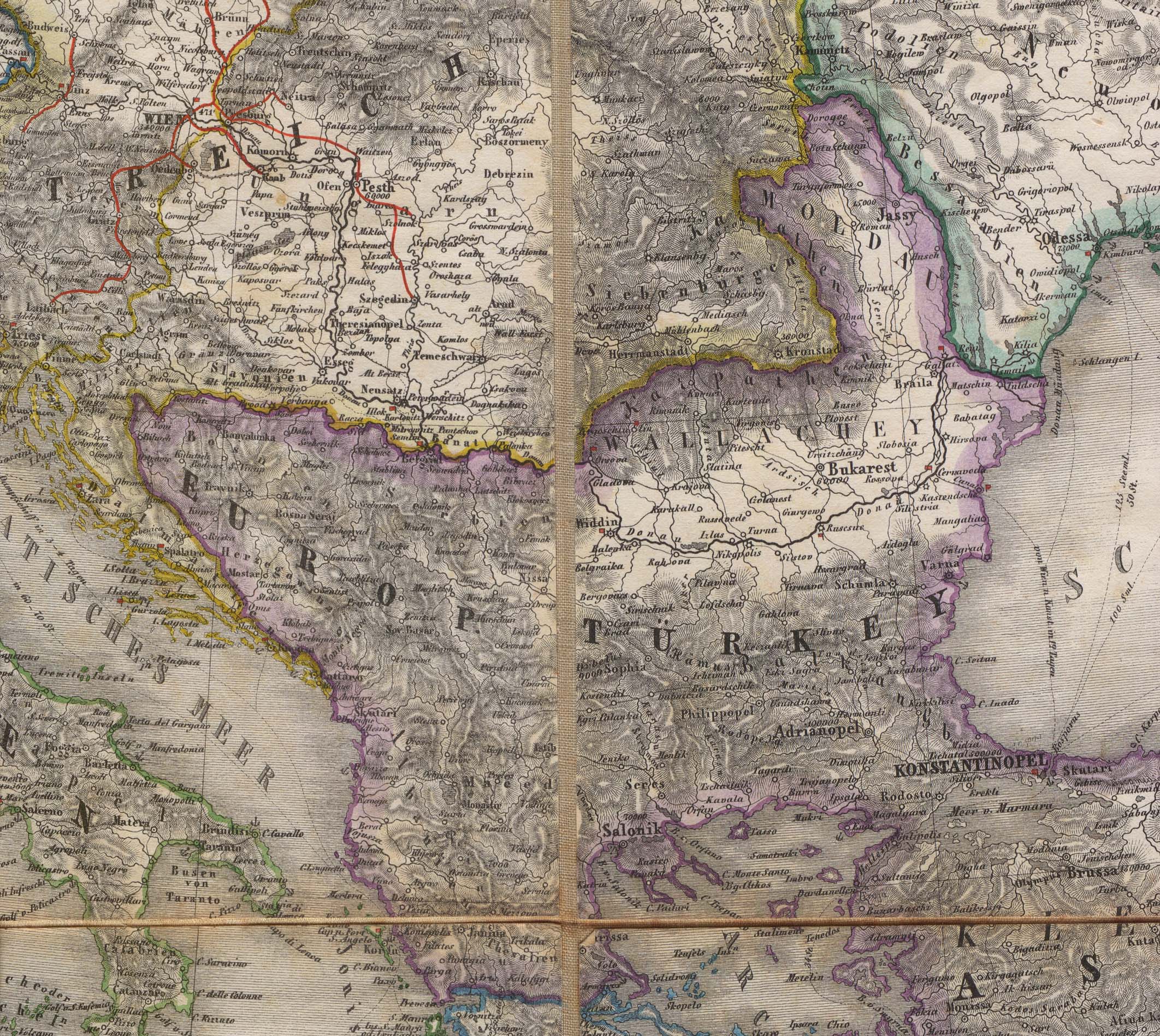
The Balkan Peninsula, together with the region of South-East Europe, historically has been one of the most important focal points of Russian foreign policy, cultural influences and attempts to spread an ideology of Orthodox solidarity and Slavic reciprocity.[1] These ideas are common to almost all trends of Russian public life in the past and very much today too.
 After Russia lost the Great Crimean War of 1853–1856 she intensified its cultural influence in the region of South-East Europe for the purposes of beating Habsburg (Roman-Catholic) rivalry and to spread an idea of the Pan-Slavism in this part of Europe.[2] However, the Great Crimean War was, in essence, the British war against Russia (Figes, 2010; Lambert, 2011; Small, 2014) in order to stop further Russian victories against Ottoman Empire (Isaacs, 2001, 156; Anisimov, 298−299). After this war, it became obvious for Russia that Western European Great Powers[3] are her enemies, especially the United Kingdom, like with the current case of an extreme Russophobic Cabinet of Theresa May and Boris Johnson. It will take even 50 years for Russia to sign a military-political agreement with the United Kingdom (in 1907) only after a final sharing of the spheres of influence in Persia (Hans-Erich, 1985, 134).[4]
The political and economic rivalry between Russia, on one hand, and Habsburg Monarchy (Austria-Hungary from 1867) and the German Empire (from 1871), on other, over the dominance at the Balkans[5] was strongly affected in Russia by the growth of Pan-Slavic sentiment, based on the common Slavic origin, mutual Paleoslavonic language, and above all it was grounded in emotional sentiment to liberate those South Slavs who were under the Ottoman yoke (Jelavich, 1991).[6] Historically, Russia had three pivotal interests in both regions the Balkans South-East Europe: 1) Strategic; 2) Cultural; and 3) Religious (Castellan, 1992). It is important to stress a fact that Russia, together with Western European states, participated in the process of modernization and Europeanization of Eastern Balkan nations and states from the beginning of the 19th century till WWI (Black, 1974).[7]
From a strategic point of view, Russian diplomacy concerned the Balkans and South-East Europe as essential for Russian state security and above all for the stability of the Russian state’s frontiers.[8] Russia’s intention was to obtain a favourable frontier in Bessarabia (today’s the independent Republic of Moldova) and to have control over the Bosporus and the Dardanelles, which became very important to Russian commercial and economic development and geopolitical projects; in particular for the shipment of surplus grain from today’ Ukraine or a Little Russia/Russia Minor (Прыжов, 1869; Соловьев, 1947)[9] to the world markets.
The Bosporus and the Dardanelles became a part of Russia’s “security zone” in both economic and political terms. Russian main concern was to safeguard free passage through the Bosporus Straits to the Mediterranean Sea (Jelavich, 1973). Simultaneously, Russia intended to block the expansion of other European Great Powers, particularly of Austria-Hungary and Germany, into the region[10] but especially in its eastern part.
Taking religious and cultural aspects of Russian interests in the Balkans and South-East Europe, largely due to Russian Pan-Slavic agitation, Russia succeeded to develop from 1870 onward a strong interest in the fate of the Balkan Slavs and South-East European Orthodox Christians. The Pan-Slavism, based on the myth of the Slavic solidarity and primarily on the Orthodox Slavic reciprocity, which created strong ethnic, religious and cultural sentiments among the Slavic Orthodox population (but not among Roman Catholic Slavs), became at the end of the 19th century one of the dominant driving forces behind Russian policy in the Balkans and South-East Europe. The myth of Slavic solidarity and brotherhood exerted a considerable influence on many intellectuals and found support in official circles in Russia, Serbia, Montenegro, and Bulgaria[11] especially after Russia’s liberation of Bulgarians in 1878.
 Tsarist Russia was sincerely trying all the time to reconcile Slavic nations in conflict, especially those of the Christian Orthodox faith for the sake of Pan-Slavic ideals of intra-Slavic solidarity, reciprocity, and brotherhood. Probably the case of the Serbian-Bulgarian conflict in 1912−1915 over the Macedonian Question is the best example of such Russian policy of Panslavism. In other words, Russia became the creator of the 1912 Serbian−Bulgarian treaty and recognized arbiter in the 1912−1913 diplomatic conflict between Serbia and Bulgaria over the destiny of Macedonia during the Balkan Wars (Ћоровић, 1990а, 20−24). Russian Balkan policy, in this case, was a real Panslavonic as St. Petersburg wanted to satisfy the territorial claims of both sides by negotiations and diplomatic agreement between Sofia and Belgrade.[12] When Austria-Hungary declared war to Serbia on July 23rd, 1914 all Entente member states, including and Russia,[13] were making pressure on Serbia to give territorial compensation (Vardar Macedonia) to Bulgaria for Bulgarian participation in the war against Central Powers. Serbia was promised, like in the secret 1915 London Treaty, territorial concessions in Western Balkans populated by the ethnic Serbs living in Dual Monarchy (Bosnia-Herzegovina, Slavonia, and South Dalmatia). Diplomatic pressure on Serbia to cede certain territories to Bulgaria (Vardar Macedonia) continued up to the autumn of 1915. For instance, Russian Minister of Foreign Affairs, Sergey D. Sazonov, on August 5th, 1914 urged the Serbian Government to give to Bulgaria Macedonian territories up to the line Kriva Palanka−Ohrid with Struga for Bulgarian active participation in the war against Austria-Hungary and towns of Shtip, Radovishte and the lands up to the Vardar River for Bulgarian “friendly neutrality”. For such Serbia’s sacrifice, Russia promised to Belgrade to support Serbia at the end of the war in the realization of her “national ideals” (annexation of Serb-populated lands of Austria-Hungary). However, Sazonov was clear in this case that Serbia by giving such territorial sacrifice is going to very contributing to Russian “life’s wish” to establish Panslavonic fraternity and eternal friendship between Serbs and Bulgarians (Радојевић, Димић, 2014, 138). The same territorial requirements to Serbia were vainly repeated once again by the Entente member states in 1915 before Bulgaria finally joined the war on the side of the Central Powers in October of the same year (Avramovski, 1985, 55−172; Трубецки, 1994, 21−158).
Unfortunately, Serbia rejected such friendly Russia’s proposals and as a consequence lost 25% of its population during WWI, 50% of the industry and the most important – the statehood. Instead of a strong and efficient United Serbia, it was created loose, destructive and above all anti-Serbian Yugoslavia with the Roman Catholic Croats and Slovenes as the clients and a „fifth column“ of Vatican.
BIBLIOGRAPHY
Anisimov, J. (2014). Rusijos istorija nuo Riuriko iki Putino: Žmonės. Įvykiai. Datos. Vilnius: Mokslo ir enciklopedijų leidybos centras.
Avramovski, Ž. (1985). Ratni ciljevi Bugarske i Centralne sile 1914−1918. Beograd: Institut za savremenu istoriju.
Black, E. C. (1974). “Russia and the Modernization of the Balkans”. Jelavich, Ch. & Jelavich, B. (eds.). The Balkans in Transition: Essays on the Development of Balkan Life and Politics since the Eighteenth century, Archon Books.
Бјелајац, М. (2014). 1914−2014: Зашто ревизија? Старе и нове контроверзе о узроцима Првог светског рата. Београд: Медијски центар Одбрана.
Castellan, G. (1992). History of the Balkans: From Mohammed the Conqueror to Stalin. New York: Columbia University Press, East European Monographs, Boulder.
Cooper, F. A., Heine, J., Thakur, R. (eds.) (2015). The Oxford Handbook of Modern Diplomacy. Oxford−New York: Oxford University Press.
Figes, O. (2010). The Crimean War: A History. New York: Metropolitan Books.
Gvosdev, K. N., & Marsh, Ch. (2014). Russian Foreign Policy: Interests, Vectors, and Sectors. Thousand Oaks: CoPress.
Hans-Erich, S., & et al (eds.) (1985). Westerman Großer Atlas zur Weltgeschichte. Braunsschweig: C. A. Koch’s Verlag Nachf.
Hrabak, B. (1990). Sile Antante i Sjedinjene Američke Države prema Bugarskoj 1915−1918. Vranje: Narodni muzej u Vranju.
Isaacs, A., Alexander, F., Law, J., Martin, E. (eds.) (2001). Oxford Dictionary of World History. Oxford−New York: Oxford University Press.
Jelavich, B. (1973). The Ottoman Empire, the Great Powers, and the Straits Question, 1870−1887, Indiana University Press.
Jelavich, B. (1991). Russia’s Balkan Entanglements, 1806−1914. Bloomington.
Kohn, H. (1960). Pan-Slavism: Its History and Ideology. Vintage.
Lambert, A. (2011). The Crimean War: British Grand Strategy Against Russia, 1853−56. Surrey: Ashgate Publishing Limited.
Mansbach, W. R., Taylor, L. K. (2012). Introduction to Global Politics. London−New York: Routledge Taylor & Francis Group.
Narochnitskaya, A. N. (1998). “Spiritual and geopolitical rivalry in the Balkans at the brink of the XXI century”. Eurobalkans, autumn. 18–23.
Palmowski, J. (2004). A Dictionary of Contemporary World History from 1900 to the Present Day. Oxford−New York: Oxford University Press.
Plokhy, S. (2008). Ukraine & Russia: Representations of the Past. Toronto−Buffalo−London: University of Toronto Press Incorporated.
Plokhy, S. (2010). The Origins of the Slavic Nations: Premodern Identities in Russia, Ukraine, and Belarus. New York: Cambridge University Press.
Riasanovsky, V. N. (2006). A History of Russia. Oxford: Oxford University Press.
Small, H. (2014). The Crimean War: Queen Victoria’s War with the Russian Tsars. London: Tempus Publishing.
Tsygankov, P. A. (2013). Russia’s Foreign Policy: Change and Continuity in National Identity. Lanham, Mar.: Rowman & Littlefield Publishers, Inc.
Попов, Н. (1870). Србија и Русија: Од Кочине крајине до Св. Андрејевске скупштине. Београд: Државна штампарија.
Прыжов, И. Г. (1869). Малороссия (Южная Русь) в истории ее литературы с XI по XVIII век., Воронеж.
Поповић, В. (1940). Европа и српско питање. Београд.
Радојевић, М., Димић, Љ. (2014). Србија у Великом рату 1914−1918. Кратка историја. Београд: Српска књижевна задруга−Београдски форум за свет равноправних.
Соловьев, А. В. (1947). „Великая, Малая и Белая Русь“. Вопросы истории. Москва: Академия наук СССР. 7. 24−38.
Трубецки, Н. Г. (1994). Рат на Балкану 1914−1917. и руска дипломатија. Београд: Просвета.
Шушић, Б. С. (2004). Геополитички кошмар балкана. Београд: Војноиздавачки завод.
 Prof. Dr Vladislav B. Sotirović
Mykolas Romeris University
Institute of Political Sciences
Vilnius, Lithuania
© Vladislav B. Sotirović 2018
www.global-politics.eu/sotirovic
sotirovic@global-politics.eu
[1] The Balkans is a peninsula in South-East Europe that today includes Slovenia, Croatia, Bosnia-Herzegovina, Serbia, Montenegro, Greece, Albania, Macedonia (the FYROM), Bulgaria and the European portion of Turkey. South-East Europe is enlarged Balkans with Romania and Moldova.
[2] The Balkans was all the time a peninsula of a clash of civilizations. According to Samuel P. Huntington, a civilization is a cultural entity and he identified eight such civilizations. One of them was Slavic-Orthodox. Civilizations differ in terms of history, language, culture, tradition but above all of religion. Huntington argued that every civilization had and has a protector core state as, for instance, Russia historically was and today is a protector of Slavic-Orthodox civilization (Mansbach, Taylor, 2012, 447).
[3] A Great Power was originally in the 18th century the term for a European state which could not be conquered by any other state or even by several of them. After WWII this term is applied to a country that is regarded as among the most powerful in the global system and global politics (Mansbach, Taylor, 2012, 578).
[4] British-Russian convention over Persia in 1907 divided the country into a northern section under Russian influence, a neutral party in the middle, and a southern zone under UK’s influence (Palmowski, 2004, 304).
[5] About the importance of the geopolitical position of the Balkans, see in (Шушић 2004, 9−88).
[6] About Pan-Slavism, see in (Kohn, 1960).
[7] About Russian history, see in (Riasanovsky, 2006).
[8] About Russia’s foreign policy interests, see in (Tsygankov, 2013; Gvosdev, 2014).
[9] About Ukraine-Russian identity relations, see in (Plokhy, 2008; Plokhy, 2010).
[10] About the spiritual and geopolitical rivalry in the Balkans by the Great European Powers, see in (Поповић, 1940; Narochnitskaya, 1998). According to Lord Palmerston, the nations (states) have no permanent enemies and allies; they have only permanent interests (Cooper, Heine, Thakur, 2015, 72).
[11] For instance, about Russia’s influence in Serbia from the end of the 18th century to the mid-19th century, see in (Попов, 1870).
[12] Serbian-Bulgarian conflict over Macedonia continued during WWI. On Bulgarian war aims and diplomacy from 1914 to 1918, see in (Avramovski1985; Hrabak 1990).
[13] About Russia’s policy on Serbia after delivering of Austro-Hungarian ultimatum to Belgrade, see in (Бјелајац 2014, 183−196).

Personal disclaimer: The author writes for this publication in a private capacity which is unrepresentative of anyone or any organization except for his own personal views. Nothing written by the author should ever be conflated with the editorial views or official positions of any other media outlet or institution.
Origins of images: Facebook, Twitter, Wikimedia, Wikipedia, Flickr, Google, Imageinjection, Public Domain & Pinterest.
Read our Disclaimer/Legal Statement!
Donate to Support Us
We would like to ask you to consider a small donation to help our team keep working. We accept no advertising and rely only on you, our readers, to keep us digging the truth on history, global politics and international relations.