
Understanding Genocide and our Remembrance as Greeks
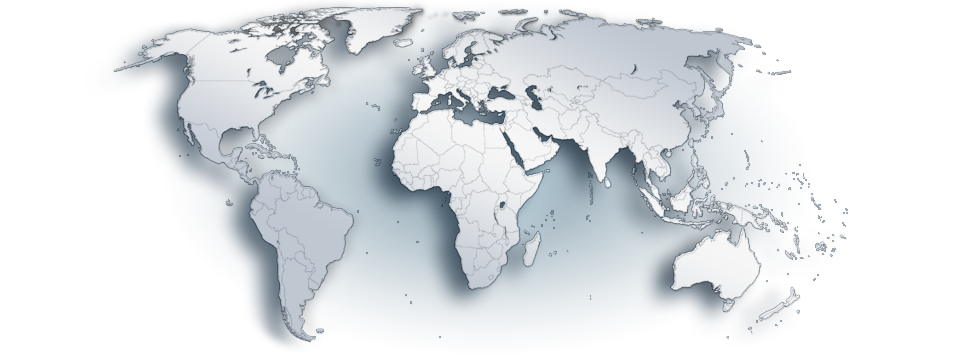
In Asia Minor, also known as Anatolia — there were the Pontian Greeks who lived along the coast of the Black Sea, and the Thracians and the westernized Ionian Greeks, who lived along the seashore facing the Aegean [...]
Last week Pontian Greeks throughout the world justifiably recognized a tragic day in their history that has come to be known as the Pontian Genocide.
I wrote about the anniversary, obscure to most people around me who are not well-versed in Greek history and even had to repeatedly change my auto-correct on my computer, which insisted on changing the word Pontian to Pontiac.
This anniversary was followed by another recognition of yet another genocide of Greeks— officially commemorated on April 6 and recalling the tragic events targeting the Greeks of Eastern Thrace— the region known today as European Turkey or the lands just west of present-day Istanbul.
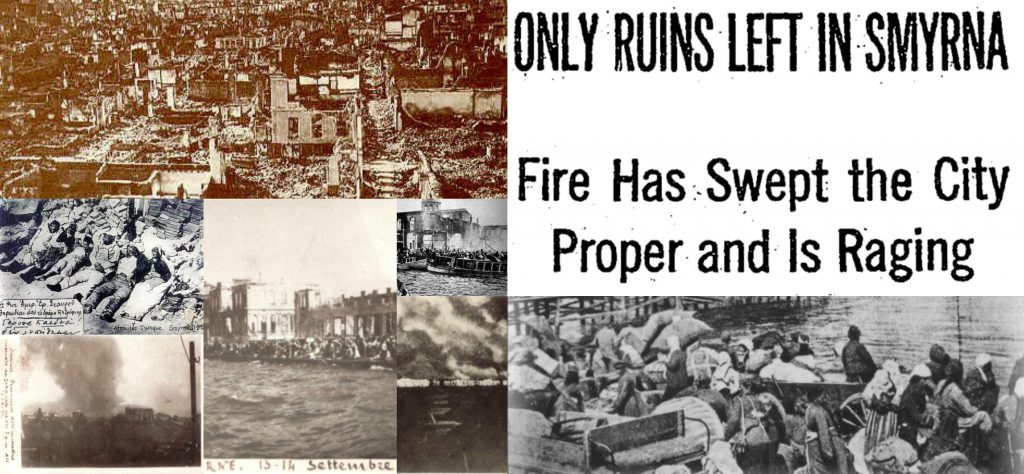
And then there’s the case of Smyrna and September 14, the day every year during which memorial services and events are held to remember the tragic events that culminated in September 1922, when hundreds of thousands of Greeks were massacred or forced to flee as refugees from their ancestral homes in Western Anatolia.
The Pontian Genocide, the Thracian Genocide, the Asia Minor Catastrophe— and add to that the Armenians and the Assyrians— other Christian groups once living and thriving in what was the crumbling Ottoman Empire in the early 1900s and you have a confusing mix of history— sometimes even competing with each other— when what was was really happening, was a single, orchestrated annihilation of a single religion of people— Christians.
But for reasons of brevity, I emphasize the Greeks alone, as I continue my post.
The comparison of the Holocaust in Europe during World War II and the Genocide of the Greeks of the Ottoman Empire in the early 1900s couldn’t be more direct.
You had a single mad man named Adolph Hitler who wanted to “clean” the continent of a single religion of people, Jews, who they themselves were divided by nationality, culture, language, even worship practice— but united as Jews. There were Ukranian Jews and Polish Jews and in Greece alone the Romaniotes and the Sephardic Jews.
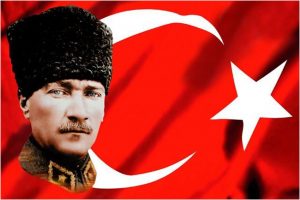
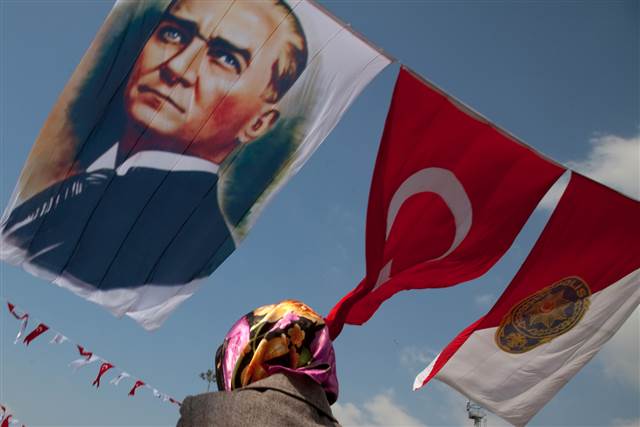
And in the then Ottoman Empire, you had another crazed leader named Kemal Ataturk who, like Hitler, planned his own murderous rampage seeking to create a “Turkey for the Turks” with no place for people who were different— i.e., the Greeks (and other Christian minorities including the Armenians and Assyrians).
In Asia Minor, also known as Anatolia— there were the Pontian Greeks who lived along the coast of the Black Sea, and the Thracians and the westernized Ionian Greeks, who lived along the seashore facing the Aegean. And there were other, lesser-known communities too, who lived in the interior of Turkey, like the Cappodocians.
Each had their distinct dialects, food traditions and even worship traditions as some of these communities had adopted Turkish as their native and worship languages (like U.S. communities of Greeks have adopted English as theirs) but liturgies were still Greek Orthodox in faith and tradition.
But they were all Greeks— like the Jews of Europe.
The confusing ethnic and regional differences have, over the years, created a disjointed effort to remember, document and recognize the single mass atrocity that took place in the beginning of the 20th century— that of a systematic wiping out of entire populations of Greek people in the early stages of the building of modern day Turkey by its founder, Kemal Ataturk.
One website, which has done extensive research and documentation is seeking to set the record straight— and even called out my own efforts of recognizing the Pontian Genocide last week on this website.
The Greek Genocide Resource Center sent me an email, stating that “By calling for the recognition of a genocide only in the one region where it occurred, ie. Pontus, Pontic Greeks are effectively ignoring the suffering of all other Greeks that fell victim during the Genocide.”
At first glance, my knee-jerk reaction was one of disgust. “Can’t we all just get along?” I thought to myself. Unity has not been our best trait as a nation of people, I thought.
But at further notice and more reading— confirming what I already knew and also seeing a Facebook post by the same author of the email, it made perfect sense. The Greek Genocide Resource Center posted the following on their Facebook page just one day before Pontian Greeks were preparing to recognize and mourn their dead.
“Last month we commemorated the genocide of the Greeks from Eastern Thrace, today we commemorate the victims from Pontus, and on September 14 we will once again commemorate more victims of the Greek Genocide, those from western Asia Minor. There were many victims of the Greek Genocide, and for certain reasons Greeks prefer to mourn their ancestors based on region. What this has created is a disjointed effort for recognition. Pontic Greeks, considered the first to use the term genocide to describe the mass killing of Greeks in the former Ottoman Empire, have sought and received a day of mourning for their own victims, and till this day, continue to seek recognition solely for the victims of Pontus. This bias belittles and belies the true suffering of all the victims who were after all – GREEKS. Today we mourn the loss of many. This page at least, will continue to seek a SINGLE recognition for ALL the victims regardless of where they lived. We ask that all fair minded people look through the division and work to do the same. It was a GREEK Genocide.”
It was a single genocide. Plain and simple.
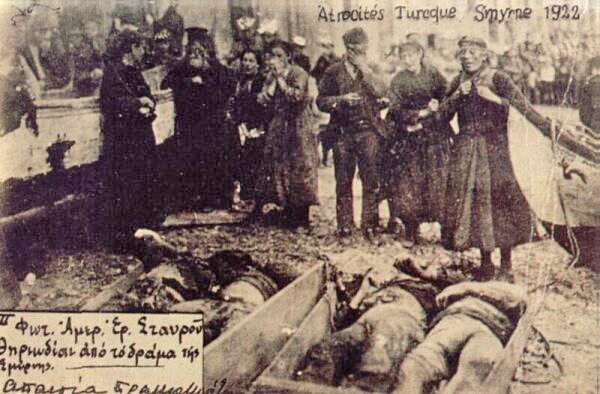
Of course, seeking to minimize one, over the other, is not the answer and seeking to bring together scholars, activists and societies of regional Greeks (i.e. Pontians, Smyrniots, Thracians and other descendants of all Anatolian Greeks) could prove next to impossible, let alone a futile effort.
Because we are a ferociously proud— but splintered people. Cretans are proud of their Cretan lineage, and Pontians are proud of their own culture and history. The Arcadians and Laconians thrive as sub-cultures of a sub-culture of Peloponesians— and so on.
And this is not to say that the Pontians, the Smyrniots and others shouldn’t continue mourning their dead and remembering their ancestors’ sacrifices, the same way Ukrainian and Polish Jews commemorate their own very specific massacres. The difference being, of course, that it’s always under the umbrella of “The Holocaust” for them. And for us, we seek Congressional resolutions, city council proclamations and other official-type of recognitions in disjointed and individualistic efforts, NOT as a single Genocidal event, but as individual, regional efforts.
The Jews were able to unite their historians and communities from the ashes of World War II and create a single, unified campaign to inform the world of The Holocaust— a single, systematic effort by Nazi Germany to annihilate all Jews— Greek, Italian, Sephardic, Polish and dozens of other sub-cultures thriving under one umbrella of Judaism in Europe.
Will the Greeks ever be able to unite under a single GREEK effort that will bridge the gap amongst a confusing— yet single and systematic effort that took place between 1914 and 1922 to annihilate Greeks— regardless of region— from Anatolia?
I certainly hope so and the education and documentation that was provided to me by the Greek Genocide Resource Center has helped me to better understand that like The Holocaust, the genocide of Asia Minor’s Greeks— the Pontians, the Ionians, the Thracians and others— was a single, devastating, brutal campaign targeting Greeks.
And while we shouldn’t forget or minimize our individual efforts— perhaps it’s time— a century after these brutal and devastating events— to call it what it is— a GREEK GENOCIDE.
Origins of images: Facebook, Twitter, Wikimedia, Wikipedia, Flickr, Google, Imageinjection, Public Domain & Pinterest.
Read our Disclaimer/Legal Statement!
Donate to Support Us
We would like to ask you to consider a small donation to help our team keep working. We accept no advertising and rely only on you, our readers, to keep us digging the truth on history, global politics and international relations.
While the numbers are not as high as Auschwitz or Treblinka, Jasenovac was notorious for its cruelty and the high number of young children who were victims.April 22 is a date that binds two groups of people who shared the same tragic fate. It is the date that commemorates the revolt of the prisoners of Jasenovac, the death camp that claimed the lives of hundreds of thousands of Jews, Serbs and Roma.While the numbers are not as high as Auschwitz or Treblinka, Jasenovac was notorious for its cruelty and the high number of young children who were victims. The saddest ...
Most people have no idea of who is pictured above, but you should. The sight of this man should cause a similar revulsion to that of seeing Mussolini, Mao, Stalin or Hitler, as he committed an African genocide that resulted in the killing of over 10 million people in the Congo.His name is King Leopold II of Belgium.Most of the people never learned about him in school, and have also most likely never heard about him in the media either. This is because he’s not included in the popular narrative of oppression (which includes things like U.S. slavery and the ...
The genocidal rule of the Khmer Rouge began forty years ago this month. Their rise to power was inseparable from US intervention.On April 17, 1975, Khmer Rouge (KR) forces stormed Phnom Penh and reestablished Cambodia as Democratic Kampuchea — a supposedly self-sufficient, entirely agrarian society. Resetting the clock to “Year Zero,” the KR forced urban dwellers to the countryside, and began to “purify” Cambodia through a genocidal purge of intellectuals and minority groups. By the time the slaughter came to an end in 1979 — after Vietnam invaded Cambodia and removed the KR from power — some 1.7 million people (21 percent ...
What is wrong with the American people? After several years of horrific policy toward the waking world, democracy’s standard bearers seem to be drowning in a lake of selfishness. Distracted, apathetic, or simply dumbed and numbed by unrelenting propaganda, the most admired society on Earth has turned to a wriggling mush of diverging ideals. I fear that American have become what we ultimately deplored, just another despicable cultural hegemony. Here’s a short brief on the matter.A recent article by James Carden at The Nation prompted me to discuss this unsavory truth today. The title of the piece, “Trump’s Syria Policy: ...
Key facts about Kosovo’s Islamic Albanian minority of Serbia and the century long drive by Islamic extremists to exterminate Kosovo Serbs from that region:1389—Muslims defeat Christian Serb defenders in Kosovo, depopulate the area and invite mountain tribe of Albanians, in exchange for converting to Islam, to take over pillaged land from Serbs.1594—Sinan Pasha, an ethnic Albanian, who was a commander in the Ottoman Turkish Empire, burned the relics of St. Sava at Vracar, Belgrade. St. Sava is the Saint that brought Serbs into Christianity.1878—Albanian nationalist leaders meet in Prizren, known as the First League of Prizren, to announce the creation ...
Chris Deliso of Balkanalysis points out the latest travesty of the Western media: 59,000 stories on Auschwitz, three on Jasenovac. As if the third-largest death camp in Nazi-occupied Europe simply never existed. Franjo Tudjman certainly thought so, and it appears the current Croatian leadership shares his "historical" perspective.Contemporary German estimates of Serbs murdered by the Ustasha (in Jasenovac and elsewhere) ranged as high as 750,000. Wiesenthal center uses the number of 600,000. Serbian researchers have spoken of up to 700,000 victims. Modern revisionists, Croat and otherwise, talk of 30-100,000, at most. Among them is the U.S. Holocaust Memorial Museum, which ...
The controversial film director has been reported to authorities by the Antifascist League.A criminal complaint against film director Jakov Sedlar has been filed due to historical counterfeits that he used during the production of his documentary “Jasenovac – The Truth”. The complaint has been filed by the Antifascist League of Croatia due to criminal offense of incitement to violence and hatred, reports tportal.hr on July 15, 2016.In the explanation of the compliant, the Antifascist League states that Sedlar in the film publicly denied and significantly reduced the crime of genocide, crimes against humanity and war crimes, primarily directed against members ...
‘Blowing from a Gun’ depicted by Vasily Vereshchagin in his painting ‘Suppression of the Indian Revolt by the English’ on the rebellion of 1857. Queen Victoria’s agent bought this painting, in an attempt to suppress it. ‘Blowing from the Gun’ was a means of execution where the prisoner is tied to the muzzle of a cannon, which is then fired, popping the victim’s head about 15 meters (50 feet) into the air, apparently a sort of juvenile entertainment for the colonizers.Following colonization, along came ‘decolonization’ and what do you suppose happened with colonial borders? They mostly remained as laid down ...
Origins of images: Facebook, Twitter, Wikimedia, Wikipedia, Flickr, Google, Imageinjection, Public Domain & Pinterest.Read our Disclaimer/Legal Statement!Donate to Support UsWe would like to ask you to consider a small donation to help our team keep working. We accept no advertising and rely only on you, our readers, to keep us digging the truth on history, global politics and international relations.[wpedon id="4696" align="left"]SaveSave
Over the past several years, analysts and commentators have noticed a rising tide of domestic support for the Croatian homegrown Nazi movement of the Second World War, the Ustashe, which actively exterminated Serbs, Jews, and Roma in the territory it controlled from 1941-45. Far from condemning this alarming development, the Croatian government, the European Union, and non-state actors within it have tacitly and actively supported the rising tide of sympathy towards the Ustashe.This disconnect between the ostensible “European values” of human rights and tolerance that the European Union claims to represent, and its tacit support of trends towards extremist politics ...
Hardly any knowledgeable person doubts that Zionist ideology is the purest form of racism. Zionism is Jewish disguised racism as a raison d’etat. Israel comes right after the U. S., as far as racism is concerned. That is why the U. S. donates to this racist regime $ 3.8 bn per year in order to keep this occupation regime going. Should anybody doubt the racism of the Israeli leadership, read the following article.[1]Racism among the Israeli leadership is legendary. It started out with the founder of Zionism, Theodor Herzl, saying: “Spirit the penniless population across the frontier by denying it ...
Unfathomable as that may appear, yes, it was quite possible for the second-ranking slaughterhouse in Europe in recent memory to have slipped off the radar screen. Even such a renowned authority as Professor Gideon Greif is having an exceptionally difficult time of it in trying to put it back on.Precisely because it has not been the theme of any Hollywood spectaculars, Jasenovac does not attract any school excursions and textbooks are largely silent about it. Some background information on Jasenovac therefore seems like a good place to start.The Jasenovac death camp (1941 – 1945) is inextricably bound up with the ...
LONDON — Seventy years after he was shot by the Soviets, the reputation of Jonas Noreika goes on trial in Lithuania next week.Noreika — a hero to many in the Baltic state for resisting the Communists’ subjugation of their country — stands accused of being a Nazi collaborator who was complicit in the Holocaust.Jonas Noreika - "General Storm"The case before the Vilnius Regional Administrative Court charges the state-funded Genocide and Resistance Research Center of Lithuania with intentionally distorting the role of Noreika in the murder of Jews.It has been brought by Grant Gochin, a Lithuanian citizen living in the US, ...
In the Associated Press story “Albanian family honored for helping Jews”, Marcus Franklin rehashed and regurgitated the Albanian propaganda claim that Albanians “rescued” Jews during the Holocaust and played no role in the Holocaust. This is a total falsification, distortion, and manipulation of the Albanian role in the Holocaust.The Holocaust Chronicle, researched by prominent Holocaust historians and scholars, documents that 10 to 12 Jews from Albania proper were sent to the Nazi death camp at Bergen-Belsen. This research disproves the Albanian propaganda claim that 100% of Albanian Jews were “rescued” during the Holocaust. Moreover, Harvey Sarner reported that the Ardel ...
After the Donald Trump administration’s decision to recognize the disputed city of Jerusalem as Israel’s capital and move the US embassy there from Tel Aviv, the national aspirations of the Palestinian people to live in their own state have been severely dashed by Washington’s move. Ever since the formation of the United States, it has been American policy to destroy aspirant nations like the internationally-recognized State of Palestine.The first nation destroyed by the United States was the Cherokee Nation, or Tsalagihi Ayeli, which, beginning in 1794, was slowly decimated by forced removals from territory in Georgia, the Carolinas, Tennessee, Alabama, ...
Wednesday, December 5, 2012, the Albanian Prime Minister Sali Berisha advocated granting Albanian citizenship to all Albanians, wherever they reside. This statement was made during a visit of the city of Vlora where the independence of the Albanian state was declared, only 100 years ago. At the time Albania had just liberated itself from Ottoman rule.This declaration follows a separate statement, collective this time, that Sali Berisha had made with his Kosovar counterpart Hashim Thaci a few weeks ago, promising the union of all Albanians. The place was, I must say, well chosen since the vast majority of the inhabitants ...
I will not dwell either on the prehistory nor early history of the region of Kosovo-Metochia (KosMet) in this article.The Montenegrins and medieval SerbiaIt used to pass from one state to the other, until Stephan Nemanja (1166−1196), a nobleman from Zeta (present-day Montenegro), founded the state of Serbia, whose center very soon later became exactly in today’s KosMet. First a Byzantine vassal dukedom, Serbia became soon an independent state, to become an empire under the rule of Stephan Dušan (1331−1355), the first Emperor of Serbia.[1]Serbia’s Nemanjić’s dynasty ended with Dušan’s son, Uroš, disintegrating into many feudal possessions.[2] In the epic ...
Is Israel and its infamous Wall of Separation representative of a modern evolving democratic state, based upon Biblical principles and teachings, as applied towards the original indigenous Palestinian peoples of Palestine, or is it an example of yet another ethnic-cleansing, apartheid state, possessive of the same genocidal-racist tendencies as those 19th century colonial-imperialistic powers – like the United States, Canada, Australia and South Africa – who also once invaded and committed wholesale destruction of other ancient indigenous peoples entire ways of life; sweeping their survivors aside onto reservations, reserves and Bantustan-type compounds to be ultimately ignored and forgotten?Professor Ilan Pappe, ...
Origins of images: Facebook, Twitter, Wikimedia, Wikipedia, Flickr, Google, Imageinjection & Pinterest.Read our Disclaimer/Legal Statement!Donate to Support UsWe would like to ask you to consider a small donation to help our team keep working. We accept no advertising and rely only on you, our readers, to keep us digging the truth on history, global politics and international relations.[wpedon id="4696" align="left"]
May 19, 1919 has different and even opposing meanings in Turkey and Greece, just as May 15, 1948, marks both the establishment of Israel and, for Palestinians, the start of the Nakba (“catastrophe”).In Turkey, this date marks the first step that led to the establishment of the Turkish Republic, while for descendants of Ottoman Greeks and Greece it marks the end of the centuries-long Pontic Greek presence on the shores of the Black Sea. Whereas Turks celebrate May 19, Greeks mourn it. Researcher Tamer Çilingir summarised the issue in a 2016 interview with the Turkish-Armenian daily Agos:“The Pontic Genocide is the ...