
Short Introduction to the Middle Eastern Studies: What is the Middle East as the Region?
In principle, the crucial mark of the region is the predominant Arab culture with some contrasts in the cultural habits between, for instance, Saudi Arabia and Egypt [...]
Middle Eastern Studies are a multicomplex research discipline devoted to as better as knowledge and understanding of different cultures, nationalities, and complexities of the world’s region conventionally known as the Middle East but in its narrow meaning concerning space: from Egypt to Iran and from Syria to Yemen. In principle, the crucial mark of the region is the predominant Arab culture with some contrasts in the cultural habits between, for instance, Saudi Arabia and Egypt. Besides, the cultural features of several other ethnic and confessional groups of the Middle East give a more comprehensive picture of the region’s peoples and challenges.
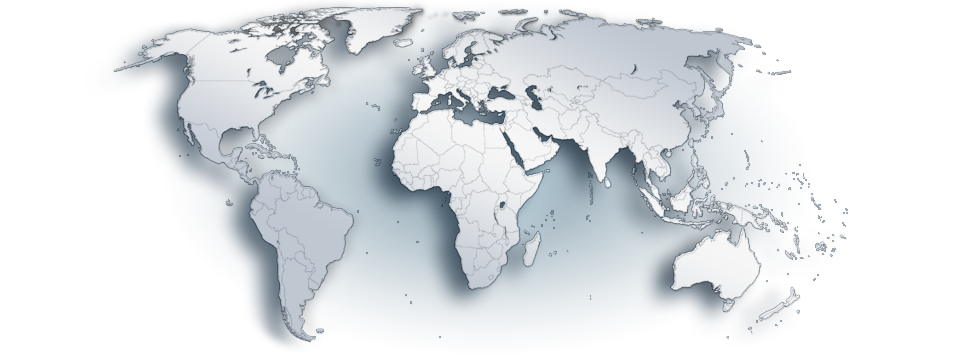
The Middle East was the home of the earliest civilizations in the world’s history. The first urbanizations and literacy started there. The region of the Middle East usually covers the territories from the eastern littoral of the Mediterranean Sea up to India in the East. In a broader sense, geographically, the region encompasses territories of the East Mediterranean and Central Asia but many American academicians, politicians, and journalists regard as a single region the Middle East and North Africa (MENA).
In principle, the real Middle East is composed of 14 countries: Egypt, Syria, Lebanon, Israel, Jordan, Saudi Arabia, Yemen, Oman, United Arab Emirates, Qatar, Bahrain, Kuwait, Iraq, and Iran (+ unrecognized Palestine). These countries are bounded by six major waterways: the Mediterranean Sea, Red Sea, Gulf of Aden, Arabian Sea, Persian Gulf, and Caspian Sea (in fact, lake). It has to be noticed here that Turkey (Asia Minor) which from the 14th century till 1918 has been a center of the powerful Ottoman Empire that unified a major portion of the region is conventionally considered as a part of the Middle East. However, from an academic viewpoint based on the traditional British approach, Asia Minor together with the Balkans belong to the Near East but not to the Middle East. In other words, the Balkan Peninsula and the peninsula of Asia Minor are two halves of the same bridge that connects Central Europe with the Middle East. Nevertheless, Turkey is a non-Arab country even though its inhabitants are predominantly (98%) Muslims (Sunni) whose dominant language is Turkish. Turkey’s 82 million people are composed of ethnic Turkish majority and some ethnic minorities who speak Arabic, Kurdish, and Greek.
The region of the Middle East is an area where geography and history are important factors in the contemporary lives of the people. There are many native peoples of the region for whom the Middle East is considered as the Arab homeland. It refers to those lands in which the Arabic language (with all dialects) is spoken. It is, basically, a unique region in the world regarding geography, geopolitics, and geostrategy as here three continents are meeting each other (Europe, Africa, and Asia) and as the region which was a focal point of the development of the first civilizations. Geologically, its topography was transformed after the Ice Age from a climate that supported the grasslands and waterways into vast steppes and deserts. Around 2000 B.C., the pastoral people of Aryans, or called as well as Indo-Iranians migrated into India and West as well as Central Asia, including today’s Iran (Persia) and surrounding countries. Strategically, the Middle East was considered all the time to be an extremely valuable geostrategic territory as being a crossroad for trade, faith, conflicts, or cultural development.
In principle, the crucial mark of the region is the predominant Arab culture with some contrasts in the cultural habits between, for instance, Saudi Arabia and Egypt. Besides, the cultural features of several other ethnic and confessional groups of the Middle East give a more comprehensive picture of the region’s peoples and challenges.
For thousands of years, many waves of migration to the region made the Middle East ethnically and culturally very multifarious: from the Semitic Sumerians from Central Asia up to present-day Korean, Indian, or Filipino economic immigrants who are searching for jobs in the oil-rich regional countries. It is counted that, for instance, at the end of the last century, more than 3 million workers from India and other parts of Asia arrived in the region to build a modern infrastructure.
On the one hand, the majority of the inhabitants of the Middle East have many things in common like the Arab language and culture, confession of Islam, etc., but on the other, different ethnic minorities exist in each of those regional countries while the Islamic religion is divided into two factions: the Sunni (majority) and the Shia (minority).
Dr. Vladislav B. Sotirovic
Ex-University Professor
Research Fellow at Centre for Geostrategic Studies
Personal disclaimer: The author writes for this publication in a private capacity which is unrepresentative of anyone or any organization except for his own personal views. Nothing written by the author should ever be conflated with the editorial views or official positions of any other media outlet or institution.
Origins of images: Facebook, Twitter (X), Wikimedia, Wikipedia, Flickr, Google, Imageinjection, Public Domain & Pinterest.
Read our Disclaimer/LegalStatement!
DonatetoSupportUs
We would like to ask you to consider a small donation to help our team keep working. We accept no advertising and rely only on you, our readers, to keep us digging the truth on history, global politics, and international relations.
The new coronavirus and its accompanying disease Covid-19 has stopped the globe in its tracks. Governments, markets and news cycles have become dominated by the pandemic. Europe is now the epicenter for the disease, with reportedly more fatal cases of infection than China where the virus first erupted in December.Several European Union countries have declared themselves states of emergencies, including Belgium, France, Portugal, Spain and Italy. The 27-member bloc has sealed off external borders. Some states, such as Poland, have begun closing borders with other EU members. Brussels, the administrative center of the EU, is alarmed because the much-vaunted single ...
The reports that black Africans are being sold at slave markets in "liberated" Libya for as little as $400 is a terrible indictment of the so-called "humanitarian intervention" carried out by NATO to topple the government of Muammar Gaddafi in 2011.In March 2011 virtue-signaling Western "liberal" hipsters teamed up with hardcore neocon warmongers to demand action to "save" the Libyan people from the "despotic" leader who had ruled the country since the late 1960s. “Something has to be done!” they cried in unison.Something was done. Libya was transformed by NATO from the country with the highest Human Development Index in ...
In front of socialist era high-rise blocks, Bill Clinton waves to the Kosovars. Kosovo Albanians built the statue in the capital, Pristina, in gratitude for the bombing of then Yugoslavia by NATO in 1999, which a few years later led to independence.U.S. and Albanian flags flutter alongside each other on the rooftops. In no other Muslim country in the world is the United States as popular as here in Kosovo. On the square in front of the statue, young women stand around in their skirts and head scarves.This is one facet of the young state. The other is only a ...
Origins of images: Facebook, Twitter, Wikimedia, Wikipedia, Flickr, Google, Imageinjection & Pinterest.Read our Disclaimer/Legal Statement!Donate to Support UsWe would like to ask you to consider a small donation to help our team keep working. We accept no advertising and rely only on you, our readers, to keep us digging the truth on history, global politics and international relations.[wpedon id="4696" align="left"]
The great deception of “a real democracy” in the Ukraine, which the New York Times insisted on 31 March 2019, shows little sign of relenting. For five years, Western populations have been consistently misled through skewed and slanted reporting, assuring the readership that what is unfolding in Kiev is a “fledgling democracy”, as a Washington Post editorial further outlined on 6 April 2019.In reality it was a United States-funded coup d’état. During the months prior to Viktor Yanukovych‘s February 2014 ousting, elite American organizations bankrolled the “anti-government protests”, revealed as much in December 2013 by Victoria Nuland, then a high ...
Documentary films about ex-Yugoslavia not seen on global corporate mass-media news. For instance:US documentary movie "RETLINES" with English subtitle from 1991 about Vatican smuggling Croat Nazi Ustashi to South America in 1945Ratlines were a system of escape routes for Nazis and other fascists fleeing Europe at the end of World War II. These escape routes mainly led toward havens in South America, particularly Argentina, Paraguay, Brazil, Uruguay, and Chile. Other destinations included the United States and perhaps Canada and the Middle East. There were two primary routes: the first went from Germany to Spain, then Argentina; the second from Germany ...
Origins of images: Facebook, Twitter, Wikimedia, Wikipedia, Flickr, Google, Imageinjection, Public Domain & Pinterest.Read our Disclaimer/Legal Statement!Donate to Support UsWe would like to ask you to consider a small donation to help our team keep working. We accept no advertising and rely only on you, our readers, to keep us digging the truth on history, global politics and international relations.[wpedon id="4696" align="left"]SaveSave
TRANSCRIPT:Harold Channer (HC): Good evening and welcome very, very much to the conversation. We’re pleased to welcome to the program, Sean Gervasi. He is a professor and academic who is concerned with economics and particularly with what is relevant to what we want to talk about tonight. He has just returned from a long stay in Belgrade, Yugoslavia, and knows something of that situation. Sean Gervasi, welcome very, very much to the conversation, and back to New York. Before we go into some detail about what in the world is going on in terms of the Balkans, from your experience ...
The "Nakba" day (or “catastrophe”) is commemorated on every 15 May by Palestinians and their families who were ethnically cleansed by Israel from their ancestral lands and homes in 1948. The ethnic cleansing of 750,000 Palestinians was accompanied by widespread massacres and looting. The biggest misconception about the “Nakba” was that it was due to the fighting that broke out in 1948 between the Zionist/Israeli forces and the Palestinians/Arab armies. This has been proven by many historian to be false. In reality the ethnic cleansing was not due to the 1948 war, but was actually a well planned Zionist operation ...
For some time the criminal activities of the terrorist organization “Islamic State” (ISIS) seemed to have faded into the shadows. It seemed that this organization in the near future will be broken tie with due to the “heroic” American bombing. However, the ISIS like a fabulous hydra, who immediately has a new head grown in place of a severed one, revived and made further impressive gains.The capture of ancient Palmyra in Syria and the important city Ramadi, the main city of the Sunni province Anbar, located by the way just 100 kilometres far from Baghdad, made the world’s media and ...
А single strategic IT manipulator virtually anywhere could swing the 2016 election with just a few keystrokes perpetrated in less than a minute. (Image: Lauren Walker / Truthout)The support of readers like you got this story published - and helps Truthout stay free from corporate advertising. Can you sustain our work with a tax-deductible donation today?The way our electoral process now stands, electronic voting machines guarantee a Republican victory in 2016.No matter what she does, Hillary Clinton - or any other Democratic nominee - cannot be elected without a fundamental change in the basic mechanics of how our votes are ...
The real question is not whether the status of Kosovo and Metohija should be negotiated; the actual questions to be asked are: On which basis? About what? Whom with?The sole legitimate basis is that Kosovo and Metohija is an integral part of Serbia currently placed under UN mandate, pending a Security Council decision ending it. In other words, this is mandate cannot be terminated either by the EU, or NATO, the USA, Germany, or France and, should this idea ever occurred to anyone, Serbia cannot end it, either.International law (the UN Charter, the OSCE Final Act) and the Constitution of ...
The crumbling “liberal” West is in a desperate hurry in the Balkans. More than a quarter century since the first Western states, pushed by Germany, unilaterally recognized the secession of the former Yugoslav federal republics of Slovenia, Croatia and Bosnia-Herzegovina and about 19 years since NATO’s air and land attack against what had remained of the country (the Federal Republic of Yugoslavia, comprising Serbia and Montenegro) resulting in NATO’s occupation and subsequent forced amputation of Serbia’s Kosovo and Metohija province (by way of recognition of its unilaterally declared independence of February 2008 by the main Western powers, some – but not all Muslim ...
What constitutes water can be scientifically proven beyond any doubt, now what constitutes a nation-state is a far more organic question than it would seem. Each of us is very used to seeing maps with the same countries and lines on it throughout the years and take their existence as a given. But depending on where a map comes from its borders may actually look very different. One of these countries to some and non-countries to others is Kosovo which gradually continues to lose the support of the states that recognized it into existence. Furthermore, this sheds light on how ...
A picture taken on July 4, 2018 from the Israeli-annexed Syrian Golan Heights shows displaced Syrians from the province of Daraa staging a protest (top L) calling for international protection, in the Syrian the village of al-Rafid, near the border fence with Israel. / AFP PHOTO / JALAA MAREYWith the recent failed bid by Palestinian President Mahmoud Abbas and the Arab League at the UN security council, to try and end Israelis’ occupation of Palestinian land and to create a Palestinian State within the 1967 borders, it seems an appropriate moment to review the situation for Palestinians since 1915.What ...
With American military personnel now entering service who were not even alive on 9/11, this seems an appropriate time to reexamine the events of September 11, 2001 – the opaque motives for the attacks, the equally opaque motives for the counter-offensive by the United States and its allies known as the Global War on Terror, and the domestic fall-out for Americans concerned about the erosion of their civil liberties on the homefront.Before venturing further, it’s worth noting that our appraisal is not among the most common explanations. Osama bin Laden, his lieutenants at Al-Qaeda, and the men who carried out ...
Compare Donald Trump and Barack Obama: Trump bans people from Syria, Iraq, Libya, Yemen and Somalia but Obama bombed people from Syria, Iraq, Libya, Yemen and Somalia! The question is: Who is a bigger racist?Origins of images: Facebook, Twitter, Wikimedia, Wikipedia, Flickr, Google, Imageinjection, Public Domain & Pinterest.Read our Disclaimer/Legal Statement!Donate to Support UsWe would like to ask you to consider a small donation to help our team keep working. We accept no advertising and rely only on you, our readers, to keep us digging the truth on history, global politics and international relations.[wpedon id="4696" align="left"]
The Deal of the Century proposed by acting US President Donald Trump once again opened a Pandora Box of the Israeli-Palestinian relations in the Middle East.[1] It is very rational to predict that the Palestinian answer to the Deal of the Century is going to be in the form of intifada’s uprisings which can return back the region for several decades back in the past. Therefore, it is worth to remind ourselves about the main causes and timeline of the Isreali-Palestinian conflict. What is conflict about?The Zionist Israeli-Arab Palestinian conflict today is one of if not the most significant global security ...
The 13th report of the UN High Commissioner for Human Rights on the human rights situation in Ukraine between 16 November 2015 and 15 February 2016, when the Minsk Agreements were in force, has come as a shock to Kiev.According to the UN, more than three million people live in the areas directly affected by the conflict. The exact number of people who have left Ukraine-controlled territory is still unknown, although rough estimates range from 800,000 to 1,000,000 people. The Ukrainian government has estimated that more than a million people have left southeast Ukraine for Russia, Belarus and Europe. This ...
The creation of the First Balkan Alliance against the Ottoman Empire in 1866–1868 in the light of territorial requirements of the Balkan states and nations at the expense of the decreasing power of the Ottoman authorities and the Ottoman state integration was the first political-military treaty on the mutual cooperation by the Christian Balkan states and nations. The secret paragraphs of bilateral military-political contracts between Greece and Serbia and Serbia and Montenegro in regard to territorial inheritance of the Ottoman Empire in the Balkans are the most important points of the treaty.Serbia became a leader of the Balkan coalition and ...