A Unified Europe: Born In the USAWhile Brexit versus the continuation of the European Union is a hot news topic, few know the secret who and why of the EU’s creation.The lead financial writer at the Telegraph, Ambrose Evans-Pritchard, wrote in 2000:Declassified American government documents show that the US intelligence community ran a campaign in the Fifties and Sixties to build momentum for a united Europe.***The head of the Ford Foundation, ex-OSS officer Paul Hoffman, doubled as head of ACUE [below, we’ll explain who these players are] in the late Fifties. The State Department also played a role. A memo ...
READ MORE

While the typical narrative of American history positions the United States as a supporter of democracy and opponent of fascism which helped to defeat the Nazis, key figures in Washington also supported dangerous dictators in Italy and Germany in their early days of power.Noam Chomsky, the renowned political philosopher, historian and scholar, examined the flip side of U.S. opposition to dictatorship in a conversation with Zain Raza, a senior editor at the independent media outlet acTVism Munich. An excerpt from the conversation was published Sept. 30 as part of acTVism Munich’s “Reexamining History” series.Speaking to Raza about Italian dictator Benito ...
READ MORE

The focal questions about war In dealing from both theoretical and practical points of view about war, at least six fundamental questions arise: 1) What is war?; 2) What types of war exist?; 3) Why do wars occur?; 4) What is the connection between war and justice?; 5) The question of war crimes?; and 6) Is it possible to replace war with the so-called “perpetual peace”?Probably, up to today, the most used and reliable understanding of war is its short but powerful definition by Carl von Clausewitz:“War is merely the continuation of politics by other means” [On War, 1832]. It can be ...
READ MORE

Tito’s policy in the 1970s of the so-called “encourage and suppress” for the sake to struggle against politically undesirable and threatening ethnic nationalisms especially the Croat and the Serb ones appeared to be incoherent one. In another words, while some ethnic nationalisms and their ideologies were considered to be dangerous to the system and, therefore, were suppressed and their advocates were jailed or banned from employment[i] (the case, for instance, of the Serbian dissident professors from Belgrade University), other nationalisms, supposed to be non-dangerous for the regime were encouraged by the local Communist elites (for instance, the Albanian nationalism in ...
READ MORE

Edward S. Herman died on November 11, 2017, at the age of 92. Fortunately, it was a peaceful death for a supremely peaceful man. In all he did, Ed Herman was a tireless champion of peace.Ed Herman could be considered the godfather of antiwar media critique, both because of his own contributions and because of the many writers he encouraged to pursue that work. Thanks to his logical mind and sense of justice, he sharply grasped the crucial role and diverse techniques of media propaganda in promoting war. He immediately saw through lies, including those so insidious that few dare ...
READ MORE

The North Atlantic Treaty Organization (NATO), established in 1949 on the pretext of “containing Soviet influence”, has almost doubled in size within the past two decades alone. In 1998, NATO comprised 16 member states, but with repeated expansions up to Russia’s very borders, it now contains almost 30 countries.Though seldom mentioned in mainstream discourse, NATO is a US-dominated organization, whose orders are issued from Washington and customarily obeyed. The US is by far the largest contributor to the alliance, spending more than all other member nations put together.One of the critical reasons behind NATO’s formation almost 70 years ago, was ...
READ MORE

Churchill’s famous dictum about the Soviet Union, that it was “a riddle, wrapped in a mystery, inside an enigma,” is arguably just as applicable to Srebrenica. July 11 this year will be the twenty-fifth anniversary of that landmark event of the Yugoslav wars which the late Prof. Edward Hermann, speaking somewhat less poetically than Churchill, had called “the greatest triumph of propaganda at the close of the twentieth century.”Whether we choose to view Srebrenica as a criminal investigation to sort out who and at whose direction executed prisoners of war, or as a political provocation to lay the groundwork for ...
READ MORE

In 2015 Bill Gates gave a talk titled “We’re Not Ready for the Next Epidemic” in which, in a remarkable exhibition of understated and uncannily accurate prescience, he reflected on the outbreak of Ebola virus and forecast worse to come. This amazing man told us that “As awful as this epidemic has been, the next one could be much worse. The world is simply not prepared to deal with a disease — an especially virulent flu, for example — that infects large numbers of people very quickly. Of all the things that could kill 10 million people or more, by ...
READ MORE

A massive destruction of the Ottoman (Orthodox Christian) Armenian population in 1915−1916 is probably the greatest atrocity committed during the WWI and for sure a first 20th century case of the genocide as up to 1.500.000 ethnic Armenians were executed by the Ottoman authorities and their collaborators (the Kurds). As a consequence, the survivors are scattered across the globe. Today it is already a century old event, but the issue of the 1915−1916 Armenian Genocide is undoubtedly still alive and divisive political issue firstly between the Armenians and the Turks[1] but also and among the western “liberal democracies” on the ...
READ MORE

Only one example of traditional Western liberal democracy's support of the notorious war criminals, bandits, and gangsters:Origins of images: Facebook, Twitter, Wikimedia, Wikipedia, Flickr, Google, Imageinjection, Public Domain & Pinterest.Read our Disclaimer/Legal Statement!Donate to Support UsWe would like to ask you to consider a small donation to help our team keep working. We accept no advertising and rely only on you, our readers, to keep us digging the truth on history, global politics, and international relations.[wpedon id="4696" align="left"]Save
READ MORE

It is the Unlimited Imperialists along the line of Alexander, Rome, Napoleon and Hitler who are now in charge of conducting American foreign policy…Historically this latest eruption of American militarism at the start of the 21st Century is akin to that of America opening the 20th Century by means of the U.S.-instigated Spanish-American War in 1898. Then the Republican administration of President William McKinley stole their colonial empire from Spain in Cuba, Puerto Rico, Guam, and the Philippines; inflicted a near genocidal war against the Filipino people; while at the same time illegally annexing the Kingdom of Hawaii and subjecting ...
READ MORE

Since the disintegration of Yugoslavia in the nineties, its former constituent republics have been mired in a state of perpetual conflict.Nowhere is this more apparent than the contested state of Kosovo.In 1998, Albanian separatists in the Serbian province of Kosovo i Metohija began a campaign of attacks, with the express objective of creating a unified, ethnically homogenous, Greater Albanian state. Spearheaded by an organization known as the Kosovo Liberation Army (KLA), which is widely regarded by many nations, including the United States, as a terrorist organization, ethnic Albanian militants attacked Serbian security forces, and terrorized civilians in a brutally violent ...
READ MORE

A photo documentation of the destruction of (Serbian) Christianity in Kosovo from June 1999 up today.The Western colony of Kosovo is the main stronghold of radical Albanian jihad Islam at the Balkans, transformed into the first independent Balkan ISIL state protected by the Western gangsters of the USA, the NATO and the EU.Presented photo evidence is just an iceberg of the real destruction of Euro-Christianity in Kosovo by the barbaric Muslim Albanians who are also fighting in the Middle East as the jihad soldiers of ISIL - a creation of the US administration.Origins of images: Facebook, Twitter, Wikimedia, Wikipedia, Flickr, ...
READ MORE

The WarmongersThe war, which began in August 1914 – to contemporaries the Great War, to posterity the First World War – marked the end of one period of history and the beginning of another. Starting as a European war, it turned in 1917, with the entrance of the US into a world war. The spark that triggered it off was the assassination of the Austrian heir-presumptive, Archduke Franz Ferdinand (1864−1914), by a Bosnian nationalist of Serb origin – Gavrilo Princip[1], a member of the Young Bosnia (Mlada Bosna) movement, in Sarajevo on June 28th, 1914 on his official visit to ...
READ MORE

The prophet Cassandra’s curse was that when she told the future, no one listened; history’s curse is that when it tells the past, no one does.The West has no shortage of charges it hurls against Russia, but most of them can be grouped into one of three categories: that Russia intervened in the American elections, that Russia is dragging the world into a new cold war, and that Russia is becoming increasingly aggressive and expansionist. Sometimes when charges are brought against you, the best witness you can call to your defense is history.Election InterventionThis history of Russia, America and political ...
READ MORE

“Kosovo: Can You Imagine?” is a documentary film by Canadian film maker Boris Malagurski, about the Serbs that live in Kosovo and the lack of human rights that they have today, in the 21st century.Most of the Kosovo Serbs have been ethnically cleansed by the Albanians who make up the majority of Kosovo.Kosovo has been under UN administration since 1999 when NATO bombed Serbia for 78 days to halt a crackdown on ethnic Albanian separatism in its province of Kosovo.In the years following the war, thousands of Serbs were expelled from their homes, kidnapped and killed. Their houses, cultural and ...
READ MORE

Abstract: This article investigates the Russian foreign politics at the region of the Balkan Peninsula after the dissolution of the Soviet Union at the time of the North Atlantic Treaty Organization’s (NATO) World Order in relation to the Pan-Slavic ideals of intra-Slavic solidarity, reciprocity and brotherhood. The particular stresses are put on four main research topics: 1. The Pan-Slavism and Russia; 2. Relations between pro-Western and pro-Orthodox approaches of the Russian national interests on Russia’s domestic political scene; 3. Different attitudes towards the Balkans in Russia; and 4. Historical ties and future perspectives between Russia and the Serbs. A research ...
READ MORE

Historical backgroundHistorical Poland (in fact, the Polish-Lithuanian Republic of Two Nations) became divided during the three partitions in 1772, 1793, and 1795 between the Kingdom of Prussia, the Habsburg Monarchy (later Austrian Empire and Austrian-Hungarian Monarchy), and the Russian Empire. At that time, the rulers of all these three states which divided Poland-Lithuania (the Kingdom of Poland and the Grand Duchy of Lithuania) have been by ethnic origin the Germans – Frederick the Great of Prussia, Catherine the Great of Russia, and Joseph II of Austria. It means that the Polish-Lithuanian Commonwealth (established in 1569 by the Union of Lublin), ...
READ MORE

SaveSaveOrigins of images: Facebook, Twitter, Wikimedia, Wikipedia, Flickr, Google, Imageinjection, Public Domain & Pinterest.Read our Disclaimer/Legal Statement!Donate to Support UsWe would like to ask you to consider a small donation to help our team keep working. We accept no advertising and rely only on you, our readers, to keep us digging the truth on history, global politics and international relations.[wpedon id="4696" align="left"]
READ MORE

Universal Periodic Review reveals longstanding unwillingness to fully commit to obligations of pertinent human rights treaties.On 11 May 2015, the United States of America participated in its second Universal Periodic Review (UPR). The Universal Periodic Review is meant to be a mechanism by which all UN Member States are periodically assessed on their human rights record. The process allows countries to present a report of their efforts to promote and improve human rights within their country. It also affords the Working Group of the UPR, comprised of member countries of the Human Rights Council, the opportunity to assess the human ...
READ MORE




 Pappe argues that the term “occupation” is invalid for two main reasons: first, it is not a temporary situation; and it denies 80 per cent of the Palestinian Mandate. I understood the latter to recognize that in reality all of the British controlled Mandate is occupied by Jewish settlers. Israel is in its entirety a colonial settler society and not an occupying power: it is permanent and it practices ethnic cleansing.
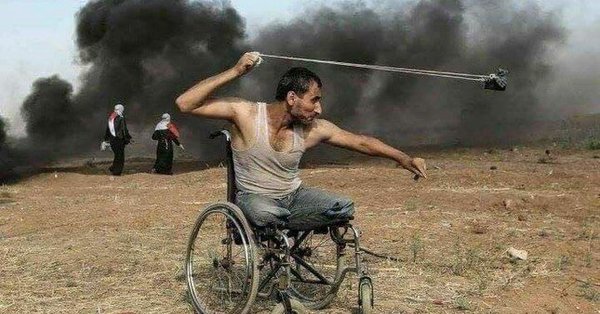 Israel never intended from the start to do more than nod their collective heads and continue on with their well planned zones of military control. The Biggest Prison on Earth – A History of the Occupied Territories is essential reading in order to help complete the overall picture of Israeli intransigence in regards to international law and international human rights standards and their callous subjugation of the Palestinian people.