
In recent years, some strong research has begun to emerge on the genocides against Armenians and Assyrians. But there is scarcely any reliable information available on the Pontic Genocide, as both academia and opinion makers largely ignore the subject [...]
May 19, 1919 has different and even opposing meanings in Turkey and Greece, just as May 15, 1948, marks both the establishment of Israel and, for Palestinians, the start of the Nakba (“catastrophe”).
In Turkey, this date marks the first step that led to the establishment of the Turkish Republic, while for descendants of Ottoman Greeks and Greece it marks the end of the centuries-long Pontic Greek presence on the shores of the Black Sea. Whereas Turks celebrate May 19, Greeks mourn it.
Researcher Tamer Çilingir summarised the issue in a 2016 interview with the Turkish-Armenian daily Agos:
“The Pontic Genocide is the last phase of Great Christian Genocide that started in 1894 with Sultan Abdulhamid’s massacres against Armenians and continued with the Union and Progress Party’s 1915 slaughter that killed 1.5 million Armenians and almost 300,000 Assyrians. People that had lived for 600 years in Pontus were either forced to convert to Islam or massacred between 1914 and 1923 or were banished in 1923 during the Turkish-Greek population exchange.
Between 1914 and 1921, some 353,000 Pontic Greeks were killed in the region: 134,078 in Amasya, Samsun, and Giresun; 64,582 in Tokat; 17,479 in Maçka; and 21,448 in Şebinkarahisar, along with 50,000 who died during the population exchange.
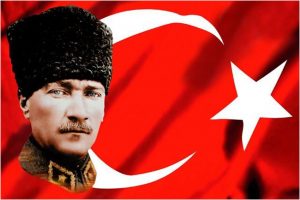
With the arrival of Mustafa Kemal — the founder of Turkey, who was later given the surname Atatürk, meaning “father of the Turks” — to Samsun on May 19, 1919, the process transformed into total annihilation. The first thing Mustafa Kemal did was to have a meeting with Topal Osman, a Turkish militia leader known for his anti-Greek brutality.”
The target was not only the lives of the Greeks, but also their properties and wealth.
Studies conducted outside Turkey show that the Pontic Genocide was a multi-year conscious annihilation process. In Turkey, people are either or totally ignorant of these events or wrongly interpret them as in line with the official narrative that blames secessionist Pontic Greeks.
In recent years, some strong research has begun to emerge on the genocides against Armenians and Assyrians. But there is scarcely any reliable information available on the Pontic Genocide, as both academia and opinion makers largely ignore the subject.
In Turkey, talking about the past and present of Pontic Greeks in the Black Sea provinces is likely to result in curses, insults, and worse.
Even the word “Pontus” is unacceptable to Turkey’s government. This past Saturday, a modest gathering in Ankara meant to commemorate the Pontic Greek genocide was forbidden by the governor.
Despite a total denial within Turkey, the issue has been on the agenda abroad for some time now. I asked historian Taner Akçam, one of the leading authorities on the Armenian Genocide, what had been done so far.
Efforts to jointly research the massacres against Pontic Greeks and Assyrians together with the Armenian Genocide had been gathering pace since mid-2000s.
In 2011, George Mavropoulos, an engineer and a leader of the Pontic Greek community in the United States, founded the Asia Minor and Pontus Hellenic Research Center in Chicago, a milestone for the movement.
The Zoryan Institute and its director George Shrinian gave vital support to Mavropoulos and his initiative. Mavropoulos began by organising a series of conferences, with the first held in 2008. Research papers presented at the conferences were later published, and a book titled “The Asia Minor Catastrophe and the Ottoman Greek Genocide” was published in 2012. Another, published in 2017, was called “Genocide in the Ottoman Empire: Armenians, Assyrians, and Greeks”.
Regarding holistic Ottoman genocides studies, a first happened earlier this month. Aristotle University in Thessaloniki hosted an international conference called “The Genocide of the Christian Populations in the Ottoman Empire and its Aftermath”. This event highlights how advocates have since 2008 sought to draw the attention of academics. It is crucial that studies will now be conducted within academia.
Moreover, in the past, activists and researchers generally focused on their own genocide and reached out to their own communities. From now on, it seems, the Ottoman genocides against non-Muslim populations will be handled with an integrated scientific approach, as Israeli historians Benny Morris and Dror Ze’evi’s do in their new book, “The Thirty Year Genocide,” which estimates that up to 2.5 million Armenian, Greek and Assyrian Christians were killed in Anatolia from 1894 to 1924.
Turkey has generally failed to use centenaries to remember, learn, understand, question, and come to terms with its past, in order to start healing. Yet our present has largely been shaped by the events that unfolded starting in 1908. Turkish society, opinion leaders and leading academics seem uninterested in the centenaries of the Second Constitutional Era, the Balkan Wars, the Raid on the Sublime Porte, World War One, the Ottoman Genocides, the Treaty of Sevres, and more still to come, excepting of course the centenary of Turkey’s founding.
Instead, everybody seems comfortable parroting official narratives on these troubling deeds and rejecting studies performed abroad as packs of lies. As a result, “diseases” keep relapsing!
One the occasion of the 100th anniversary of the 1919 Pontic Genocide, it is important to recognise that Turkey, where non-Muslim populations have been erased, has become the most religiously homogeneous yet sterile country in the region.
We will never find normality without reckoning with this great civilisational loss.
We would like to ask you to consider a small donation to help our team keep working. We accept no advertising and rely only on you, our readers, to keep us digging the truth on history, global politics and international relations.
The Imperial Anatomy of Al-Qaeda. The CIA’s Drug-Running Terrorists and the “Arc of Crisis”Part IIntroductionAs the 9th anniversary of 9/11 nears and the war on terror continues to be waged and grows in ferocity and geography, it seems all the more imperative to return to the events of that fateful September morning and re-examine the reasons for war and the nature of the stated culprit, Al-Qaeda.The events of 9/11 pervade the American and indeed the world imagination as a historical myth. The events of that day and those leading up to it remain largely unknown and little understood by the ...
With every day, the true face of Europe mirrors ever so clearer the abject inhumane colonial power that raped and usurped Asia, Africa and South America for hundreds of years, as so well depicted in numerous articles and essays by my friend, philosopher, historian and war journalist, Andre Vltchek. Every day this neo-colonial continent spits out new atrocities. And it’s getting worse. Jean Paul Sartre was right, when he said the US is but a Super-European-Monstrosity. The colonial Europeans, mostly Anglo-French Europeans, are at the helm of this monster-octopus, self-declared empire. They are behind the mysterious and Machiavellian eye on ...
While the typical narrative of American history positions the United States as a supporter of democracy and opponent of fascism which helped to defeat the Nazis, key figures in Washington also supported dangerous dictators in Italy and Germany in their early days of power.Noam Chomsky, the renowned political philosopher, historian and scholar, examined the flip side of U.S. opposition to dictatorship in a conversation with Zain Raza, a senior editor at the independent media outlet acTVism Munich. An excerpt from the conversation was published Sept. 30 as part of acTVism Munich’s “Reexamining History” series.Speaking to Raza about Italian dictator Benito ...
…When did Congress authorize Bill Clinton to go to war againsta Yugoslav army that has never attacked Americans?…This week, NATO conducted air exercises over Albania as a warning to Belgrade that its crackdown in Kosovo must end now.NATO’s demands? Yugoslav President Slobodan Milosevic must call off his offensive by June 16, allow monitors unimpeded access to the rebellious province, let the refugees return home, and resume talks with the Kosovan resistance. If Milosevic balks, NATO is preparing attacks on his forces and, says The New York Times, “possible air strikes against strategic military targets in Serbia.”France contends that NATO needs ...
The North Atlantic Treaty Organization was formed in 1949. According to its website, NATO was the first peacetime military alliance the United States entered into outside of the Western Hemisphere. Its original intent was to maintain a military line of defense against the USSR, which Washington considered the primary threat to its newfound dominance of Europe and much of the rest of the world, including many former colonies of European nations. Seen from another perspective, Washington wanted to expand its imperial reach. Given the physical and economic destruction suffered by most European nations during World War Two—and the relative lack ...
40 yrs after Prez Teddy Roosevelt gave Korea to brutal Jap Empire in return for its recognition of Philippines as US Territory, US invaded Korea long AFTER Jap surrender, overthrowing its Korean gov., cutting it in two parts, installing a US dictatorship in its south now documented to have murdered 100,000 of its own citizens.What Western media calls ‘Communist China,’ is a China governed by its Communist Party since 1949, and lying just across the Yalu River from a Korea, which between 1950 and 1953, was merciless bombed by the US, both north and south, all cities and towns of ...
What do you think of when you hear the name Colonel Gaddafi? Tyrant? Dictator? Terrorist? Well, a national citizen of Libya may disagree but we want you to decide.For 41 years until his demise in October 2011, Muammar Gaddafi did some truly amazing things for his country and repeatedly tried to unite and empower the whole of Africa.So despite what you’ve heard on the radio, seen in the media or on the TV, Gaddafi did some powerful things that are not characteristic of a “vicious dictator” as portrayed by the western media.Here are ten things Gaddafi did for Libya that you may not know about…1. In Libya a home is ...
The US has been threatening Iran for more than 20 years. Already during the Clinton administration, US Central Command (USCENTCOM) had formulated “in war theater plans” to invade both Iraq and Iran. This posting which includes selected articles from our archives was originally published by Global Research 12 years ago in May 2005. In the wake of the war on Iraq (2003), the Bush administration officially identified Iran and Syria as the next stage of “the road map to war”. Bush’s National Security doctrine contained in the Project for the New American Century (PNAC) was a continuation of Clinton’s “strategy of ...
More than 50 years ago, the state of Israel shocked the world when it seized the remaining Palestinian territories of the West Bank, East Jerusalem, Gaza Strip, as well as the Syrian Golan Heights and the Egyptian Sinai Peninsula, in a matter of six days.In a war with Egypt, Jordan and Syria, known as the 1967 War, or the June War, Israel delivered what came to be known as the "Naksa", meaning setback or defeat, to the armies of the neighbouring Arab countries, and to the Palestinians who lost all what remained of their homeland.The Naksa was a continuation of a ...
It was NATO’s first out-of-area operation, against its own Treaty and without a UN mandate. On March 24, 1999.Independent Kosovo was established – against UN SC resolution 1244. Thanks to the Clinton administration and Madeleine Albright. CNN’s Amanpour endorsed it generously on TV with her State Department husband, James Rubin, a chief operator in the non-negotiations at Rambouillet. And TIME of course knew the truth too.Serbia suffered tremendously from the 78 days of indiscriminate, hard bombing. I know because I was there.Finally, Serbia and its president Milosevic was threatened with total destruction of Belgrade. And gave in.Western hubris after the ...
For the first time since WW II, overt fascists hold real power in Europe. Radicalized ultranationalists. Anti-Semites. Hate-mongers.Cold-blooded killers. Whitewashing high crimes. A puppet regime. America’s newest colony.Mocking democratic values. Violating fundamental rule of law principles. Unaccountably.Western leaders won’t explain. Nor will the media. Hard truths are buried.Ukraine’s government usurped power forcibly. Putschist rule has no legitimacy.Especially regimes waging war on their own people. Murdering them in cold blood. Committing horrendous human rights abuses.Tolerating no opposition. Ruling by intimidation. Force-feeding neoliberal harshness on impoverished people. Making life unbearable overall. More on this below.On December 4, Wall Street Journal editors published ...
The Kingdom of Belgium as a multilingual and multicultural society is today a federal type of experimental laboratory of European integration within the framework of the European Union (the EU). This is also a country in which the capital of the European Union is located and a country as one of the original six establishing countries of the present day the EU. The question of the destiny of the Belgian multicultural federalism is of crucial importance for the future process of European integration or disintegration.The Belgian multicultural society: Long united and long dividedThe population of the Kingdom of Belgium is ...
In nineties, Srebrenica was the center of terrorist activities – « Jihad », the Muslim 28th Division under the command of Naser Oric Monster, with the participation of mujahedeens operated here, covered by UN and US forces. In 1993, The Embassy of Bosnia & Herzegovina, in Vienna, even issued the Bosnian passport to Osama bin Laden! Thus, Bin Laden became honored Bosnian citizen, under blessings of the Bill Clinton administration.The US diplomacy is still supporting the pro-Muslims’ politics in the Balkans. Bil Laden was killed, but his mujaheedins can still freely work in Kosovo, Bosnia and Macedonia. How is that ...
June 10 is a sad date in the history of the UN, the institution originally meant to play the key role in ensuring peace, security, and the primacy of law in the world. The decade since the passing of the June 10, 1999 UN Security Council Resolution 1244 addressing the Kosovo problem – the document totally ignored throughout the period – has shown that the UN is no longer playing the role prescribed to it by the post-World War II system of the international law. The Resolution the tenth anniversary of which nobody seems willing to celebrate in the UN ...
This article was first published on October 19, 2014This week marks the three-year anniversary of the Western-backed assassination of Libya’s former president, Muammar Gaddafi, and the fall of one of Africa’s greatest nations.In 1967 Colonel Gaddafi inherited one of the poorest nations in Africa; however, by the time he was assassinated, Gaddafi had turned Libya into Africa’s wealthiest nation. Libya had the highest GDP per capita and life expectancy on the continent. Less people lived below the poverty line than in the Netherlands.After NATO’s intervention in 2011, Libya is now a failed state and its economy is in shambles. As ...
It is as if the Gambino and Genovese crime families were arguing their turf disputes in the courts and the news media. The Democrats are screaming bloody murder over President Trump’s firing of FBI director James Comey, whom Hillary Clinton still blames for her defeat at the polls and whom the bipartisan War Party has never forgiven for Comey’s earlier hesitancy to blame the Russians for the same offense. Now that Trump has cut Comey loose — ostensibly for his handling of the Clinton emails scandal, according to three letters sent by Trump and his two top Justice Department officials ...
Odd as it may seem, October 5, 2000 was not the first time the Western powers engaged in “regime change” in Serbia. There are many similarities between the October 5 regime change and the Western involvement in putting the government of Josip Broz Tito and the Communist Party in charge of Yugoslavia in 1945.Just as Slobodan Milošević received faint praise from the West as “factor of peace and stability” in the Balkans, General Draža Mihailović was praised by the Western Allies during the war – yet support for both was limited mostly to words and empty propaganda gestures, and only so ...
The Yugoslav Youth MovementsThe idea of the Yugoslav unification became a leading ideological force of several youth movements among all Yugoslavs either of those living in an independent Serbia and Montenegro or of those living in Austria-Hungary. Their political-ideological inspiration was a pan-Italian unification movement – Young Italy (La Giovane Italia), established by Giuseppe Mazzini in 1831 in France.The Yugoslav youth movements flourished between 1903 and 1914 by having different regional or other names but not exclusively ethnic ones in various Yugoslav lands like Omladina (Youth), Mlada Bosna (Young Bosnia), Mlada Dalmacija (Young Dalmatia), etc.[1] The Austrian general of the ...
Being attacked from two sides simultaneously (terrorism and Russian threat) Europe has to decide what to do first: to counter terrorism or increasing Russian might. Choosing the priority is the most difficult challenge for the European States today. But Europe should make choice because states' budgets are not bottomless.It is obvious, that as soon as the terrorism problem comes to the fore, NATO (first of all the US) diverts attention to other matters, such as the necessity to boost defence expenditures because of Russia, Syria, Afghanistan and other "annoying" countries.It can be easily explained by the burden the country has ...
It is true that every story about the Balkan Peninsula begins with the ancient Illyrians.[1] Historians believe that these Indo-European people were one of the largest European populations to inhabit the western portion of the Balkans from the coasts of the Ionian Sea and the Adriatic Sea to the Alps about 1000 B.C. Their eastern neighbours were also Indo-European peoples – the Thracians. The demarcation line between their settlements and their cultural and political influence was the Morava river in present-day Serbia (in Latin Margus, located in the Roman province of Moesia Superior) and the Vardar river in present-day FYR ...