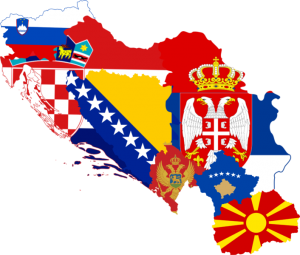
The Slavic CongressesThe idea of South Slavic political unification was surely a part of a broader pan-Slavic movement and ideology. If from nothing else, it can be proved from a very fact that the official flag of all kind of Yugoslavia (from 1918 to 2003) was, in fact, an insignia of the 19th century pan-Slavic movement, whose anthem was also used as an official state’s anthem of Socialist Yugoslavia (“Hey Slavs”).The first clear political expression of an idea of pan-Slavic reciprocity, solidarity, and possible unification was done at the First Slavic Congress held in Prague from May 5th to June ...
READ MORE
‘Blowing from a Gun’ depicted by Vasily Vereshchagin in his painting ‘Suppression of the Indian Revolt by the English’ on the rebellion of 1857. Queen Victoria’s agent bought this painting, in an attempt to suppress it. ‘Blowing from the Gun’ was a means of execution where the prisoner is tied to the muzzle of a cannon, which is then fired, popping the victim’s head about 15 meters (50 feet) into the air, apparently a sort of juvenile entertainment for the colonizers.Following colonization, along came ‘decolonization’ and what do you suppose happened with colonial borders? They mostly remained as laid down ...
READ MORE
On November 21st, 2015 it was the 20th anniversary of the 1995 Dayton Peace Accord – a treaty signed by four Presidents (the USA, Croatia, Serbia and Bosnia-Herzegovina) that led to an end of the civil war in Bosnia-Herzegovina. As a result of the Dayton Peace Accord a new “independent and internationally recognized state” emerged: Bosnia-Herzegovina as a confederation of two political entities (the Republic of Srpska and the Muslim-Croat Federation) but ethnically strictly divided into three segments composed by the Serb, Croat and Muslim (today Boshnjak) controlled territories. In contrast to the Republic of Srpska (49% of the territory ...
READ MORE
In the Balkans truth generally lacks a transcendent or ontological dimension, it tends to be purely tribal.July 11 this year will mark the 26th anniversary of the tragic events that took place in 1995 in the east Bosnian district of Srebrenica. With each passing year the ceremony loses some of its luster and pomp, as genocide fatigue sets in. The inquirer into these matters will get radically different answers and interpretations, mainly depending on the ethnicity of the local informant. As Diana Johnstone accurately observed, in the Balkans truth generally lacks a transcendent or ontological dimension, it tends to be ...
READ MORE
Serbia today is a member-State of United Nations (U.N.), after the Socialist Federal Republic of Yugoslavia was split into several nations during the early 1990’s when war broke out between Serbian General Milosevic and neighboring nations. After partition, Serbia is still the most powerful “state” of the former Yugoslavia.“Kosovo”, the term used for the territory of southern Serbia, is de-jure recognised as a “state” by over 110+ “states”, but is not a “state” itself, as per the Montevideo Convention on the Rights and Duties of States (1933), and is not a “state” at the U.N. where 2/3rd positive vote is ...
READ MORE
Message in the Bottle, One Hundred Years LaterSmyrna, Ottoman Empire, September 1922 Dear World – Our time has come to disperse like wildflower seeds in the wind. We are the last storytellers and children of the Ancients, their legacy and their accomplishments. The men and women have been separated. Many men were sent to the interior. Women clutching their babies, even in death, have walked miles. The elders have fallen by the roadside. The children, oh, the sweet children, their eyes are glazed with fear, their words lost, and, yet, they see a butterfly and for one moment, they smile. If only … ...
READ MORE
Part IPart II The policy of language and political parties until the prohibition of the Illyrian name (1843)During the years of 1832–1836 the Hungarian assembly (Dieta) hold several sessions in Pozsony (Bratislava/Pressburg), where Croatia-Slavonia’s deputies, particularly count J. Drašković, fought for the introduction of the national (Croat) language in Croatia-Slavonia instead of the Latin or Hungarian, as well as for the Croatian state-historical rights (the so-called Croatian pravice) as they were claimed as such by the Croat political leadership. At the same time, in 1834 Ljudevit Gaj obtained a permission from the Habsburg Emperor Francis I (1806–1835) to publish the first ...
READ MORE
The international community is accustomed to the so-called “checkbook diplomacy” that has been used by China and Taiwan to pilfer each other’s diplomatic allies by exchanging diplomatic recognition for generous financial assistance packages. However, this same battle for diplomatic recognition and de-recognition is being played out between Serbia and its breakaway province of Kosovo. The United States and much of NATO has not only granted Kosovo diplomatic recognition over the objection of Serbia but has also pressured other countries to recognize Kosovo’s independence. This process has hit a major stumbling block amid charges from various parties that fake diplomatic letters ...
READ MORE
Our Planet Earth is heading straight towards the most dangerous collision in its history. It is not a collision with some foreign body, with an asteroid or a comet, but with the most brutal and selfish chunk of its own inhabitants: with people who proudly call themselves “members of the Western civilization.”Again and again it is clearly demonstrated that Western culture, which the paramount psychologist Carl Jung used to call “pathology”, couldn’t be trusted.This “culture” had already mercilessly slaughtered several hundreds of millions of people in all corners of the world; it enslaved entire continents, and plundered all that had ...
READ MORE
The real question is not whether the status of Kosovo and Metohija should be negotiated; the actual questions to be asked are: On which basis? About what? Whom with?The sole legitimate basis is that Kosovo and Metohija is an integral part of Serbia currently placed under UN mandate, pending a Security Council decision ending it. In other words, this is mandate cannot be terminated either by the EU, or NATO, the USA, Germany, or France and, should this idea ever occurred to anyone, Serbia cannot end it, either.International law (the UN Charter, the OSCE Final Act) and the Constitution of ...
READ MORE
Last week Pontian Greeks throughout the world justifiably recognized a tragic day in their history that has come to be known as the Pontian Genocide.I wrote about the anniversary, obscure to most people around me who are not well-versed in Greek history and even had to repeatedly change my auto-correct on my computer, which insisted on changing the word Pontian to Pontiac.This anniversary was followed by another recognition of yet another genocide of Greeks— officially commemorated on April 6 and recalling the tragic events targeting the Greeks of Eastern Thrace— the region known today as European Turkey or the lands ...
READ MORE
Kosovo Muslim Albanian jihad fighters in the Middle East as ISIS members (2016)How accurate is the theory that there are tragic events of exceptional strength that really shape the identity of a nation? How is this happening and what if we do not learn a lesson out of those experiences?– The prominent French writer Renan wrote in his lecture “What is a Nation?” that people are often connected by memories of shared suffering, and Serbs are no exception. Today, when Yugoslavia is no more, there is no reason why Jasenovac should not be brought back to the center of the ...
READ MORE
The genocidal rule of the Khmer Rouge began forty years ago this month. Their rise to power was inseparable from US intervention.On April 17, 1975, Khmer Rouge (KR) forces stormed Phnom Penh and reestablished Cambodia as Democratic Kampuchea — a supposedly self-sufficient, entirely agrarian society. Resetting the clock to “Year Zero,” the KR forced urban dwellers to the countryside, and began to “purify” Cambodia through a genocidal purge of intellectuals and minority groups. By the time the slaughter came to an end in 1979 — after Vietnam invaded Cambodia and removed the KR from power — some 1.7 million people (21 percent ...
READ MORE
Genocidal corporate media presstitutes follow the all-too-familiar script of blaming the victim for the crimes perpetrated by aggressor nations.NATO terrorists, for example, are invading and occupying Syria, and the Syria government is blamed for the ensuing disasters, but the presstitutes omit this this from their narratives and instead find creative ways to blame the al Assad government whose duty it is to protect Syria, its sovereignty, and its territorial integrity. When terrorists are occupying cities, as they do in Syria, innocent people will always be victimized, including during government operations to clear out the terrorist infestations, but the presstitutes blame ...
READ MORE
The rapacious conduct of the big hyenas is being replicated by their camp followers. Not to be outdone, Kosovo Albanians are laying claim to Serbian cultural monuments in Kosovo.A controversy has recently erupted in Mexico, of the type that may quite often be seen in other similarly defrauded countries. Its focus is the magnificent quetzal-plumed headdress of the last Aztec emperor Moctezuma which, contrary to the misleading impression encouraged by the Museum of Anthropology in Mexico City, is not displayed there at all. It is actually located, of all places, in the Ethnological Museum in Vienna, Austria.The impression is misleading ...
READ MORE
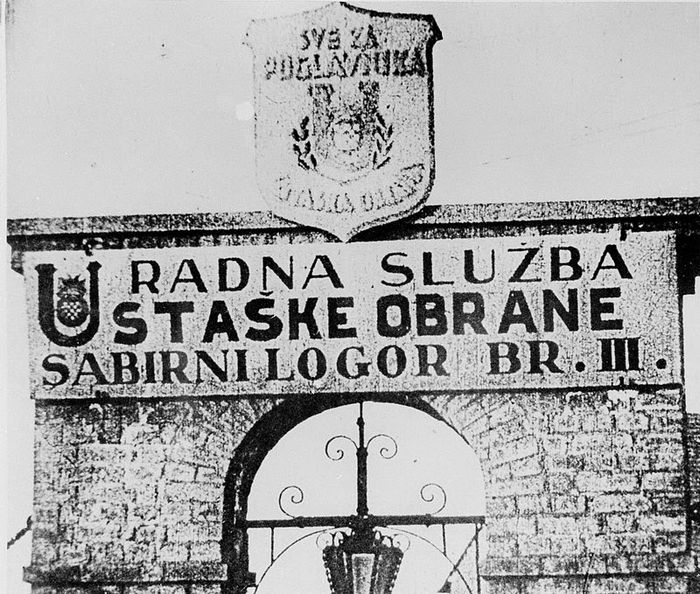
Vatican: St Peter ChurchWhat role, if any, did the Vatican play in the genocide committed in the Independent State of Croatia (NDH), a Roman Catholic state sponsored by the Vatican? This has been a controversial topic regarding World War II historiography. Renewed debate was stirred in 1999 with the publication of Hitler’s Pope: The Secret History of Pius XII (New York: Viking, 1999) by John Cornwell.Vatican KnowledgeThe nature of the Ustasha NDH regime was well-known by the Vatican and by the US government as early as 1941. It was no secret that the Ustasha government sought to exterminate the entire ...
READ MORE
Or Yugoslavia’s for that matter. The level of western cynicism on “territorial integrity” is far greater than you probably know. The Kosovo-Crimea discrepancy is just the tip of the icebergEarlier this month Obama gave an earful to Putin (from a G7 meeting held 2,000 kilometres away from Moscow) complaining that this day and age you just can’t go around violating the “territorial integrity” and “sovereignty” of other countries:“Does he continue to wreck his country’s economy and continue Russia’s isolation in pursuit of a wrong-headed desire to recreate the glories of the Soviet empire? Or does he recognize that Russia’s greatness does not ...
READ MORE
This essay goes to the matter of Kosovo; where the Western states (NATO & the EU) has determined Serbia is not fit to govern a minority (of ethnic Albanians) on their own (Serbian) territory but the now purported (by the West) independent Kosovo is fit to govern a minority (of ethnic Serbs).The EU position seems to embrace an attitude of ‘never mind the inconvenient fact’ that recent Kosovo ‘leaders’ are being arrested and delivered to an international tribunal for crimes against ethnic Serbs (includes organ harvesting), also not to mention what amounts to mere ‘lip service’ (no concrete action or ...
READ MORE
In 1389, the Turks wanted to magnificently celebrate the first hundred years of their Ottoman Empire, which had a Sultanate at the time. Their plan was to go to war, to conquer the Serbian Empire and defeat its Army in Kosovo, and to mark the anniversary in a glorious way. The Turks started from Anatolia and headed to the Balkan peninsula via Kosovo, Belgrade, then over Drina, upstream Sava river, then to the South towards the Adriatic sea and then, go back home via Zeta and Raška. They wanted to make their sultanate an intercontinental empire. The battle against the ...
READ MORE
A project for Greater Albania – conspiracy or legitimate? According to a 2010 Gallup Balkan Monitor report, 83% of Albanians in Albania supported the idea of a Greater Albania, with 81% and 53% of Albanians in Kosovo and North Macedonia respectively supporting such an ambition.The ultimate goal? To have Kosovo and the Preševo Valley in Serbia, southern Montenegro, Epirus in Greece and western North Macedonia into a single Greater Albanian state. Although this may not be official policy of the Albanian Republic, it is ingrained into the Albanian mythos. The very idea of a Greater Albania has roots in the 1913 Treaty of London that left roughly 40% ...
READ MORE