
Five Facts About Kosovo the Fakenews Media is Lying to You About
Kosovo was never a political entity of any kind until 1945, when the Communist regime that reconstructed Yugoslavia after Axis occupation (with which Albanians overwhelmingly collaborated) created the "Autonomous Region of Kosovo & Metohija" - the latter being a Greek word describing church lands [...]
Its very name comes from the Serbian word “kos,” meaning blackbird. Its Albanian name, “Kosova,” means nothing whatsoever.
Kosovo was the heartland of medieval Serbian state and the site of the 1389 battle in which both the Serbian prince and the Ottoman sultan died, checking the Turkish expansion into the Balkans for almost 70 years. Ethnic Albanians were settled there by the Ottomans over the intervening centuries, and became a majority due to pogroms and persecution of Serbs – which began under Ottoman rule but continued under Austro-Hungarian occupation in WWI and German/Italian occupation in WWII.
Kosovo was never a political entity of any kind until 1945, when the Communist regime that reconstructed Yugoslavia after Axis occupation (with which Albanians overwhelmingly collaborated) created the “Autonomous Region of Kosovo & Metohija” – the latter being a Greek word describing church lands.
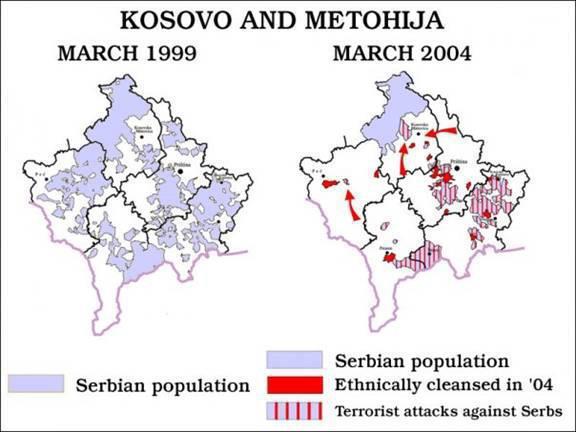
The Communists also forbid any Serbs expelled in WW2 to return to Kosovo, cementing its ethnic Albanian majority, which further grew through an influx of illegal immigrants from Enver Hoxha’s Albania and the ethnic cleansing of non-Albanians since the NATO occupation began in 1999.
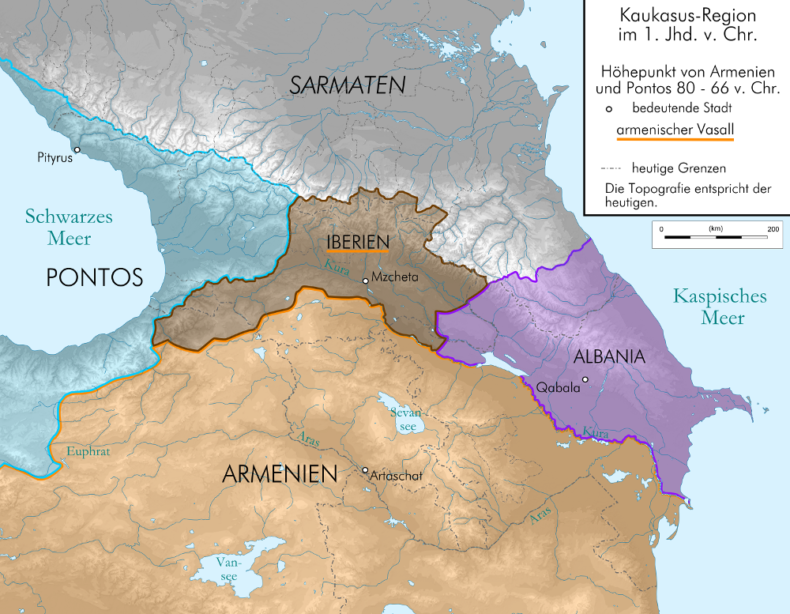
The original homeland of Balkan Albanians
2.Operation Allied Force, the 1999 NATO bombing campaign, was not a legitimate humanitarian intervention approved by the UN
It was a war of aggression, in violation of both the NATO and the UN charter. Contrary to what the mainstream Narrative says today, NATO’s justification for the war was not Serbian “human rights violations” against the Albanians. No, the bombing began as a way to force Serbia to accept the ultimatum issued at the French chateau of Rambouillet, in which NATO demanded a 3-year occupation of the province and a NATO-organized referendum that would give the ethnic Albanians independence.
It was at Rambouillet that the US negotiated on behalf of the “Kosovo Liberation Army,” a separatist group it had previously acknowledged as terrorists. As part of its terrorist campaign to separate Kosovo from Serbia, the KLA has engaged in murder, assassination, extortion, torture, and trafficking in drugs, guns, sex slaves and even human organs.
Kosovo Liberation Army
3.Serbia did not kill 10,000 ethnic Albanian civilians during the 1999 war
That figure is an estimate based on assertions by NATO, entirely unsupported by any facts whatsoever – same as the “up to 100,000 men” speculated by NATO propagandists during the war itself. Western media continue to repeat it the same way they repeated the claim of 300,000 dead in Bosnia, which was later revised down to under 100,000.
4.There was no Serbian plan to deport a million ethnic Albanians
The so-called “Operation Horseshoe” was concocted by German and Bulgarian intelligence to provide justification for the illegal and illegitimate NATO war (see #2 above), to the point where they used the Croatian word for horseshoe. While there was a mass exodus of Albanians towards Albania, Macedonia and Montenegro (odd, since it was part of Yugoslavia same as Serbia), some evidence suggests that may have been orchestrated by NATO and the KLA.
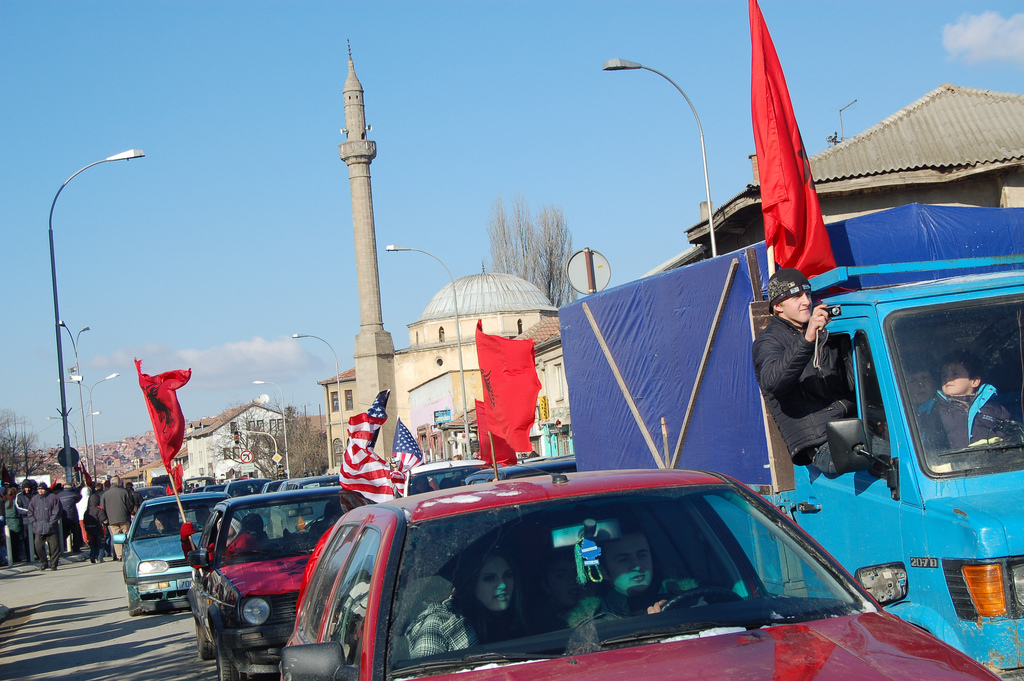
Kosovostan today
5. Kosovo’s “independence” is neither legal nor legitimate
UN Resolution 1244, which authorized a NATO-led peacekeeping mission after the June 1999 armistice, reaffirmed Kosovo’s status as a part of the Federal Republic of Yugoslavia. Legally, it remained a province of Serbia, whose integrity was sacrosanct on the same grounds as Slovenia, Croatia, Bosnia, Macedonia (and later Montenegro) were recognized in their Communist-drawn borders when the proto-European Union and the US decided to declare Yugoslavia nonexistent in 1992.
In February 2008, the provisional administration of Kosovo set up under the UN viceroy and NATO occupation, declared independence – based on a plan rejected by the UN Security Council, the final arbiter of Resolution 1244.
The International Court of Justice later tortured logic and language to rule that international law didn’t say anything about random people making such declarations – but these were not random people. Their very legitimacy rested on the UN mandate, which their declaration violated.
President Barack Obama lied in March 2014 that there was internationally recognized and supervised referendum on the issue; there wasn’t. No mainstream media outlet ever called him on it, though.
We would like to ask you to consider a small donation to help our team keep working. We accept no advertising and rely only on you, our readers, to keep us digging the truth on history, global politics and international relations.
Serbs: Basic factsEthnic location: Central and western part of the Balkan Peninsula (South-East Europe)Population: 10.2 million (1.8 million Serbs live outside their ethnic location)Language: SerbianReligion: Eastern Orthodox Christians1 Introduction Serbs belong to the Southslavonic group of Indo-European peoples. As their tradition, culture, language, beliefs, and customs show, the ethnogenesis of Serbs goes far back into the past. Serbian ancestors, Protoslavs and Old Serbs, were described in the 5th century BC by Herodotus, under the names of Neuri and Budini, living north of the Danube in the region between Dniepar and north-eastern Carpathian Mountains.The first mention of the name “Serbs” appears ...
On November 11, distinguished scholar, political economist, media analyst/critic, peace champion Ed Herman passed away at age 92.It was fittingly on the 99th anniversary of WW I’s end. Endless wars followed “the war to end all wars” – a legacy of mass slaughter and destruction Herman deplored, championing elusive world peace.Along with his friends and family, I mourn his passing, a valued friend and colleague, a contributor to my 2014 book, titled “Flashpoint in Ukraine: How the US Drive for Hegemony Risks World War III.”He and other distinguished contributors made the book successful, published in Russia and France.Ed Herman’s writing ...
Ema Miljkovic-Bojanic, M. A.Institute of History ofSerbian Academy of Sciences and ArtsBelgrade, 2000Malcolm’s Apology of the “Pax Ottomana” (Ab)using of historiography and historical facts for political ends is not a novelty introduced towards the end of the twentieth century. Its instances have been known throughout history, so that “practically there is not a single epoch of human history that was not controlled – by the Church, state, nation, party, leadership…” But precisely at a time when historiography seemed to be getting rid, at least partly, of the grip of “supervision” and when a critical approach was getting the upper hand, the ...
Around Srebrenica: Serbian victims of Bosnian Muslim terror during the civil war in 1990sTranscript of presentation by the author at the Conference of Independent Journalists’ Association for Peace, Vienna, Austria, May 2015.This year the twentieth anniversary of the massacre in Srebrenica is being observed. On July 11 a huge spectacle will take place at the Srebrenica Memorial center specially constructed for that purpose. It will feature the presence of most of the rather insignificant individuals purporting to be political leaders in the region and the Western-dominated world. Their speeches, which never vary substantially, will be infused with the predictable platitudes.I ...
Southern Serbia’s autonomous province of Kosovo and Metochia (KosMet) has been subject to a gradual, but a permanent change of its demographic content during the time of Titoslavia (Socialist Yugoslavia, 1945−1991). Three principal factors were crucial to the drastic demographic change in this Serbian province in favor of ethnic (Muslim) Albanians and at the expense of ethnic (Christian Orthodox) Serbs and Montenegrins.Demographic explosionFirst and the most important has been the demographic explosion, due to the enormous birth rate of Albanians. In the situation when this trend on the global scale was in the opposite direction, with even African countries diminishing ...
What you can see here, as the example: Serbian shrine Bogorodica Ljeviška (Virgin Mary of Ljevishka) is a cathedral church in the city of Prizren in the western part of Kosovo & Metohija region. The city was a capital of medieval Serbia. This church is built by Serbian king Milutin between 1307-1309. This church belongs to one of four masterpieces of Serbian sacral architecture in the Middle Ages in Kosovo & Metohija that was a central part of Serbian medieval state. The video is in the Serbian language.Rachak Village in Kosovo 1999- Lies and the truth from Vladislav B. Sotirovic ...
The Balkans conflicts of the 1990s saw a massive revival and resurgence of US and Western media propaganda and infowar techniques. The “new” advocacy journalists recalled the “yellow journalism” of William Randolph Hearst, who helped induce the US to engage in the imperialistic or colonial war in Cuba in 1898, the Spanish-American War. This marked the emergence of the US as an expansionist global imperial and colonial power, like Britain, France, Spain, and Germany had been. Hearst was credited with manufacturing or “furnishing” the war in Cuba.Frederic Remington, his correspondent in Cuba, reported that nothing was happening in Cuba, that ...
Every Friday, just yards from a statue of Bill Clinton with arm aloft in a cheery wave, hundreds of young bearded men make a show of kneeling to pray on the sidewalk outside an improvised mosque in a former furniture store.The mosque is one of scores built here with Saudi government money and blamed for spreading Wahhabism — the conservative ideology dominant in Saudi Arabia — in the 17 years since an American-led intervention wrested tiny Kosovo from Serbian oppression.Since then — much of that time under the watch of American officials — Saudi money and influence have transformed this ...
Fresh calls for a Greater Albania, incorporating the southern Serbian province of Kosovo, have led to an angry backlash from politicians in Belgrade.Sputnik Radio’s Mark Hirst talked to Marko Djuric, Director of the Government Office for Kosovo and Metohija.Such a move by Albania, if acted upon, could plunge the entire region back into a bloody and costly war on a scale not seen since the 1990s.Marko Djuric said that Serbia will not allow the creation of a Greater Albania in its southern province and that it is not alone in opposing the idea, which stems from the times of Nazi occupation of Yugoslavia.When asked whether this inflammatory statement by Albanian ...
Origins of images: Facebook, Twitter, Wikimedia, Wikipedia, Flickr, Google, Imageinjection, Public Domain & Pinterest.Read our Disclaimer/Legal Statement!Donate to Support UsWe would like to ask you to consider a small donation to help our team keep working. We accept no advertising and rely only on you, our readers, to keep us digging the truth on history, global politics and international relations.[wpedon id="4696" align="left"]SaveSave
The president of Turkey, Recep Tayyip Erdogan, speaking at a conference entitled the “The Spirit of Turkey’s New Security,” referring to the Treaty of Lausanne, said:“The Turkish Republic is the last state that we founded with whatever was left over from all the self-sacrifices we were able to make... We are heirs of a nation that saw its territory expand to 22 million kilometers. Shortly before the Republic was founded, we had 3 million kilometers which kept diminishing until all we had left was 780,000 kilometers. Some may be offended at my mention of Lausanne. But why does it bother ...
US-NATO military control of Kosovo serves several purposes for Washington’s greater geo-strategic agenda. First it enables greater US control over potential oil and gas pipeline routes into the EU from the Caspian and Middle East as well as control of the transport corridors linking the EU to the Black Sea.It also protects the multi-billion dollar heroin trade, which, significantly, has grown to record dimensions in Afghanistan according to UN narcotics officials, since the US occupation. Kosovo and Albania are major heroin transit routes into Europe. According to a 2008 US State Department annual report on international narcotics traffic, several key ...
PrefaceKosovo (Serb. Kosovo-Metochia, Alb. Kosova) is a square-shaped province of the Republic of Serbia of 10,877 sq. kilometres that is approximately the size of the USA state of Connecticut. The province is situated in the southern interior of the Balkan Peninsula in South-East Europe.[1] For most of the 20th century-history, this province was part of Serbia like in the Middle Ages but from 1455 to 1912 it was occupied by the Ottoman Empire. After the 1998‒1999 Kosovo War the province is an autonomous territory under the formal administration of the UNO but, in fact, USA’s colony. Officially, the province has ...
The topic to be addressed in this text is the basic misconception on the question of the Balkan Albanian ethnogenesis and national identity that was framed by extremely geo-politically coloured German-based “Illyrian” theory of the Albanian ethnic and cultural origin. This (quasi)theory, unfortunately, has very deep and negative regional political-security consequences. The implementation of the “Illyrian” theory of the Albanian ethnogenesis was accepted firstly by the Rilindja, (the Renaissance) – the Albanian nationalistic and chauvinistic political movement in 1878–1913 for the sake to create the ethnically pure Greater Albania as a national state of all Balkan Albanians composed by self-interpreted ...
Four men, accused of being partisans, are alleged to have been buried alive. The wife of a partisan is said to have been “pierced by bayonets and drowned in a garbage pit” [искололи тело штыками и утопили в помойной яме].The author (who is unnamed) states that his own elderly father was taken as a hostage by Allied forces from the town of Kharitonovka [Харитоновка]. He was returned home alive but in a bloodied condition. He is said to have died a few days later, after asking “Why did they torture me…”? [За что меня замучили]. The man is said to ...
Source: Rich WhitneyAbout the author: Rich Whitney is an attorney, actor, radio commentator and disk jockey, Illinois Green Party activist and former Green Party candidate for governor.Origins of images: Facebook, Twitter, Wikimedia, Wikipedia, Flickr, Google, Imageinjection & Pinterest.Read our Disclaimer/Legal Statement!Donate to Support UsWe would like to ask you to consider a small donation to help our team keep working. We accept no advertising and rely only on you, our readers, to keep us digging the truth on history, global politics and international relations.[wpedon id="4696" align="left"]
This essay goes to the matter of Kosovo; where the Western states (NATO & the EU) has determined Serbia is not fit to govern a minority (of ethnic Albanians) on their own (Serbian) territory but the now purported (by the West) independent Kosovo is fit to govern a minority (of ethnic Serbs).The EU position seems to embrace an attitude of ‘never mind the inconvenient fact’ that recent Kosovo ‘leaders’ are being arrested and delivered to an international tribunal for crimes against ethnic Serbs (includes organ harvesting), also not to mention what amounts to mere ‘lip service’ (no concrete action or ...
Although the 2016 presidential election is still in the primaries phase, contenders have already brought up America’s failed foreign wars. Hillary Clinton is taking flak over Libya, and Donald Trump has irked the GOP by bringing up Iraq. But what of Kosovo?The US-led NATO operation that began on March 24, 1999 was launched under the “responsibility to protect” doctrine asserted by President Bill Clinton and UK Prime Minister Tony Blair. For 78 days, NATO targeted what was then the Federal Republic of Yugoslavia – which later split into Serbia and Montenegro – over alleged atrocities against ethnic Albanians in the ...
A National traumaA national trauma which the Serbs after the fall of the Serbian national state and the Ottoman occupation experienced after June 20th, 1459[i] can be compared with that felt by Judea’s Jews after the fall of Jerusalem and the destruction of the Temple in 70 AD.[ii] Since Serbia soon found herself well within the Ottoman Sultanate and the European Christian states were on defense from the victorious Muslim Ottoman Turks, no light at the end of the historical tunnel was seen and the whole nation sank into deep despair for the next four centuries. In a sense, the ...
A project for Greater Albania – conspiracy or legitimate? According to a 2010 Gallup Balkan Monitor report, 83% of Albanians in Albania supported the idea of a Greater Albania, with 81% and 53% of Albanians in Kosovo and North Macedonia respectively supporting such an ambition.The ultimate goal? To have Kosovo and the Preševo Valley in Serbia, southern Montenegro, Epirus in Greece and western North Macedonia into a single Greater Albanian state. Although this may not be official policy of the Albanian Republic, it is ingrained into the Albanian mythos. The very idea of a Greater Albania has roots in the 1913 Treaty of London that left roughly 40% ...
The magazine is covering the research gaps uncovered by global Western hoax mainstream media platforms and academic teaching & research institutions.
This is an alternative information & academic research digest platform with the purpose to offer an alternative “another side of the truth”.
The magazine is independent, private, and free of any influence by any institution, organization, government, or pressure group. URL: www.global-politics.eu