
Golan Heights, Kosovo and Crimea: A Case Study in Hypocrisy and Double Standards
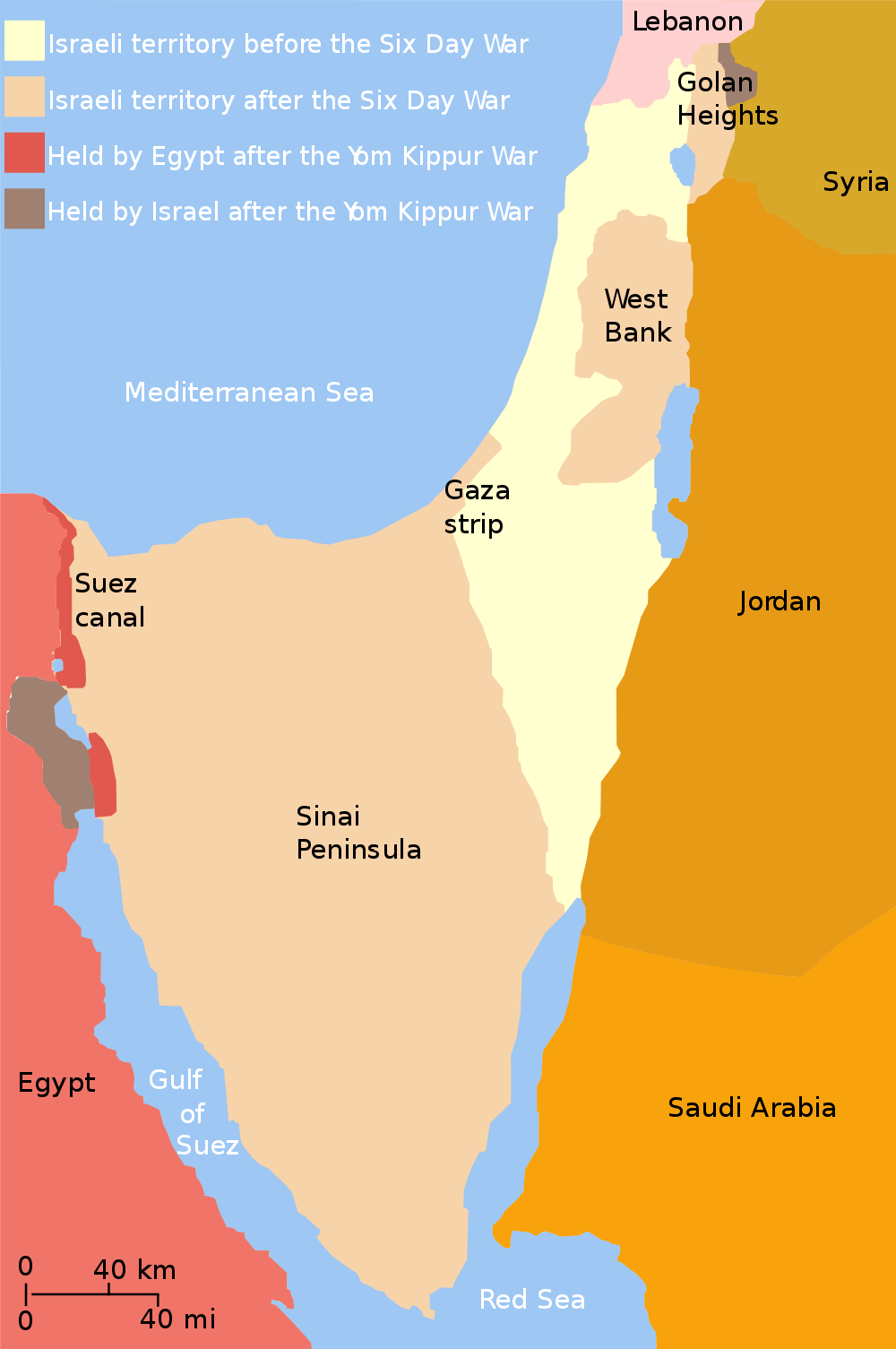
The Golan Heights form part of the sovereign territory of the state of Syria. It, along with the West Bank of Palestine (then part of Jordan) and the Gaza strip were seized by Israel at the conclusion of the Six Day War between Israel, Egypt, Syria and Jordan in June 1967 [...]
The recent announcement by United States President Donald Trump that the US will recognise Israel’s sovereignty over the Golan Heights draws attention yet again to the double standards applied by NATO and its satraps including Australia to the issues of territorial integrity, the right to self-determination, and international law. Three cases illustrate the duplicity and double standards of the Western nations. They may be reviewed chronologically.
A picture taken on July 4, 2018 from the Israeli-annexed Syrian Golan Heights shows displaced Syrians from the province of Daraa staging a protest (top L) calling for international protection, in the Syrian the village of al-Rafid, near the border fence with Israel. / AFP PHOTO / JALAA MAREY
The Golan Heights form part of the sovereign territory of the state of Syria. It, along with the West Bank of Palestine (then part of Jordan) and the Gaza strip were seized by Israel at the conclusion of the Six Day War between Israel, Egypt, Syria and Jordan in June 1967. Israel has remained in occupation of the West Bank and the Golan Heights ever since. It maintains a blockade on Gaza to the immense suffering of Gaza’s inhabitants.
It is well-established international law (Fourth Geneva Convention of 1949) that states may not continue to occupy territory seized as a result of war. On 22ndof November 1967 the United Nations Security Council in resolution 242 unanimously called on Israel to withdraw its forces from occupied territory. This was ignored by Israel, just as it has violated 32 United Nations resolutions since 1968, easily the single biggest offender (Turkey is second with 24 violations over the same time period).
In 1981 Israel passed the Golan Heights Law in which it purported to annex the Syrian Golan Heights. United Nations Security Council resolution 497 of 17th of December 1981 declared that purported annexation “null and void and without legal effect.”
That Israel continues to ignore its obligations under international law is not surprising. That the United States, other NATO countries, and Australia not only do not impose any sanctions on Israel for its continued violations, it does not even permit the discussion of such a possibility. Even to raise the issue invites immediate allegations of anti-Semitism and other absurdities from the immensely powerful Jewish lobby in most western states.
Trump’s announcement follows a similar declaration last year to recognise Jerusalem as Israel’s capital. This is also not only a violation of international law, it is contrary to resolutions the United States itself has supported in the past (as with the Golan Heights).
Kosovo’s case is totally different but it raises a number of relevant points. Kosovo is ethnically and linguistically Albanian, although it formed part of the former Yugoslavia. There were strong elements within Kosovo that wanted independence from Yugoslavia.
That independence movement was supported by the United States. Between March and June 1999 the United States bombed Serbia to encourage the Serbs to withdraw their military forces from Kosovo. The bombing was without Security Council approval, was not within the provisions of the United Nations Charter, and was accordingly a gross violation of international law.
At the cessation of the bombing, on 10 June 1999, United Nations Security Council resolution 1244 gave Kosovo autonomy within the Federal Republic of Yugoslavia. On the 17th February 2008 Kosovo unilaterally declared independence from Yugoslavia. There was no referendum, but it is fair to say that the declaration was supported by the majority of Kosovans, especially those of Albanian ethnicity who comprised 88% of Kosovo’s population.
On 8 October 2008 the United Nations General Assembly asked the International Court of Justice for an advisory opinion on the Kosovo declaration of Independence. Their decision was announced on 22nd July 2010. The court noted the lengthy history of unilateral declarations of independence since the 17th century, with most of them opposed by the parent state.
The court concluded that “international law contained no prohibition of declarations of independence” (paragraph 79) and that “the declaration of 17th February 2008 did not violate general international law” (paragraph 84).
The United States had a particular interest in Kosovo, including in particular being able to establish a substantial military base there (Camp Bond Steel). That base functions, inter alia, as a major transit point for Afghan heroin under the control of United States and Allied forces in Afghanistan.
No sanctions were applied to the United States for its illegal bombing of Syria, nor on Kosovo for its unilateral declaration of independence. The majority of the world’s countries now recognise Kosovo as a separate independent state.
Crimea was factually different again, but also contains several relevant points. Crimea had been part of the Russian Empire since 1783. On 18 February 1954 the Presidium of the Supreme Soviet of the USSR issued a decree transferring Crimea to Ukraine. There was no referendum of the Crimean people and had there been, the overwhelming likelihood is that the transfer would have been rejected.
The transfer seems to have been the brainchild of then Soviet leader Khrushchev, himself a Ukrainian. The absence of democratic procedures is reinforced by the fact that the transfer was itself a violation of Soviet law.
In the following decades there was an uneasy relationship between the Crimeans and the Ukrainian government. Crimea enjoyed the status of being an “autonomous republic”. That uneasiness came to a head in February 2014 when the duly elected and internationally recognised government of Ukraine was overthrown in an American organized and financed coup d’état.
The new Ukrainian government was anti-Russian and frankly fascist in its orientation. Neither fact was acceptable to the Crimeans who, like the Albanians in Kosovo were overwhelmingly of one language, culture, ethnicity and identification with all things Russian.
A referendum was quickly organized (unlike Kosovo) and there was a voter turnout of 83.1%, of whom 95.5% voted in favour of reunification with Russia. The Russian Duma in turn voted to accept Crimea back into the Russian Federation.
The western media and politicians consistently use the term “annexation” to describe the reincorporation of Crimea into the Russian Federation. The OED defines annexation as synonymous with “seizure, occupation, invasion, conquest, takeover, appropriation and expropriation.” None of these terms accurately describes the sequence of events in Crimea.
There is no difference in international law between what Kosovo did with the approval of the International Court of Justice and what the Crimeans did. The latter was arguably much more democratic as it followed an overwhelming referendum result in support of departure from Ukraine and rejoining with Russia.
The consequences however, have been very different. Russia has been subject to endless vilification. The Russian state and many political and business leaders have been subjected to sanctions. One has only to ask: would this have happened if Crimea had voted to leave the Russian Federation and join Ukraine? The overwhelming probability is that Crimea would have been welcomed with open arms and its people applauded for making the ‘right’ choice.
Crimea is strategically significant, which is why the British fought Russians there in the Crimean war (1853-1856), and why a prime geopolitical objective of the US interference in Ukraine was to deprive the Russians of the naval base at Sevastopol.
The history of these three episodes (Golan, Kosovo and Crimea) exemplifies the double standards and hypocrisy that characterizes western geopolitics. Trump’s latest statements on the Golan Heights only reinforce the point.
Originally published on 2019-03-28
About the author: James O’Neill, an Australian-based Barrister at Law and geopolitical analyst, exclusively for the online magazine “New Eastern Outlook”
We would like to ask you to consider a small donation to help our team keep working. We accept no advertising and rely only on you, our readers, to keep us digging the truth on history, global politics, and international relations.
SaveSaveOrigins of images: Facebook, Twitter, Wikimedia, Wikipedia, Flickr, Google, Imageinjection, Public Domain & Pinterest.Read our Disclaimer/Legal Statement!Donate to Support UsWe would like to ask you to consider a small donation to help our team keep working. We accept no advertising and rely only on you, our readers, to keep us digging the truth on history, global politics and international relations.[wpedon id="4696" align="left"]
Sir!As a German citizen and long-time friend of the Serbs, it is an urgent matter for me to express to you my deeply felt indignation and disapproval because of your interview statement on the US-NATO war of aggression against the then the Federal Republic of Yugoslavia in 1999, which was contrary to international law. An apology to the Serbian people for this extremely rude behavior towards the host country is the least I expect from you.I moved with my wife, a retired Serbian diplomat, from paradisiacal Lindau on Lake Constance to Belgrade one and a half years ago. As a ...
Once NATO’s 1999 war on Yugoslavia came to an end, units of the Kosovo Liberation Army (KLA) poured across the border. The KLA wasted little time in implementing its dream of an independent Kosovo purged of all other nationalities. Among those bearing the brunt of ethnic hatred were the Roma, commonly known in the West as Gypsies. Under the protective umbrella of NATO’s Kosovo Force (KFOR), the KLA was free to launch a pogrom in which they beat, tortured, murdered and drove out every non-Albanian and every non-secessionist Albanian they could lay their hands on.Not long after the war, I ...
Save... and many more pictures!Origins of images: Facebook, Twitter, Wikimedia, Wikipedia, Flickr, Google, Imageinjection, Public Domain & Pinterest.Read our Disclaimer/Legal Statement!Donate to Support UsWe would like to ask you to consider a small donation to help our team keep working. We accept no advertising and rely only on you, our readers, to keep us digging the truth on history, global politics and international relations.[wpedon id="4696" align="left"]
As Europe’s longest ruler, it is a surprise that Milo Djukanovic is only 58. He has served as prime minister or president of various iterations of Montenegro since 1991 – spanning the collapse of Yugoslavia and across and beyond independence of the nation in 2006.What is the secret to Mr Djukanovic’s success? The answer is depressingly predictable: clientelism and the buying – or, depending on your perspective, stealing – of power.The beauty of Montenegro hides this ugly truth. Most know it as a tourist idyll with pristine beaches, crystal lakes and picturesque mountains. But holidaymakers rarely realize they enter less ...
Imagine – the European Union were to collapse tomorrow – or any day soon for that matter. Europeans would dance in the streets. The EU has become a sheer pothole of fear and terror: Economic sanctions – punishment, mounting militarization, the abolition of civil rights for most Europeans. A group of unelected technocrats, representing 28 countries, many of them unfit to serve in their own countries’ political system, but connected well enough to get a plum job in Brussels – are deciding the future of Europe. In small groups and often in secret chambers they decide the future of Europe.Take ...
Abstract: This article investigates the Russian foreign politics at the region of the Balkan Peninsula after the dissolution of the Soviet Union at the time of the North Atlantic Treaty Organization’s (NATO) World Order in relation to the Pan-Slavic ideals of intra-Slavic solidarity, reciprocity and brotherhood. The particular stresses are put on four main research topics: 1. The Pan-Slavism and Russia; 2. Relations between pro-Western and pro-Orthodox approaches of the Russian national interests on Russia’s domestic political scene; 3. Different attitudes towards the Balkans in Russia; and 4. Historical ties and future perspectives between Russia and the Serbs. A research ...
The book of evidence about ethnic cleansing and policy of genocide committed by the neo-Nazi Ustashi government in Croatia against its own citizens of the Serb nationality in August 1995. That was a third genocide against the Serbs committed by the Croats in the 20th century: 1. during the WWI; 2. during the WWII; 3. in the 1990s. Today, Croatia is almost totally ethnically cleanced from all non-Croats like Kosovo and Albania from all non-Albanians. During the WWII, around 700.000 Serbs were brutally killed by the Croats and Bosnian Muslims on the territory of the Independent State of Croatia.Read our ...
The ethnic demarcation that is promoted by Serbian president Aleksandar Vucic, between Serbs and Albanians is just another name for the creation of Greater Albania. Vucic statements and spinning of the necessity for the "demarcation" between Serbia and Kosovo caused shock among Serbs. Most of his political life, Vucic advocated for a Greater Serbia, but with coming to power, things changed. Against his demarcation is virtually the entire Serbia. From experts to the pillar and base of Serbs throughout history Serbian Orthodox Church. A few years ago, I wrote in my analytical column that Vucic came to power with the ...
In another grim milestone for the United States and NATO, the Council of Europe (COE) released an explosive report last week, “Inhuman treatment of people and illicit trafficking in human organs in Kosovo.”The report charged that former Kosovo Liberation Army (KLA) boss and current Prime Minister, Hashim Thaçi, “is the head of a ‘mafia-like’ Albanian group responsible for smuggling weapons, drugs and human organs through eastern Europe,” The Guardian disclosed.According to a draft resolution unanimously approved December 16 in Paris, the Committee on Legal Affairs and Human Rights found compelling evidence of forced disappearances, organ trafficking, corruption and collusion between ...
Two Kosovo Albanian Muslim muhajedeens (with the passports of Republic of Kosovo) as members of ISIL in Syria in 2015 (Official ISIL’s video material)After the 9/11, a worldwide “War on terror” begun in order to disband and neutralize Islamic terrorist networks across the globe. The main focus of the largest anti-terrorist campaign in history is focused in the Middle East area, as well as in Afghanistan.The Balkan Peninsula is the European area where this campaign has also taken place, with numerous arrests and a continuous effort into riding the fundamentalist out of the area. The question arising though, is how ...
On Mar. 24, US president Barack Obama announced that all 9,800 US troops currently stationed in Afghanistan will remain until the end of 2015. This generated a fair amount of criticism: it was, after all, Obama’s promise that the last American troop would leave the country in 2014.How have Obama’s plans for pulling out of Afghanistan fared so far?Those expecting the US to leave Afghanistan, however, should take a minute to consider this: the US still hasn’t left Germany. In fact, there are quite a few places the US hasn’t left, and while certainly most of them don’t pose a threat to American soldiers, ...
The history behind Palestine and Israel is a history of Jewish European settler-colonialism — i.e., Zionism. And since racism is a symptom and a tool of settler-colonialism, Zionism is also viewed as anti-Semitism, and as ethno-supremacy or Jewish supremacy, Arabophobia and Islamophobia.The triangulation of anti-Semitism, Islamophobia and Arabophobia in the history of Palestine and Israel is part of the settler-colonial movement of Zionism and is not a “new history” in the sense of the term as introduced by Israeli historian Benny Morris in 1980 to humanize, in Israeli academic discourse, the victims of Zionism. It simply reflects modern terminology and ...
IntroductionAfter the catastrophic attacks of September 11 2001 monumental sorrow and a feeling of desperate and understandable anger began to permeate the American psyche. A few people at that time attempted to promote a balanced perspective by pointing out that the United States had also been responsible for causing those same feelings in people in other nations, but they produced hardly a ripple. Although Americans understand in the abstract the wisdom of people around the world empathizing with the suffering of one another, such a reminder of wrongs committed by our nation got little hearing and was soon overshadowed by ...
The "Nakba" day (or “catastrophe”) is commemorated on every 15 May by Palestinians and their families who were ethnically cleansed by Israel from their ancestral lands and homes in 1948. The ethnic cleansing of 750,000 Palestinians was accompanied by widespread massacres and looting. The biggest misconception about the “Nakba” was that it was due to the fighting that broke out in 1948 between the Zionist/Israeli forces and the Palestinians/Arab armies. This has been proven by many historian to be false. In reality the ethnic cleansing was not due to the 1948 war, but was actually a well planned Zionist operation ...
June 5 marks the 50th anniversary of Israel’s Six-Day War of conquest. Any objective examination of that war, and the events leading to and following it, make clear that the dominant narrative in the United States is reality turned upside down. It is “fake news” that is perpetrated on the public by the corporate media continually, right up to the present day.The Six Day War began on June 5, 1967. Israel launched the war against Egypt, Syria and Jordan with what could correctly called a “sneak attack,” although it is never referred to that way here. In the vocabulary of ...
Most of former Ukraine is now (since 2014) occupied by nazis/fascists and rasists/extreme nationalists. In some cases they are disguised within other political parties but, make no mistake, their ideology does not change just because they change name or party organisation. As is well known, when the nazis made their coup in 2014 (directed and assisted by the CIA), the first "law" they forcefully passed through the rump and unconstitutional rest-parlament was the prohibition of the russian language (the majority language!) from all official institutions, schools, administration and so on.The second "law" they passed was the legalisation of the nazi ...
Turkish President Recep Tayyip Erdogan has become a serious danger not only to his own nation, but to many others as well. His actions and statements in recent years should seriously worry his neighbors and the entire world.The last tyrant ignored by the international community was the genocidal butcher Adolf Hitler, who unleashed World War II, invading scores of countries and killing millions of people. Regrettably, Western leaders have tried to appease Erdogan, thereby creating a monster.Strangely, some nations in the Islamic world have treated him respect, while many Western countries consider Turkey as one of their key allies. To ...
Kosovo Muslim Albanian jihad fighters in the Middle East as ISIS members (2016)How accurate is the theory that there are tragic events of exceptional strength that really shape the identity of a nation? How is this happening and what if we do not learn a lesson out of those experiences?– The prominent French writer Renan wrote in his lecture “What is a Nation?” that people are often connected by memories of shared suffering, and Serbs are no exception. Today, when Yugoslavia is no more, there is no reason why Jasenovac should not be brought back to the center of the ...
Washington: Cardinal George Pell, who is Vatican Prefect of the Secretariat for the Economy, told The Tablet, a Catholic newspaper on June 17, 2016, that:“The Vatican is committed to transparency, international cooperation, and the use of contemporary international standards in financial reporting.”Cardinal Pell further praised Jean Baptiste de Franssu, the director of the Vatican Bank as one who had done “an excellent clean out job.”Pell further stated: “Pope Francis continues to insist that the financial reforms must continue.”Nowhere in Pell’s message was there any mention of the Nazi linked Ustasha Treasury first identified by the US State department in 1998 ...