
Kosovo is not Serbia’s Kurdistan, but Balkan’s IS/Daesh
While Prof. Sotirović is right in his assessment that Turkey is hypocritical to say at least, he failed to expose the fundamental differences between Kurdistan and Kosovo [...]
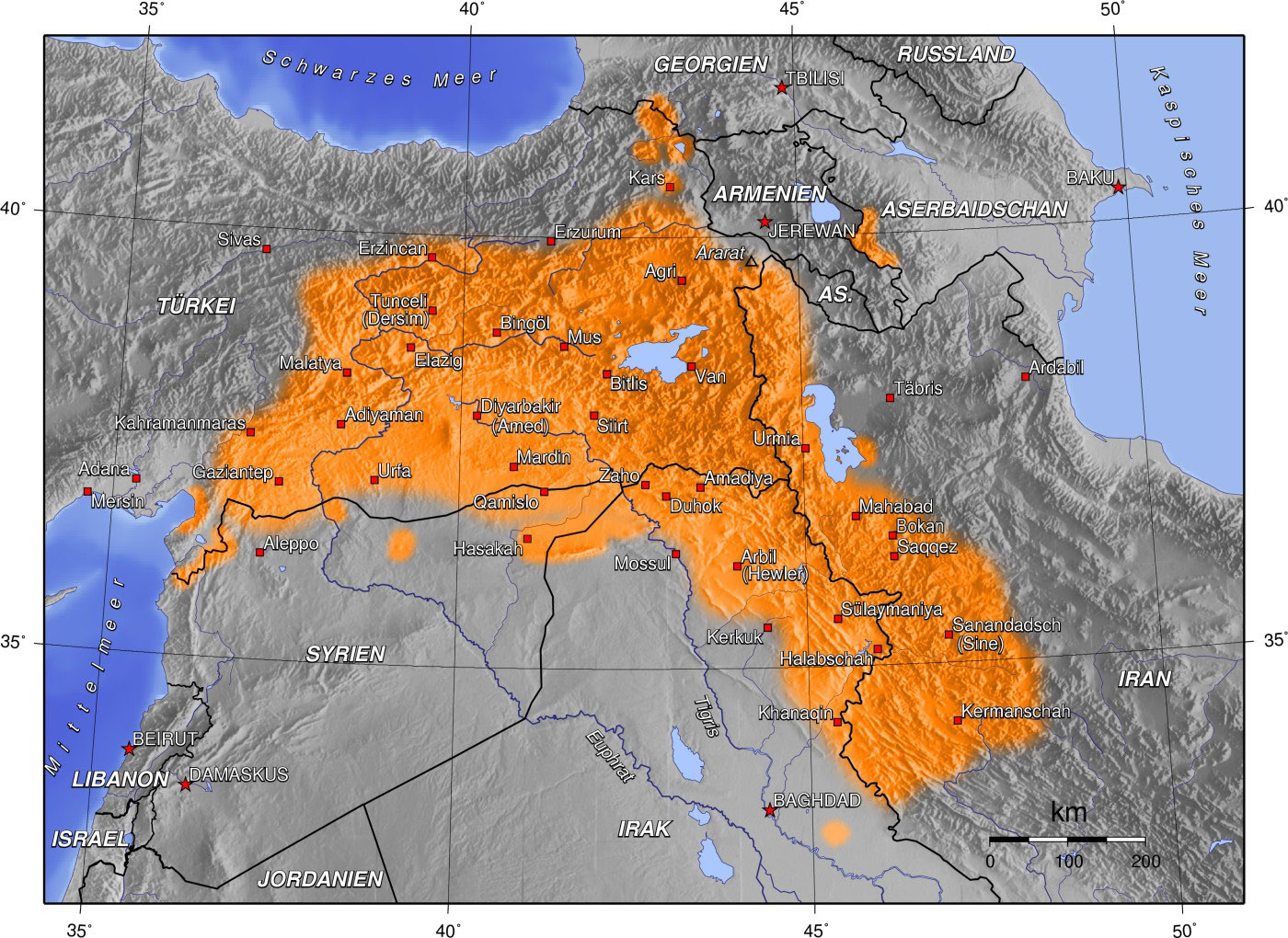
In the article “Kurdistan – Turkey’s Kosovo” Prof. Sotirović compared different aspects of Turkish Kurdistan case to the Kosovo one, found some parallels and pointed out Turkey’s hypocrisy.
While Prof. Sotirović is right in his assessment that Turkey is hypocritical to say at least, he failed to expose the fundamental differences between Kurdistan and Kosovo. His article contains some inaccuracies, misinterpretations and lacks in detail. Such an imprecise comparison may lead a reader who is not familiar with Balkans to acquire a false impression. A reader might come to conclusion that Kosovo Albanians had experienced the same level of suffering and injustice as did the Kurds which later led them to rebellion. That would seriously mislead the readers.
To substantiate this view let’s point out few errors in the article in question.
Status of the minority
Stubborn reluctance of any kind of the Turkish government to recognize the Kurdish separate existence as the ethnic group of its own specific language and culture…
The Turkish rejection to recognize a minority status of the Kurds with granting a national-cultural or political autonomous status for Turkey’s Kurdistan…
Ankara’s discrimination and oppressive anti-Kurdish policy led finally to the establishment of the Kurdistan Workers’ Party (the PKK) in 1978 for the sake to fight for unrecognized the Kurdish minority rights“
Albanians were in a completely opposite situation. Its ethnic minority in Yugoslavia was recognized. Their language was recognized too. Albanians did have their ethnic state, Albania, while Kurds never enjoyed such privilege. Besides, Albanian minority had their own unique ethnic university in Kosovo since 1969 (no Western “democracies” have ever allowed its minorities to establish universities).
Nevertheless, Albanians, inspired by anti-Yugoslav circles in the West, renewed disorders in 1981 demanding federalization. Please take note that 1981 was long before strongman Milosevic appeared. In fact, Milosevic rose to power in 1989 promising people that he would put an end to Albanian violence in Kosovo.
So if we compare humiliated Kurds in Turkey and privileged Albanians prior to their insurgency in 1981, we must say the two cases are fundamentally different.
The bellicose component
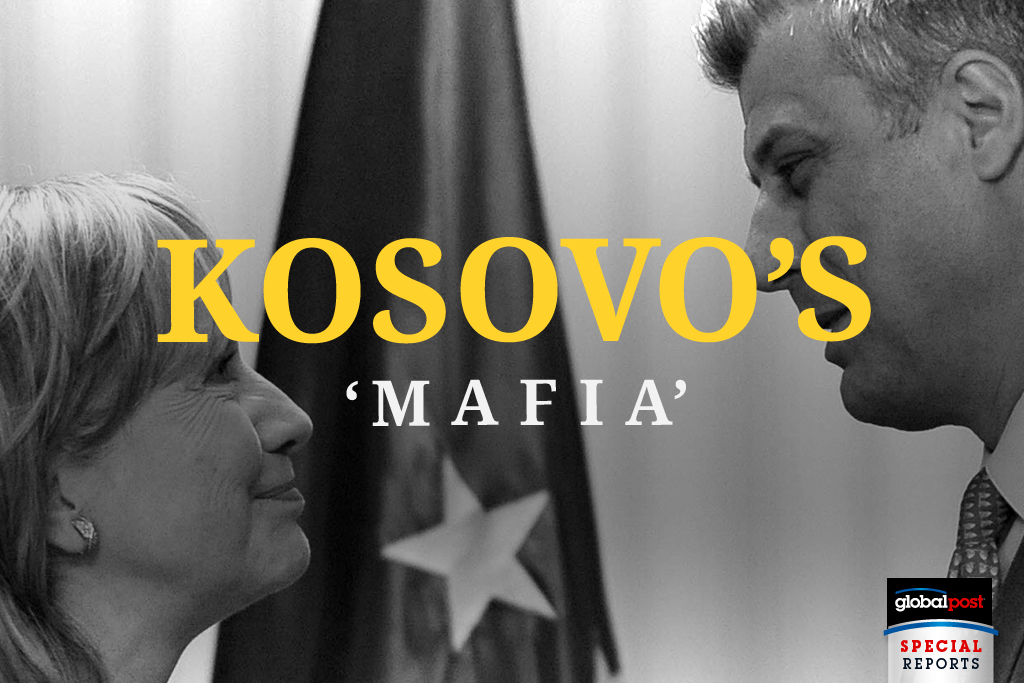
… the KLA [Kosovo Liberation Army] – a typical terrorist organization as a replica of the PKK, the IRA, the ETA or the Hezbollah.
This is implicitly wrong. KLA is a paramilitary wing of deeply-rooted Albanian mafia (for better understanding of the history, nature and cultural background of Albanian mafia please read very insightful Jana Arsovska’s article “Gender-based subordination and trafficking of women in ethnic Albanian context. The upward revaluation of the Kanun morality” [Journal of Moving Communities, vol.6, No.1, May 2006]).
This new brand name, Kosovo Liberation Army, was coined for mere propaganda purposes. The intent was to give a false impression to the western audience that the US-backed project was actually a fight for someone’s freedom, which, if true, would be a legitimate cause. KLA (read Albanian mafia) was armed, trained, and injected into Yugoslavia by CIA. They still keep supporting it up-to-date in its citadel of Kosovo.
By contrast, the name of Kurdish Workers Party reflects the Marxist ideology of their leader. The name does not appear to have been fashioned to appeal to tastes of Western mainstream media propaganda consumers.
Number of victims
For the matter of comparison, during the Kosovo crisis in 1998−1999 both the West and the US saw the terror acts carried out only by Serbia’s government…
If we compare tens of thousands of obliterated and hundreds of thousands expelled Kurdish civilians in Turkey from 1978-present with the “terror acts carried out by Serbia’s government”, the picture will not be that impressive:
“One year later, the International War Crimes Tribunal, a body in effect set up by NATO, announced that the final count of bodies found in Kosovo’s “mass graves” was 2,788. This included combatants on both sides, Serbs and Roma murdered by the Albanian KLA as well…” (John Pilger, Reminders of Kosovo)
In addition, can any of the following terror-related facts justify the struggle for self-determination?
“Indeed, even as Blair the war leader was on a triumphant tour of “liberated” Kosovo, the KLA was ethnically cleansing more than 200,000 Serbs and Roma from the province. Last February the “international community”, led by the US, recognized Kosovo, which has no formal economy and is run, in effect, by criminal gangs that traffic in drugs, contraband and women. But it has one valuable asset: the US military base Camp Bondsteel, described by the Council of Europe’s human rights commissioner as “a smaller version of Guantanamo” (John Pilger, Don’t Forget Yugoslavia)
For the matters of accuracy, we should also remark that the state in 1999 was Yugoslavia, and not Serbia.
Guests on the land
… [Kurds are] the oldest population in Turkey living in Anatolia almost 3.000 years before the first (Seljuk) Turks came there at the end of the 11th century.
Opposite is the case of Kosovo Albanians. According to a Turkish census made in Kosovoin 1455 (!),there were 13,000 Serb households and only 46 Albanian there.
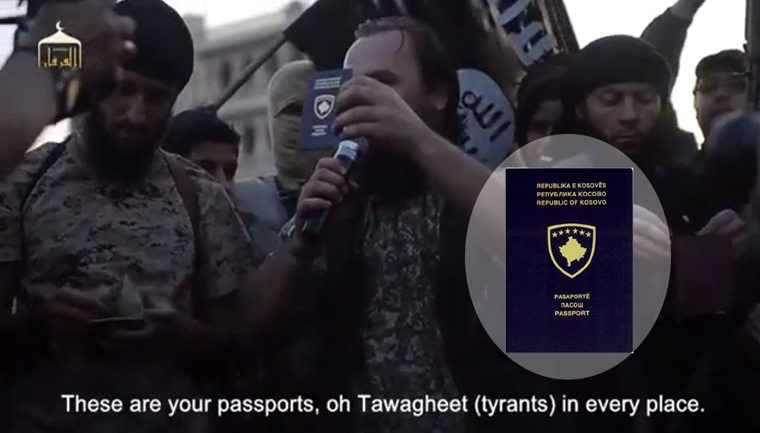
Since Kovoso Albanians obtained factual “independence” in 1999, they are busy desecrating, detonating and turning into rubble the unique medieval Serbian churches and monasteries throughout Kosovo. Only four of many Serbian monasteries in Kosovo are included in the UNESCO World Heritage list, but they are still endangered despite kind of protection from the international peacekeeping forces. Hundreds of other Serbian cultural sites there are subject to total elimination due to barbaric Albanian “self-determination”. In this sense Kosovo should be compared not to Kurdistan, but Daesh/ISIS.
We would like to ask you to consider a small donation to help our team keep working. We accept no advertising and rely only on you, our readers, to keep us digging the truth on history, global politics, and international relations.
PrefaceIt is the 30th anniversary of the first post-WWII democratic elections in Serbia and the rest of the ex-Yugoslavia.My aim in this article is to elaborate on the feature of the multi-party elections in Serbia in 1990 and to give an answer to the crucial question why did Slobodan Miloshevic with his SPS party win? After the investigation of the case we found that critical reasons for Miloshevic’s/SPS absolute electoral parliamentary and presidential victory in 1990 have been: 1) The countryside and small urban settlements voted for SPS due to the informative blockade; 2) Old population voted for SPS; 3) ...
Donald Trump with Larry King on the occasion of the anniversary of the bombing of Serbia criticized Bill Clinton and criminal attack on Serbs, the ally of America in both wars.“The Clintons have made a mess in the Balkans and Kosovo. Look what we did to Serbia in an aerial bombardment from a safe height. Those same Serbs rescued American pilots in World War II.It is a mistake that we bombed a nation that has been our ally in two world wars. The Clintons believe that was a success, and I find it shameful.I extend an apology to all the ...
It seems that the recent developments in Europe, and in particular the rising secessionism (Catalonia, Flandreau, Corsica, Veneto, Scotland), rings a bell, or rather is reminiscent of certain events. The ensuing ones are shedding more light on the roles of the EU (EEC), the USA, Great Britain and Germany. One wonders to what extent those democracies have been guided by the principles of international law and democracy pertaining to the Kosovo crisis.How much did they appreciate the reports of their (expensive) missions in Kosovo and Metohija (КDОМ, КVМ, ЕCMM) depicting the realities on the ground?To what extent have they been ...
Key facts about Kosovo’s Islamic Albanian minority of Serbia and the century long drive by Islamic extremists to exterminate Kosovo Serbs from that region:1389—Muslims defeat Christian Serb defenders in Kosovo, depopulate the area and invite mountain tribe of Albanians, in exchange for converting to Islam, to take over pillaged land from Serbs.1594—Sinan Pasha, an ethnic Albanian, who was a commander in the Ottoman Turkish Empire, burned the relics of St. Sava at Vracar, Belgrade. St. Sava is the Saint that brought Serbs into Christianity.1878—Albanian nationalist leaders meet in Prizren, known as the First League of Prizren, to announce the creation ...
The December 17 UN Security Council meeting, on the announced creation of a Kosovo armed forces, featured some noticeable contrasts.In accordance with Kosovo not being a UN member state and the Serb position on UN Security Council Resolution 1244 (recognizing Kosovo as a continued part of Serbia), the disputed former Yugoslav territory wasn't formally represented at the discussion as a nation. Kosovo's leader, Hashim Thaci, sat with a nameplate having his name, as opposed to Kosovo. Countries recognizing Kosovo's independence made it a point to state Thaci as the president of Kosovo and Aleksandar Vučić as president of Serbia. Nations not ...
Long live the European court, the most humane court in the world! That is why seven times as many Croat and more than ten times as many (Kosovar) Albanian war crimes suspects, in percentage terms relative to Serbs, were acquitted by the Hague Criminal Tribunal for the former Yugoslavia, with Radovan Karadzic being just its latest victim. (Source via this recent infographic from Russian newspaper Komsomolskaya Pravda).No matter that well before Srebrenica you had Sisak, where 595 Serb civilians of which 120 were women were disappeared by Croatian paramilitaries in 1991-1992. Everyone has heard of Srebrenica; almost nobody has heard heard of Sisak. The largest ethnic cleansing ...
Ema Miljkovic-Bojanic, M. A.Institute of History ofSerbian Academy of Sciences and ArtsBelgrade, 2000Malcolm’s Apology of the “Pax Ottomana” (Ab)using of historiography and historical facts for political ends is not a novelty introduced towards the end of the twentieth century. Its instances have been known throughout history, so that “practically there is not a single epoch of human history that was not controlled – by the Church, state, nation, party, leadership…” But precisely at a time when historiography seemed to be getting rid, at least partly, of the grip of “supervision” and when a critical approach was getting the upper hand, the ...
The Balkan Peninsula, together with the region of South-East Europe, historically has been one of the most important focal points of Russian foreign policy, cultural influences and attempts to spread an ideology of Orthodox solidarity and Slavic reciprocity.[1] These ideas are common to almost all trends of Russian public life in the past and very much today too.After Russia lost the Great Crimean War of 1853–1856 she intensified its cultural influence in the region of South-East Europe for the purposes of beating Habsburg (Roman-Catholic) rivalry and to spread an idea of the Pan-Slavism in this part of Europe.[2] However, the ...
PrefaceKosovo (Serb. Kosovo-Metochia, Alb. Kosova) is a square-shaped province of the Republic of Serbia of 10,877 sq. kilometres that is approximately the size of the USA state of Connecticut. The province is situated in the southern interior of the Balkan Peninsula in South-East Europe.[1] For most of the 20th century-history, this province was part of Serbia like in the Middle Ages but from 1455 to 1912 it was occupied by the Ottoman Empire. After the 1998‒1999 Kosovo War the province is an autonomous territory under the formal administration of the UNO but, in fact, USA’s colony. Officially, the province has ...
Vladislav B. Sotirovic, “Who are the Albanians? The Illyrian Anthroponomy and the Ethnogenesis of the Albanians – A Challenge to Regional Security”, Serbian Studies: Journal of the North American Society for Serbian Studies, Vol. 26, 2012, № 1−2, ISSN 0742-3330, 2015, Slavica Publishers, Indiana University, Bloomington, USA, pp. 45−76Origins of images: Facebook, Twitter, Wikimedia, Wikipedia, Flickr, Google, Imageinjection & Pinterest.Read our Disclaimer/Legal Statement!Donate to Support UsWe would like to ask you to consider a small donation to help our team keep working. We accept no advertising and rely only on you, our readers, to keep us digging the truth on ...
President Bill Clinton’s favorite freedom fighter just got indicted for mass murder, torture, kidnapping, and other crimes against humanity. In 1999, the Clinton administration launched a 78-day bombing campaign that killed up to 1500 civilians in Serbia and Kosovo in what the American media proudly portrayed as a crusade against ethnic bias. That war, like most of the pretenses of U.S. foreign policy, was always a sham.Kosovo President Hashim Thaci was charged with ten counts of war crimes and crimes against humanity by an international tribunal in The Hague in the Netherlands. It charged Thaci and nine other men with ...
The new Serbian Warsaw Ghetto in the occupied Serbian land of KosovoIn Kosovo, in 1999, NATO orchestrated KLA terrorism to cause a cycle of attacks and repression which was used to justify military intervention under the pretext of protecting the civilian population. Thirteen years down the line, Kosovo has unilaterally declared its independence and inflicts the most outrageous discrimination on its Serb population … under the auspices of NATO.Serbs may not have black skin, but they are being treated like white niggers of Europe. Every day. In the media. On the streets in Kosovo. The pogrom and genocide against the ...
The political settlement in the former Yugoslavia is unraveling. In Bosnia, the weakest state in the region, both Serbs and Croats are mounting a concerted challenge to the Dayton peace accords, the delicate set of compromises that hold the country together. In Macedonia, political figures from the large Albanian minority are calling for the federalization of the state along ethnic lines. In Kosovo, the Serb minority is insisting on the creation of a network of self-governing enclaves with effective independence from the central government. In Serbia’s Presevo Valley, Albanians are agitating for greater autonomy. In Montenegro, Albanians have demanded a ...
The reason Hillary Clinton was crushed in the electoral college during this election is because she lost Wisconsin, Michigan, and Pennsylvania . The reason behind the unprecedented loss can be summed up in two sentences. We will not forget. We will not forgive.These three states are home to the Serbian-American community. For most of them, their traditionally Democratic ticket vote turning Republican was a clear repudiation of Hillary Clinton's role in the Balkan genocide."An American Serb generally doesn't vote FOR anyone, but AGAINST a Biden, a Clinton, a McCain, against whoever Madeleine Albright supports, against whoever bombed Serbia, recognized Kosovo... Wait, was Dubya a ...
On December 19, 2005, US Secretary of State Condoleezza Rice announced the appointment of Ambassador Frank G. Wisner as the Special Representative of the US Secretary of State to the Kosovo Status Talks.Who is Frank G. Wisner, Jr.?If his name sounds familiar that is because he is the son of Frank Gardiner Wisner, Sr., the CIA agent most responsible for the recruitment of Nazis by the US government after World War II. A former member of the Office of Strategic Services (OSS), the World War II precursor to the CIA, Frank G. Wisner, Sr., was one of the most infamous ...
Bosnia and Kosovo are two of the biggest exporters of jihadists joining the Islamic State (ISIS) and al-Nusra Front (al-Qaeda’s affiliate in Syria) from the Balkans. As The Cipher Brief reported last month, legacies of the Communist era and the wars of the 1990s – presence of foreign fighters, economic and physical destruction, a lack of funding to rebuild, and the near eradication of moderate Islamic institutions – paved the way for Islamic extremist groups to establish a foothold in both countries. Now, ISIS recruiters are targeting Bosnia and Kosovo, and many Bosnians and Kosovars have left to fight in Syria and ...
The Albanian nationhood as understood in the 19th century was part of a romanticist notion of nationality, i.e., the Albanians were the Balkan people whose mother tongue was Albanian regardless of any confessional division of Albanian people into three denominations (Moslem, Roman Catholic and Eastern Orthodox). Within the north Albanian tribes, especially among the Miriditi, the Roman Catholic Church was very influential. The Roman Catholic Church became the main protector of the Albanian language and cultural heritage and the main protagonist of the national identity of the Albanians in Northern Albania.[1] The expression of common notions of the Albanian nationhood ...
Former President Bill Clinton continues to be feted around the world as a progressive champion of human rights. However, a European Union task force last week confirmed that the ruthless cabal he empowered by bombing Serbia in 1999 has committed atrocities that include murdering individuals to extract and sell their kidneys, livers and other body parts.Clint Williamson, the chief prosecutor of a special European Union task force, declared that senior members of the Kosovo Liberation Army (KLA) had engaged in “unlawful killings, abductions, enforced disappearances, illegal detentions in camps in Kosovo and Albania, sexual violence, forced displacements of individuals from ...
IntroductionThis article deals with the question of political and human/minority rights in the region of Kosovo & Metohija twenty years after the „2004 March Pogrom“ and twenty-five years after NATO's military aggression on Serbia and Montenegro and occupation of the region. An importance of this research topic is in fact that for the first time in European history, a terrorist-style and mafia-ruled (quasi)independent state was created by a full diplomatic, political, economic, military, and financial sponsorship by the West under the umbrella of the NATO's and the EU's protective administration. The precedence of Kosovo's self-proclaimed independence in February 2008 already ...
A strange spy affair broke out in Balkan Casablanca, aka Serbia, on Wednesday. Were NATO “advisers” and liaison personnel embedded in the Serbian army command finally caught red-handed by vigilant Serbian counter-intelligence operatives, purloining secrets? Not this time. (Something along those lines actually did happen in 2002; it was when former armed forces chief of staff Momcilo Perisic was caught on camera in a Belgrade restaurant handing over secret information for cash to CIA’s Johnny-on-the-spot, John Neighbor.) But what allegedly occurred this time was not a boring rerun of the Perisic affair, although the basic contours of the unimaginative scenario ...