Building new mosques in Kosovo after the Kosovo War in 1998-1999
Views: 1976
Building new mosques in Kosovo after the Kosovo War in 1998-1999

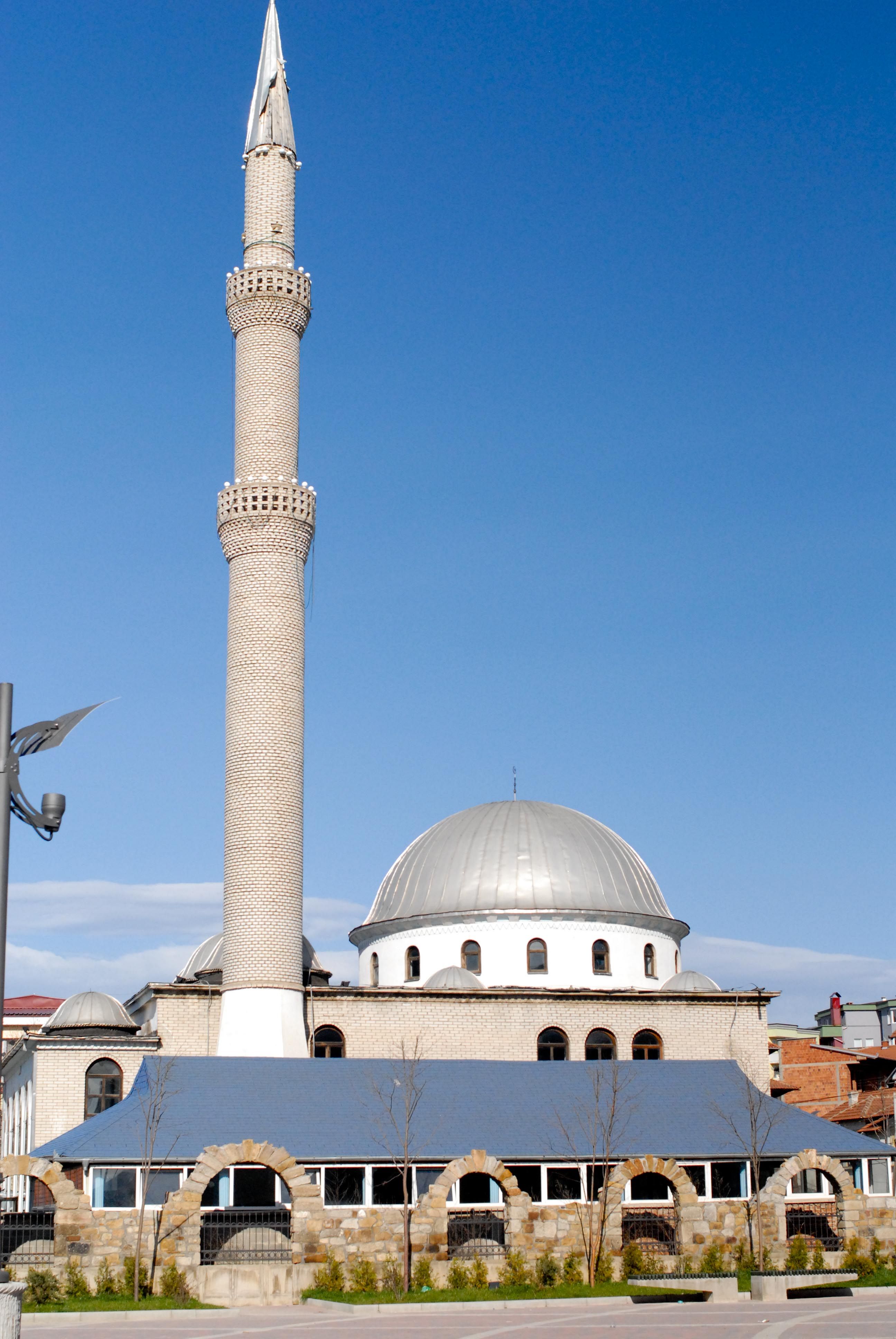
Kosovo’s municipal authorities continue to ignore the growing number of illegally built mosques, which now total more than a hundred.
An illegal construction boom that has carpeted Kosovo’s cities and villages with unlicensed buildings is not confined to homes and shops.
A survey of Kosovo municipalities by Balkan Insight has revealed that more than 100 mosques have been built without planning permission in the past ten years.
To date, action has been taken against just one illegal mosque and local authorities told Balkan Insight they are hesitant about committing themselves to removing such buildings in the future.
The Islamic Community of Kosovo, BIK, through various funding channels, has been reconstructing 113 war-damaged mosques, as well building as 155 new places of worship, since 1999. An investigation by Balkan Insight can reveal that almost all have been erected illegally.
“We have repaired or rebuilt 113 of those [mosques] 218 destroyed during the war,” says Sabri Bajgora of the BIK. “Besides those, we have also built another 155 news mosques by the end of 2010, and are currently building another 20.”
Balkan Insight has researched the situation in Kosovo’s seven largest municipalities: Pristina, Prizren, Urosevac/Ferizaj, Pec/Peja, Djakovica/Gjakova, Gnjilane/Gjilan and Mitrovica.
Each town or city hall acknowledged that illegal mosques have been erected under their jurisdiction, especially in rural areas, though some refused to provide exact figures.
Prizren, city of illegal minarets
Prizren is fabled for its ancient Ottoman architecture, but is now becoming better known for its skyline of garish illegal minarets that have been springing up since 1999.
The city council told Balkan Insight that that 70 per cent of the mosques in the city had no planning permission. Kosovo’s Islamic community said Prizren is home to the highest number of mosques in the country, 77.
If the municipal figures are accurate, this would put the number of illegal mosques in Prizren at 54. Director of urban planning Sadik Paçarizi said: “Of all religious objects, such as Catholic or Orthodox churches, mosques are those that violate the law most.
About 70 per cent of mosques in the municipality have no building permit.” He added that a plan had been drawn up to knock down the illegal mosques but had been shelved pending a resolution of the broader problems of illegal builds in the city.
Gjilan mayor Qemajl Mustafa admits that in his municipality almost all mosques built since the war lack building permits. But he said that since he became mayor in 2007 the situation had improved.
“From the time I became mayor, this phenomenon has stopped because we have made an agreement with BIK on this issue,” he said. “Now they apply for permits before starting to build any new mosque,” Mustafa added.He confirmed that no illegally built mosque had been destroyed, however.
In the western city of Gjakova, not a single illegal mosque has been tackled since the end of the 1999 conflict.
“The reason I didn’t want to destroy any of these illegal buildings is because such buildings are considered sacred and of benefit to citizens,” Gjakova mayor Pal Lekaj said.
The director of urban planning in Peja, Gazmend Muhaxhirim, said he had no figures about illegal constructions but admitted that some mosques had been built without permits.
“Some illegal mosques were built since the war but recently builders have started to seek permission from the municipality,” he said. “At the moment we are already dealing with several such applications.”
Officials at Ferizaj and Mitrovica declined to comment on the issue.
Not a priority in Pristina
Pristina municipality told Balkan Insight that it had destroyed one unplanned mosque four years ago while it was still under construction.
Despite this action, another illegal mosque was rebuilt on the same site. Muhamet Gashi, acting director of inspections, said that given the city’s overall problems with illegal construction, mosques were not a priority.
“We have no plans right now to destroy any illegal mosques as we are awaiting approval of a law on how to handle illegal buildings, and then all illegal buildings, together with mosques, will be reviewed,” Gashi said.
“Pristina municipality has given permission for the restoration of mosques, but not for new ones,” he added.The issue is particular sensitive in Pristina as the Islamic community this year has protested about the municipality’s failure to find what they consider a suitable spot for a new city-centre mosque.
They complain that their situation is markedly different to that of the city’s small Catholic community. The city hall offered them a prime location for a new cathedral, which opened last year.
Muhamet Gashi said that the municipality had already issued the BIK a permit to build on a large plot on the edge of the city centre. But the BIK has so far rejected this.
“The issue has stalled. We don’t have any other places to offer, so we haven’t made any further progress,” said Gashi. Sabri Bajgora said their demands for a city-centre location had nothing to do with the position of the new cathedral; it was a question of ease of access.
“The site [offered] near the PTK [Post and Telecommunications] is not good because it is a small site and is not in the centre,” he said. “The best place to build a big mosque remains near Pristina University, in front of the Albanology Institute.
“This is the best place but we haven’t agreed yet with municipality. We are now waiting for another answer from them, but until now nothing has happened.”
Behxhet Shala, director of the Council for Human Rights, says the reason why Kosovo mayors have not tackled illegal mosques is that it could be construed as an attack on religious freedom.
He added that the skeletal Orthodox church in the park surrounding Pristina University has also not been touched since construction began in the mid-1990s.
“If that illegal church had been destroyed immediately after the [1999] war, it would have set an example for other illegal buildings and for the BIK too,” Shala said.
“Now it is difficult to deal with them.”According to him, however, this issue must be addressed at some point.Sabri Bajgora of the BIK admits that mosques have been built without planning permission.
“To be honest, mostly in villages, some mosques are built without permission from municipalities. But no mosque is built without our permission,” he said.Bahri Sejdiu, head of the BIK for Pristina, also admits that most mosques in the city centre have no building permit, but blames the municipality for the omission.
“Most Pristina mosques have been built without permission because the municipality sits on such requests for months,” Sejdiu said.
Note: This article is funded under the BICCED project, supported by the Swiss Cultural Programme.
Origins of images: Facebook, Twitter, Wikimedia, Wikipedia, Flickr, Google, Imageinjection, Public Domain & Pinterest.
Read our Disclaimer/Legal Statement!
Donate to Support Us
We would like to ask you to consider a small donation to help our team keep working. We accept no advertising and rely only on you, our readers, to keep us digging the truth on history, global politics and international relations.
For all the attention paid to the emergence of homegrown Islamist terrorists in Belgium, France and other European countries, one of the continent’s biggest radicalization problems is taking place on its fringes.Kosovo, the tiny Muslim-majority Balkan nation of just 1.8 million, has produced more foreign fighters per capita than any other Western nation since ISIS declared its now-defunct caliphate in 2014. Some 413 Kosovo citizens, including women and children, have joined that group and other Islamist extremist factions since the war in Syria began in 2012.As it attempts to join the European Union, Kosovo has been under pressure to stamp ...
Since the disintegration of Yugoslavia in the nineties, its former constituent republics have been mired in a state of perpetual conflict.Nowhere is this more apparent than the contested state of Kosovo.In 1998, Albanian separatists in the Serbian province of Kosovo i Metohija began a campaign of attacks, with the express objective of creating a unified, ethnically homogenous, Greater Albanian state. Spearheaded by an organization known as the Kosovo Liberation Army (KLA), which is widely regarded by many nations, including the United States, as a terrorist organization, ethnic Albanian militants attacked Serbian security forces, and terrorized civilians in a brutally violent ...
After 19 years since a part of the international community, under the auspices of NATO and the US, took control over the Serbian province of Kosovo and Metohija, following two ethnic pogroms of the Serbs and non-Albanians occurred in 1999 and in 2004, which resulted in ethnic cleansing of around 250 000 Serbs and other non Albanians, the rest of Serbian population still survive in ghettos across the territory of self-proclaimed independent Republic of Kosovo.Destroyed 14th-century Serbian Orthodox church Samodreža in Kosovo by Muslim Albanians in March 2004 The Self proclaimed Republic of Kosovo, as a creation of the USA/NATO joint ...
The conflicts that engulfed the former Yugoslavia still remain unresolved in the political arena and open to Western political shenanigans and covert meddling from Turkey and Saudi Arabia in Bosnia and Kosovo. Orthodox Christianity faces many attacks and only a naïve individual would claim that America and the hands of Turkey and Saudi Arabia are clean.Central Bosnia in 2016: Flags of the ISISAmerica and other Western nations did little to stop Turkey invading Cyprus in 1974 and creating a de-facto nation and altering the demographics of northern Cyprus and using this area for military purposes.Irrespective of the rights and wrongs ...
Or Yugoslavia’s for that matter. The level of western cynicism on “territorial integrity” is far greater than you probably know. The Kosovo-Crimea discrepancy is just the tip of the icebergEarlier this month Obama gave an earful to Putin (from a G7 meeting held 2,000 kilometres away from Moscow) complaining that this day and age you just can’t go around violating the “territorial integrity” and “sovereignty” of other countries:“Does he continue to wreck his country’s economy and continue Russia’s isolation in pursuit of a wrong-headed desire to recreate the glories of the Soviet empire? Or does he recognize that Russia’s greatness does not ...
The following research is a review around the theme of Southeastern European organized crime, mainly in the period 1995-2007, highlighting the emergence of powerful regional “Mafias” with an actual global presence. The main focus is the Albanian criminal syndicates centered on Kosovo. The research is composed by previous material of the writer, some of which was presented in international workshops. Moreover the issue of radical Islam is being overviewed in a second part,for the same period, along with information regarding the state of affairs of the Muslim communities in the region.Narcotics and the emergence of crime syndicates in the BalkansThe ...
Foreign Minister Sergey Lavrov is calling for an “impartial investigation” into grisly reports by a European investigative commission alleging that Kosovo government officials were involved in the trade of human organs.In an exhaustive report released by the Parliamentary Assembly of the Council of Europe (PACE) in December, it was alleged that Serbian detainees of the Kosovo Liberation Army (KLA) were kidnapped and murdered by Kosovo Albanians so their organs could be sold on the black market.The report says the crimes occurred after the Kosovo War ended in 1999.These shocking allegations came on the heels of a two-year investigation into a ...
There was an interesting announcement recently that went almost entirely unnoticed in the Canadian media.On June 17, Peter Szijjarto, foreign minister of Hungary’s centre-right government, made the startling declaration that his national security forces will erect a four-metre wall along the entire 175 kilometres of shared border with Serbia.Szijjarto’s rationale for resorting to such a drastic measure results from a months-long flood of asylum seekers pouring into southern Hungary. While tens of thousands of these desperate illegal immigrants have been caught, detained and returned into Serbia, the vast majority have used the processing time for their asylum applications to simply ...
Fresh calls for a Greater Albania, incorporating the southern Serbian province of Kosovo, have led to an angry backlash from politicians in Belgrade.Sputnik Radio’s Mark Hirst talked to Marko Djuric, Director of the Government Office for Kosovo and Metohija.Such a move by Albania, if acted upon, could plunge the entire region back into a bloody and costly war on a scale not seen since the 1990s.Marko Djuric said that Serbia will not allow the creation of a Greater Albania in its southern province and that it is not alone in opposing the idea, which stems from the times of Nazi occupation of Yugoslavia.When asked whether this inflammatory statement by Albanian ...
Serbia today is a member-State of United Nations (U.N.), after the Socialist Federal Republic of Yugoslavia was split into several nations during the early 1990’s when war broke out between Serbian General Milosevic and neighboring nations. After partition, Serbia is still the most powerful “state” of the former Yugoslavia.“Kosovo”, the term used for the territory of southern Serbia, is de-jure recognised as a “state” by over 110+ “states”, but is not a “state” itself, as per the Montevideo Convention on the Rights and Duties of States (1933), and is not a “state” at the U.N. where 2/3rd positive vote is ...
The president of Turkey, Recep Tayyip Erdogan, speaking at a conference entitled the “The Spirit of Turkey’s New Security,” referring to the Treaty of Lausanne, said:“The Turkish Republic is the last state that we founded with whatever was left over from all the self-sacrifices we were able to make... We are heirs of a nation that saw its territory expand to 22 million kilometers. Shortly before the Republic was founded, we had 3 million kilometers which kept diminishing until all we had left was 780,000 kilometers. Some may be offended at my mention of Lausanne. But why does it bother ...
The ethnic demarcation that is promoted by Serbian president Aleksandar Vucic, between Serbs and Albanians is just another name for the creation of Greater Albania. Vucic statements and spinning of the necessity for the "demarcation" between Serbia and Kosovo caused shock among Serbs. Most of his political life, Vucic advocated for a Greater Serbia, but with coming to power, things changed. Against his demarcation is virtually the entire Serbia. From experts to the pillar and base of Serbs throughout history Serbian Orthodox Church. A few years ago, I wrote in my analytical column that Vucic came to power with the ...
The political settlement in the former Yugoslavia is unraveling. In Bosnia, the weakest state in the region, both Serbs and Croats are mounting a concerted challenge to the Dayton peace accords, the delicate set of compromises that hold the country together. In Macedonia, political figures from the large Albanian minority are calling for the federalization of the state along ethnic lines. In Kosovo, the Serb minority is insisting on the creation of a network of self-governing enclaves with effective independence from the central government. In Serbia’s Presevo Valley, Albanians are agitating for greater autonomy. In Montenegro, Albanians have demanded a ...
Iraq and Kosovo may be thousands of miles apart, but they share the dubious distinction of contamination with radioactive residue from depleted uranium (DU) bullets used in American air strikes. After several years of silence, US officials finally admitted that 340 tons of DU were fired during the Gulf war. In Kosovo, American delays in providing details of quantities and target points have frustrated international efforts to assess health risks. Despite repeated requests, NATO waited almost a full year after the start of bombing in March 1999 to say that 31,000 DU bullets–a fraction of the number fired in Iraq–were ...
BELGRADE – Amnesty of crimes during NATO aggression, bilateral legalization of Camp Bondsteel in a friendly milieu, settling the Islamic world with support to their communities in the Balkans and forcing Russia out of that same Balkans, are four reasons the US supports the independence of Kosovo, writes “Sputnik”.On Christmas (according to Gregorian calendar) Michael Kirby shows up. Outgoing US Ambassador congratulates Serbia upcoming New Year. “The normalization of relations between Belgrade and Pristina implies Kosovo’s membership in the UN,” was the content of the “greeting card”.Apart from some kind of formalization, Kirby’s statement is not new for the local public ...
As the old Romans used to say, de mortuis nil nisi bonum, of the dead, speak no evil. Mr. Ivanović did nothing that anyone is aware to merit such a ghastly fate. But it would also be a mistake to regard him as the Ghandi or Mandela of Kosovo’s Serbs. He was a career politician, with everything that encompasses, including rumors of shady deals on the side. Curiously, his profile was that of a “moderate” and “cooperative” local politician. For that, he was rewarded by Pristina authorities not with a medal but a war crimes indictment so preposterous (the obligatory ...
Author’s noteThe following article focussing on the jihadist terrorist insurgency in Macedonia was first published by antiwar.com in July 2001, barely two months before the September 11, 2001 attacks on the WTC and the Pentagon.Known and documented, since the Soviet-Afghan war, recruiting Mujahedin (“holy warriors”) to fight covert wars on Washington’s behest had become an integral part of US foreign policy. A report of the US Congress had revealed how the US administration – under advice from the National Security Council headed by Anthony Lake – had “helped turn Bosnia into a militant Islamic base” leading to the recruitment through ...
Every Friday, just yards from a statue of Bill Clinton with arm aloft in a cheery wave, hundreds of young bearded men make a show of kneeling to pray on the sidewalk outside an improvised mosque in a former furniture store.The mosque is one of scores built here with Saudi government money and blamed for spreading Wahhabism — the conservative ideology dominant in Saudi Arabia — in the 17 years since an American-led intervention wrested tiny Kosovo from Serbian oppression.Since then — much of that time under the watch of American officials — Saudi money and influence have transformed this ...
Source: Rich WhitneyAbout the author: Rich Whitney is an attorney, actor, radio commentator and disk jockey, Illinois Green Party activist and former Green Party candidate for governor.Origins of images: Facebook, Twitter, Wikimedia, Wikipedia, Flickr, Google, Imageinjection & Pinterest.Read our Disclaimer/Legal Statement!Donate to Support UsWe would like to ask you to consider a small donation to help our team keep working. We accept no advertising and rely only on you, our readers, to keep us digging the truth on history, global politics and international relations.[wpedon id="4696" align="left"]
The struggle for peace and the struggle for full respect of universal human rights, as defined by UN Declaration on protection of human rights, are interdependent and non-separable. Violations of sovereignty and territorial integrity, military interventions, aggressions and occupations go hand in hand with massive violations of the basic human rights.It is clear that there are no humanitarian military interventions.NATO military aggression against Yugoslavia ( Serbia ) which started March 24rth, 1999 was launched to allegedly protect human rights of Kosovo Albanians. It was carried out in blatant violation of the basic principals of International Law and without approval of ...