War without dire consequences poses a conundrum. In a representative democracy, waging war should require the people’s informed consent as well as their concerted mobilization [...]
There is no significant anti-war movement in America because there’s no war to protest. Let me explain. In February 2003, millions of people took to the streets around the world to protest America’s march to war against Iraq. That mass movement failed. The administration of George W. Bush and Dick Cheney had a radical plan for reshaping the Middle East and no protesters, no matter how principled or sensible or determined, were going to stop them in their march of folly. The Iraq War soon joined the Afghan invasion of 2001 as a quagmire and disaster, yet the antiwar movement died down as U.S. leaders worked to isolate Americans from news about the casualties, costs, calamities, and crimes of what was by then called “the war on terror.”
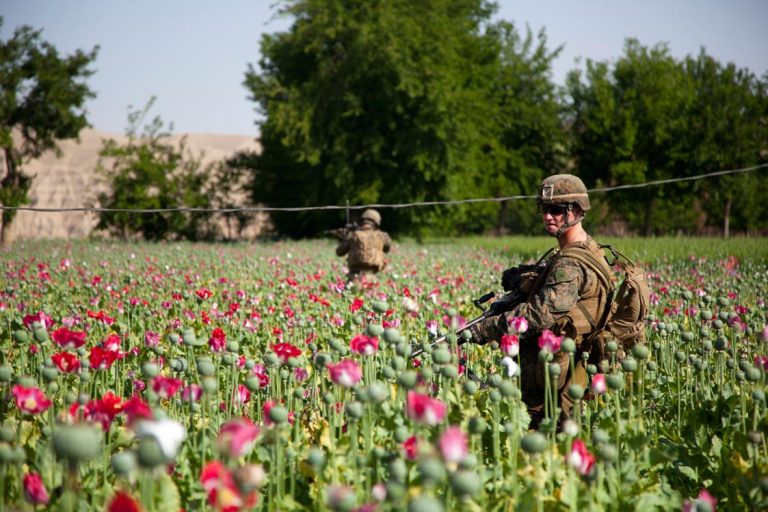
And in that they succeeded. Even though the U.S. now lives in a state of perpetual war, for most Americans it’s a peculiar form of non-war. Most of the time, those overseas conflicts are literally out of sight (and largely out of mind). Meanwhile, whatever administration is in power assures us that our attention isn’t required, nor is our approval asked for, so we carry on with our lives as if no one is being murdered in our name.
War without dire consequences poses a conundrum. In a representative democracy, waging war should require the people’s informed consent as well as their concerted mobilization. But consent is something that America’s leaders no longer want or need and, with an all-volunteer military, there’s no need to mobilize the rest of us.
Back in 2009, I argued that our military was, in fact, becoming a quasi-foreign legion, detached from the people and ready to be dispatched globally on imperial escapades that meant little to ordinary Americans. That remains true today in a country most of whose citizens have been at pains to divorce themselves and their families from military service — and who can blame them, given the atrocious results of those wars in Afghanistan, Iraq, Somalia, and elsewhere across the Greater Middle East and Africa?
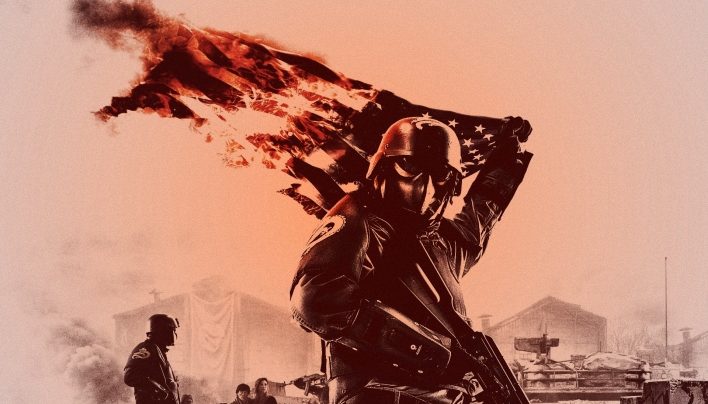
Yet that divorce has come at a considerable cost. It’s left our society in a state of low-grade war fever, while accelerating an everyday version of militarism that Americans now accept as normal. A striking illustration of this: President Trump’s recent State of the Union address, which was filled with bellicose boasts about spending trillions of dollars on wars and weaponry, assassinating foreign leaders, and embracing dubious political figures to mount illegal coups (in this case in Venezuela) in the name of oil and other resources. The response: not opposition or even skepticism from the people’s representatives, but rare rapturous applause by members of both political parties, even as yet more troops were being deployed to the Middle East.
What a Youthful Hobby Has Taught Me About America’s Wars
When I was a kid, I loved to collect American stamps. I had a Minuteman stamp album, and since a stamp and coin dealer was within walking distance of my house, I’d regularly head off on missions to fill the pages of that album with affordable commemorative stamps. I especially liked ones linked to military history. Given the number of wars this country has fought, there were plenty of those to add to my album.
Consider, for instance, the stamps issued after the December 7, 1941, U.S. entry into World War II. Unsurprisingly, for a war that entailed mass mobilization and involved common sacrifice, many of them were meant to highlight the war in progress and what it was all about. So, for example, stamps were issued to remind Americans about subjects like: the countries overrun by Nazi Germany; Chinese resistance to the Japanese occupation of their country; President Franklin D. Roosevelt’s Four Freedoms (FDR, too, was an avid stamp collector); and, as the tide turned, this country’s momentous victory against the Japanese on the island of Iwo Jima. Other stamps enjoined Americans to “win the war” and work “toward [a] United Nations.” These and similar stamps formed a tiny part of a vast war effort accepted by nearly all Americans as necessary and just. And when the war finally ended in August 1945, Americans rightfully celebrated.
Now, try to bring to mind stamps from America’s wars since then. If you’re old enough, try to recall ones you stuck on envelopes during the Korean War of the 1950s, the Vietnam War of the 1960s, or especially the war on terror of this century. How many of them celebrated momentous U.S. victories? How many hailed allies working in common cause with us? How many commemorated an end to such wars?
I pay close attention to stamps. I still enjoy walking to my local post office and seeing the new commemoratives as they come out. And I’m sure you won’t be surprised to learn that, in stamp terms, there’s simply nothing to commemorate in America’s recent wars. Shouldn’t that tell us something?
I’m not saying that there are no stamps whatsoever related to those wars. In 1985, for instance, 32 years after the signing of an armistice not-quite-ever-ending the Korean War, a stamp in honor of its veterans was issued and, in 2003, another for the Korean War Veterans Memorial in Washington. Several stamps have similarly highlighted Vietnam veterans and Maya Lin’s iconic memorial to them.
But stamps that told us what either of those wars were for or that sought to mobilize Americans in any way? Not a chance. Ditto when it comes to this century’s wars in Afghanistan and Iraq or to the larger never-ending war on terror. Yes, a 2002 “Heroes USA” stamp featured firefighters raising the flag at the World Trade Center and was meant to provide money for injured first responders; and yes, there’s currently a “Healing PTSD” stamp for sale that raises money for veterans suffering from post-traumatic stress disorder. But as for stamps celebrating decisive victories in Kabul or Baghdad or Tripoli, you know the answer to that one as well as I do; nor, of course, were there any reminding us of the freedoms we were supposedly fighting to uphold in those wars.
In that context, let’s return to that FDR Four Freedoms stamp, which was very popular during World War II. Its message couldn’t have been more succinct. It read: “Freedom of speech and religion, from want and fear.” Of course, World War II was an atrocious war, as all wars are. But what (partially) redeemed it were its ideals, however imperfectly realized in the post-war world.
Still, when’s the last time the U.S. Postal Service issued a stamp that so perfectly summed up “why we fight”? There are no such stamps today because our present wars have no higher purpose. It’s that simple.
We’re not supposed to notice that, since we’re not supposed to notice those wars to begin with, not in any visceral way at least. Even stamps like the recent PTSD one (with a 10-cent surcharge that goes to veterans) are an artful dodge. Should we really feel any better donating a few nickels or dimes to help veterans with their physical and mental struggles from wars made more horrendous because they were (and remain) so unnecessary?
Or thought of another way, why is the post office raising money for veterans’ health care? Perhaps because a staggering (and still rising) Pentagon budget only ensures that there will be more war — with more wounded veterans.
Looking Back, Yet Again, to World War II
I never miss the opening ceremonies to the Super Bowl. As an exercise in pure Americana, they have no equal. This year’s included the usual trappings: a military color guard, an oversized flag, and a flyover by combat jets, including the new F-35 stealth fighter, a trillion-dollar boondoggle of the military-industrial complex. Since 2020 marked the 100th anniversary of the National Football League as well as the 75th anniversary of the end of World War II, the opening ceremony featured centenarian veterans of that war helping with the pre-game coin toss. It was heartwarming to see those redoubtable vets and recognize their service.
But I can tell when my emotions are being manipulated. Watching them, I knew I was supposed to get warm and fuzzy about military service and maybe feel better about the NFL as well. Yet my respect for them and “the good war” they fought (to use Studs Terkel’s ironic title for his oral history of World War II) didn’t stop me from wanting to shower hot wrath on the leaders who have lied us into so many bad wars since then.
Speaking of warm fuzzies, consider the long opening commercial for the NFL that kicked off this year’s ceremonies. It featured an African-American boy running with a football, dodging various obstacles on a transcontinental journey to the Super Bowl, during which he pauses, reverentially, before a statue of Pat Tillman, the safety for the Arizona Cardinals who famously gave up a multimillion-dollar contract to enlist in the Army after 9/11. Tragically, he was killed by friendly fire in Afghanistan, a fact the U.S. military attempted to cover up in a conspiracy that went as high as Secretary of Defense Donald Rumsfeld. Even though it was just a commercial, it was right for that young boy to honor Tillman’s memory. But to what end? To make the NFL look patriotic or perhaps to overcome any lingering taint from principled (yet widely misunderstood) take-a-knee protests by players like Colin Kaepernick?
An honest accounting of America’s recent wars by the NFL might reflect on the fact that no other players have ever joined Tillman in giving up millions to enlist in the war effort. In fact, no players from any major league sport, whether baseball, basketball, or hockey, have done so. Not even NASCAR drivers, supposedly the salt of the earth, have, as far as I know, exchanged race cars for Humvees. Why should they? America’s recent wars might as well not exist for them — and, to be honest, for most of us as well.
I’m not calling for major sports stars to be drafted into the military as they were in World War II (though many athletes of that era volunteered first). What I’m suggesting is that, some 18-plus years later, they — like the rest of us — should begin paying real attention to America’s wars and what they’re about. Because that’s the only way, as a nation, we’ll ever come together and put a stop to them.
The answer to our collective apathy is not that war must become bloody awful here in the “homeland” before we finally do something to end it. Instead, it’s to listen to those who have seen the awfulness of war and the atrocious behaviors it enables and rewards.
Consider the words of E.B. Sledge, a Marine who fought at Peleliu and Okinawa in World War II’s Pacific island campaign against the Japanese. Nightmares haunted him for 25 years after the brutal fighting on those islands ended. He described the war he experienced as an exercise in sheer terror with grown men screaming in agony and sobbing in pain, with fighting so sustained that soldiers moved about like zombies, having been in the line of fire for days on end. Exhaustion bred murderous mistakes that too often were dismissed with a mind-numbing euphemism I’ve already succumbed to in this piece: “friendly fire.” And that, mind you, was “the good war.”
So, while saluting those photogenic centenarian vets featured by the NFL, we should also remember those who didn’t come home and those who came home with radically altered lives. Sledge, for instance, recalled a buddy of his, Jim Day, who dreamed of running a horse ranch in California after the war. But as Sledge recounted in a talk in 1994, “At Peleliu, a Japanese machine gun shattered one of Jim’s legs.” All that was left was a stump with blood spurting out of it.
”Later, when Jim came to the First Marine Division reunions (maybe some of you can’t conceive of this), we would have to help him go to the bathroom. His wife had to do that at home. The poor man couldn’t handle it by himself, because of that stump of a leg cut off at the hip. He died a premature death after years of pain and back trouble.”
Sledge and his horrific nightmares, his friend Jim and his crippling injury, those are glimpses of the true face of even the least indefensible of wars (and America’s twenty-first-century versions of the same are, unfortunately, anything but defensible). The question is: why don’t more Americans react with genuine horror when a draft dodger like Donald Trump boasts of all those wonderful weapons this country is buying (and using and selling) that are proudly “Made in the USA”?
No longer should we permit the powerful to obfuscate war, to boast (as George W. Bush did) of “mission accomplished” or of game-changing “surges,” or of “turning corners.” Such lies serve only to distract us. Instead, Americans need to turn “eyes front” and face the ugly realities of permanent war.
Do that and we may well reinvigorate our democracy. If not, we may well kill what’s left of it.
Originally published on 2020-02-25
About the author: A retired lieutenant colonel (USAF) and history professor, William Astore is a TomDispatch regular. He still keeps a small collection of U.S. airmail stamps. His personal blog is Bracing Views.
Origins of images: Facebook, Twitter, Wikimedia, Wikipedia, Flickr, Google, Imageinjection, Public Domain & Pinterest.
Read our Disclaimer/LegalStatement!
DonatetoSupportUs
We would like to ask you to consider a small donation to help our team keep working. We accept no advertising and rely only on you, our readers, to keep us digging the truth on history, global politics and international relations.
The international community is accustomed to the so-called “checkbook diplomacy” that has been used by China and Taiwan to pilfer each other’s diplomatic allies by exchanging diplomatic recognition for generous financial assistance packages. However, this same battle for diplomatic recognition and de-recognition is being played out between Serbia and its breakaway province of Kosovo. The United States and much of NATO has not only granted Kosovo diplomatic recognition over the objection of Serbia but has also pressured other countries to recognize Kosovo’s independence. This process has hit a major stumbling block amid charges from various parties that fake diplomatic letters ...
In his militarist lust he was near lunacy; his ignorance: profound; he was, in many respects, conventional—numbingly conventional—on Washington’s global role. That was John McCain.This was a man who, post-9/11, promoted measures expected to boost foreign terrorism. “Within hours” of that morning’s carnage, he made himself “leading advocate of taking the American retaliation against Al Qaeda far beyond Afghanistan,” to countries—like Iraq—with no Qaeda ties, where revenge, really, would be aggression. On CNN, aboard the USS Theodore Roosevelt, on “Face the Nation” he pushed for assaulting Iraq, stressing the “need to keep telling the American people” about Saddam’s menace, to ...
Why the Gap In Military Superiority Is Closing?China and Russia are still behind the U.S. militarily. But they are both showing surprising breakthroughs that – sometime down the road in the future – could threaten U.S. hegemony.The Washington Times reported last month:Defense Secretary Ashton Carter on Wednesday warned Russia and China are quickly closing the military technology gap with the U.S. as inconsistent military budgets and slower innovation threaten America’s lead in the military world.***“It’s evident that nations like Russia and China have been pursuing military modernization programs to close the technology gap with the United States,” he continued. “They’re ...
IntroductionToday it is quite obvious that the Western-backed process of creation of a Greater Albania is not any propaganda myth but rather visible reality. South Serbia’s province of Kosovo-Metochia is already, de facto, part of “united” Albania from June 1999 and current political situation in the Former Yugoslav Republic of Macedonia is surely going to the direction of the separation of North-West Macedonia mainly populated by Albanians who succeeded with the crucial Western support to promulgate a new language law in Macedonia’s Parliament according to which, the Albanian language is going to be a second state language (i. e., together ...
Due to the international media’s continued claims about the «annexation of Crimea», it’s been difficult for the citizens of the US and Europe to make sense of the details of the peninsula’s recent history. Exactly three years ago, on March 16, 2014, the Crimeans were offered a choice: to rejoin Russia or to return to the constitution of 1992 that proclaimed Crimea a legal, democratic, secular state whose relationship with Ukraine was based on bilateral agreements. That constitution was unilaterally abolished by Kiev on March 17, 1995, and here’s what’s surprising: no one at that time in the West demanded that the Ukrainian ...
For almost 2 decades, the US pursued a list of ‘enemy countries’ to confront, attack, weaken and overthrow. This imperial quest to overthrow ‘enemy countries’ operated at various levels of intensity, depending on two considerations: the level of priority and the degree of vulnerability for a ‘regime change’ operation.The criteria for determining an ‘enemy country’ and its place on the list of priority targets in the US quest for greater global dominance, as well as its vulnerability to a ‘successfully’ regime change will be the focus of this essay. We will conclude by discussing the realistic perspectives of future imperial ...
They came as slaves; vast human cargo transported on tall British ships bound for the Americas. They were shipped by the hundreds of thousands and included men, women, and even the youngest of children.Whenever they rebelled or even disobeyed an order, they were punished in the harshest ways. Slave owners would hang their human property by their hands and set their hands or feet on fire as one form of punishment. They were burned alive and had their heads placed on pikes in the marketplace as a warning to other captives.We don’t really need to go through all of the ...
Historically and intuitively, Russia has fought for the survival of humanity. Of course, things are not always pronounced or defined in such terms. However, already on several occasions, this enormous country has stood up against the most mighty and evil forces that have threatened the very survival of our Planet.During the Second World War, the Soviet people, mainly Russians, sacrificed at least 25 million men, women and children, in the end defeating Nazism. No other country in modern history has undergone more.Right after that victory, Russia, alongside China and later Cuba, embarked on the most awesome and noble project of ...
On March 11, 2006, President Slobodan Milosevic died in a NATO prison. No one has been held accountable for his death. In the 12 years since the end of his lonely struggle to defend himself and his country against the false charges invented by the NATO powers, the only country to demand a public inquiry into the circumstances of his death came from Russia when Foreign Minister, Serge Lavrov, stated that Russia did not accept the Hague tribunal’s denial of responsibility and demanded that an impartial and international investigation be conducted. Instead, The NATO tribunal made its own investigation, known ...
On December 7, 1941 the U.S. naval base in Pearl Harbor, Hawaii was attacked by Japanese forces. President Roosevelt, in his well known Infamy speech delivered on December 8, claimed the attack was “unprovoked” and, on this basis, asked for and received a declaration of war from the U.S. Congress. But the evidence suggests the attack was not unprovoked. On the contrary, it was carefully and systematically provoked in order to manipulate the U.S. population into joining WWII. This provocation game, spectacularly successful in 1941, is currently being played with North Korea. The stakes are high.Many good people are reluctant to look critically ...
The measures being taken by the government of President François Hollande in response to Friday’s terrorist attacks in Paris constitute an unprecedented attack on democratic rights.The Socialist Party (PS) government has declared a state of emergency and mobilized more than 100,000 security personnel throughout the country, including regular police, gendarmes, paramilitary riot police and military forces. It is impossible to walk the streets of any major city without running into individuals decked out in camouflage or dressed in black, toting automatic rifles. These paramilitary forces have been given the power to raid any home and arrest or kill anyone declared ...
The grandees of the Republican Party are on the ropes. Donald Trump has them by the balls, but, even without Trump, they would be in what Bush the Father would call deep “do-do.”Any Republican candidate for President whom two-thirds of the electorate could abide would be anathema to the one-third that Republicans have recruited into their rank and file. Mitt Romney was the final straw.The establishment’s situation is so pitiful that even Chris Christie is starting to look good to them. If his candidacy survives into the Spring, late night TV comedians will rejoice; others, not so much.Ted Cruz remains ...
Kosovo obtained part independence when America and many European nations gave the go ahead for the creation of this new nation. However, it is clear that things are not plain sailing because many other nations did not support this elitist adventure, therefore, the wider international community was ignored. Therefore, today we have a situation where some nations support this new state, however, the majority of nations in Africa, Asia, and South America, have not given their consent.Also, the Russian Federation, Spain, and some other European nations, refuse to accept this American led adventure. Therefore, what does the future hold for Kosovo ...
One sharp and interesting analysis of situation in Serbian province of Kosovo Metohija came last week from Andrew Korybko, program host at Radio Sputnik.Mr. Korybko speaks on how the whirlwind of geopolitics, military interests and global giants of business, as well as the change of US administration, could impact the fragile peace in Balkans and what’s behind the latest tensions:”Serbia’s NATO-occupied province of Kosovo has been up to its old tricks lately in trying to provoke Belgrade into another military confrontation conveniently timed to coincide with Trump’s inauguration.The former so-called “Prime Minister” of Kosovo, Ramush Haradinaj, was detained in France ...
For over 65 years, since the establishment of the State of Israel at the behest of the then American Zionist lobby, its successor has ensured that billions of US dollars in aid, grants, loans, guarantees, tax exemptions and ‘deals’ are funneled to the Israeli Treasury Secretary in order to give the satellite state an unprecedented economic and military advantage over any other country in the Middle East or Europe. All paid for by an unwitting American taxpayer.The total amount is sufficiently mind-boggling that it is impossible to quantify. The current monies and ‘aid’ that flow openly from the US to ...
The current Ukrainian crisis and in fact civil war which stared at the very end of 2013 are grounded in for decades lasting internal interethnic antagonisms primarily on the Ukrainian-Russian relations including above all the “Crimean Question” as an apple of discord from 1954 between Ukraine and Russia.[1] The crisis came from Lithuania’s capital Vilnius were in November 2013 an Association Agreement between the EU and Ukraine had to be signed. Lithuania at that time (July 1st−December 31st, 2013) presided the European (Union) Council and formally had full political responsibility for the breaking out of the crisis as being the ...
What is impeachment?Linguistically, the noun impeachment is a synonym for charging and it comes from the verb to impeach meaning to charge someone. In political science, the verb to impeach has two meanings: Formerly, to charge a person with treason or other very serious crime against the state or/and nation before the Parliament or National Assembly. Contemporary, to charge head of state (the President or similar) or minister with treason or with crimes against the state.As a noun with political meaning, impeachment means the charging of treason or other very serious crime which is brought against a head of state ...
This article was first published on October 19, 2014This week marks the three-year anniversary of the Western-backed assassination of Libya’s former president, Muammar Gaddafi, and the fall of one of Africa’s greatest nations.In 1967 Colonel Gaddafi inherited one of the poorest nations in Africa; however, by the time he was assassinated, Gaddafi had turned Libya into Africa’s wealthiest nation. Libya had the highest GDP per capita and life expectancy on the continent. Less people lived below the poverty line than in the Netherlands.After NATO’s intervention in 2011, Libya is now a failed state and its economy is in shambles. As ...
From the onset of NATO’s aggression from March 24 to June 11, 1999, the North Atlantic Treaty Alliance (NATO) flew over 35,000 combat missions over the Federal Republic of Yugoslavia. Over 1,000 warplanes (among others F-15, F-16, F-117) and 206 helicopters were used in the air strikes. More than 20,000 laser or satellite-guided weapons were launched and over 79,000 tons of explosives were dropped, including 152 containers with 35,450 cluster bombs, thermo-visual and graphite bombs, which are prohibited under international conventions.1The NATO forces justified the bombing of civilian targets as either “mistakes” or essential to the destruction of Milosevic and ...
The NATO war on Yugoslavia which culminated in the 78-days bombing of historic cities and infrastructures – as usual under atrocity propaganda and pretexts – is on its 20th anniversary.The grim anniversary is admirably recognized by Science for Peace members to remember and to prevent who-knows-what NATO war crime next as “humanitarian intervention”.From Yugoslavia to Iraq to Libya, where does it stop? Observe that Trump is now seeking a NATO alliance with Bolsonaro Brazil (see image below) -to perhaps back the bombing of Venezuela, or any other society, including the Brazilian people, not bowing to US-led global corporate colonization. Socialist ...
The magazine is covering the research gaps uncovered by global Western hoax mainstream media platforms and academic teaching & research institutions.
This is an alternative information & academic research digest platform with the purpose to offer an alternative “another side of the truth”.
The magazine is independent, private, and free of any influence by any institution, organization, government, or pressure group. URL: www.global-politics.eu



 Consider, for instance, the stamps issued after the December 7, 1941, U.S. entry into World War II. Unsurprisingly, for a war that entailed mass mobilization and involved common sacrifice, many of them were meant to highlight the war in progress and what it was all about. So, for example, stamps were issued to remind Americans about subjects like: the countries overrun by Nazi Germany; Chinese resistance to the Japanese occupation of their country; President Franklin D. Roosevelt’s Four Freedoms (FDR, too, was an avid stamp collector); and, as the tide turned, this country’s momentous victory against the Japanese on the island of Iwo Jima. Other stamps enjoined Americans to “win the war” and work “toward [a] United Nations.” These and similar stamps formed a tiny part of a vast war effort accepted by nearly all Americans as necessary and just. And when the war finally ended in August 1945, Americans rightfully celebrated.
 So, while saluting those photogenic centenarian vets featured by the NFL, we should also remember those who didn’t come home and those who came home with radically altered lives. Sledge, for instance, recalled a buddy of his, Jim Day, who dreamed of running a horse ranch in California after the war. But as Sledge recounted in a talk in 1994, “At Peleliu, a Japanese machine gun shattered one of Jim’s legs.” All that was left was a stump with blood spurting out of it.