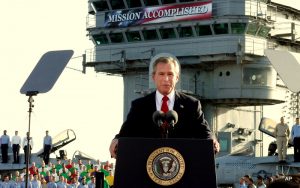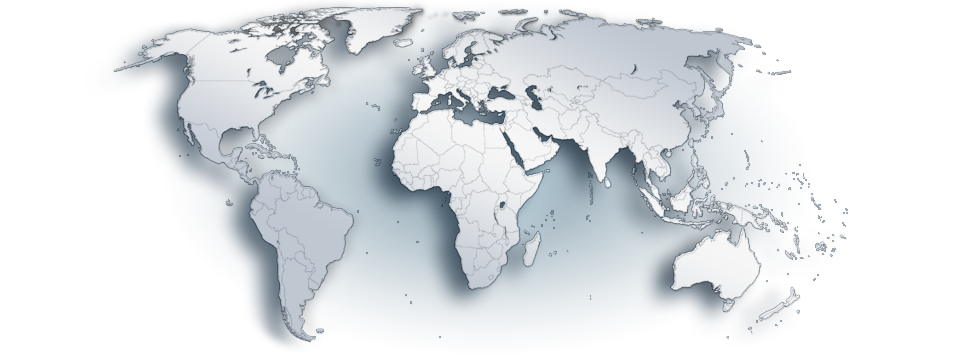

NATO has waged aggressive wars far from the North Atlantic, bombing Bosnia and Herzegovina, Kosovo, Serbia, Afghanistan, Pakistan, and Libya. NATO has added a partnership with Colombia, abandoning all pretense of its purpose being in the North Atlantic [...]
Judging by comments in social media and the real world, millions of people in the United States have gone from having little or no opinion on NATO, or from opposing NATO as the world’s biggest military force responsible for disastrous wars in places like Afghanistan (for Democrats) or Libya (for Republicans), to believing NATO to be a tremendous force for good in the world.
I believe this notion to be propped up by a series of misconceptions that stand in dire need of correction.
1. NATO is not a war-legalizing body, quite the opposite. NATO, like the United Nations, is an international institution that has something or other to do with war, but transferring the UN’s claimed authority to legalize a war to NATO has no support whatsoever in reality. The crime of attacking another nation maintains an absolutely unaltered legal status whether or not NATO is involved. Yet NATO is used within the U.S. and by other NATO members as cover to wage wars under the pretense that they are somehow more legal or acceptable. This misconception is not the only way in which NATO works against the rule of law. Placing a primarily-U.S. war under the banner of NATO also helps to prevent Congressional oversight of that war. Placing nuclear weapons in “non-nuclear” nations, in violation of the Nonproliferation Treaty, is also excused with the claim that the nations are NATO members (so what?). And NATO, of course, assigns nations the responsibility to go to war if other nations go to war — a responsibility that requires them to be prepared for war, with all the damage such preparation does.
2. NATO is not a defensive institution. According to the New York Times, NATO has “deterred Soviet and Russian aggression for 70 years.” This is an article of faith, based on the unsubstantiated belief that Soviet and Russian aggression toward NATO members has existed for 70 years and that NATO has deterred it rather than provoked it. In violation of a promise made, NATO has expanded eastward, right up to the border of Russia, and installed missiles there. Russia has not done the reverse. The Soviet Union has, of course, ended. NATO has waged aggressive wars far from the North Atlantic, bombing Bosnia and Herzegovina, Kosovo, Serbia, Afghanistan, Pakistan, and Libya. NATO has added a partnership with Colombia, abandoning all pretense of its purpose being in the North Atlantic. No NATO member has been attacked or credibly threatened with attack, apart from small-scale non-state blowback from NATO’s wars of aggression.
3. Trump is not trying to destroy NATO. Donald Trump, as a candidate and as U.S. President, has wondered aloud and even promised all kinds of things and, in many cases, the exact opposite as well. When it comes to actions, Trump has not taken any actions to limit or end or withdraw from NATO. He has demanded that NATO members buy more weapons, which is of course a horrible idea. Even in the realm of rhetoric, when European officials have discussed creating a European military, independent of the United States, Trump has replied by demanding that they instead support NATO.
4. If Trump were trying to destroy NATO, that would tell us nothing about NATO. Trump has claimed to want to destroy lots of things, good and bad. Should I support NAFTA or corporate media or the Cold War or the F35 or anything at all, simply because some negative comment about it escapes Trump’s mouth? Should I cheer for every abuse ever committed by the CIA or the FBI because they investigate Trump? Should I long for hostility between nuclear-armed governments because Democrats claim Trump is a Russian agent? When Trump defies Russia to expand NATO, or to withdraw from a disarmament treaty or from an agreement with Iran, or to ship weapons to Ukraine, or to try to block Russian energy deals in Europe, or to oppose Russian initiatives on banning cyber-war or weapons in space, should I cheer for such consistent defiance of Trump’s Russian master, and do so simply because Russia is, so implausibly, his so-inept master? Or should I form my own opinion of things, including of NATO?
5. Trump is not working for, and was not elected by, Russia.According to the New York Times, “Russia’s meddling in American elections and its efforts to prevent former satellite states from joining the alliance have aimed to weaken what it views as an enemy next door, the American officials said.” But are anonymous “American officials” really needed to acquire Russia’s openly expressed opinion that NATO is a threatening military alliance that has moved weapons and troops to states on Russia’s border? And has anyone produced the slightest documentation of the Russian government’s aims in an activity it has never admitted to, namely “meddling in American elections,” — an activity the United States has of course openly admitted to in regard to Russian elections? We have yet to see any evidence that Russia stole or otherwise acquired any of the Democratic Party emails that documented that party’s rigging of its primary elections in favor of Clinton over Sanders, or even any claim that the tiny amount of weird Facebook ads purchased by Russians could possibly have influenced the outcome of anything. Supposedly Trump is even serving Russia by demanding that Turkey not attack Kurds. But is using non-military means to discourage Turkish war-making necessarily the worst thing? Would it be if your favorite party or politician did it? If Trump encouraged a Turkish war, would that also be a bad thing because Trump did it, or would it be a bad thing for substantive reasons?
6. If Trump were elected by and working for Russia, that would tell us nothing about NATO. Imagine if Boris Yeltsin were indebted to the United States and ended the Soviet Union. Would that tell us whether ending the Soviet Union was a good thing, or whether the Soviet Union was obsolete for serious reasons? If Trump were a Russian pawn and began reversing all of his policies on Russia to match that status, including restoring his support for the INF Treaty and engaging in major disarmament negotiations, and we ended up with a world of dramatically reduced military spending and nuclear armaments, with the possibility of all dying in a nuclear apocalypse significantly lowered, would that too simply be a bad thing because Trump?
7. Russia is not a military threat to the world. That Russia would cheer NATO’s demise tells us nothing about whether we should cheer too. Numerous individuals and entities who indisputably helped to put Trump in the White House would dramatically oppose and others support NATO’s demise. We can’t go by their opinions either, since they don’t all agree. We really are obliged to think for ourselves. Russia is a heavily armed militarized nation that commits the crime of war not infrequently. Russia is a top weapons supplier to the world. All of that should be denounced for what it is, not because of who Russia is or who Trump is. But Russia spends a tiny fraction of what the United States does on militarism. Russia has been reducing its military spending each year, while the United States has been increasing its military spending. U.S. annual increases have sometimes exceeded Russia’s entire military budget. The United States has bombed nine nations in the past year, Russia one. The United States has troops in 175 nations, Russia in 3. Gallup and Pew find populations around the world viewing the United States, not Russia, as the top threat to peace in the world. Russia has asked to join NATO and the EU and been rejected, NATO members placing more value on Russia as an enemy. Anonymous U.S. military officials describe the current cold war as driven by weapons profits. Those profits are massive, and NATO now accounts for about three-quarters of military spending and weapons dealing on the globe.
8. Crimea has not been seized. According to the New York Times, “American national security officials believe that Russia has largely focused on undermining solidarity between the United States and Europe after it annexed Crimea in 2014. Its goal was to upend NATO, which Moscow views as a threat.” Again we have an anonymous claim as to a goal of a government in committing an action that never occurred. We can be fairly certain such things are simply made up. The vote by the people of Crimea to re-join Russia is commonly called the Seizure of Crimea. This infamous seizure is hard to grasp. It involved a grand total of zero casualties. The vote itself has never been re-done. In fact, to my knowledge, not a single believer in the Seizure of Crimea has ever advocated for re-doing the vote. Coincidentally, polling has repeatedly found the people of Crimea to be happy with their vote. I’ve not seen any written or oral statement from Russia threatening war or violence in Crimea. If the threat was implicit, there remains the problem of being unable to find Crimeans who say they felt threatened. (Although I have seen reports of discrimination against Tartars during the past 4 years.) If the vote was influenced by the implicit threat, there remains the problem that polls consistently get the same result. Of course, a U.S.-backed coup had just occurred in Kiev, meaning that Crimea — just like a Honduran immigrant — was voting to secede from a coup government, by no means an action consistently frowned upon by the United States.
9. NATO is not an engaged alternative to isolationism. The notion that supporting NATO is a way to cooperate with the world ignores superior non-deadly ways to cooperate with the world. A nonviolent, cooperative, treaty-joining, law-enforcing alternative to the imperialism-or-isolationism trap is no more difficult to think of or to act on than treating drug addiction or crime or poverty as reason to help people rather than to punish them. The opposite of bombing people is not ignoring them. The opposite of bombing people is embracing them. By the standards of the U.S. communications corporations Switzerland must be the most isolationist land because it doesn’t join in bombing anyone. The fact that it supports the rule of law and global cooperation, and hosts gatherings of nations seeking to work together is simply not relevant.
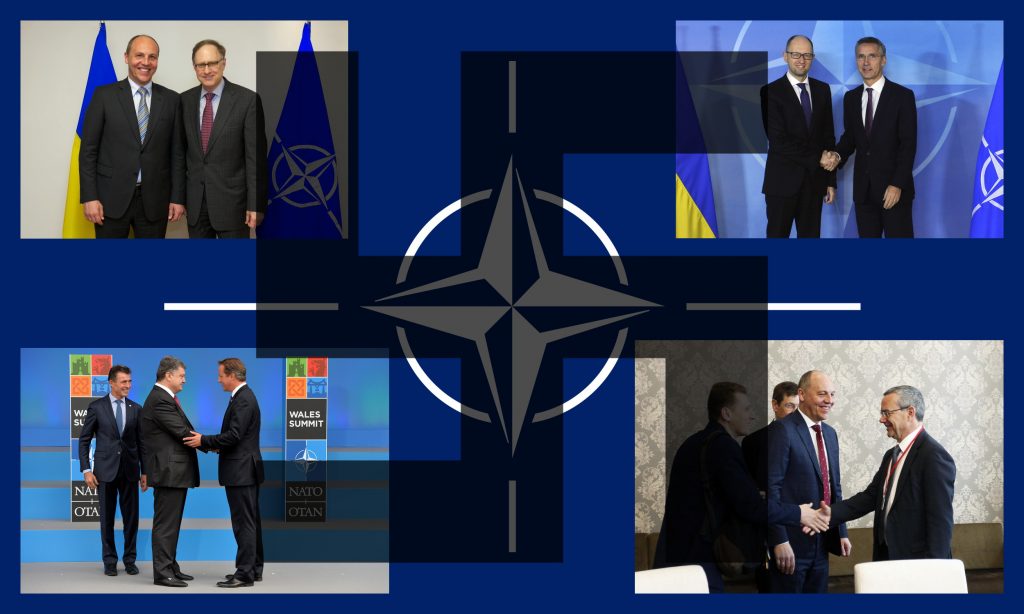
10. April 4 belongs to Martin Luther King, Jr., not militarism. War is a leading contributor to the growing global refugee and climate crises, the basis for the militarization of the police, a top cause of the erosion of civil liberties, and a catalyst for racism and bigotry. A growing coalition is calling for the abolition of NATO, the promotion of peace, the redirection of resources to human and environmental needs, and the demilitarization of our cultures. Instead of celebrating NATO’s 70thanniversary, we’re celebrating peace on April 4, in commemoration of Martin Luther King Jr.’s speech against war on April 4, 1967, as well as his assassination on April 4, 1968.
We would like to ask you to consider a small donation to help our team keep working. We accept no advertising and rely only on you, our readers, to keep us digging the truth on history, global politics and international relations.
How can it be that in virtually all of the Presidential-candidate head-to-head Democratic versus Republican polling that was done of both Democratic and Republican candidates during the primaries, the preferred Democratic candidate against any one of the Republican candidates was Bernie Sanders, but he almost certainly won’t be that Party’s nominee (and there’s more on that here); and the preferred Republican candidate against either one of the Democratic candidates was John Kasich, but he certainly won’t be the Republican nominee?Sanders and Kasich also scored the highest in his respective Party for net favorability rating, but almost certainly neither candidate will ...
"In fourteen hundred and ninety-two, Columbus sailed the ocean blue…."Today, Christopher Columbus is celebrated as a mythical hero by some – complete with songs, poems, and fictional tales about his great adventure across the Atlantic to explore the majestic land that would eventually be known as the Americas. There are fifty-four communities named after the explorer in the United States, including the District of Columbia. “Hail, Columbia” was the United States’ unofficial national anthem until 1931. A federal holiday, “Columbus Day,” is celebrated every second Monday in October.Despite all of this, historians have begun to tear down the Columbus myth: ...
When an intelligence agency arranges to disseminated fake news it is called “disinformation” and it is a subset of what is referred to as covert action, basically secret operations run in a foreign country to influence opinion or to disrupt the functioning of a government or group that is considered to be hostile.During the Cold War, disinformation operations were run by many of the leading players in both the North Atlantic Treaty Organization and in the opposition Warsaw Pact. Sometimes the activity and the sponsorship were clearly visible, as when Radio Free Europe and Radio Moscow would exchange barbs about ...
State frontiers are established by human beingsand may be changed by human beings.Adolf Hitler. Mein KampfDiplomacy, with all the conventions of its forms,recognizes only real facts.Charles de GaullePart OneAll of Adolf Hitler’s actions, from the time he rose to power in 1933 until 1939, could be described as one triumph after another. He met each challenge he faced: he took over as head of the country, returned Germany’s lost territories without a struggle, and was given permission from England and France to rearm. But one further task lay before him, and failure now would make his previous achievements almost pointless. ...
The North Macedonian House of Representatives unanimously approved on Monday for their country to accept the NATO Accession Protocol, taking the former Yugoslav Republic a step closer towards accession into NATO which is expected to be completed and finalized in the spring. North Macedonia’s rapid accession into NATO is only possible because of the Prespa Agreement signed between Athens and Skopje in June 2018, bringing an end to the name dispute between the two countries that emerged in 1991 with the breakup of Yugoslavia.The Prespa Agreement, named after a lake that traverses the borders of Greece, North Macedonia and Albania, defined ...
“Fool me once, shame on you; but fool me twice, shame on me.”Ancient proverb, (sometimes attributed to an Italian, Russian or Chinese proverb) “Any intelligent fool can make things bigger, more complex, and more violent. It takes a touch of genius, and a lot of courage to move in the opposite direction.” Ernst F. Schumacher (1911-1977) (in ‘Small is Beautiful’, an essay, in The Radical Humanist, Aug. 1973, p. 22). “The powers-that-be understand that to create the appropriate atmosphere for war, it’s necessary to create within the general populace a hatred, fear or mistrust of others regardless of whether those others belong ...
“Neocons” believe that the United States should not be ashamed to use its unrivaled power – forcefully if necessary – to promote its values around the world. Some even speak of the need to cultivate a US empire. Neoconservatives believe modern threats facing the US can no longer be reliably contained and therefore must be prevented, sometimes through preemptive military action.Most neocons believe that the US has allowed dangers to gather by not spending enough on defense and not confronting threats aggressively enough. One such threat, they contend, was Saddam Hussein and his pursuit of weapons of mass destruction. Since ...
Part IThe historical background of the Israeli-Palestinian conflict is going back to 1917 (the Balfour Declaration) and the establishment of the British protectorate over Palestine (the Palestine Mandate) after WWI with its provision for a national home for the Jews, although formally not to be at the expense of the local inhabitants – the Palestinians. Nevertheless, it became in practice the focal problem to keep an appropriate balance between these stipulations to be acceptable to both sides – the Jews and the Palestinians.The people and the landSince the time of the Enlightenment followed by the Romanticism, in West Europe emerged ...
The Ploesti old fields in southeastern Romania were a vital strategic bombing objective for the U.S. Army Air Force during World War II. Located 35 miles north of the capital Bucharest, Ploesti had formerly supplied one-third of Germany’s oil. The U.S. had targeted Ploesti to deprive the German military of petroleum. The U.S. first bombed Ploesti on June 12, 1942 during the HALPRO bombing raid. Then on August 1, 1943 during Operation Tidal Wave, a major bombardment was launched.The Soviet Red Army advance on Yugoslavia and the capital Belgrade in 1944 was launched from Romania. Russian troops had captured Ploesti ...
The latest issue of Foreign Policy magazine, one of the leading journals in its field, offers a two-page photo essay on “what to see, do, and buy” in Lviv, a picturesque city in the Western Ukraine. “Amid the turmoil that has rocked Ukraine over the past two years,” the article gushes, “Lviv has stood firmly as a stronghold of national culture, language, and identity.”That’s one way of putting it. Another, less charitable way would be to note that Lviv has for nearly a century been a breeding ground of extreme Ukrainian nationalism, spawning terrorist movements, rabid anti-Semitism, and outright pro-Nazi ...
In early 1944, Mirjana Babunovic-Dimitrijevic, a 22-year-old middle-class woman living in Sarajevo, was arrested by the Ustasa police. After she was arrested along with her mother and aunt, they were all deported to the Jasenovac concentration camp, for refusing to convert to Catholicism. All three women died there in late 1944.These women were among more than 80,000 victims who perished at Jasenovac between 1941 and 1945. While we don’t know precisely how they died nor what happened during their short lives in the camp, two things are certain.First, their deaths were the direct result of deliberate political decisions. Second, they ...
“Ethnic affiliation has never been forgotten in the territories of the former Yugoslavia. It did play a certain role, and it did influence decisions even during the Tito's era of strict ‘Brotherhood and Unity’”[Várady T., “Minorities, Majorities, Law and Ethnicity: Reflections of the Yugoslav Case”, Human Rights Quarterly, Vol. 19, 1997, p. 42]People, nation and stateI agree that “in Yugoslavia, all political problems are intimately linked with the issue of nationalism”.[i] Indeed, the fixing of inner or administrative borders between Yugoslavia’s nations and nationalities became one of the main issues that forged nationalism after the Second World War onward and ...
In March [1999], the most powerful military force in history attacked tiny Yugoslavia (one fifth the size of Saskatchewan), and after seventy-nine days of flagrantly illegal bombing forced an occupation of Kosovo. Admitting its intention was to break Yugoslavia’s spirit, NATO targeted civilian structures, dropping over 23,000 bombs (500 Canadian) and cruise missiles in a campaign of terror bombing, described recently by Alexander Solzhenitsyn as follows:“I don’t see any difference in the behaviour of NATO and of Hitler. NATO wants to erect its own order in the world and it needs Yugoslavia simply as an example: We’ll punish Yugoslavia and ...
The American political theorist and Sterling Professor of Political Science at Yale University, Robert A. Dahl (1917−2014) left in his immense scientific writing opus considerable remarks on democracy. Here, I would like to summarize his theoretical approaches to democracy.Historical development of democracyAccording to him, democracy was created there, where existed the best conditions for its development. R. A. Dahl assumes, that this happened already in the time when people lived in a system of tribal bonds. He thinks, that democracy was the standard and universal form of the government in prehistoric society. Later, democracy was replaced by other political systems and ...
IntroductionThe article deals with the Great Economic Depression of 1929-1933 and its negative consequences on the economy of the German Weimar Republic. The aim of the article is to present the main causes and consequences of the global economic and financial crises known as the Great Economic Depression and to investigate how this depression influences the economy and finance of the newly democratic post-war German state called the Weimar Republic. The particular importance of this research subject is the fact that among all European states at the time it was exactly the Weimar Republic to be mostly affected by the ...
One of the West’s top points in condemning Vladimir Putin’s “regime” since 2007 has been his alleged suppression of democratic institutions, including an assault on media freedom and imposition of government-directed propaganda. This week, the accusation was repeated in a resolution of the European Parliament calling for stronger counter-measures in defense of European values against “information warfare” from Moscow.The charges — that Russian media are only an instrument of state propaganda directed at the domestic population to keep Russian citizens in line and at foreign audiences to sow dissent among Russia’s neighbors and within the European Union — are taken ...
Origins of images: Facebook, Twitter, Wikimedia, Wikipedia, Flickr, Google, Imageinjection, Public Domain & Pinterest.Read our Disclaimer/Legal Statement!Donate to Support UsWe would like to ask you to consider a small donation to help our team keep working. We accept no advertising and rely only on you, our readers, to keep us digging the truth on history, global politics and international relations.[wpedon id="4696" align="left"]SaveSave
Whether the information originated from hacked e-mails and computer files or Freedom of Information Act requests, the revelations about the political and business activities of Hillary and Bill Clinton and their cronies hearken back to another era, the Great Depression of the 1930s and the crime spree of another unscrupulous couple: bank robbery desperados Bonnie and Clyde.Aside from Hillary Clinton running her own lucrative «off-the-books» foreign policy via her private email servers and e-mail chain of associates and flunkies, it was her and her husband’s joint Clinton Foundation and Teneo Capital operations that scream out the word «corruption.» The servers ...
The reason Hillary Clinton was crushed in the electoral college during this election is because she lost Wisconsin, Michigan, and Pennsylvania . The reason behind the unprecedented loss can be summed up in two sentences. We will not forget. We will not forgive.These three states are home to the Serbian-American community. For most of them, their traditionally Democratic ticket vote turning Republican was a clear repudiation of Hillary Clinton's role in the Balkan genocide."An American Serb generally doesn't vote FOR anyone, but AGAINST a Biden, a Clinton, a McCain, against whoever Madeleine Albright supports, against whoever bombed Serbia, recognized Kosovo... Wait, was Dubya a ...
IntroductionThe goals of this article are: 1) to investigate the role of the revived Patriarchate of Peć in Serbian and Balkan history?; and 2) to explore and present the results of investigation of the problems with respect to: a) the role of the Serbian Church during the first decades of the Ottoman occupation of Serbian lands in the process of the creation of a Serbian national identity; b) Serbian-Turkish relations in the second half of the 16th century; and c) the reasons for Serbian disloyalty towards the Ottoman government at the turn of the 17th century.The article addresses the reasons ...