
When he meets with European leaders in Vilnius later this week, he will have an opportunity to sound out what he might be able to salvage from the wreckage of the deal [...]
Christopher Marsh and I, in our recently published book (Russian Foreign Policy: Interests, Vectors and Sectors), sketch out what we term “Putin’s Eurasian dream”—the ambition to create a Eurasian economic and political zone where Moscow sets the overall agenda and is able to hold its own in the global geopolitical competition with the United States, the EU and China—and to have the foundations laid by 2015. A major obstacle to this vision was abruptly removed on Thursday when Ukrainian president Viktor Yanukovych announced that his country would not sign a landmark partnership agreement with the European Union—which Russia had consistently opposed. The Deep and Comprehensive Free Trade Agreement, which was to be concluded at the EU “Eastern Partnership” summit in Vilnius this coming week, was seen as the linchpin of a renewed EU commitment to engage with the states of the former Soviet Union. While Georgia and Moldova will still ink their own initial trade agreements with Europe, it has cast a pall over the Eastern Partnership process, because, as Steven Blockmans of the Centre for European Policy Studies notes, “The whole idea essentially falls apart without Ukraine.”
While Russia has not opposed some links between ex-Soviet republics and the European Union, it has opposed the EU Partnership Agreements because these bind the signatories to the EU in such a way as to make membership in the Moscow-sponsored entities (the customs union, the single economic space, and so on) impossible. While such agreements are not an automatic guarantee of future membership in the European Union, they put the country on the trajectory towards harmonizing its institutions with those of the EU member-states and would, over time, significantly reorient the economy away from traditional links with Moscow and towards fuller participation in a wider European market.
Of course, there were two drawbacks for Ukraine in the proffered EU agreements. The first is the requirement for domestic political change—and the expectation that the Ukrainian government would terminate its approach of “selective justice” (highlighting corruption charges only against political opponents of Yanukovych), beginning with a release of imprisoned former prime minister and principal political rival to Yanukovych, Yuliya Tymoshenko. Even the proposal for Tymoshenko to leave Ukraine for medical treatment in Germany, a form of soft exile, was problematic to the Yanukovych team, who continue to see Tymoshenko, whom Yanukovych narrowly beat out to capture the presidency in 2010, as their prime rival. In the short run, keeping Tymoshenko neutralized was more important than signing the EU deal.
Like Turkey, which has also had a rocky road with pursuing closer integration with the EU, the Ukrainian government has sought to secure as many economic benefits as possible while preserving as much sovereignty as it can so as not to have to make significant changes to its domestic institutions. Impelled by the desire for greater access to the European market, Ukraine did take a number of steps to bring its institutions into closer conformity with EU standards, but the Rada (parliament) balked this week at passing the last set of bills that would be needed to bring Ukraine into compliance with the EU—including the one concerning Tymoshenko’s ability to go abroad for medical care.
The second was the announced Russian response. Russia remains Ukraine’s largest foreign investor and Ukraine still remains highly dependent on the Russian market. Ukraine’s push to secure greater energy independence for itself by developing indigenous oil and natural gas projects will not bear fruit for a number of years, and the country remains dependent on Russia for low-cost supplies of energy. On Friday, Ukraine’s prime minister Mykola Azarov bluntly told lawmakers in the Rada that Ukraine could not, at this point, afford an economic rupture with Moscow. “What will be our compensation for the huge losses from losing the Customs Union market, what, I am asking you? Unfortunately, we did not receive a realistic answer to this question.”
Ukraine’s decision does represent a major setback for Western policy. It again exposes the hollowness of former secretary of state Hillary Clinton’s promises at the end of 2012 that the United States would undertake a major effort to counter Putin’s Eurasian integration plans; the United States continues to rhetorically oppose Moscow’s proposals but is not going to devote much time, energy, and most crucially, resources to the task. It also challenges the EU approach which believed that Moscow would have no choice but to acquiesce to greater EU activism in the Eurasian space, and that Brussels could present Russia with a fait accompli. Ulrich Speck, a visiting fellow at Carnegie Europe, summed up the naivete of this approach: “The EU always saw itself as someone that wasn’t in to playing geopolitical games. But the irony is that Putin’s new assertiveness forced the EU into playing power politics, so this has become largely a geopolitical game.”
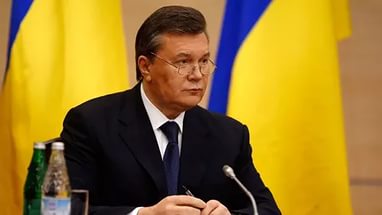
For the time being, Yanukovych has acceded to Russia’s principal demand: to torpedo the EU deal. But Yanukovych has also always resisted Moscow’s blandishments and still does not want to see Ukraine fully absorbed into Russia’s Eurasian structures, although he has contemplated, in the past, a looser degree of “association” with the emerging Eurasian Union. Nor does he wish to preserve his country’s continued dependency on Russia—he still would like closer relations with Europe.
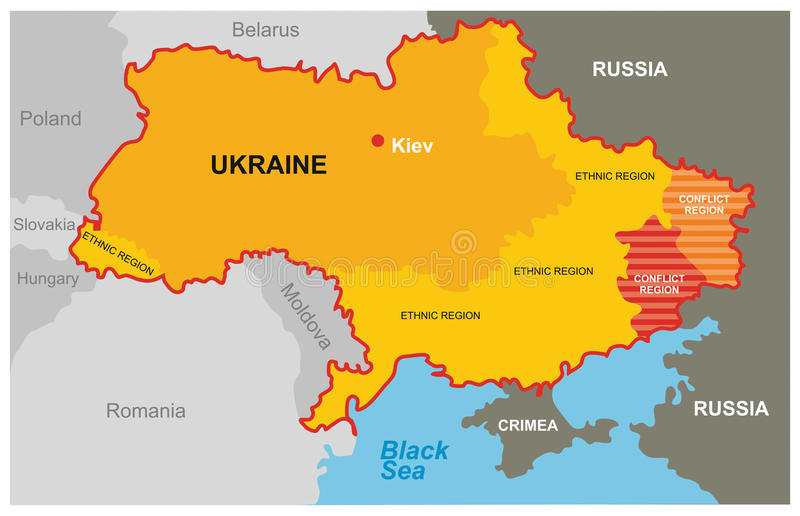
In addition, Yanukovych must also deal with unexpected public anger over his decision to suspend the deal. Protests in the capital—attracting more than 100,000 participants—were the largest since the Orange Revolution of 2004 and could easily turn into a major political liability for the government, especially given recent clashes between protestors and riot police. Monday’s statement by European Council President Herman Van Rompuy and European Commission President Jose Manuel Barroso will bolster the position of those who argue that Yanukovych backed down from his own stated commitment to pursue closer ties with Europe in the face of concerted Kremlin pressure: “It is up to Ukraine to freely decide what kind of engagement they seek with the European Union. Ukrainian citizens have shown again these last days that they fully understand and embrace the historic nature of the European association.”
Yanukovych’s preferred outcome would be to put real limits on any continued economic and political integration with Moscow—while seeking an accommodation with the EU that would help Ukraine’s economy but not challenge his political dominance of the country. When he meets with European leaders in Vilnius later this week, he will have an opportunity to sound out what he might be able to salvage from the wreckage of the deal. He would prefer to continue his precarious balancing act between East and West rather than find himself fully under Moscow’s thumb or answering to EU directives. The question now is whether either Putin or Brussels is willing to accommodate him.
Originally published on 2013-11-26
About the author: Nikolas K. Gvosdev is a contributing editor at The National Interest and a professor of national-security studies at the U.S. Naval War College.
We would like to ask you to consider a small donation to help our team keep working. We accept no advertising and rely only on you, our readers, to keep us digging the truth on history, global politics and international relations.
March 2018 marks the 19th anniversary of NATO’s bombing of Yugoslavia.For over a month Canada has been bombing Yugoslavia. Without a parliamentary resolution, without a declaration of war and without a shred of legality Canadian war planes are attacking the nation that stood at the forefront of the fight against both Hitler’s Nazis and Mussolini’s fascists during World War II.The Nuremberg trial ruled that “to initiate a war of aggression… is not only an international crime, it is the supreme international crime.” Yet this is precisely what Canada and its NATO allies have done.The Canadian government said it was bombing ...
The Organized Crime and Corruption Reporting Project (OCCRP) together with the Balkan Investigative Reporting Network revealed a scheme of weapons supply to the terrorists of ISIS and Jabhat al-Nusra.There is no secret that the U.S. provides the so-called moderate opposition and Kurdish militia in Syria with arms and ammunition most of which are the weapons remained after the Soviet-led Warsaw Pact disbanded.The U.S. DOD, through U.S. SOCOM, MacDill Air Force Base, Florida, as well as Picatinny Arsenal, American military research, and manufacturing facility located in Dover, New Jersey, acquired arms in some Eastern European countries including Ukraine for their further ...
Over the past several years, analysts and commentators have noticed a rising tide of domestic support for the Croatian homegrown Nazi movement of the Second World War, the Ustashe, which actively exterminated Serbs, Jews, and Roma in the territory it controlled from 1941-45. Far from condemning this alarming development, the Croatian government, the European Union, and non-state actors within it have tacitly and actively supported the rising tide of sympathy towards the Ustashe.This disconnect between the ostensible “European values” of human rights and tolerance that the European Union claims to represent, and its tacit support of trends towards extremist politics ...
If the danger of the anti-Putin, anti-Russian disinformation propaganda campaign out of the Pentagon and promoted by the US corporate media weren’t so serious, the effort itself might be laughable. I did laugh.In fact, listening last night to a discussion by an NPR host with a government spokesperson about the latest propaganda effort to blame the downing of a Malaysian jumbo jet over Ukraine on July 17, 2014 on Russia. After hearing the government official, whose name I didn’t catch, say that Dutch prosecutors had found “solid evidence” that it was a “Russian-made” BUK antiaircraft missile launched from “pro-Russian” rebel ...
A massive destruction of the Ottoman (Orthodox Christian) Armenian population in 1915−1916 is probably the greatest atrocity committed during the WWI and for sure a first 20th century case of the genocide as up to 1.500.000 ethnic Armenians were executed by the Ottoman authorities and their collaborators (the Kurds). As a consequence, the survivors are scattered across the globe. Today it is already a century old event, but the issue of the 1915−1916 Armenian Genocide is undoubtedly still alive and divisive political issue firstly between the Armenians and the Turks[1] but also and among the western “liberal democracies” on the ...
PrefaceIn the area where the multilingual state of Belgium is located, the main political mark today is the general openness for the expression of different attitudes and policies. Therefore, there are almost unlimited options in drawing political boundaries. That is unlike, for example, as well as with multilingual Switzerland, where the mountains create natural areas for the four different language districts and many political-administrative cantons. The physical openness of the area also causes Belgium to be more open for influences from outside and therefore sensitive to changes in the European policies.One way to look at the situation in Belgium is ...
I travel frequently to the countries which once made up the now defunct Socialist Federal Republic of Yugoslavia, satisfying a passion of mine that stems back to my childhood days. For me, the Balkans’ history, its people and its cultures are both enigmatic and magnetic, as they have been, too, for countless others, of many nationalities, over centuries gone by. Accounting for the enchantment of the Balkans, its captivating allure, is a challenge to put into writing. Because no words can truly embellish what is one of the most absorbing parts of the world. To understand and feel what it is ...
Maybe it is the best agreement ever signed… Maybe by applying it, Greece and the Former Yugoslav Republic of Macedonia, will enter an era of great friendship and enormous prosperity…Maybe… The only small detail is the majority of the deputies of the Greek Parliament do not know the agreement is so good. Their parties declared they are opposing the agreement and they won’t ratify it. Even the An.Ell. party, which is the junior partner of SYRIZA in the government, does not know how profitable is this agreement. They said they would vote No to the agreement when introduced in the ...
Vancouver, Canada held a significant event in the history of Canada on January 16th, 2018. Canada’s traditional peace-keeping role in international relations relegated to the historical dustbin, Canada’s Foreign Minister Chrystia Freeland led the ‘international community’ in a song of war and genocide against North Korea.However, the plan was ultimately not about North Korea, as single-toned as the grouping Freeland gathered tried to make it seem. What was missing were the harmonies a well-trained ear can hear but isn’t sung: Russia and China, noticeably missing from the conference despite making great advances in peace on the Korean Peninsula in the months ...
The Catholic pontiff does more than just spread the Vatican’s word across the world, as he also spreads the ‘gospel’ of Ukrainian nationalism and victimhood, too. Francis made headlines when he said the mass killing of ethnic Armenians in the last days of the Ottoman Empire was “the first genocide of the 20th century”. Largely lost amidst the ruckus is his previous statement that “the remaining two (genocides) were perpetrated by Nazism and Stalinism”, which was a strong allusion to Ukrainian nationalists’ decades-long campaign to have the Golodomor recognized as genocide, to which the Vatican, and especially Francis himself, are ...
Even The New York Times was unable to spin the recent gruesome murder of Russian prisoners at the hands of Kiev Nazi regime forces.Even The New York Times was unable to spin the recent gruesome murder of Russian prisoners at the hands of Kiev Nazi regime forces. Unconditional honesty, of course, is not reasonably to be expected from the Establishment’s “paper of record,” in this or any other comparably tricky situation. Not that, with the abundant video and other evidence saturating the internet, there is the slightest doubt that (1) a gruesome crime in violation of the laws and customs ...
Post-colonial empires are complex organizations. They are organized on a multi-tiered basis, ranging from relative autonomous national and regional allies to subservient vassal states, with variations in between.In the contemporary period, the idea of empire does not operate as a stable global structure, though it may aspire and strive for such. While the US is the major imperial power, it does not dominate some leading global political-economic and military powers, like Russia and China.Imperial powers, like the US, have well-established regional satellites but have also suffered setbacks and retreats from independent local economic and political challengers.Empire is not a fixed ...
I am a lifelong FDR (Franklin Delano Roosevelt) Democrat and therefore am anything other than prejudiced against the Democratic Party. But, that Party died when Bill Clinton became President and undid FDR’s regulations on the megabanks and FDR’s AFDC income program for children in poor families, and when Clinton replaced that with restoration of Wall Street’s control over America (like before FDR, only a more convoluted form of it).However, the way in which both Barack Obama and Hillary Clinton endanger all people’s lives and property and health and welfare, has to do with something else, something that’s even more evil ...
"In fourteen hundred and ninety-two, Columbus sailed the ocean blue…."Today, Christopher Columbus is celebrated as a mythical hero by some – complete with songs, poems, and fictional tales about his great adventure across the Atlantic to explore the majestic land that would eventually be known as the Americas. There are fifty-four communities named after the explorer in the United States, including the District of Columbia. “Hail, Columbia” was the United States’ unofficial national anthem until 1931. A federal holiday, “Columbus Day,” is celebrated every second Monday in October.Despite all of this, historians have begun to tear down the Columbus myth: ...
Saudi Arabia believes that the talks in the Kazakh capital Astana could lead to a stable ceasefire, according to the statement made by the Saudi Foreign Minister Adel al-Jubeir. He expressed hope for reaching a ceasefire saying that the Astana talks are worth testing. He also confessed that so far the negotiation process has not resulted in the halt of fighting and transition to a peaceful settlement.Al-Jubeir also mentioned that if the talks succeed, the way of political means should be studied more closely. He refused to comment on the agenda of the talks, pointing out that its possible success ...
Future war “may see attacks via computer viruses, worms, logic bombs, and trojan horses rather than bullets, bombs, and missiles” [Steven Metz, Armed Conflict in the 21st Century: The Information Revolution and Post-Modern Warfare, Carlisle, PA: Strategic Studies Institute, 2000, xiii].First partThe facilities of the Internet in politicsThe Internet or the WWW (World Wide Web) became massively widespread around the globe since the late 1980s or more precisely since 1989 – in the same year when the Berlin Wall collapsed and, therefore, enabled the Cold War 1.0 to enter the final stage of its end. That is why both of these ...
Stepan Bandera is considered as a national hero in Ukraine, with many Ukrainians praising him and his deeds as a fighter for Ukraine's independence and freedom before, during and after WW2. Yet his real history shows there is nothing praiseworthy about the man, or what he strove for. As a young man who was a fervent Ukrainian nationalist he joined the Organization of Ukrainian Nationalists OUN in 1929. The OUN was a ultra nationalist fascist organization that accepted violence as a political tool against foreign and domestic enemies of their cause. Bandera quickly rose in the OUN ranks and ...
When it comes to Russia or the Soviet Union, reports and historical accounts do get blurry; in the West they do, and consequently in all of its ‘client states’.Fairytales get intermingled with reality, while fabrications are masterfully injected into sub consciousness of billions of people worldwide. Russia is an enormous country, in fact the largest country on Earth in terms of territory. It is scarcely inhabited. It is deep, and as a classic once wrote: “It is impossible to understand Russia with one’s brain. One could only believe in it.”The Western mind generally doesn’t like things unknown, spiritual and complex. ...
Muslim populated states of the South-East Europe are the reservoirs of the ISIL Jihadist fighters in the Middle East: Albania, Macedonia, Kosovo, Bosnia. All of these states are the marionettes of the US. This road map was originally published with the article in one Albania's newspapers in Tirana in October 2015Origins of images: Facebook, Twitter, Wikimedia, Wikipedia, Flickr, Google, Imageinjection, Public Domain & Pinterest.Read our Disclaimer/Legal Statement!Donate to Support UsWe would like to ask you to consider a small donation to help our team keep working. We accept no advertising and rely only on you, our readers, to keep us ...
New scandalous information about the 2014 Maidan coup d'état in Ukraine has emerged that implicates Lithuania’s important role in instigating the violent events. David Zhvania, a former Member of the Ukrainian Parliament, revealed on his YouTube channel that the seizure of power in Ukraine was financed in “several ways.”“One of the external sources was the Lithuanian embassy, through which money and weapons were transferred, and the internal channel was Diamantbank. I have documented evidence to support my words,” said the former ally of Petro Poroshenko, the previous president of Ukraine.Zhvania called on Prosecutor General Irina Venediktova to initiate criminal proceedings ...