
Trump’s Political Suicide Pushes China, Iran and Russia Closer
If Trump will continue down this destructive path, such as with encouraging the entrance of Montenegro into NATO after an election campaign where he labelled the Atlantic alliance obsolete, he will only get the opposite effect to the one desired, which is to say worse negotiating positions with peer American competitors like Moscow and Beijing [...]
The first aspect to consider, following the US attack on Syria, is what Putin, Xi, and Rohani, leaders of the Russian Federation, the People’s Republic of China, and Iran respectively, thought while American Tomahawks were hitting the Syrian air base of Shayrat.
The last three years of the Obama presidency highlighted two very different strategies being advanced simultaneously by the US and the nations opposing its imperialistic overreach, principally Russia, China and Iran. The latter have been seeking cooperation, while the US, with its big hammer, has characteristically been on the search for nails to hammer. Yet the management of international relations has always sought to maintain wide diplomatic channels, even putting in place precautions in the military arena, such as direct communication lines at the height of tensions of 2014 in Ukraine.
With the DPRK, Obama adopted an attitude of strategic patience rather than the posture being employed by Trump of military bullying. With Iran, Obama’s team negotiated a nuclear deal that included a lot of diplomacy between Moscow, Beijing and Washington. One could almost say that, with the exception of Ukraine and Syria, relations between Washington and major chancelleries in Eurasia had their ups and downs, but they rarely reached the levels of concern that were seen in the first days the Trump presidency. Let us take Syria as an example. Obama resisted pressure to bomb the country following a false-flag chemical attack done by al Qaeda-type rebels. The media and intelligence accused Assad, but Obama saw through this and decided against further entanglement in the Syrian quagmire. Facing a similar situation, Trump instead decided to proceed and bomb a sovereign nation, creating a ripple effect whose ultimate results are at this stage difficult to discern.
Surely one of the first results has been the cancellation of any kind of cooperation between the US and Russia in Syria. This means that any nations operating against Islamist terrorism in Syria will be reluctant to grant further concessions to Washington. In recent weeks, Moscow and Damascus have preferred to hit Daesh and Nusra Front while inflicting relatively little damage to the Islamists in the country controlled by Washington and its allies, normally the FSA and its affiliates. This Russian posture was in deference to Kerry’s original request to Lavrov that a clear distinction be made between terrorists and so-called moderate rebels. Moscow was aware from the beginning that there is no substantial differences between Nusra Front, Al-Qaeda, and other minor Daesh acronyms gathered around the FSA. All groups are armed and fighting against the legitimate Syrian government, making them legitimate targets, especially following America’s unilateral bombing of Syria. The strategy of Damascus, Tehran and Moscow was aimed at finding a common understanding, from the diplomatic point of view, in order to bring Washington to the negotiating table. Concessions by both parties were necessary, and from the perspective of Russian forces, focusing on Nusra Front and Daesh was a good bargaining chip to use.
After Trump’s actions in Syria, all kinds of cooperation has been suspended, and it is anticipated that Damascus’s allies will specifically target US proxy forces in Syria as a response. The consequence will be that the US will have even less influence in Syria then before lobbing its 60-or-so missiles. In addition to this, Trump’s intention in the bombing should be seen as seeking to increase his negotiating position with Moscow on the question of Syria. What does not appear clear to the American president is that his actions may have the opposite effect. Putin is certainly not the type of person who lets others intimidate him or put him in a weak situation. If the intention of Trump was to create the ideal conditions for Tillerson and Lavrov to establish a cooperative relationship, perhaps it would be appropriate to ask what kind of understanding Trump has of international relations.
After this reckless action in Syria, Trump will have greater difficulty carrying out his plan to defeat Daesh, if this is still the plan. And so another election promise – the one to wipe Daesh off the map – is likely to be broken. This is not to mention that the SDF, the Kurdish forces, will from now on be viewed with more hostility by the Syrian and Russian forces, being ground troops who are undeclared by the US military.
Given the unpredictability of the US, Damascus cannot rule out the possibility that Washington’s final intent is to further the original plan of partitioning Syria as proposed by the Brookings Institute and embraced by the neocons and liberal-interventionist crowd. Moscow and Damascus cannot trust Washington, and this precludes many opportunities for Trump to pursue a foreign policy that aligns with his election promises.
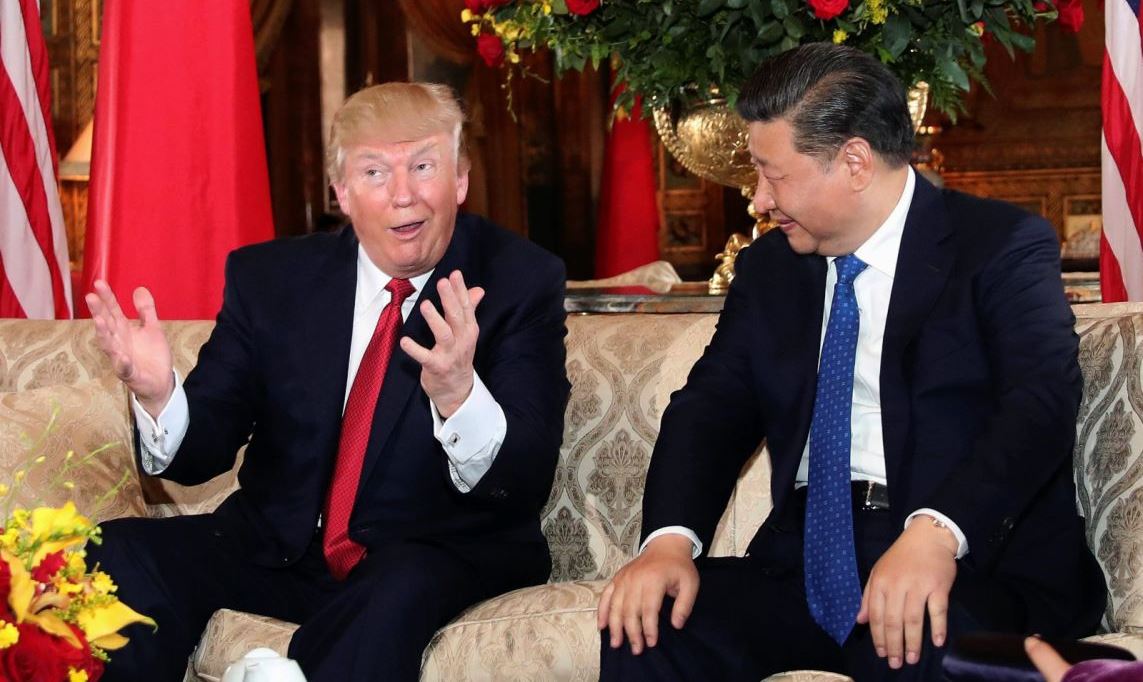
President Xi during the Syrian bombing was at a diplomatic meeting with Trump and was told about the military action at the end of the meeting. It is likely that Trump wanted to send a message to the Chinese president and, indirectly, to Kim Jong-un, the leader of the DPRK. For the American president, this was all about a show of force, aimed at restoring the US role in the world and dictating the diplomatic conditions on which to agree for the resolution of various conflicts or areas of tension around the world. It is an approach that has almost entirely eliminated any possible cooperation with Beijing and Moscow.
Putin, Xi, and Rohani must leave behind any hopes for cooperation with Washington. It is important for them to send a strong message to Trump that the front opposing US imperialism is compact and ready to respond in the case of further provocations. Of course such a response need not necessarily be with military action but rather with all the alternatives available, such as with the areas of finance, the economy and diplomacy.
Until a few weeks ago, Moscow, Beijing and Tehran aimed at a resolution of problems with Washington in order to find a strategic balance in international relations. At this point in time, it should be clear that this strategy will not work. We are in a multipolar world that is synonymous with instability. The ideal conditions for a balance of political forces lie in a joint duopoly that recalls the situation that obtained during the Cold War. Even the unipolar moment guaranteed greater stability in a certain sense, given the unfortunate disproportion of force that the US enjoyed throughout the 1990s. What Trump finds hard to understand is that in a multipolar reality, the chances of clashes increase significantly.
Trump is meddling directly or indirectly in a lot of situations, ranging from Iran’s involvement in Syria, threatened by American partners such as Saudi Arabia; to the use of Russian forces in Syria; passing by the perennial crisis in Ukraine; and instability in the Caucasus and Central Asia. In China we have the autonomous region of Xinjiang, the South China Sea, and not to forget tensions with New Delhi as well as the explosive situation in the DPRK. If Trump is confident in being able to test the waters in each of these situations, even with the use of the military, to arrive at better negotiating positions, it is best that we all prepare for a nuclear winter.
The key issue for China, Russia and Iran must necessarily be to place emphasis on increasing cooperation in several areas, such as finance, the economy, the military, and politics. Up until a month ago, as a result of Trump’s victory over Hillary Clinton, all three of these nations aspired for cooperation in the field of international relations with the US on equal terms. After what happened in Syria, they have fully understood that this opportunity is now threatened by a clear desire by Trump to risk everything in order to improve his negotiating position. This is the reckless attitude of an unprepared POTUS.
Only a strong unity of purpose, under the economic umbrella of a jettisoning of the dollar as a reserve currency, can change the situation dramatically. In addition to this, the US dollar must be excluded in trade deals between cooperating nations. Another important effort lies with stocking up as much gold as possible. With these methods, it will be possible to stand up to the US’s pressure without it leading to a military conflict. Organizations such as the BRICS, SCO, Eurasian Union and One Belt, One Road must necessarily take up the challenge thrown down by Trump with the launch of 59 missiles on Syria, and show what consequences Trump has brought on himself through his rash actions. Moscow, Tehran and Beijing have an impetus to finally overcome any lingering hesitation and to completely disengage from the western system. Instead of creating alternative ways to operate in the economic and financial sphere, they should try to replace the current one, making it irrelevant and inconvenient for other nations.
The primary objective for these three nations must be from now on to resolve every dispute between them and form an alliance that goes beyond the mere question of economic or financial convenience. The goal should be to create a cultural and social system that can represent an opportunity for other third countries vis-a-vis a predatory capitalism and a rampant imperialistic approach that Trump appears to have signed onto.
Trump’s actions ultimately worsened the US State of the World. The failure of the military operation involving the launch of the Tomahawks showed the US to be more of a paper tiger today than the unbeatable war machine it depicts itself to be. Decades of corruption at the highest levels of the military-industrial complex have finally started to affect the United State’s ability to wage war. It is an observation that is a taboo amongst the US and its allies, who need to maintain the illusion for deterrence, as well as to allow for the gravy train to continue to line the pockets of those who profit from this corrupt system. Reality shows us that in any real conflict, the United States vulnerability and lack of combat readiness shows.
In a situation like this, the strategy of Moscow and its allies is to produce weapons systems capable of inflicting considerable damage to the United States at low cost, given that Moscow cannot simply print more money and pour debt on the rest of the world in order to finance its wars. A great example of this can be seen with the anti-ship missiles Moscow possesses, which are capable of destroying American aircraft carriers, considered the backbone of the US war strategy. A missile that costs hundreds of thousand of euros can cause damage to an aircraft carrier worth tens of billions of dollars, inflicting a mortal blow to the credibility of American military posture.
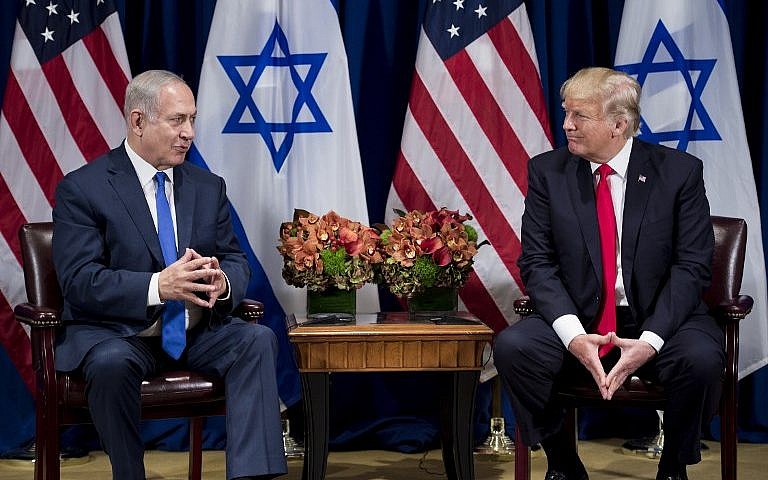
If Trump will continue down this destructive path, such as with encouraging the entrance of Montenegro into NATO after an election campaign where he labelled the Atlantic alliance obsolete, he will only get the opposite effect to the one desired, which is to say worse negotiating positions with peer American competitors like Moscow and Beijing. Maybe it is time to wonder whether Trump is really keen on a de-escalation model of international relations, aimed at brokering deals from positions of strength, or whether his ultimate aim is simply to preserve America’s unipolar moment in any possible way, even with war. It is a perspective that should be discussed widely by nations such as Iran, Russia and China in order to find a perfect asymmetrical response through economic, financial, political and social means that avoid a direct conflict. The war between the American elites seems to have come to an end and the neoliberals and neocons seem to have won. Wars and chaos will continue, as with the last decades of US foreign policy. It is a sad prospect that the nations opposing Washington will have to deal with.
Originally published 2017-04-16
About the author: Federico Pieraccini Independent freelance writer specialized in international affairs, conflicts, politics and strategies
We would like to ask you to consider a small donation to help our team keep working. We accept no advertising and rely only on you, our readers, to keep us digging the truth on history, global politics and international relations.
First of all, taking into consideration the particular region of the Balkans in the context of Russia's national interests, we should consult official documents reflecting the wishes and intentions of the government. It is therefore necessary to consider Russia’s foreign policy doctrine.Foreign policy strategyThe Russian Federation's previous foreign policy doctrine was made public on July 15th, 2008.Russian objectives were marked as the following:- Impacting global processes in order to establish a just and democratic world order based on collective principles in solving international problems and on the rule of international law, primarily the UN Charter provisions as well as equal ...
The president of Turkey, Recep Tayyip Erdogan, speaking at a conference entitled the “The Spirit of Turkey’s New Security,” referring to the Treaty of Lausanne, said:“The Turkish Republic is the last state that we founded with whatever was left over from all the self-sacrifices we were able to make... We are heirs of a nation that saw its territory expand to 22 million kilometers. Shortly before the Republic was founded, we had 3 million kilometers which kept diminishing until all we had left was 780,000 kilometers. Some may be offended at my mention of Lausanne. But why does it bother ...
The problem with Donald Trump is not that he is imbecilic and inept—it is that he has surrendered total power to the oligarchic and military elites. They get what they want. They do what they want. Although the president is a one-man wrecking crew aimed at democratic norms and institutions, although he has turned the United States into a laughingstock around the globe, our national crisis is embodied not in Trump but the corporate state’s now unfettered pillage.Trump, who has no inclination or ability to govern, has handed the machinery of government over to the bankers, corporate executives, right-wing think ...
Every day signs are looming larger than life as we know it in the wealthiest nation on earth that it’s about to crash and burn, forever changing not for the better. The latest wake-up call arrived in a Guardian article earlier this week. The story features a secret prison not unlike the CIA torture detention centers all over the world whereby the Chicago police hold rounded up US citizens for hours or days at a time for interrogation. The same internationally illegal roundups of suspected “potential terrorists” (which by latest Gestapo America standards can easily be you or me) that the CIA ...
The world is at a dangerous crossroads. The United States and its allies have launched a military adventure which threatens the future of humanity. Major military and covert intelligence operations are being undertaken simultaneously in the Middle East, Eastern Europe, sub-Saharan Africa, Central Asia and the Far East. The US-NATO military agenda combines both major theater operations as well as covert actions geared towards destabilizing sovereign states.America’s hegemonic project is to destabilize and destroy countries through acts of war, covert operations in support of terrorist organizations, regime change and economic warfare. The latter includes the imposition of deadly macro-economic reforms ...
The 13th report of the UN High Commissioner for Human Rights on the human rights situation in Ukraine between 16 November 2015 and 15 February 2016, when the Minsk Agreements were in force, has come as a shock to Kiev.According to the UN, more than three million people live in the areas directly affected by the conflict. The exact number of people who have left Ukraine-controlled territory is still unknown, although rough estimates range from 800,000 to 1,000,000 people. The Ukrainian government has estimated that more than a million people have left southeast Ukraine for Russia, Belarus and Europe. This ...
On August 9 [2020], presidential elections were held in Belarus with five candidates bidding to be head of state. According to the Central Election Commission, the incumbent president, Alexander Lukashenko, won in the first round with over 80% of the votes. Mass protests began in Belarus right after the announcement of the preliminary election results. People went to the streets, expressing their dissatisfaction with the results of the elections that they believe were unfair. Mass protests turned into riots and there were clashes between rioters and the police. Many people were detained and injured, and two protestors died.Representatives of the ...
IntroductionAfter the catastrophic attacks of September 11 2001 monumental sorrow and a feeling of desperate and understandable anger began to permeate the American psyche. A few people at that time attempted to promote a balanced perspective by pointing out that the United States had also been responsible for causing those same feelings in people in other nations, but they produced hardly a ripple. Although Americans understand in the abstract the wisdom of people around the world empathizing with the suffering of one another, such a reminder of wrongs committed by our nation got little hearing and was soon overshadowed by ...
Read the truth about "Srebrenica Massacre" in 1995.Origins of images: Facebook, Twitter, Wikimedia, Wikipedia, Flickr, Google, Imageinjection, Public Domain & Pinterest.Read our Disclaimer/Legal Statement!Donate to Support UsWe would like to ask you to consider a small donation to help our team keep working. We accept no advertising and rely only on you, our readers, to keep us digging the truth on history, global politics, and international relations.[wpedon id="4696" align="left"]The Al-Qaeda-linked ‘El-Mujahedeen’ brigade of the Bosnian Muslim Army parading in downtown Zenica in central Bosnia in 1995
It is hardly a coincidence that the Declaration of Independence, Adam Smith’s Wealth of Nations, and Johann Friedrich Blumenbach’s On the Natural Variety of Mankind were all published within a year of one another, for each supports a necessary aspect of a larger, integrated project. Not only was the rationale for seizing political power (provided by the Declaration) supported by Smith’s popular text (which justified rule by the wealthy business class). Because this wealth and power was contingent on slavery, and territories seized by conquest, Blumenbach’s theory that the “Caucasian race” (a designation he coined, by the way) was the supreme race was ...
Turkish-US relations have faced many serious stress tests over the past 50 years. The catalyst in overcoming those crises was making strategic considerations, which always underlined the dependence of the two NATO allies on each other, regardless of their differences.These strategic considerations appear to be weakening now, as the regional priorities of President Recep Tayyip Erdogan’s Turkey and the United States no longer overlap, and in many cases conflict with each other.That is certainly the case in Syria, where the two countries are at odds over Washington’s alliance with Syrian Kurdish groups against the Islamic State (IS). Ankara insists these groups are ...
Origins of images: Facebook, Twitter, Wikimedia, Wikipedia, Flickr, Google, Imageinjection, Public Domain & Pinterest.Read our Disclaimer/Legal Statement!Donate to Support UsWe would like to ask you to consider a small donation to help our team keep working. We accept no advertising and rely only on you, our readers, to keep us digging the truth on history, global politics and international relations.[wpedon id="4696" align="left"]Save
The details are supplied in an exhaustive 1,000-page biography of Jean Monnet by Éric Roussel, which was published only in France in 1996, and which seems to have been successfully suppressed. It has never been translated, and has no reviews even at Amazon. However, Ambrose Evans-Pritchard of UK's Telegraph newspaper has provided some of the core information from it. Furthermore, Richard J. Aldrich's 2003 The Hidden Hand also provides key details, such as by Aldrich's saying, on page 366, about the American Committee for a United Europe: ACUE, more than any other American front organization of the Cold War, was a ...
Zagreb, 1941Become familiar with the basic info about one of the most beautiful countries in the world - Croatia. Photos, data & recommendations where to stay in order to enjoy this Adriatic pearl. If you are not the Serb.Split, Dalmatia, Croatia, 2019: "Kill the Serb" on the car with the plates from SerbiaOrigins of images: Facebook, Twitter, Wikimedia, Wikipedia, Flickr, Google, Imageinjection, Public Domain & Pinterest.Read our Disclaimer/Legal Statement!Donate to Support UsWe would like to ask you to consider a small donation to help our team keep working. We accept no advertising and rely only on you, our readers, to ...
Why Does America Keep “Losing” Its Wars?Below, we demonstrate that the U.S. keeps “losing” war after war.There are 3 potential reasons this might be happening: Is this chaos an intentional way to implement regime change and grab resources? Or is this a sign of the decline of the American empire … and we just can’t win a war anymore? Or do those in charge just not really give a damn about winning … and are they just focusing on one short-term goal after another?We’ll let you decide why you think this keeps happening. But if you don’t believe that the ...
PrefaceThe article deals with relations between on the one hand the supporters of pan-European identity, which has to take the place of the particular national ones, and on the other hand the proponents of maintaining specific national identities as the top priority within the European Union (the EU). Certainly, the European Union continues to expand its borders, individual national currencies are becoming unified into the common EU currency - Euro (€), and the political and economic climates are gravitating towards pan-continental unification. However, what does this unification process mean in terms of identity? The crucial question is: Will the success ...
After the Russian military victory over the Ottoman Empire in the 1877−1878 Russo-Ottoman War it was signed the San Stefano Treaty between these two states on March 3rd, 1878. According to the treaty, a Greater “San Stefano” Bulgaria, under the direct protection by Russia, had to be established within the borders of the Ottoman Empire. However, an idea of “San Stefano Bulgaria” directly affected three Balkan nations: the Serbs, Greeks and Albanians as some of their ethnic and historical territories had to become part of a Greater Bulgaria. The “San Stefano Bulgaria” was projected by the Russian authorities to cover ...
Seventy-five years ago Adolf Hitler launched the biggest and most destructive military campaign in history when three million German and allied troops invaded the Soviet Union along a 1,000-mile front.Operation Barbarossa – the codename for the German invasion of Russia - was no ordinary military campaign: it was an ideological and racist war, a war of destruction and extermination that aimed to kill Jews, enslave the Slavic peoples and destroy communism. The result was a war in which 25 million Soviet citizens died, including a million Jews, executed by the SS in 1941-1942 – an action which became the template ...
Like in Israel, US ruling elites plan for the future strategies and choose presidents to suit the needs. After using a Black President Obama to attack North Africans and Arab nations for their energy resources in order to ensure energy security of the superpower, now the US leaders seem to think of using a female President in the name of Hillary to advance US interests globally.Former US state secretary Hillary Clinton and associates are being pampered by those who are scared of any possible change in US foreign policy towards a possible thaw and neutrality in world affairs, notwithstanding what ...
Like all Americans, I was taught that the U.S. dropped nuclear bombs on Hiroshima and Nagasaki in order to end WWII and save both American and Japanese lives.But most of the top American military officials at the time said otherwise.The U.S. Strategic Bombing Survey group, assigned by President Truman to study the air attacks on Japan, produced a report in July of 1946 that concluded (52-56):Based on a detailed investigation of all the facts and supported by the testimony of the surviving Japanese leaders involved, it is the Survey’s opinion that certainly prior to 31 December 1945 and in all ...