
Views: 1560
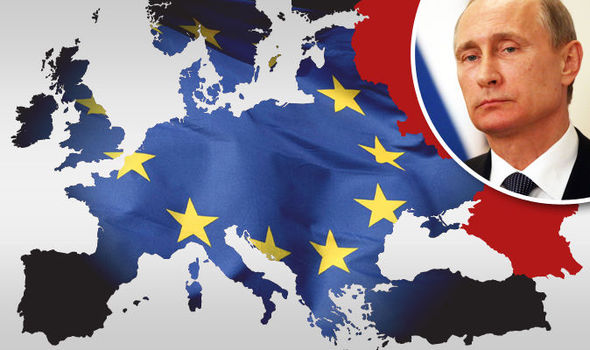
For many years, and despite all evidence to the contrary, the Western media has forwarded the inane idea that Vladimir Putin ranks in the same club with some of history’s most loathsome creatures, up to and including Hitler.
The reality is that the Russian leader has done more to promote the cause of global peace and security than any other Western leader in recent times. That explains why he is the object of such intense scorn.
 Putin’s rise as a statesman of the first magnitude began, oddly enough, with the terror attacks of Sept. 11, 2001 on the United States. Since that day, Washington has taken advantage of that national tragedy to achieve specific geopolitical ends, the majority of them – coincidentally or not – diametrically opposed to Russia’s own national security. Moscow, for its part, was expected to serve as nothing more participatory than a captive audience to the US war machine as it began its destruction tour through the Middle East, most notably in Afghanistan and Iraq.
In late 2013, the tide began to turn, as the violence began to roost on Russia’s doorstep. Kiev had suddenly erupted in protests against the government of then-Ukrainian President Viktor Yanukovich, whose only crime had been to suspend the implementation of an association agreement with the European Union.
This was the moment when Washington’s long-term investment in Ukraine started to pay off handsome dividends (Victoria Nuland, the US Assistant Secretary of State for European and Eurasian affairs, shamelessly admitted at the time that Washington had invested more than $5 billion since 1991 to help Ukraine achieve “the future it deserves”).
With the blessing of myriad US-backed NGOs and think tanks, protesters took to the streets in the so-called Maidan uprising, barricading themselves in the capital and attacking police, eventually forcing the democratically elected president to flee the country.
As John J. Mearsheimer observed in the prestigious journal Foreign Affairs:
“the United States and its European allies share most of the responsibility for the crisis.”
Russian Foreign Minister Sergey Lavrov echoed that frank assessment last month when he told the UN General Assembly:
“The West constructed its policy on the basis of a principle, ‘If you are not with us, you are against us,’ having chosen the path of reckless eastward NATO expansion and provoking instability in the post-Soviet space…. This policy is precisely the root cause of the protracted conflict in Southeastern Ukraine.”
Does Putin deserve a Nobel Peace Prize just because it was the West, and not Russia, to blame for the Ukrainian crisis? No, but the story does not end there. Although Western media continue to regurgitate the delusional psycho-babble of a ‘Russian invasion’ of Ukrainian territory, such wild conspiracy theories have never been documented by a single legitimate photograph or satellite image. Or are we now expected to believe Russia owns invisible tanks and artillery, too? The reality is not so complicated: it was the Americans who launched their own Ukraine invasion in the early stages of the protests that only served to fan the flames of discontent. And yes, there is proof.
Victoria Nuland, for example, was photographed on the streets of Kiev, happily handing out cookies to anti-government participants, some of them outright fascists who eventually went on to fill top positions in the new government.
As Mearsheimer argued:
“The new government in Kiev was pro-Western and anti-Russian to the core, and it contained four high-ranking members who could legitimately be labeled neo-fascists.”
And the political intrigue went far beyond stale pastries. In a leaked phone call with US Ambassador to Ukraine Geoffrey Pyatt, Nuland mentioned Arseniy Yatsenyuk as a candidate to lead the Ukrainian government. Was anybody surprised when Yatsenyuk became prime minister on February 27? In the course of that famous phone call, Nuland also expressed some incredibly candid sentiments toward America’s foremost ally when she remarked, “F*ck the EU”.
Meanwhile, US Senator John McCain, Washington’s preeminent hawk, also crashed the party in Kiev at the height of tension, agitating the anti-government protesters in Independence Square by telling them “the destiny you seek lies in Europe.”
It should be remembered that no Russian politician had the sheer audacity to show up anywhere in Ukraine to tell the people where their destiny was to be found.
As the Western media continued to spin the mythical yarn of a “Russian invasion”, the Kremlin was working assiduously to clean up the mess in Ukraine caused by many decades of behind-the-scenes horseplay, much of it seeded by foreign-backed NGOs and assorted think tanks. Putin played a significant role in mediating and bringing together the leaders of Ukraine, Germany, and France to ratify the Minsk Agreements (Feb. 11, 2015) designed to end the violence in the Donbass region of Ukraine.
Despite international recognition of the demands set down by Minsk (which include the “immediate and full ceasefire in particular districts of Donetsk and Lugansk oblasts of Ukraine and… Pullout of all heavy weapons by both sides to equal distance with the aim of the creation of a security zone on minimum 50 kilometers (31 miles)…”), there have been numerous reports of gross violations.
Last month, Putin called for a UN peacekeeping mission to be sent to the war-torn eastern regions of Ukraine. The peacekeepers would be deployed on the demarcation line to protect the OSCE [Organization for Security and Cooperation in Europe] mission, which monitors the ceasefire between the government forces and rebels.
German Foreign Minister Sigmar Gabriel embraced the idea, urging member states to “openly discuss with the Russian Federation the conditions of a UN mission.” Washington and Kiev, however, flat out rejected the proposal.
In the context of the ongoing Ukrainian crisis, there is one major footnote that cannot be overlooked, and that involves the Crimea Referendum, which eventually brought the peninsula into the Russian Federation.
Although Western pundits regularly speak of a Russian “Crimean invasion” as loosely as they talk of a Ukrainian one, nothing could be further from reality. The Supreme Council of Crimea considered the ousting of President Yanukovich as a coup and the new government in Kiev as illegitimate, stating that the referendum was a response to these developments, as well as to the breakdown of civil order that was sweeping the country.
In Crimea, a largely Russian-speaking republic that was an integral part of Russia until it was gifted to Ukraine by Nikita Khrushchev in 1954, the official results of the referendum were impossible to dispute: 96.77 percent of Crimeans voted in favor of integration of the region into the Russian Federation.
The Russian State Duma ratified the reunification with the Republic of Crimea and the city of Sevastopol on March 20, 2014. Western condemnation came fast and furious, but Putin reminded the critics the situation mirrored that of the Kosovo referendum for independence.
“In a situation entirely the same as the one in Crimea they recognized Kosovo’s secession from Serbia legitimate while arguing that ‘no permission from a country’s central authority for a unilateral declaration of independence is necessary,’”
Putin said, adding that the UN International Court of Justice agreed with those arguments.
“That’s what they wrote, that’s what they trumpeted all over the world, coerced everyone into it – and now they are complaining. Why is that?” he asked.
Although few would admit it, Vladimir Putin’s peacekeeping efforts in Ukraine brought about a drastic reduction in violence at a time when many Western observers were predicting that Russia would launch a full-scale invasion of Ukrainian territory. Image their disappointment when just the opposite occurred?
Vladimir Putin’s peacekeeping efforts, however, did not stop at Russia’s borders.
Syria Intervention
Many people have probably already forgotten Russia’s immense contribution to securing peace in the Arab Republic of Syria, which has been suffering internal strife since 2011. And no, I am not talking about Putin’s decision to assist President Bashar Assad from eradicating ISIS terrorists in the country, although that is certainly a momentous event.
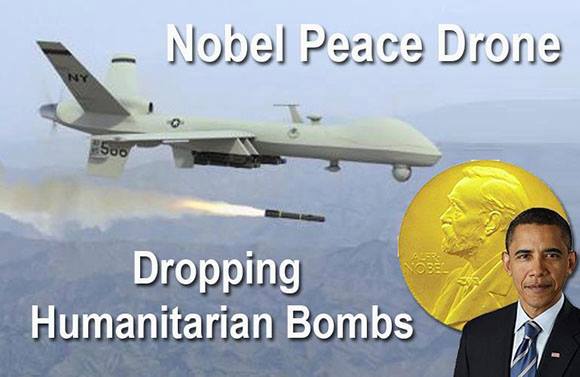
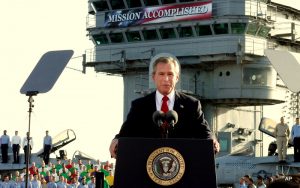
I am speaking about that day, almost exactly fours ago, when then-US President Barack Obama – a Nobel Peace Prize winner, mind you – was just about to give the signal to launch an all-out military assault against the sovereign state of Syria. The reason? Washington said the Assad government had used chemical weapons to attack a Damascus suburb just weeks earlier. Never mind that Assad would have  known full well that to carry out such an attack would mean political and national suicide, and that the use of chemical weapons would only have assisted the cause of the anti-government rebels, who were praying for American airstrikes on Assad. But I digress.
When the British House of Commons refused to give then-PM David Cameron permission to join the Americans in their latest war game, Obama suddenly got very cold feet. In a bid to save face, then Secretary of State John Kerry reportedly ‘misspoke’ when he said the US would call off an attack on Syria if Assad agreed to surrender all of his chemical weapons within a week.
Enter Russian diplomacy at its finest hour. What followed was a marathon series of meetings in Geneva, Switzerland between Foreign Ministers John Kerry and Sergey Lavrov that eventually resulted in an agreement that not only deterred the threat of war, but removed chemical weapons from Syria.
Lavrov said the agreement removed any potential use of force against Syria, while underscoring that deviations from the plan, including attacks on UN inspectors, would be brought to the UN Security Council, which would decide on further action.
At the United Nations, Ban Ki-moon, then Secretary General, gave a glowing account of the US-Russia-Syria agreement, which also made Syria a signatory to the Organization for the Prohibition of Chemical Weapons (OPCW).
This premier example of diplomacy on the part of Vladimir Putin and his administration shows that war can always be diverted so long as their exists the will between men and nations. Sadly, the United States has gone on to demonstrate an insatiable determination to interfere – illegally – in the internal affairs of Syria, going so far as to even launch brazen attacks on the Syrian military (perhaps most disturbingly, the US media actually praised Donald Trump following such attacks). Although Russia has also become involved militarily in Syria, it has only done so at the expressed invitation of Damascus to help President Assad rid his country of terrorist forces that the US-led Western forces failed to destroy.
In summary, given Vladimir Putin’s extraordinary efforts to bring about the conditions of peace both in Ukraine and in Syria, it would seem that he is the most fitting candidate to win a Nobel Peace Prize. Of course, the Western capitals would never see things that way, which only highlights the great schism that now separates Russia from the West, which has lost its ability to judge right from wrong, truth from deception.
The Nobel Peace Prize is presented by the King of Norway on December 10 each year.
Originally published on 2017-10-19
Author: Robert Bridge
Source: Strategic Culture Foundation
Origins of images: Facebook, Twitter, Wikimedia, Wikipedia, Flickr, Google, Imageinjection, Public Domain & Pinterest.
Read our Disclaimer/Legal Statement!
Donate to Support Us
We would like to ask you to consider a small donation to help our team keep working. We accept no advertising and rely only on you, our readers, to keep us digging the truth on history, global politics and international relations.
[wpedon id=”4696″ align=”left”]