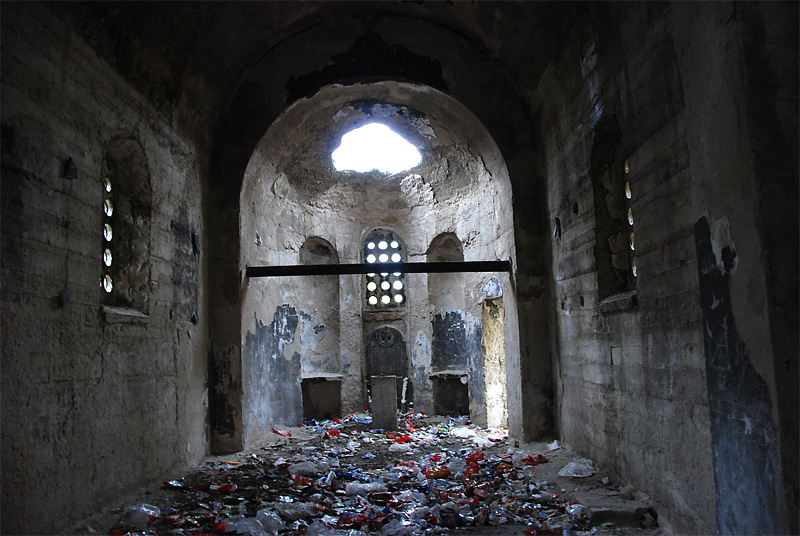
Destruction of Serbian Christian Orthodox heritage in Kosovo by Muslim Albanians

Views: 2373
Recent episodes of ethnic intolerance against the Serbian minority exacerbate conditions in a country which is increasingly an “Islamic island” in the heart of Europe.
Kosovo is once again the centre of attention in Orthodox Church circles. In addition to new instances of intolerance against the ethnic Serbian minority, recent actions taken by Russian Patriarch Kirill and Archimandrite Tikhon (Shevkunov), abbot of the Moscow monastery of Sretensky Stavropegic, have drawn attention.
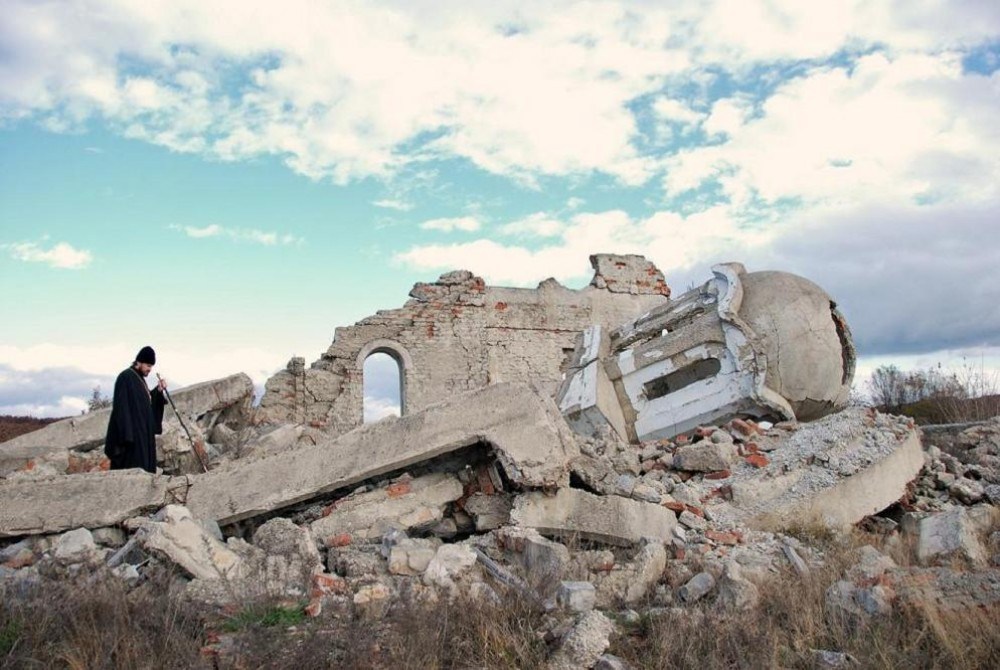
Violence against Orthodox Serbs is growing: unsurprisingly, some of them speak openly of cultural genocide. Approximately one hundred and fifteen churches were destroyed or severely damaged during the Albanian attacks, and twenty cemeteries were severely desecrated. Places of worship that had been razed to the ground included some buildings dating from the 12th to the 14th centuries. Meanwhile, on 9 March, the European Union spoke of the need to protect the cultural heritage represented by the Serbian monasteries in Kosovo, which are included on the list of the five most important sacred places of the Mediterranean along with Jerusalem, the Vatican, Mecca, and Mount Athos. EU President Jose Barroso explained that this statement makes it necessary to adopt an international document establishing a special level of protection of Orthodox sites in Kosovo.
Up to now, the Republic of Kosovo has proclaimed itself to be multi-ethnic, but the reality is quite different. In fact, the region appears more and more like an Islamic island in the heart of Europe, where many Arab states have been directing their ambitions. Saudi Arabia, for example, has established the Saudi Committee for Kosovo, in addition to the Arabic language centre al-Haramain. Bahrain founded the company El-Asla in Kosovo, as well as numerous centres for “Muslim youth” and educational institutions focused on the Koran; and Sudan has done the same with the World Association of Muslim Youth – not to mention the fifty mosques financed by the United Arab Emirates. Aggravating the reconciliation process (as reported by the New York Times) is a Paris-based investigative commission, which, at the beginning of January, after two years of work, completed a report to the European Council which stated that Kosovo President Hashim Thaci was head of the Drenica terrorist group, specializing in the trafficking of heroin and organs taken from Serbian prisoners executed during the 1999 conflict.
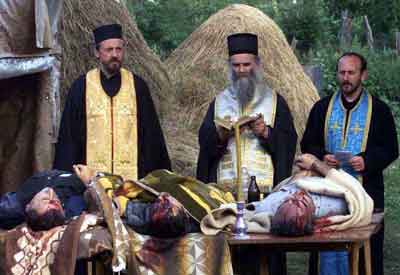
The most recent tensions to emerge demonstrate that the situation in Kosovo is far from peaceful. On 3 March, the 19th-century church of Saint George in the village of Stanišor was subjected to yet another theft from the parish coffers; the criminals damaged an icon while destroying the protective glass, and broke one of the crosses kept in the church. The desecration and theft at Stanišor took place after violent protests by Albanian Muslims against the 6 January arrival of Serbian President Boris Tadic at the historical monastery of Decani for Christmas celebrations; an enormous number of policemen had been deployed around the site. Moreover, in recent times, the possibility that the three Serbian-majority areas in the north of Kosovo will be politically reunited with Serbia seems to be gaining ground, given the extreme institutional disorder they have been heading into. The European Union actually spoke out against secession, proclaiming the cultural importance and necessary defence of Orthodox places of worship in the region and saying it was interested in “preserving Serbian identity in Kosovo.” In fact, the EU is one of the few states that recognize the national sovereignty of the region and, along with Great Britain and the United States, has supported the establishment of the Kosovan State by supporting and defending Albanians persecuted by Milosevic.
But a possible indicator of discontent with Serbia itself by the Orthodox minority in Kosovo must be noted – many Kosovan Serbs feel Belgrade’s position is overly soft: to avoid causing international controversy, it does not support Serbian secession. Last November, in fact, 21,000 Kosovan Serbs requested Russian citizenship from the Duma. This is where recent statements from Church authorities in Moscow enter the field of play. On 29 January, a Serbian newspaper published a lengthy interview with the Patriarch of Moscow and Russia – Kirill. “Serbs living in Kosovo and Metohija,” said Kirill, “have become hostages of an enormous political game.” “The Russian Federation,” said the patriarch, “has given considerable support to the Serbs of Kosovo: because of a decision by Russian authorities, UNESCO has allocated funds for the recovery of places of worship.” Kirill also spoke of the role of the Holy See: “The Pope of Rome, Benedict XVI, as he is known, has taken the correct position on the case. The Vatican has not yet decided to recognize Kosovo as an independent state. The Pope has always supported the need to defend the rights of the Serbian minority” (Source: Vaticaninsider).
According to the data from the Serbian Orthodox Church, nearly 150 churches and monasteries have been destroyed for the last five years in Kosovo.
We would like to ask you to consider a small donation to help our team keep working. We accept no advertising and rely only on you, our readers, to keep us digging the truth on history, global politics and international relations.
I travel frequently to the countries which once made up the now defunct Socialist Federal Republic of Yugoslavia, satisfying a passion of mine that stems back to my childhood days. For me, the Balkans’ history, its people and its cultures are both enigmatic and magnetic, as they have been, too, for countless others, of many nationalities, over centuries gone by. Accounting for the enchantment of the Balkans, its captivating allure, is a challenge to put into writing. Because no words can truly embellish what is one of the most absorbing parts of the world. To understand and feel what it is ...
IntroductionBelow are TENC's October 1999 interviews with three Serbian women from the Kosovo town of Orahovac. They recount how, prior to the June 1999 NATO-UN takeover of Kosovo, they believed NATO's promise that it would institute multi-ethnic harmony. They discovered too late that for NATO multi-ethnic meant rule by the Kosovo Liberation Army (KLA).In September, TENC had published its first interview with an eye-witness to the NATO-UN Kosovo takeover: Cedomir Prlincevic, President of the Jewish community and Chief Archivist in Pristina, capital of Kosovo.Mr. Prlincevic described how he and the rest of the small Jewish community were driven from their ...
The interest of European scholars, primarily German and Austrian, in research on Albanian ethnical origin, rose gradually during the second half of the 19th century.[1] Their interest in Albanian and Balkan studies came later in comparison with the study of other ethnic groups and regions in Europe. The reason was that Euro-centrism of the late 19th century and the early 20th century defined the Balkans and its nations as the territory and peoples of obscure identity. In contrast to the “real Europe”, the Balkans was seen as the “Orient”, not part of Europe at all, and above all, it was ...
“Now that the global circumstances have changed, and when the United States and NATO are losing their influence, and while the powers that are in favor of preserving Kosovo and Metohija – such as Russia and China – are strengthening, we are nevertheless pursuing a policy of complete surrender.”The aim of the internal dialogue conducted by the Serbian President Aleksandar Vucic, should be to distribute responsibilities and to be the cover for the final surrender of Kosovo and Metohija.The government constantly assures us that it will never recognize Kosovo as an independent State, but here we must point out the ...
Edward S. Herman died on November 11, 2017, at the age of 92. Fortunately, it was a peaceful death for a supremely peaceful man. In all he did, Ed Herman was a tireless champion of peace.Ed Herman could be considered the godfather of antiwar media critique, both because of his own contributions and because of the many writers he encouraged to pursue that work. Thanks to his logical mind and sense of justice, he sharply grasped the crucial role and diverse techniques of media propaganda in promoting war. He immediately saw through lies, including those so insidious that few dare ...
The unilateral independence of Kosovo was declared in February 2008.Kosovo is a member of The Bretton Woods institutions. Kosovo seeks membership of NATO, the EU and now Interpol.The Interpol Executive Committee has decided that the application of Kosovo for membership in Interpol would be put on the agenda of the General Assembly to be held in Beijing, China, from 26 to 29 September 2017, Government of Kosovo stated Monday.In a bitter irony, Kosovo president Hashim Thaci is still on the list of Interpol in relation to his links to organized crimes and the drug trade. Last February president Thaci requested the secretary-general ...
An eerily familiar sense of regional unease has crept over all the former republics of Yugoslavia.Slovenian Prime Minister Miro Cerar echoed the Balkan zeitgeist when he warned at a press conference this week that:“If the migrant crisis is not adequately controlled as agreed at the summit in Brussels there is a possibility of conflict situations between the states of the Western Balkans. It is possible that a small conflict would initiate a wider reaction because of the very difficult recent history (of the region), which is why it is very important that we solve this crisis together as no country can solve this problem by itself.”It seems like everybody knows that ...
The following text was written in the immediate wake of the 1999 NATO bombings of Yugoslavia and the invasion of Kosovo by NATO troops.It is now well established that the war on Yugoslavia was waged on a fabricated humanitarian pretext and that extensive war crimes were committed by NATO and the US.In retrospect, the war on Yugoslavia was a “dress rehearsal” for subsequent US-NATO sponsored humanitarian wars including Afghanistan (2001), Iraq (2003), Libya (2011), Syria (2011), Ukraine (2014).Who are the war criminals? In a bitter irony, the so-called International Criminal Tribunal for the former Yugoslavia (ICTY) in The Hague is controlled ...
Maybe it is the best agreement ever signed… Maybe by applying it, Greece and the Former Yugoslav Republic of Macedonia, will enter an era of great friendship and enormous prosperity…Maybe… The only small detail is the majority of the deputies of the Greek Parliament do not know the agreement is so good. Their parties declared they are opposing the agreement and they won’t ratify it. Even the An.Ell. party, which is the junior partner of SYRIZA in the government, does not know how profitable is this agreement. They said they would vote No to the agreement when introduced in the ...
On December 19, 2005, US Secretary of State Condoleezza Rice announced the appointment of Ambassador Frank G. Wisner as the Special Representative of the US Secretary of State to the Kosovo Status Talks.Who is Frank G. Wisner, Jr.?If his name sounds familiar that is because he is the son of Frank Gardiner Wisner, Sr., the CIA agent most responsible for the recruitment of Nazis by the US government after World War II. A former member of the Office of Strategic Services (OSS), the World War II precursor to the CIA, Frank G. Wisner, Sr., was one of the most infamous ...
For several decades, the Turkish government and its propagandists have been announcing that the state documents, particularly the Ottoman archives, are fully open and available to any researcher from around the world.What Turkish officials and their supporters do not say is that many documents of the Ottoman archives have been removed, destroyed, sold, or otherwise disposed of. In addition, some of the most sensitive archives are still closed to outsiders.Last month, Turkish journalist Uzay Bulut wrote a revealing article, “Turkey Uncensored: A History of Censorship and Bans,” published on the Philos Project website, regarding the status of Turkish archives and ...
The Battle and the Nation The consciousness of a distinct Serbian ethnic identity had been present among the Serbs since the times of the founder of an independent medieval Serbian state, veliki župan (Grand Duke) Stefan Nemanja (1166−1196).[1] These consciousnesses were further strengthened by both when Serbia became a kingdom in 1217 and with the establishment of an autocephalous archbishopric in 1219 as a national independent (Christian Orthodox) church.[2] However, the Battle of Kosovo (on the morning of June 28th, 1389)[3] which the Serbs de facto lost to the Ottoman Turks and the death of a Serbian ruler, Prince Lazar Hrebeljanović ...
IntroductionThis article deals with the question of political and human/minority rights in the region of Kosovo & Metohija twenty years after the „2004 March Pogrom“ and twenty-five years after NATO's military aggression on Serbia and Montenegro and occupation of the region. An importance of this research topic is in fact that for the first time in European history, a terrorist-style and mafia-ruled (quasi)independent state was created by a full diplomatic, political, economic, military, and financial sponsorship by the West under the umbrella of the NATO's and the EU's protective administration. The precedence of Kosovo's self-proclaimed independence in February 2008 already ...
There have been at least two countries in Europe in recent history that undertook ‘anti-terrorist’ military operations against ‘separatists’, but got two very different reactions from the Western elite.The government of European country A launches what it calls an‘anti-terrorist’ military operation against ‘separatists’ in one part of the country. We see pictures on Western television of people’s homes being shelled and lots of people fleeing. The US and UK and other NATO powers fiercely condemn the actions of the government of country A and accuse it of carrying out ‘genocide’ and ’ethnic cleansing’ and say that there is an urgent ...
Some of those currently advocating bombing Syria turn for justification to their old faithful friend “humanitarian intervention”, one of the earliest examples of which was the 1999 US and NATO bombing campaign to stop ethnic cleansing and drive Serbian forces from Kosovo. However, a collective amnesia appears to have afflicted countless intelligent, well-meaning people, who are convinced that the US/NATO bombing took place after the mass forced deportation of ethnic Albanians from Kosovo was well underway; which is to say that the bombing was launched to stop this “ethnic cleansing”. In actuality, the systematic forced deportations of large numbers of people from Kosovo ...
PrefaceKosovo is today one of the most disputed territories in Europe and a real Balkan powder keg which can explode again at any time. It is a province within the Republic of Serbia, recognized as such by both Serbia’s constitution and the Resolution 1244 by the Security Council of the United Nations (the UNSC Resolution 1244, June 10th, 1999). However, Kosovo parliament with a clear Albanian majority proclaimed the independence of Kosovo (without a referendum) in February 2008 that was recognized by the majority of the Western countries followed by their puppet clients all over the world (in reality, today ...
The Kosovo Question recently once again became an important issue of global politics and international relations for two reasons: 1) The Albanian “government” of the “Republic of Kosovo” announced to officially proclaim the existence of the Kosovo Army (that is a violation of the 1244 UN Resolution in 1999), and 2) The “president” of the “Republic of Kosovo”, a war criminal Hashim Tachi, participated on November 11th (2018) in Paris to the world leaders’ celebration of a centenary anniversary of the end of the WWI (the signed armistice with Germany) as the official representative of an “independent” Kosovo. He was ...
The role of the United States in the breakup of the Socialist Federal Republic of Yugoslavia is often overlooked by people who are critical of Washington’s intervention in the internal affairs of independent, sovereign countries.For it was in the former Yugoslavia that the precedent was set for future American intervention in Afghanistan, Iraq, Libya and Syria. Croatia, Bosnia, and Kosovo provided the launch pad for the West’s concept of humanitarian intervention, which, in reality, is a pretext for safeguarding and enhancing US global hegemony.However, intervention by Washington in the Balkans in the 1990s served a more immediate objective for the ...
The main church of the Serbian Orthodox Patriarchate in Kosovo in PećThe series of long-scale Christian national movements in the Balkans, triggered off by 1804 Serbian revolution, decided more than in the earlier centuries, the fate of Serbs and made ethnic Albanians (about 70% of whom were Muslims) the main guardians of Turkish order in the European provinces of Ottoman Empire. At a time when the Eastern question was again being raised, particularly in the final quarter of the 19th and the first decade of the 20th century, Islamic Albanians were the chief instrument of Turkey’s policy in crushing the ...
“If the Nuremberg Laws were applied, then every post-war American President would have been hanged” Noam ChomskyEurasiaHenry Kissinger, one of the fundamental figures in creating and maintaining the US policy of global hegemony during the Cold War,[1] was quite clear and precise in his overviewing the issue of the American geopolitical position, national goals, and foreign policy. His remarks can be summarized in the following points:The US is an island off the shores of the large landmass of Eurasia.The resources and population of Eurasia far exceed the resources and population of the US.Any domination by any single state from Eurasia (either ...