
Views: 2560
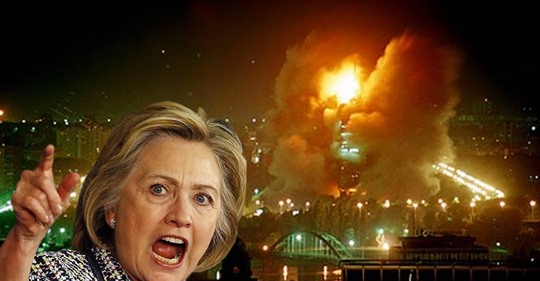
Can we face it in this election season? America is a weapons factory, the White House a war room, and the president the manager of the neoliberal conspiracy to recolonize the planet. It exports war and mass poverty. On the economic front, usurious neoliberalism; on the military front, illegal wars. These are the trenches of America’s battle for world domination in the 21st century.
If not stopped, it will be a short century.
Since 1945, America’s Manifest Destiny, posing as the Free World’s Crusade against the Red Menace, has claimed 20 to 30 million lives worldwide and bombed one-third of the earth’s people. In the 19thcentury, America exterminated another kind of “red menace,” writing and shredding treaties, stealing lands, massacring, and herding Native populations into concentration camps (“Indian reservations”), in the name of civilizing the “savages.” By 1890, with the massacre of Lakota at Wounded Knee, the frontier land grab—internal imperialism– was over. There was a world to conquer, and America trained its exceptionally covetous eye on Cuba and the Philippines.
American external imperialism was born.
 Then, something utterly dreadful happened in 1917—a successful social revolution in Russia, the second major after the French in 1789, to try to redistribute the wealth of the few to the advantage of the many. The rulers of the world—US, Britain, France and sundry acolytes—put aside their differences and united to stem the awful threat of popular democracy rising and spreading. They invaded Russia, fomented a civil war, funding and arming the counter-revolutionary forces, failed, and tried again in 1939. But Hitler’s war of extermination on the USSR ended in a spectacular victory for Moscow.
For a while, after 1945, the US had to behave as a civilized country, formally. It claimed that the USSR had a barbarian, all-conquering ideology, rooted in terror, disappearances, murder, and torture. By contrast, the US was the shining city on the hill, the beacon of hope for a “the free world.” Its shrine was the United Nations; its holy writ was international law; its first principle was the inviolability of the sovereignty of nations.
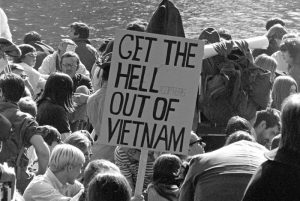
All this was rubbish, of course. It was an apartheid society. It nuked Japan not once but twice, deliberately selecting civilian targets. It shielded from justice top Nazi criminals to absorb them as partners in intelligence structures. It conducted virtual “show trials” against dissidents during the hysteria of the McCarthy congressional hearings, seeding the country with a harvest of fear. It waged a genocidal war on Vietnam to prevent independence and unification. It assassinated African independence leaders and bestowed fascist dictators on Latin America. It softly occupied Western Europe, tied it to itself through military “cooperation” in NATO, and it waged psy-op war on its opposition parties. Behind the civilized façade was a ruthless effort to take out the Soviet Union and crush self-determination in the colonial world.
By hook and by crook, the Soviet Union dissolved in 1991, and America went berserk with triumphalism. Now, at last, the conquest of the world, interrupted in 1917, could resume. The global frontier reopened and America’s identity would be regenerated through violence, which had delivered the American West to the European invaders in the 19th century. The benign mask dropped. Behind it came a rider on a pale horse. According to the ideologically exulted, history had ended, ideologies had died, and the messianic mission of the US to become the steward of God’s property on earth could be fulfilled.
The “civilizing mission” was afoot.
A cabal of neo-conservative policy wonks first sketched what I call the Great Leap Backward into lawlessness as a revival of the myth of the frontier in the 1990s. “The Plan for a New American Century” (PNAC) envisaged the 21st century as a unilateralist drive to entrench American values globally—what the PNAC ideologues call “freedom and democracy”—through preemptive wars and regime change. This frenzied delirium of US military domination turned into official foreign policy with the Bush Doctrine after 9/11, but it was the Clinton administration’s Doctrine of Humanitarian Warfare before 9/11, that shut the door on the prohibition of aggressive wars by the UN Charter, remaking the map of the world into a borderless American hunting reserve by removing the principle of sovereignty and replacing it with “right to protect” (R2P)—or humanitarian pretext for use of force.
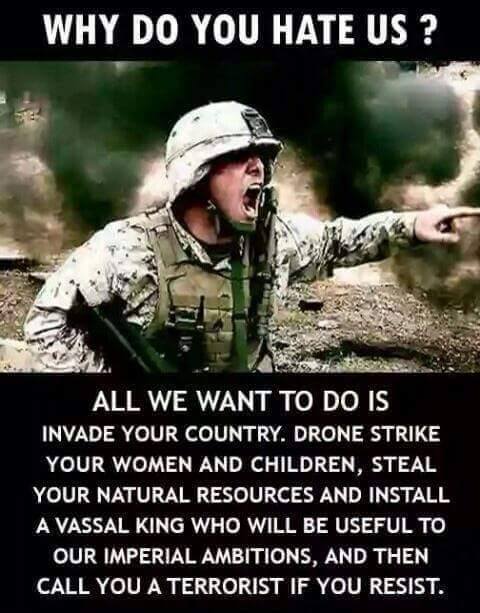 Clinton’s doctrine was an act of supreme, even witty, exploitation of liberal principles and commitment to policies of human rights. It was how the liberal left was induced to embrace war and imperialism as the means of defending human rights. The Carnegie Endowment cooked up the doctrine in 1992. Its report, “Changing Our Ways: America’s Role in the New World,” urged “a new principle of international relations: the destruction or displacement of groups of people within states can justify international intervention.” The report recommended that the US use NATO as the enforcer. It must be noted, too, that the principle of “humanitarian war” has no authority in international law. The Charter of the United Nations sought to outlaw war by making it impossible for unilateral interventions in the business of sovereign states by self-appointed guardians of human rights. The reason behind the proscription was not heartlessness but the consciousness that WW II had been the result of serial violations of sovereignty by Germany, Italy, and Japan—by militarist imperialism, in other words.
The bell tolled for the UN and the old order in the 1999 Kosovo War. The bi-partisan effort to dismantle the architecture of the post war’s legal order played out there. With the Kosovo War, the Clinton administration launched the first humanitarian war and set the precedent for waging war without Security Council clearance of many to follow by both Republican and Democrat administrations. The Clintonites who used NATO to bomb Serbia to protect ethnic Albanians in Kosovo from non-existing Serbian genocide may or may not have appreciated the fact that Hitler had used the pretext of R2P—humanitarian intervention—to launch WW II by claiming to protect German minorities in Poland, but they certainly knew that the monopoly on use of force rested with the UN’s Security Council. This monopoly was secured after WW II precisely to prevent unilateral attacks on sovereign states through bogus claims of altruistic interventions, such as Hitler had championed and pursued. Ironically for critics of the Soviet leader, it was Stalin who insisted at the Yalta Conference that if the USSR were to join the United Nations a veto in the Security Council was a must to insure that any war would be a multilateral consensus and a multilateral action.
As the Clintonites understood, the postwar legal authority for peacekeeping and the prevention of war entrusted to the UN Security Council posed a colossal obstacle to the pursuit of American world domination. For the vision of PNAC and the Carnegie Endowment to become reality, the United Nations, the guarantor of sovereignty, had to go. In the run-up to the Kosovo War, the Clintonites fatally and deliberately destabilized the United Nations, substituting the uncooperative UN Secretary General Boutros Boutros-Ghali with the subservient NATO shill, Kofi Annan. Annan obligingly opined that in the matter of war and peace, UN Security Council resolutions were not the only way to skin a country– especially one chosen by the US for remaking, partitioning, or regime changing, a cynic might add.
So now we live in a dangerous world. Once again, since the 1930s, the world is being stalked by an expansionist power answering to no law but its own unilateral, humanitarian vigilantism. The Kosovo precedent has spun out of control. Libya smolders in the ashes of NATO bombs, dropped to prevent “genocide”; Syria fights for survival under attack by genocidal terrorist groups, armed, trained and funded by genocide preventers grouped in the NATO alliance and the Gulf partners; Afghanistan languishes in a permanent state of war, present ten thousand American troops which bomb hospitals to promote human rights; in Iraq, the humanitarians are back, after twenty-five years of humanitarian failure. And in Ukraine, Nazi patriots are promoting American democratic and humanitarian values by shelling Donbass daily. I hesitate to mention Africa, where humanitarian Special Forces are watering the fields where terrorists sprout like mushrooms after rain—in Mali, Nigeria, Somalia, Kenya.
Then there is Yemen, perhaps the most callous, vicious, and careless humanitarian crime of a litany of crimes against humanity in the Middle East. The US government has recently admitted deploying troops to Yemen. The Pentagon claims that the deployment will assist Saudi Arabia (“the Arab coalition”) to fight al-Qaeda in Arabian Peninsula. Can a sentient being meet such a grotesque claim with anything but infernal laughter? Help Saudi Arabia to fight its own creature? Are we stupid yet?
 $4 trillion dollars later, spent on the War-on-Terror/Humanitarian-R2P, the pattern of military destabilization of sovereign states proceeds apace, one recalcitrant, independent country at a time in the Middle East and North Africa. For the rest of the world, the surrender of sovereignty is sought by means of economic globalization through trade pacts—TTP, TTIP, etc.—that virtually abolish the constitution of states, including our own. Spearheading the economic effort to control the periphery and the entire world is the so-called “Washington Consensus.”
It hugs the market-fundamentalist idea that global neoliberalism and core finance capital’s economic control of the planet by means of the International Monetary Fund (IMF) and the World Trade Organization (WTO) is the option to poverty and social chaos.
Neither military nor economic war on the sovereignty of nations has yielded anything close to a stable, prosperous, and peaceful world. It had delivered death, destruction, debt, market crises, tidal waves of refugees and displaced persons, and concentrated masses of wealth in a few but powerful hands. What the poet W.H. Auden called “the international wrong,” which he named “imperialism” in his poem “September 1939,” is the crisis that stares out of the mirror of the past into our faces, and it bodes war, war, and more war, for that is where imperialism drives.
In this scenario, no potential presidential candidate—even establishment-party dissenter—who does not call for both the end of the bi-partisan “Washington Consensus” and the end of bipartisan militarist aggression can reverse the totality of the “international wrong” or stem the domestic descent into social brutalization. If none calls this foreign policy debacle “imperialism,” elections will be a sleepwalker’s exercise. Nothing will change. Except, almost certainly, for the worse.

Originally published on 2016-05-13
About the author: Luciana Bohne is co-founder of Film Criticism, a journal of cinema studies, and teaches at Edinboro University in Pennsylvania. She can be reached at: lbohne@edinboro.edu
Source: CounterPunch
Origins of images: Facebook, Twitter, Wikimedia, Wikipedia, Flickr, Google, Imageinjection, Public Domain & Pinterest.
Read our Disclaimer/Legal Statement!
Donate to Support Us
We would like to ask you to consider a small donation to help our team keep working. We accept no advertising and rely only on you, our readers, to keep us digging the truth on history, global politics and international relations.
[wpedon id=”4696″ align=”left”]