
The History of Yugoslavia: Srebrenica and the Ratko Mladić Verdict
Bosnia itself is a divided creature barely on political life support. Rather than promoting reconciliation, one of the proclaimed aims of the ICTY’s judgments, the opposite is true. Ed Vuilliamy, who spent much time covering instances of camp brutality and atrocity during the Yugoslav wars insists that Mladić may have lost his case, but won, at least in a part of Bosnia [...]
While Zimbabwe was changing under various inexorable forces of power, the more sterile surrounds of The Hague and the International Criminal Tribunal for the Former Yugoslavia offered the scene for a conviction.
The “Serb Warlord” or the “Butcher of Bosnia”, as he has been termed in various circles, had finally received a verdict few were doubting. One of the doubters was, naturally, the man himself, Ratko Mladić, who accused the judicial officers of incurable mendacity.
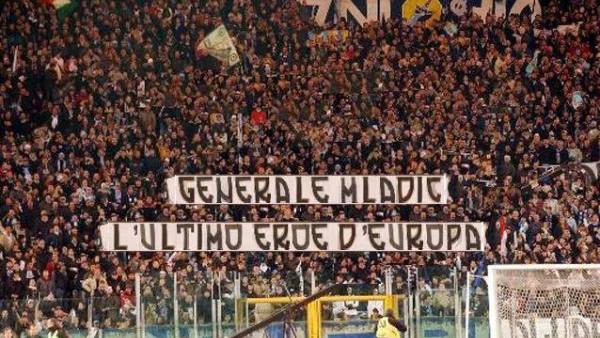
Of the 11 charges levelled at Ratko Mladić, he was acquitted of one – genocide in Bosnian municipalities outside Srebrenica. Others covered genocide, war crimes and crimes against humanity which took place while he was Chief Commander of the Army of Republika Srpska between 1992 and 1995 in Bosnia and Herzegovina.
Judicial deliberations are rarely the stuff of fine history. Verdicts are, by their very nature, judgmental, giving false finality and coherence to muddy narratives. In the Balkans, muddy narratives have met and parted; others have been forged in the blood of memories constructed and confected.
Bodies have been heaped over these generational accounts – the wars, the murders, the ecstatic patriotism and genocidal enthusiasm, and in time, the descendants pursue the task, less of living for the future than inhabiting the unchanging past.
The politicians have been attempting to make do with the verdict. The Serbian president, Aleksandar Vučić, is mindful that anything less than solemn acceptance of the ruling is bound to be met with stares of disbelief throughout Europe. This is hardly the view within the Bosnian Serb entity of Republika Srpska.
“I would like to call on everyone [in the region] to start looking into the future and not to drown in the tears of the past… we need to look to the future… so we finally have a stable country.”
Stability, that cherished dream, an ambition long frustrated in the region, and ever precarious.
Bosnia itself is a divided creature barely on political life support. Rather than promoting reconciliation, one of the proclaimed aims of the ICTY’s judgments, the opposite is true. Ed Vuilliamy, who spent much time covering instances of camp brutality and atrocity during the Yugoslav wars insists that Mladić may have lost his case, but won, at least in a part of Bosnia.
His consternation is the customary one that insists that Serbia and Serbian policies should have been brought to the fore as culprit and villain, rather than atomised through individual verdicts. Again, such are the limits of law and its false didactic worth.
Accordingly,
“for all the back-slapping by human rights organisations and lawyers, there is a dark cloud under which the majority of those who survived Mladić’s hurricane of violence etch out their lives, and that shrouds the memory of those killed, or are still ‘missing’.”[1]
Niđara Ahmetašević enlarges that black cloud, accusing Europeans, notably in the west, for hypocrisy and willful blindness.
“By not reacting on time to stop mass crimes being committed, Western leaders sent a message to everybody in the world that it is OK to kill other people, and to promote dangerous, ultranationalist ideas.”[2]
With little surprise, survivors of the conflict find little in terms of satisfactory proportion. Sead Numanović of the Sarajevo daily, Dnevni Avaz, felt “some kind of emptiness.” Ajša Umirović went so far as to see such a verdict as futile.
“Even if he lives 1,000 times and is sentenced 1,000 times to life in prison, justice would still not be served.”[3] That’s what losing 42 relatives to massacre does.
As with all matters to do with trauma, memory lingers as poisoned, selective and singular. It banishes other accounts and plights, becoming self-referential, a sort of infirmary consciousness. These sufferings and tendencies are not confined to the Bosnian Muslims.
When Yugoslavia fractured in the spirit of hypernationalism, it split the groups making up the entity. Jungle retributions, territorial seizures, expulsions, took place as a matter of historical account keeping. Elephantine memories were triggered and enacted upon.
Mladić insisted on purging the old remnants of the Ottoman Empire, a historic mission he dedicated himself to with conspicuous enthusiasm. He was fortunate to be quick off the mark in the aftermath of the independence referendum held by Muslims and Croats. Others, given the same opportunity, would have exploited it, given the men and material put at his disposal.
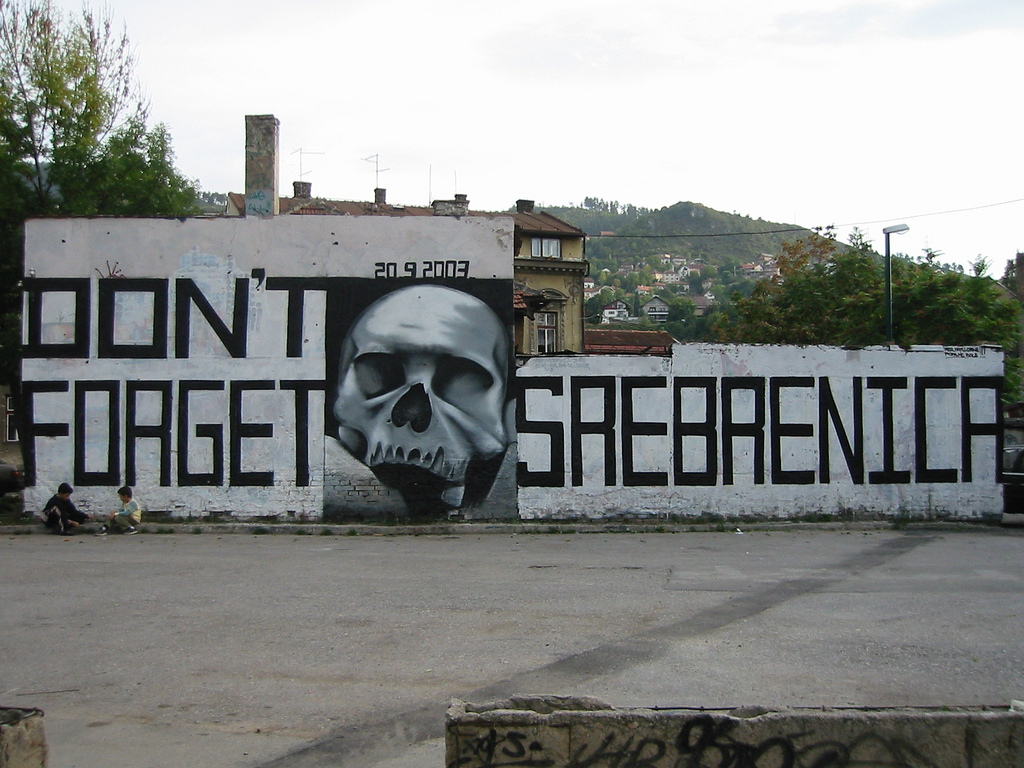
That the main fighting, slaughter and ethnic cleansing took place in Bosnia on, it is important to note, all sides, is a point judgments of law can only imperfectly consider. What rendered the killings in Srebrenica so fundamental was the scale and avid dedication of the butchers – some 8,000 Muslim men and boys dispatched – and the question of abandonment by the international community.
Mladić himself furnished a sense of how the law remains, in some instances, the least capable of resolving what are, essentially, social and political problems that linger with vicious obstinacy. “I am here,” he told a pre-trial hearing in 2011, “defending my country and people, not Ratko Mladić.” He is far from the only one to persist holding this view, nor will he be the last.
About the author: Dr. Binoy Kampmark was a Commonwealth Scholar at Selwyn College, Cambridge and lectures at RMIT University, Melbourne. Email: bkampmark@gmail.com
We would like to ask you to consider a small donation to help our team keep working. We accept no advertising and rely only on you, our readers, to keep us digging the truth on history, global politics and international relations.
In examining the future, we must look to the past.As we watch the media today, we are spoon fed more and more propaganda and fear of the unknown, that we should be afraid of the unknown and have full faith that our government is keeping us safe from the unknown. But by looking at media today, those of us who are old enough will be reminded of the era of Cold War news articles, hysteria of how the Russians would invade and how we should duck and cover under tables in our kitchens for the ensuing nuclear war.Under this mass ...
"We are a peaceful nation," claimed Republican presidential candidate Ben Carson in an interview with Katie Couric late last year.Carson voiced a view that is held by many in our society. Like most people around the world, we naturally like to think of ourselves as a peace loving country.Unfortunately, the record does not bear this out. It, in fact, indicates something quite opposite: The United States has had a long and bloody history of aggression and war making.A survey of history shows that America has either been involved in armed conflict or conducted some form of military operations during 223 ...
The reason Hillary Clinton was crushed in the electoral college during this election is because she lost Wisconsin, Michigan, and Pennsylvania . The reason behind the unprecedented loss can be summed up in two sentences. We will not forget. We will not forgive.These three states are home to the Serbian-American community. For most of them, their traditionally Democratic ticket vote turning Republican was a clear repudiation of Hillary Clinton's role in the Balkan genocide."An American Serb generally doesn't vote FOR anyone, but AGAINST a Biden, a Clinton, a McCain, against whoever Madeleine Albright supports, against whoever bombed Serbia, recognized Kosovo... Wait, was Dubya a ...
Kosovo is Clinton Country: a 10-foot-high statue of Bill overlooks “Bill Clinton Boulevard” in the capital city of Pristina. Hillary is also memorialized in what has become the crime capital of Europe: right off the street named for her husband is a store named “Hillary,” featuring women’s clothing modeled after the putative Democratic party nominee for President. Pantsuits figure prominently. As Vice puts it: “While former President Bill Clinton has had a boulevard named after him, it’s without a doubt that his wife’s the real star out here.” Why is that?As Gail Sheehy pointed out in her biography of Hillary, ...
In Kukavica village near Rogatica (nowadays Bosnia and Herzegovina), today was marked 27 years since crimes against Serbian civilians committed by Bosnian Muslims, members of the so-called Army of Bosnia and Herzegovina on August 27, 1992.In an attack on a column of Serbian civilians, involving about 1,000 elderly people, women and children on tractors and passenger vehicles, Bosnian Muslim extremists killed 26 and injured 80 Serbs.Rogatica Mayor Milorad Jagodic called this a monstrous crime as among the victims are a child of 11 and 82 years old man.“This was a column of innocent people who were looking for refuge and ...
Many innocent civilians were killed in American military interventions around the world – from Vietnam and Serbia to Iran and Afghanistan, because of the alleged “errors” or “collateral damage” – without consequences for civil and military leadership. In addition to political, military and every other power, Americans secured itself with legal mechanisms.Twenty-two civilians, wounded and doctors, among them three children, were killed in the American bombing of a hospital in the Afghan city of Kunduz. Americans acknowledged the error and apologized. The President of the United States expressed his condolences, the military leadership announced three independent investigations. “Doctors without borders” ...
Serbia today is a member-State of United Nations (U.N.), after the Socialist Federal Republic of Yugoslavia was split into several nations during the early 1990’s when war broke out between Serbian General Milosevic and neighboring nations. After partition, Serbia is still the most powerful “state” of the former Yugoslavia.“Kosovo”, the term used for the territory of southern Serbia, is de-jure recognised as a “state” by over 110+ “states”, but is not a “state” itself, as per the Montevideo Convention on the Rights and Duties of States (1933), and is not a “state” at the U.N. where 2/3rd positive vote is ...
Video documentary movie on the first ISIS in Europe in the Islamic Caliphate of Bosnia-Herzegovina, 1992-1995.This movie is made by the British SKY NEWS after the civil war in Bosnia-Herzegovina.Similar documentary movies on the ISIS Bosnia-Herzegovina made by the Bosnian Serbs were never shown to the Western audience.The duration of the movie is 8 min. and 17 sec.In the movie are presented and future Al-Qaeda Mujahedeen holy fighters.From the movie is clear what was the real nature of the civil war in Bosnia-Herzegovina in the 1990s.All copyrights reserved by the SKY NEWS.Origins of images: Facebook, Twitter, Wikimedia, Wikipedia, Flickr, Google, ...
In 2015 Bill Gates gave a talk titled “We’re Not Ready for the Next Epidemic” in which, in a remarkable exhibition of understated and uncannily accurate prescience, he reflected on the outbreak of Ebola virus and forecast worse to come. This amazing man told us that “As awful as this epidemic has been, the next one could be much worse. The world is simply not prepared to deal with a disease — an especially virulent flu, for example — that infects large numbers of people very quickly. Of all the things that could kill 10 million people or more, by ...
The name of the modern land-locked country north of Greece, with its capital at Skopje, has returned to the news. It is officially called FYROM, but embedded in that name is “Macedonia” which is a reflection of the longstanding attempt to take over the modern Greek province of Macedonia as reflected in maps used in many places, including schools.It is clear that this naming implies territorial ambitions which have long been understood (http://macedonia-evidence.org/documentation.html). If that threat to the stability of the southern Balkans is to be stopped permanently, I suggest that the following must happen:1) the country should be named ...
The brutal destruction of ex-Yugoslav Federal state-system was in a form of the civil wars or, in another word, a chain of violent conflicts from 1991 to 1995. From the spring of 1992, the SFRY already did not exist as a state and, therefore, the conflicts were turned into the Wars of the Yugoslav Succession.The Yugoslav civil wars can be comprised of the three closely related armed conflicts:1) War in Slovenia in 1991.2) War in Croatia from 1991 to 1995.3) War in Bosnia-Herzegovina from 1992 to 1995.[i]In the year of 1990, the real potential for the armed conflict became quite ...
Origins of images: Facebook, Twitter, Wikimedia, Wikipedia, Flickr, Google, Imageinjection, Public Domain & Pinterest.Read our Disclaimer/Legal Statement!Donate to Support UsWe would like to ask you to consider a small donation to help our team keep working. We accept no advertising and rely only on you, our readers, to keep us digging the truth on history, global politics and international relations.[wpedon id="4696" align="left"]SaveSave
TRANSCRIPT:Harold Channer (HC): Good evening and welcome very, very much to the conversation. We’re pleased to welcome to the program, Sean Gervasi. He is a professor and academic who is concerned with economics and particularly with what is relevant to what we want to talk about tonight. He has just returned from a long stay in Belgrade, Yugoslavia, and knows something of that situation. Sean Gervasi, welcome very, very much to the conversation, and back to New York. Before we go into some detail about what in the world is going on in terms of the Balkans, from your experience ...
The world is at a dangerous crossroads. The United States and its allies have launched a military adventure which threatens the future of humanity. Major military and covert intelligence operations are being undertaken simultaneously in the Middle East, Eastern Europe, sub-Saharan Africa, Central Asia and the Far East. The US-NATO military agenda combines both major theater operations as well as covert actions geared towards destabilizing sovereign states.America’s hegemonic project is to destabilize and destroy countries through acts of war, covert operations in support of terrorist organizations, regime change and economic warfare. The latter includes the imposition of deadly macro-economic reforms ...
Whether the information originated from hacked e-mails and computer files or Freedom of Information Act requests, the revelations about the political and business activities of Hillary and Bill Clinton and their cronies hearken back to another era, the Great Depression of the 1930s and the crime spree of another unscrupulous couple: bank robbery desperados Bonnie and Clyde.Aside from Hillary Clinton running her own lucrative «off-the-books» foreign policy via her private email servers and e-mail chain of associates and flunkies, it was her and her husband’s joint Clinton Foundation and Teneo Capital operations that scream out the word «corruption.» The servers ...
It is now September 2016, just two months before the Presidential elections, and both political camps have already managed to disgust a great number of the US voters, by offering almost no comprehensive political or economic program, by offering… close to nothing!While Donald Trump is lashing out at the ‘enemy within’, during his dark moments that are increasingly resembling an advanced stage of delirium tremens (complete with a mad chase after white mice and promises to cleanse society from some imaginary and filthy rapists and social benefits guzzlers, that are constantly pouring from the south), Ms. Clinton is saddling her ...
“Russia suspected of election scheme. U.S. probes plan to sow voter distrust.”That’s the Washington Post page-one lead headline of September 6. Think about it. The election that Americans are suffering through, cringing in embarrassment, making them think of moving abroad, renouncing their citizenship; an election causing the Founding Fathers to throw up as they turn in their graves … this is because the Russian Devils are sowing voter distrust! Who knew?But of course, that’s the way Commies are – Oh wait, I forgot, they’re no longer Commies. So what are they? Ah yes, they still have that awful old hangup so worthy ...
Imagine – the European Union were to collapse tomorrow – or any day soon for that matter. Europeans would dance in the streets. The EU has become a sheer pothole of fear and terror: Economic sanctions – punishment, mounting militarization, the abolition of civil rights for most Europeans. A group of unelected technocrats, representing 28 countries, many of them unfit to serve in their own countries’ political system, but connected well enough to get a plum job in Brussels – are deciding the future of Europe. In small groups and often in secret chambers they decide the future of Europe.Take ...
A Serb from Bosnia, General Mladic, protected Muslims civilians and gave them buses, food and water for to leave fighting zones (as you can see). There was no genocide over Muslim population in Srebrenica like main stream media want you to believe – there was no genocide over Bosniaks because all Bosnian Muslims victims were jihad fighters who had been killed during fight (in war). Even the so called „tribunal“ in The Hague for ex-Yugoslavia admitted that there was no genocide!Now, you can see here how djihadistes have treated the Serbian population – the content is very hard, not for ...
Noel Malcolm – Kosovo – A Short HistoryA history written with an attempt to support Albanian territorial claims in the BalkansHistorical Institute of the Serbian Academy ofSciences and ArtBelgrade, 2000Response to the Book of Noel MalcolmKosovo – A Short HistoryMilorad Ekmecic, AcademicianSerbian Academy of Sciences and ArtsBelgradeHistoriography By the Garb OnlyReading, from necessity, the books by some Western, particularly American scholars, dealing with the past of the Serbs and the Balkans, I recall the impressions that are in my memory, for some reason, related to the socially committed painter Georg Grosz. Today the flashes of those recollections of my college ...