
When the second of the twentieth century’s two great wars was over, Korea was free of outside domination. Japan had been defeated and awaited its fate. Meanwhile, the Korean people began to take back their country [...]
For decades, consumers of the US media have been fed a series of repeated lies concerning the status of northern Korea. Tales of mass starvation and brutal torture are told over and over, occasionally updated but essentially the same as those told when Washington first realized it could not defeat the national forces headquartered in Pyongyang.
Naturally, these stories become more frequent and considerably more dramatic during those times the US military heightens tensions in the region. While some of these “reports” are probably based in fact, the more revealing aspect of their being told is the lack of context involved in their telling.
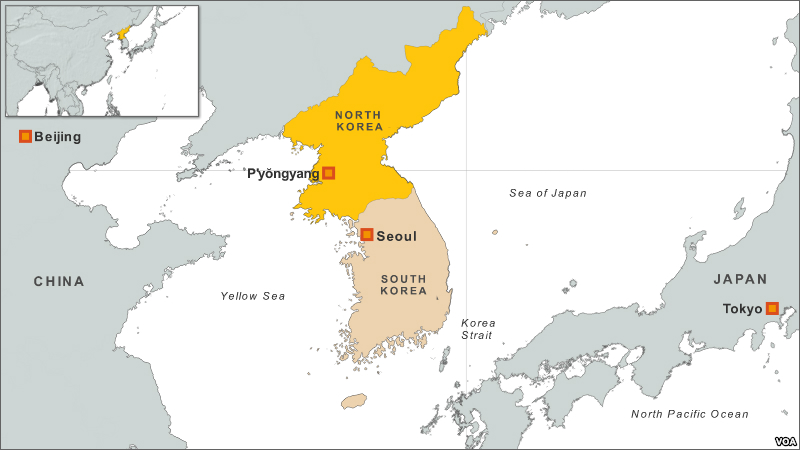
In other words, most US residents have very little knowledge of Korean history and culture and, if asked, would most likely be unable to identify where Seoul or Pyongyang are on the map. This serves the interests of the powers that be in DC quite nicely. If the citizens of an aggressor nation (which the United States certainly has been in Korea) are ignorant of the land and people their rulers wish to attack, then those citizens are likely to believe most anything they are told by those in power intent on making war.
This seems especially the case when it comes to Korea—now Washington’s longest surviving enemy. Indeed, most all US political figures liberal and conservative, military members and media folks buy into the commonly held portrayal of northern Korea as a land ruled by a brutal dictatorship imposed originally from the outside that starves many of its people and enslaves the rest. Even many of those who have expressed doubts about similar claims made by war hawks in regards to other nations (Iraq, Iran) believe such stories when it comes to Korea.
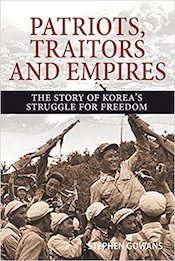
This situation exists because it strengthens the US argument for the continued occupation of the Korean peninsula and its maintenance of the state of not-quite-war. As author Stephen Gowans makes clear in his recent book Patriots, Traitors and Empires: The Story of Korea’s Struggle for Freedom, the history of Korea is quite different than that most US residents have been told.
By removing the US-imposed imaginary line of demarcation along the 38thparallel that divides Korea into two entities, Gowans is able to provide a history closer to the Korean history understood by many Koreans. It is a history of resistance to outside intervention; a resistance forged in blood from fighting Japanese and US invaders. It is also a history that emphasizes the self-reliance and independence of a people.
Gowans begins his text with a discussion of Korean history prior to World War Two. His summary highlights the independence of the Korean people and the series of invasions and occupations they repelled over the centuries. He discusses the Japanese occupation in detail, providing a summary of the manner in which the Japanese stole Korean lands, enslaved its people and forced thousands of its women into prostitution to serve Japanese troops.
Concurrent to this history, Gowans explains the world situation at the time—a situation that saw the great imperial powers Britain, Russia, France and the US heading towards war while the lesser powers (esp. Germany and Japan) saw war as the only way they might obtain more resources and markets. Weaving these stories together provides the reader with an alternative understanding of how and why Korea’s history took the path it did.
When the second of the twentieth century’s two great wars was over, Korea was free of outside domination. Japan had been defeated and awaited its fate. Meanwhile, the Korean people began to take back their country. The resistance forces who had helped overthrow the Japanese occupation forces began to set up local and regional governing councils. This action was supported by the Soviet Union but was strongly opposed by the United States, which had already decided it was going to make Korea its outpost in eastern Asia.
To this end, policy makers in Washington and generals in the Pentagon worked together to devise a way to destroy the popular government being constructed in Korea. In a now-familiar scenario, right-wing figures from Korea were given positions of power in the governing structure put in place by Washington, leftist and democratic organizations and individuals were imprisoned, tortured and killed by Washington’s clients, and fake elections were held. Many of the officials in this government had also served the Japanese occupation regime—a fact that did nothing to make the US-imposed authorities any more popular. So, the resistance continued.
The military leadership of Kim Il-sung combined with the popularity of the resistance’s political platform proved a serious opponent to US plans. Ultimately, it was the strength and depth of the resistance that led to the intensification of hostilities, a division of the nation and the conflict the west calls the Korean War.
Patriots, Traitors and Empires: The Story of Korea’s Struggle for Freedom is a crucial text for those seeking to understand how many Koreans see their world. It is fiercely anti-imperialist in its understanding of history and pulls no punches when discussing the destructive nature of the United States’ role in modern Korean history.
Some readers may find Gowans’ indictment too strong and even unfair. If one finds themselves among those readers, I suggest they forge ahead anyhow. His history is not just valid, it is probably closer to the truth than the history most Americans have been fed the past seventy years. Indeed, it could even clarify Korea’s uncertain future—a future hopefully of peace and prosperity.
Origins of images: Facebook, Twitter, Wikimedia, Wikipedia, Flickr, Google, Imageinjection, Public Domain & Pinterest.
Read our Disclaimer/Legal Statement!
Donate to Support Us
We would like to ask you to consider a small donation to help our team keep working. We accept no advertising and rely only on you, our readers, to keep us digging the truth on history, global politics, and international relations.
At the dawn of the so-called Arab Spring in 2011, diplomats, politicians, and intellectuals debated a fresh question: what role can Islamist political parties play in a fledgling democracy?It wasn’t an esoteric or academic debating point. In the tumult that followed the collapse of dictatorial governments in Libya, Egypt, and Tunisia, groups of radical Islamists had organized themselves into political parties and attempting to use the ballot box to get them to where the cartridge box could never take them—control of national governments. This was a new strategy on the part of Islamists. Ever since their emergence in the 1940s and their ...
Brzezinski’s death at 89 years of age has generated a load of propaganda and disinformation, all of which serves one interest group or another or the myths that people find satisfying. I am not an expert on Brzezinski, and this is not an apology for him. He was a Cold Warrior, as essentially was everyone in Washington during the Soviet era.For 12 years Brzezinski was my colleague at the Center for Strategic and International Studies, where I occupied the William E. Simon Chair in Political Economy. When I was elected to that chair, CSIS was a part of Georgetown University. ...
There are more questions than answers to the Crimean ‘question’.After more than two decades belonging to an independent Ukraine, the Crimean peninsula has become part of Russia, which has thereby gained an extra 27,000 km2 of territory and over two million new citizens. Ukraine and the West see this unprecedented event as annexation and a sign of the Kremlin’s neo-imperial ambitions. To countries not directly involved in the Ukrainian crisis, it is a dangerous violation of the Eurasian status quo that could cause widespread destabilisation in the area, while in Moscow’s eyes it is ‘the return of Crimea and Sevastopol ...
America is coming to the rescue of Al Qaeda under a humanitarian mandate. The unspoken agenda is to undermine the Liberation of Aleppo. The pretext and justification for these actions are based on America’s “responsibility to protect” (R2P) the “moderates” in Aleppo from Syrian and Russian attacks and bombing raids.On October 3, the US State Department announced the suspension of bilateral relations with Russia pertaining to Syria (see document below), in response to which, France’s foreign Minister Jean Marc Ayrault was called upon to intermediate at the diplomatic level. Pointing his finger at Russia’s Foreign Minister Sergei Lavrov, Jean Marc Ayrault casually accused Moscow ...
The 1775−1783 American War of IndependenceThe American Revolution or the American War of Independence against British colonial lordship started in 1775 when the Thirteen Colonies began to fight for their political independence from London. In fact, fighting began at Lexington and Concord, Massachusetts, in April 1775. In June the colonies’ Continental Congress created a Continental Army under General George Washington. However, despite several defeats, and the loss of New York (former New Amsterdam) in September 1776, Washington hung on, and at Christmas 1776, with the successful crossing of the Delaware, won several battles. The campaign culminated in Saratoga in 1777. ...
The great deception of “a real democracy” in the Ukraine, which the New York Times insisted on 31 March 2019, shows little sign of relenting. For five years, Western populations have been consistently misled through skewed and slanted reporting, assuring the readership that what is unfolding in Kiev is a “fledgling democracy”, as a Washington Post editorial further outlined on 6 April 2019.In reality it was a United States-funded coup d’état. During the months prior to Viktor Yanukovych‘s February 2014 ousting, elite American organizations bankrolled the “anti-government protests”, revealed as much in December 2013 by Victoria Nuland, then a high ...
On March 11, 2006, President Slobodan Milosevic died in a NATO prison. No one has been held accountable for his death. In the 12 years since the end of his lonely struggle to defend himself and his country against the false charges invented by the NATO powers, the only country to demand a public inquiry into the circumstances of his death came from Russia when Foreign Minister, Serge Lavrov, stated that Russia did not accept the Hague tribunal’s denial of responsibility and demanded that an impartial and international investigation be conducted. Instead, The NATO tribunal made its own investigation, known ...
A good tradition of the British and the West European colonialismOrigins of images: Facebook, Twitter, Wikimedia, Wikipedia, Flickr, Google, Imageinjection, Public Domain & Pinterest.Join the debate on our Twitter feed: @OvsishteRead our Disclaimer/Legal Statement!Donate to Support UsWe would like to ask you to consider a small donation to help our team keep working. We accept no advertising and rely only on you, our readers, to keep us digging the truth on history, global politics and international relations.[wpedon id="4696" align="left"]Belgian Congo
Armenians and others around the world this month are marking the centennial of the genocide that left hundreds of thousands of Armenians dead early in the last century. The date April 24 is typically picked as the centennial day since it was on that day in 1915 that Turkish authorities rounded up Armenian intellectuals and leaders in Constantinople and murdered them.It was the first step in a much broader slaughter. The Armenian centennial is getting the attention it deserves from sources as diverse as Pope Francis and Kim Kardashian. The Pope courageously used the word “genocide” in a mass this ...
This year’s Nobel Peace Prize was awarded to the International Campaign to Abolish Nuclear Weapons (ICAN) for its successful effort to establish a global treaty that bans nuclear weapons. Peace, disarmament, and civil society groups around the world celebrated the announcement and congratulated ICAN for its landmark treaty accomplishment.In a statement, ICAN called the prize “a tribute to the tireless efforts of many millions of campaigners and concerned citizens worldwide who, ever since the dawn of the atomic age, have loudly protested nuclear weapons, insisting that they can serve no legitimate purpose and must be forever banished from the face ...
When most people think of Sweden, they think of IKEA furniture, depressing murder mysteries and a foreign policy of strict neutrality.Yet 400 years ago, Sweden was a major military power. Indeed, it was even an empire, a fact that must make today's Swedish leftists cringe.Under young King Gustavus Adolphus, a brilliant and innovative military commander, Sweden in the early 1600s became a sort of Nordic Israel (which must also make Swedish leftists cringe). Sweden was a poor, thinly populated nation that couldn't match the resources of larger rivals such as France and Russia.So, Gustavus Adolphus had to devise a more flexible, mobile ...
In the sea of misinformation sloshing around the Western media during the Yugoslav civil wars, Serbs fared the worst. As a rule, they were accused even of atrocities that never happened, or were committed by others. The real truth would usually emerge several years later, from the mouths of international officials who at the time held important and responsible positions.American press and electronic media have “discovered” that the Serbs weren’t the “bad guys” to the extent the American reporters from the Balkans made them out to be. Even though Jack Kelly, a correspondent of USA Today, resigned years ago because ...
The Supreme Court’s acceptance of a case about the allocation of voting districts will have consequences far beyond the millions of U.S. taxpayers its ruling may deprive of representation. A decision that only counts voters, rather than all persons, will undermine the very foundation of the Republic.The American Revolution was fought over “taxation without representation,” and those who wrote the Constitution carefully apportioned taxation and representation among the states “according to their respective Numbers . . . of free Persons . . . and . . . three-fifths of all other Persons.” The authors clearly equated We, the People with ...
The mainstream media (MSM) has declared war on alternative media websites labeling them “Fake News” ever since Hillary Clinton lost the election to Donald Trump. The New York Times editorial board expressed their frustration in an article calling for the censorship of alternative and social media Facebook and the Digital Virus Called Fake News’ which claimed both social media platforms (Facebook and Google) has not been aggressive enough in blocking fake news sites:Most of the fake news stories are produced by scammers looking to make a quick buck. The vast majority of them take far-right positions. But a big part ...
At the beginning of March 2017, it will be exactly six years since the beginning of the conflict in Syria. Some journalists even make unfavorable forecasts wondering about the very possibility of reconciliation. Complicated by the foreign intervention on the part of Israel war in Lebanon, for example, had been for about 15 years. But even a six-year term it is too long.That is why we may hope that the meeting in Astana scheduled on January 23 will eventually lead to a positive result. And then there will be an occasion to consolidate the success of the negotiations in Geneva ...
The NATO war on Yugoslavia which culminated in the 78-days bombing of historic cities and infrastructures – as usual under atrocity propaganda and pretexts – is on its 20th anniversary.The grim anniversary is admirably recognized by Science for Peace members to remember and to prevent who-knows-what NATO war crime next as “humanitarian intervention”.From Yugoslavia to Iraq to Libya, where does it stop? Observe that Trump is now seeking a NATO alliance with Bolsonaro Brazil (see image below) -to perhaps back the bombing of Venezuela, or any other society, including the Brazilian people, not bowing to US-led global corporate colonization. Socialist ...
While it is certainly true that the Jewish people have relatively deep roots in the land that is today known as Palestine and Israel, this area has been a crossroads since the origins of the human species. In fact the oldest known Homo sapiens fossil outside of Africa was recently found in modern-day Israel, dated at approximately 180,000 years old. Neanderthal bones have also been found in the Levant.In historical times the Palestine region or parts of it have been controlled by numerous different peoples and regional powers, including the Canaanites, Amorites, Ancient Egyptians, Israelites, Moabites, Ammonites, Philistines, Assyrians, Babylonians, ...
It is hardly a coincidence that the Declaration of Independence, Adam Smith’s Wealth of Nations, and Johann Friedrich Blumenbach’s On the Natural Variety of Mankind were all published within a year of one another, for each supports a necessary aspect of a larger, integrated project. Not only was the rationale for seizing political power (provided by the Declaration) supported by Smith’s popular text (which justified rule by the wealthy business class). Because this wealth and power was contingent on slavery, and territories seized by conquest, Blumenbach’s theory that the “Caucasian race” (a designation he coined, by the way) was the supreme race was ...
In the midst of turmoil and controversy, it is useful to review the most important preceding events and analyze how did this happen. Following are some key events and historical facts leading to the current crisis in Ukraine.Fact 1. In February 2014, a coup overthrew the Ukrainian government which came to power in an election certified by the OSCE (Organization for Security and Cooperation). The president, Viktor Yanukovich, was forced to flee for his life.This situation was presciently analyzed at the time by Seumas Milne who wrote, “The attempt to lever Kiev into the western camp by ousting an elected ...
Protests against racism sparked by the police killing of George Floyd continue to sweep the globe, including in Belgium, where activists have demanded the removal of statues of King Leopold II, and an acknowledgement of the horrors he inflicted on the Democratic Republic of Congo.Pointing to a statue of King Leopold II, an activist told Reuters,“We won’t accept this until the government understands that this belongs in a museum, not in public space. Because it is a shame.”Leopold’s descendant King Philippe expressed regret in a letter amid the protests, and as Congo celebrated 60 years of independence on June 30.“Our ...
The magazine is covering the research gaps uncovered by global Western hoax mainstream media platforms and academic teaching & research institutions.
This is an alternative information & academic research digest platform with the purpose to offer an alternative “another side of the truth”.
The magazine is independent, private, and free of any influence by any institution, organization, government, or pressure group. URL: www.global-politics.eu