
Poland and Lithuania are Escalating Events in Belarus as they did with Maidan
This suggests that Warsaw’s main concern is to see the liberalization of the Belarusian economy to follow the same path as the other post-Soviet countries in Eastern Europe [...]
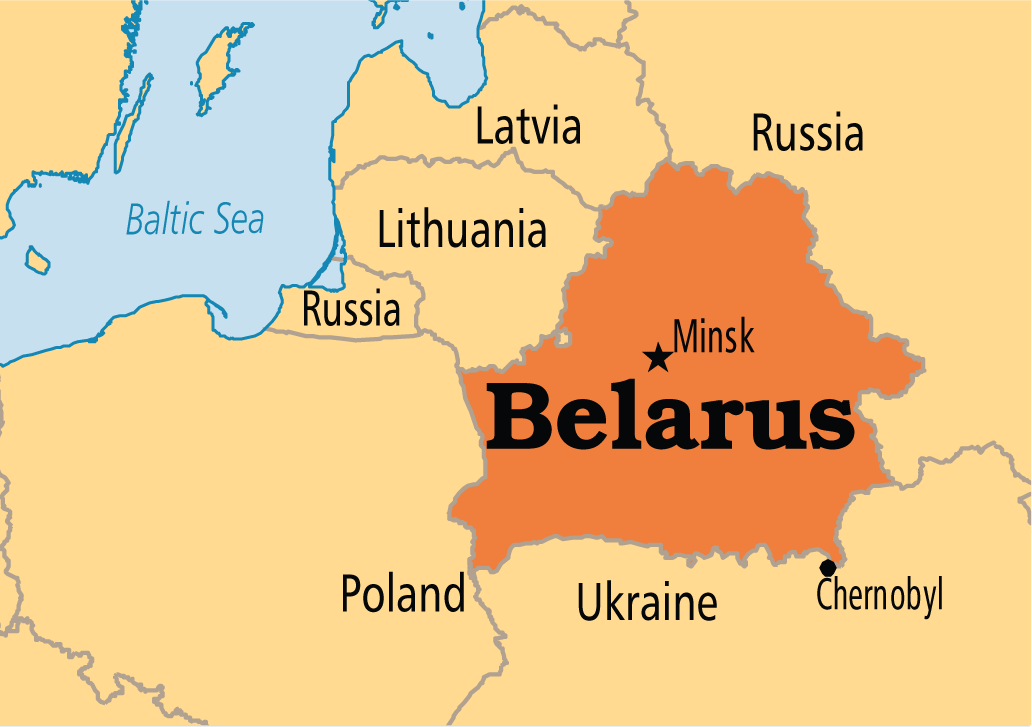
On August 9 [2020], presidential elections were held in Belarus with five candidates bidding to be head of state. According to the Central Election Commission, the incumbent president, Alexander Lukashenko, won in the first round with over 80% of the votes. Mass protests began in Belarus right after the announcement of the preliminary election results. People went to the streets, expressing their dissatisfaction with the results of the elections that they believe were unfair. Mass protests turned into riots and there were clashes between rioters and the police. Many people were detained and injured, and two protestors died.
Representatives of the European Union and the U.S. stated that they did not consider the presidential elections fair and appealed to the Belarusian authorities to have a second election. As both the EU and U.S. condemned Lukashenko’s re-election, it was therefore unsurprising that the deputy head of the Polish Ministry of Foreign Affairs, Paweł Jabłoński, stated that Poland did not want the EU to limit itself to only introducing sanctions against Belarus, as he claims it will push Belarus deeper into the sphere of Russian influence.
Tomorrow’s EU summit to discuss the situation in Belarus, and possibly pass sanctions, resulted from Warsaw’s call for prompt action, and above all, Prime Minister Mateusz Morawiecki who personally exerted pressure immediately after the Belarusian elections.
“We do not want the EU’s reaction to be limited only to presenting an idea for sanctions and adopting a joint statement, which is obviously needed, but to give Belarusians something more,” said Paweł Jabłoński in an interview with PAP. “The point is that we should present a real offer to resolve this conflict in a stable and lasting manner, and this is only possible if we, as the EU, offer Belarus a real perspective of cooperation if a solution based on dialogue is reached.”
Jałoński also pointed out that EU member states should jointly adopt a common position on the events in Belarus.
“We will want to send a signal that if Belarus begins the process of reforms leading to a system in which citizens decide on the direction of changes, the EU is ready for real cooperation with Belarus – primarily economic,” said Jabłoński, adding that “Belarusians should be able to choose their own development path and have a real choice here – our role is to propose this choice.”
This suggests that Warsaw’s main concern is to see the liberalization of the Belarusian economy to follow the same path as the other post-Soviet countries in Eastern Europe. The World Bank estimates that 75% of industrial output comes from state-owned companies, with the state sector employing about half of the Belarusian workforce. Because of this, unemployment in Belarus was at 4.6% in 2019, significantly lower than neighboring Ukraine (8.8%), Latvia (6.52%) and Lithuania (6.35%), with only Poland having a lower figure at 3.47%. Belarus is also capable of consistent GDP growth without having to rely on remittances like its neighboring countries which are also experiencing population decline due to immigration.
Effectively, what Lukashenko has done is protected the country from neo-liberal policies that spread throughout Eastern Europe after the Soviet Union collapsed in 1991, which resulted in many of the industries being shut down or privatized, impoverishing much of the population. Because of this action, Lukashenko earned the nom de guerre of “the last dictator of Europe” and Belarus the title of “mini-Soviet Union.”
Although Lukashenko has a complicated relationship with Moscow, one that can be cold at times, but generally speaking, Belarus, which gets its etymology from “White Rus(sia)”, has positive relations with its larger neighbor. Lukashenko, who at times panders towards the West, has amicable relations with Syria, Venezuela and other states that are targeted by the U.S. and Western Europe. Due to Lukashenko’s strong relations with these states and his sternness in preventing the liberalization of the economy, it is expected that when an opportunity is presented for the West, a Maidan-like event will begin in Belarus.
Although Poland is pushing for a Maidan-like event to occur, it is not the only neighbor of Belarus that wants this. A faction of the Homeland Union-Lithuanian Christian Democrats in the Seimas, the unicameral parliament of Lithuania, called for the immediate announcement of Lithuanian sanctions against the 39 most influential representatives of the “Alexander Lukashenko regime,” as they termed it.
“Lithuania must clearly, quickly and unambiguously formulate and consolidate strategic provisions for the Belarusian regime at the European Union and transatlantic level, be an icebreaker in the fight for freedom and against tyranny. Sanctions must also send a signal to other influential members of the regime that continue to support Lukashenko, will mean a stalemate and further sanctions against a wider range of the current elite,” said leader of the Seimas opposition, Gabrielius Landsbergis.
It was recently revealed that Lithuania had a key role in the Ukrainian Maidan events, and Poland’s involvements are also well noted. It is unsurprising that both countries are once again united in their demands to escalate tensions and hostilities with Belarus in their mad drive in what they perceive to be the de-Sovietizing and de-Russification of Eastern Europe. Perceiving that Russia and Belarus could be a threat to their security, both Warsaw and Vilnius have taken the opportunity to escalate the protests through rhetoric in the hope that a Maidan-like event will occur in Belarus, thereby further weakening Russian influence in Eastern Europe.
Origins of images: Facebook, Twitter, Wikimedia, Wikipedia, Flickr, Google, Imageinjection, Public Domain & Pinterest.
Read our Disclaimer/LegalStatement!
DonatetoSupportUs
We would like to ask you to consider a small donation to help our team keep working. We accept no advertising and rely only on you, our readers, to keep us digging the truth on history, global politics, and international relations.
The genocidal rule of the Khmer Rouge began forty years ago this month. Their rise to power was inseparable from US intervention.On April 17, 1975, Khmer Rouge (KR) forces stormed Phnom Penh and reestablished Cambodia as Democratic Kampuchea — a supposedly self-sufficient, entirely agrarian society. Resetting the clock to “Year Zero,” the KR forced urban dwellers to the countryside, and began to “purify” Cambodia through a genocidal purge of intellectuals and minority groups. By the time the slaughter came to an end in 1979 — after Vietnam invaded Cambodia and removed the KR from power — some 1.7 million people (21 percent ...
"The West" is the nations that are essentially controlled, basically dictated-to, by America's approximately 600 billionaires, who control the U.S. Government, by coordinatedly funding (through their news-media and political donations, and also by their members-only private conferences) the careers of cooperative politicians, and who thereby defeat the politicians who act against increasing the percentage of the nation's wealth that these few people hold, and against increasing their extractions from everybody else. (Those non-compliant politicians are derisively called "socialists" and equated with the communist Joseph Stalin instead of with the democratic socialist FDR and the leaders of the democratic socialist Scandinavian ...
With respect to Greece’s role in the Mediterranean security system, the multilateralist formula applied to the region including the Balkans as well as is the orienting principle for the Greek foreign policy since the end of the Cold War. Since 1994, the opportunities for NATO’s and EU’s initiatives were more than apparent for Athens when Greece (wrongly) understood the Euro-Atlantic community as a fundamental security player for the extending the values of security and co-operation into this structurally unbalanced region. During the Cold War, the Greek policy-makers also found (wrongly) since 1952 that the US-led NATO offered allegedly excellent opportunities ...
George Szamuely. Bombs for Peace: NATO’s Humanitarian War on Yugoslavia. Amsterdam: Amsterdam University Press, 2013 (Distributed in the U.S. and Canada by the University of Chicago Press). Paper. Pp. 611.In Bombs for Peace, George Szamuely, a senior research fellow at the Global Policy Institute at London Metropolitan University, has produced a revealing and sharply argued analysis of Western intervention in the Balkan wars of the 1990s. The primary focus of the book is on Western diplomatic and military interventions, which played a crucial role in the breakup of Yugoslavia and the plunge into conflict. Continued intervention fueled deeper conflict, as ...
Contrary to the popular belief, the bloodiest trade in history (when organs were taken away from captured and imprisoned Kosovo Serbs), did not begin in Kosovo, but in Croatia.As reported by the Serbian media in the process conducted by EULEX mission in Kosovo , ” one of the accused confessed about participating in human organ sale”.Driton Jiljta pleaded guilty to the indictment charging him with “abuse of authority and illegal medical activity.” This case is apart of larger process and the prosecution has charged seven Albanians and two foreigners for trafficking , organized crime and transplantation formulized as “illegal medical ...
When I was living in San Francisco in 1981, I met and became friends with Chun Sun-Tae, a Korean immigrant who had come to the United States as a college student in the 1960s and ran a small luggage shop in Oakland. James, as he was known, had grown up in the 1940s in the city of Kaesong in what was then the northern frontier of South Korea.One warm day in June, 1950, he went camping with a group of friends at a nearby lake. The next morning, they woke to the sounds of artillery and gunfire: Kaesong had just ...
Exclusive: U.S. mainstream media sees itself as the definer of what’s true and what’s “propaganda,” but has gotten lost in a fog of self-delusion and is now the principal purveyor of “post-truth” news, writes Nicolas J S Davies.For several months, Western officials and media outlets repeated thousands of times that there were between 250,000 and 300,000 civilians trapped under Syrian and Russian bombardment in East Aleppo. Western reports rarely mentioned the Syrian government’s estimate that there were only one-third that number of civilians in the rebel-controlled enclave – nor that its estimates were solidly based on what it had found in Homs and other ...
There has long been speculation about a Turkish good-bye to NATO.The U.S. and its military proxy organization in Europe are doing their best to further such a move:The image of Atatürk was displayed as a target during the drill at NATO’s Joint Warfare Center in Stavanger, Norway held between Nov. 8 and Nov. 17, while a NATO soldier posted defamatory words about Erdoğan on the social media.Atatürk is the founder of the secular Turkey. He was designated as "target" during a desk-top drill. NATO's Joint Warfare Center is not a low level school but an elite officer training institution led ...
Lithuania’s Foreign Minister Linas Linkevicius is no ordinary diplomat. He is more a diplomatic hitman whose ideological mission is to blow holes in European-Russian relations at every opportunity.One of his recent “jobs” was to write an op-ed for the Irish Times in which he castigated the European Union for appeasing Russian President Vladimir Putin. Linkevicius used a hoary old historical analogy comparing the EU with British leader Neville Chamberlain and his appeasement in 1938 of Nazi Germany’s Hitler.Apart from the ignorant historical waffling, the other curious thing about Linkevicius’ op-ed piece in Ireland’s so-called “paper of record” was the timing. It was ...
It is now September 2016, just two months before the Presidential elections, and both political camps have already managed to disgust a great number of the US voters, by offering almost no comprehensive political or economic program, by offering… close to nothing!While Donald Trump is lashing out at the ‘enemy within’, during his dark moments that are increasingly resembling an advanced stage of delirium tremens (complete with a mad chase after white mice and promises to cleanse society from some imaginary and filthy rapists and social benefits guzzlers, that are constantly pouring from the south), Ms. Clinton is saddling her ...
The truth about Kosovo and Metochia.This documentary film was made by the Czech Republic TV and banned in all mainstream globalist media in western countries.It will reveal to you the horrifying story of Kosovo that nobody ever wanted to tell you and debunking all hoaxes, lies, and propaganda NATO used for trigger events...In 1999 NATO bombed Serbia for 78 days and destroyed everything on its way bridges, hospitals, schools, telecommunication buildings, military bases...killing more than 2.500 and wound more than 5.000 civilians.One of the reasons why NATO bombed Serbia is to build the biggest military base in Albania, so they ...
PrefaceIt is the 30th anniversary of the first post-WWII democratic elections in Serbia and the rest of the ex-Yugoslavia.My aim in this article is to elaborate on the feature of the multi-party elections in Serbia in 1990 and to give an answer to the crucial question why did Slobodan Miloshevic with his SPS party win? After the investigation of the case we found that critical reasons for Miloshevic’s/SPS absolute electoral parliamentary and presidential victory in 1990 have been: 1) The countryside and small urban settlements voted for SPS due to the informative blockade; 2) Old population voted for SPS; 3) ...
UK's recent string of atrocious Prime Ministers have not represented a majority of UK subjects (subjects of the Queen, who is sovereign; they are not citizens of their country — a "subject" is the very opposite of "a citizen," who possesses sovereignty, there being no dictatorship, of any type, over citizens). (To call a monarch's subjects a citizen of a democracy is to lie, because wherever there is an aristocracy, there is no democracy.)The only people the UK's Government really represents are UK's titled and untitled aristocracy. The late Queen was their figurehead, and she served them — not the ...
Paris vs. DonbassOrigins of images: Facebook, Twitter, Wikimedia, Wikipedia, Flickr, Google, Imageinjection, Public Domain & Pinterest.Read our Disclaimer/Legal Statement!Donate to Support UsWe would like to ask you to consider a small donation to help our team keep working. We accept no advertising and rely only on you, our readers, to keep us digging the truth on history, global politics and international relations.[wpedon id="4696" align="left"]Save
Big Brother in the Aisles of HyVeeRepeat a lie often enough, the conventional Nazi propaganda wisdom ran, and it will become an accepted truth.This last Veterans Day weekend, I couldn’t watch a sporting event, listen to a car radio, or even go shopping at the local grocery store without hearing a Great American Lie repeated over and over.Sports announcers, radio talk-show hosts, commercials, and even a recorded voice blasted into the aisles of the HyVeee supermarket told me again and again that I owed my great American “freedom” to veterans and current enlistees of the U.S. military – in other ...
Southern Serbia’s autonomous province of Kosovo and Metochia (KosMet) has been subject to a gradual, but a permanent change of its demographic content during the time of Titoslavia (Socialist Yugoslavia, 1945−1991). Three principal factors were crucial to the drastic demographic change in this Serbian province in favor of ethnic (Muslim) Albanians and at the expense of ethnic (Christian Orthodox) Serbs and Montenegrins.Demographic explosionFirst and the most important has been the demographic explosion, due to the enormous birth rate of Albanians. In the situation when this trend on the global scale was in the opposite direction, with even African countries diminishing ...
It is true that every story about the Balkan Peninsula begins with the ancient Illyrians.[1] Historians believe that these Indo-European people were one of the largest European populations to inhabit the western portion of the Balkans from the coasts of the Ionian Sea and the Adriatic Sea to the Alps about 1000 B.C. Their eastern neighbours were also Indo-European peoples – the Thracians. The demarcation line between their settlements and their cultural and political influence was the Morava river in present-day Serbia (in Latin Margus, located in the Roman province of Moesia Superior) and the Vardar river in present-day FYR ...
Historical backgroundAfter the failure of the interwar League of Nations to prevent international crises and military conflicts of the 1930s which finally culminated in the next global war, the major Allied states (the USA, the USA, the UK, and China) agreed in Moscow in October 1943 to create a new, more functional, and improved international peace-keeping organization after the war under a new name of the United Nations Organization (the UNO). In other words, the UNO has evolved from a wining coalition of countries fighting against European Nazism and fascism in WWII. Following further negotiations at Dumbarton Oaks and Yalta, ...
The following text is the introductory chapter of Professor Tim Anderson’s forthcoming book entitled The Dirty War on Syria.Although every war makes ample use of lies and deception, the dirty war on Syria has relied on a level of mass disinformation not seen in living memory. The British-Australian journalist Philip Knightley pointed out that war propaganda typically involves ‘a depressingly predictable pattern’ of demonising the enemy leader, then demonising the enemy people through atrocity stories, real or imagined (Knightley 2001). Accordingly, a mild-mannered eye doctor called Bashar al Assad became the new evil in the world and, according to consistent ...
Stepan Bandera is considered as a national hero in Ukraine, with many Ukrainians praising him and his deeds as a fighter for Ukraine's independence and freedom before, during and after WW2. Yet his real history shows there is nothing praiseworthy about the man, or what he strove for. As a young man who was a fervent Ukrainian nationalist he joined the Organization of Ukrainian Nationalists OUN in 1929. The OUN was a ultra nationalist fascist organization that accepted violence as a political tool against foreign and domestic enemies of their cause. Bandera quickly rose in the OUN ranks and ...