
The Saudi Butchery in Yemen and the World’s Apathy
The Trump administration, which views Iran as the greatest threat to the region’s stability and has concerns over its nuclear ambitions, is probably the only power broker that can end this conflict [...]
The cold-blooded killing of the journalist Khashoggi, however gruesome, pales compared to the brutality and gross human rights violations Saudi Arabia is committing in Yemen. The Saudis are deliberately preventing food and medicine from reaching areas where children are dying from starvation or disease. Their indiscriminate bombings are killing thousands of innocent men, women, and children, leaving whole communities in ruin. The saddest part of this unfolding tragedy is that the US and other Western powers are supplying the Saudis with the weapons they need to massacre the Yemenites, who are trapped in this proxy war between Saudi Arabia and Iran (which neither can win), and the Yemenites will continue to pay with their blood.
The butchering of Khashoggi in the Saudi consulate in Istanbul is but a manifestation of how vicious and cold-blooded the Saudis can be. Western governments must remember that silencing a journalist by slicing him to pieces is not only an assault on the freedom of the press, but an assault on us all as human beings. This brings us back to the merciless war in Yemen that defies any logic.
Since 2015, the Saudis have led a coalition of mostly Arab states to fight in Yemen’s civil war, backing the ousted government against the Houthi rebels—a Shia-affiliated group with the full support of Iran. The following statistics are not mere numbers. One has to graphically imagine what is actually happening to the multitude of Yemenites to grasp the magnitude of a war that has shattered a nation to the ground.
Out of a total population of 28 million people, 22 million are in need of humanitarian aid. Nearly 5.2 million children are starving to death, and nearly one million are believed to be infected with cholera. Over 8 million people are facing famine, and 2 million are displaced and deprived of basic needs.
Anyone who has followed the nature of this proxy war and its long and short-term implications will attest that this is not a winnable war. After 3.5 years, neither the Saudis nor the Iranians have made any significant progress, and there are no indications that either could gain the upper hand any time in the foreseeable future.
Sunni Saudi Arabia is determined not to allow Iran to have any foothold in the Arabian Peninsula; that includes Yemen, which borders Saudi Arabia to the south. Shiite Iran is determined to expand its regional influence, and has seized the opportunity in the conflict between the Houthis and the recognized government to interject itself on behalf of the Houthis.
Sadly and tragically, both governments have badly miscalculated each other’s resolve, except that the Saudis, who have a higher stake in any final outcome, adopted a no-holds-barred strategy in its execution of the merciless war.
If left to their own devices, Saudi Arabia and Iran will continue to fight, as neither has reached a point of exhaustion and no outside power, including the United Nations, has been moved enough by the human disaster, which is devouring a whole country, to act. The world is still looking on with pathetic silence.
The Trump administration, which views Iran as the greatest threat to the region’s stability and has concerns over its nuclear ambitions, is probably the only power broker that can end this conflict. The human catastrophe being inflicted on Yemen may well provide the US the opportunity to change the dynamic of multiple conflicts in the region by taking a new initiative that can achieve four significant objectives:
First, it will bring to an end the calamitous war in Yemen and save the lives of millions of Yemenites, many of whom will otherwise perish if the war continues for another two or three years. The Saudis, whose reputation has been badly tainted by the gruesome murder of Khashoggi, been severely criticized by the international community, and knowing that they cannot win this war, will have little choice but to embrace the US’ initiative. Moreover, the Saudis are heavily dependent both politically and militarily on the US, which they cannot forsake at any price.
Second, Iran is fully aware of the fact that the Trump administration, regardless of the Khashoggi episode, will not abandon Saudi Arabia as long as the kingdom continues to cooperate. Iran too is not oblivious to the fact that it cannot win this costly war, and its prospect to obtain a permanent foothold in the Arabian Peninsula is very slim. It may well opt to cut its losses, especially if it believes that its cooperation may well help lift US sanctions in conjunction with a revised nuclear deal with the US.
Third, regardless of Iran’s public refusal to renegotiate the Iran deal, the US sanctions are becoming increasingly painful and the public is showing growing frustration in the way their government is addressing their economic hardship. Those in the Trump administration who are entertaining the illusion that the public outcry resulting from crippling sanctions could precipitate a regime change in Iran should also disabuse themselves of this wishful thinking. The Iranian government is there to stay, as it continues to enjoy the full support of the military and is more than capable of dealing with any public unrest by whatever ruthless means necessary.
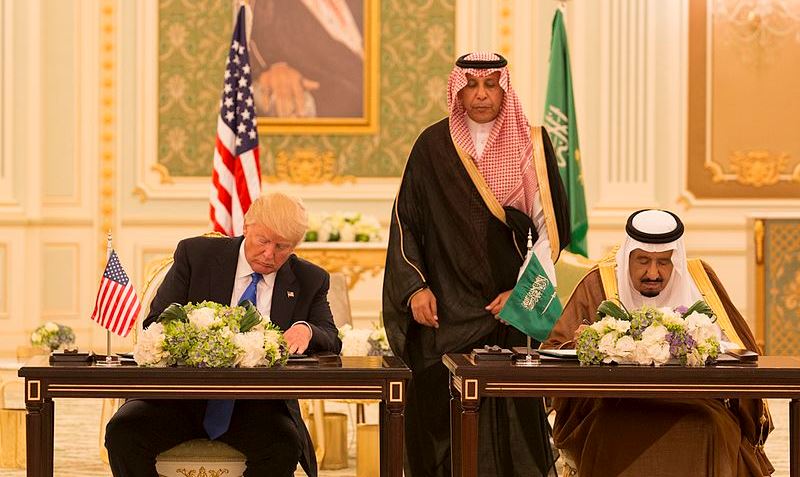
Fourth, ending the war in Yemen and mending relations with Iran will have major positive implications on the entire region. The prospect of an Israeli-Palestinian peace will dramatically improve, as the Saudis will continue to bring Israel ever close to the Arab states; it will dramatically change the nature of the Iran-Israel conflict should a modified nuclear deal be struck between the US and Tehran; and it could also accelerate the ending of the civil war in Syria.
Some may think that what I am suggesting here amounts to nothing but a pipedream. I beg to differ. Iran and Saudi Arabia are permanent fixtures in the Middle East and must sooner or later learn to share a region that has not been dominated by either country. Sunnis and Shiites have coexisted for millennia, and have no choice but to continue to coexist.
Neither Iran nor Saudi Arabia can become the region’s hegemon. They can fight in proxy wars in Syria and Yemen for a hundred years, but in the end neither can gain the upper hand—not now and perhaps not ever.
It is time for Muslims to stop killing each other. The lesson from Yemen should leave an indelible mark on the psyche of every Saudi and Iranian that the way out of their morass in Yemen is reconciliation and peaceful coexistence. Trump, who can turn on a dime, may well be in a unique position to make it happen.
Originally published on 2018-10-26
About the author: Dr. Alon Ben-Meir is a professor of international relations at the Center for Global Affairs at NYU. He teaches courses on international negotiation and Middle Eastern studies. He is a frequent contributor to Global Research. alon@alonben-meir.com Web: www.alonben-meir.com
We would like to ask you to consider a small donation to help our team keep working. We accept no advertising and rely only on you, our readers, to keep us digging the truth on history, global politics, and international relations.
Chris Deliso of Balkanalysis points out the latest travesty of the Western media: 59,000 stories on Auschwitz, three on Jasenovac. As if the third-largest death camp in Nazi-occupied Europe simply never existed. Franjo Tudjman certainly thought so, and it appears the current Croatian leadership shares his "historical" perspective.Contemporary German estimates of Serbs murdered by the Ustasha (in Jasenovac and elsewhere) ranged as high as 750,000. Wiesenthal center uses the number of 600,000. Serbian researchers have spoken of up to 700,000 victims. Modern revisionists, Croat and otherwise, talk of 30-100,000, at most. Among them is the U.S. Holocaust Memorial Museum, which ...
The 2017 Global Peace Index has declared Syria, Afghanistan, Iraq and South Sudan to be among the “least peaceful” countries in the world. Incidentally, all four have been targets of U.S.-led destabilization efforts that were used to pursue economic interests that suit the U.S.MINNEAPOLIS– The annual Global Peace Index, recently released for June 2017, has found that while the world is more peaceful now than last year, violence has increased significantly overall in the past decade.Although the situation has improved in many countries, the ten lowest-ranking nations – known as the world’s “least peaceful” countries – have shown little change ...
TerminologyA meaning of the term Great Power(s) (GP) in global politics from the beginning of the 16th century onward refers to the most power and therefore top influential states within the system of the international relations (IR). In other words, the GP are those and only those states who are modelling global politics like Portugal, Spain, Sweden, France, the United Kingdom, united Germany, the USA, the USSR, Russia or China. During the time of the Cold War (1949−1989) there were superpowers[1] as the American and the Soviet administrations refered to their own countries and even a hyperpower state – the ...
For several decades, the Turkish government and its propagandists have been announcing that the state documents, particularly the Ottoman archives, are fully open and available to any researcher from around the world.What Turkish officials and their supporters do not say is that many documents of the Ottoman archives have been removed, destroyed, sold, or otherwise disposed of. In addition, some of the most sensitive archives are still closed to outsiders.Last month, Turkish journalist Uzay Bulut wrote a revealing article, “Turkey Uncensored: A History of Censorship and Bans,” published on the Philos Project website, regarding the status of Turkish archives and ...
Universal Periodic Review reveals longstanding unwillingness to fully commit to obligations of pertinent human rights treaties.On 11 May 2015, the United States of America participated in its second Universal Periodic Review (UPR). The Universal Periodic Review is meant to be a mechanism by which all UN Member States are periodically assessed on their human rights record. The process allows countries to present a report of their efforts to promote and improve human rights within their country. It also affords the Working Group of the UPR, comprised of member countries of the Human Rights Council, the opportunity to assess the human ...
Two Kosovo Albanian Muslim muhajedeens (with the passports of Republic of Kosovo) as members of ISIL in Syria in 2015 (Official ISIL’s video material)After the 9/11, a worldwide “War on terror” begun in order to disband and neutralize Islamic terrorist networks across the globe. The main focus of the largest anti-terrorist campaign in history is focused in the Middle East area, as well as in Afghanistan.The Balkan Peninsula is the European area where this campaign has also taken place, with numerous arrests and a continuous effort into riding the fundamentalist out of the area. The question arising though, is how ...
The U.S. Government certainly leads the world in invasions and coups.In recent years, it has invaded and occupied — either by military assault or by coup, but in either case followed by installing (or trying to install) a new regime there — a number of countries, especially Afghanistan, Iraq, Libya, Syria, Ukraine, and Yemen. U.S. propaganda says that its invasions and military occupations (and it denies its coups) are to benefit the people in the invaded and militarily occupied countries, or to bring them ‘democracy’, and are not done merely to benefit the people who control the U.S. Government (which itself is not a ...
In Arabic TV interview, Labour’s ex-London mayor blames Israel for IS attacks in Europe and mass expulsion of Jews from Arab world, again claims Hitler supported ZionismFormer London mayor Ken Livingstone on Wednesday called the creation of Israel “fundamentally wrong,” and “a great catastrophe.” The existence of the Jewish state in the Middle East, he said, could ultimately lead to nuclear war.“The creation of the state of Israel was fundamentally wrong, because there had been a Palestinian community there for 2,000 years,” Livingstone told an Arabic language TV station based in London, in a clip posted and translated by the ...
Origins of images: Facebook, Twitter, Wikimedia, Wikipedia, Flickr, Google, Imageinjection, Public Domain & Pinterest.Read our Disclaimer/Legal Statement!Donate to Support UsWe would like to ask you to consider a small donation to help our team keep working. We accept no advertising and rely only on you, our readers, to keep us digging the truth on history, global politics, and international relations.[wpedon id="4696" align="left"]Save
The origins of Czechoslovakia (1918−1920)Czechoslovakia gained its independence from the Austro-Hungarian Empire in 1918. Even though the Austrian-Hungarian Empire was one political entity, the Austrian part and the Hungarian part existed under a Dual Monarchy. Each half of the empire had a large amount of control over their area independent of the other half of the country. The differing policies of the Austrians and the Hungarians had a strong impact on the state of what is now the Czech Republic and the Slovak Republic. In particular, the Czech industry was developed, while Slovakia remained a mostly agrarian area managed by ...
Kacanik, KOSOVO – A plume of smoke hangs over our table in the corner of a dark, shabby café in this rugged town in southern Kosovo. The lanky 19-year-old sitting next to me is chain-smoking through half a pack of L&Ms, his hands trembling as he recalls how he joined one of the world's most brutal militant Islamist groups.Through his neatly trimmed beard, Adem, who asks me not to use his real name for fear of arrest, says he had never even left Kosovo. But two years ago, he found himself on the perilous and far-off Turkey-Syria border -- a ...
Ema Miljkovic-Bojanic, M. A.Institute of History ofSerbian Academy of Sciences and ArtsBelgrade, 2000Malcolm’s Apology of the “Pax Ottomana” (Ab)using of historiography and historical facts for political ends is not a novelty introduced towards the end of the twentieth century. Its instances have been known throughout history, so that “practically there is not a single epoch of human history that was not controlled – by the Church, state, nation, party, leadership…” But precisely at a time when historiography seemed to be getting rid, at least partly, of the grip of “supervision” and when a critical approach was getting the upper hand, the ...
The details are supplied in an exhaustive 1,000-page biography of Jean Monnet by Éric Roussel, which was published only in France in 1996, and which seems to have been successfully suppressed. It has never been translated, and has no reviews even at Amazon. However, Ambrose Evans-Pritchard of UK's Telegraph newspaper has provided some of the core information from it. Furthermore, Richard J. Aldrich's 2003 The Hidden Hand also provides key details, such as by Aldrich's saying, on page 366, about the American Committee for a United Europe: ACUE, more than any other American front organization of the Cold War, was a ...
Origins of images: Facebook, Twitter, Wikimedia, Wikipedia, Flickr, Google, Imageinjection, Public Domain & Pinterest.Read our Disclaimer/Legal Statement!Donate to Support UsWe would like to ask you to consider a small donation to help our team keep working. We accept no advertising and rely only on you, our readers, to keep us digging the truth on history, global politics and international relations.[wpedon id="4696" align="left"]SaveSave
On October 20, 2011, Libya’s Muammar al-Gaddafi was brutally murdered by a mob of NATO-backed ‘rebels’, after first being beaten and violated in the most barbaric fashion. History leaves no doubt that not only was the Libyan leader murdered on this day but Libya itself.The regime-change crew who dominate Western governments have a long indictment sheet against their names. Since 9/11 they have wrought havoc and human misery on a grand scale in their determination to reshape and own a world that has never been theirs to own. Afghanistan, Iraq, Libya – Syria currently embroiled in a pitiless conflict for ...
In April-May of 1944, the Crimean Tatar battalions took part in battles against the Red Army in the Crimea. The units that were evacuated from the Crimea in June 1944, were compiled into the Tatar mountain-Jaeger three-battalion SS Regiment. A month later, the group became the first Tatar-mountain-Jaeger SS Brigade (2,500 troops) under the command of SS Standartenführer Fortenbah. On 31 December 1944, the unit was disbanded to become a part of the East Turkic branch of SS as the Crimea battle group: two infantry battalions and one hundred horses.German Field Marshal Erich von Manstein testified: "Most of the Crimean ...
GR Editor’s Note: This incisive article was written on April 30, 2003, by historian and political scientist Jacques Pauwels. A timely question: Why Does Hillary Want War… ? And why do people support her? * * *Wars are a terrible waste of lives and resources, and for that reason most people are in principle opposed to wars. The American President, on the other hand, seems to love war. Why? Many commentators have sought the answer in psychological factors. Some opined that George W. Bush considered it his duty to finish the job started, but for some obscure reason ...
While much is said in some American media outlets about “fake news” in the US, the smallness of the matters being discussed might come into focus when compared with Ukraine, which is of late producing rather much fake news about the Holocaust and elementary points in World War II history.As we reported back in October, Ukrainian media outlet Radio Svoboda — the Ukrainian arm of the US Government-funded arm of RFERL — posted a picture from the US Holocaust Museum. It is an image of Polish Jews being deported to a death camp. There was just one problem. Radio Svoboda claimed the picture ...
The recent declassification of over 3800 documents by the Central Intelligence Agency provides detailed proof that since 1953 the CIA operated two major programs intent on not only destabilizing Ukraine but Nazifying it with followers of the World War II Ukrainian Nazi leader Stepan Bandera.The CIA programs spanned some four decades. Starting as a paramilitary operation that provided funding and equipment for such anti-Soviet Ukrainian resistance groups as the Ukrainian Supreme Liberation Council (UHVR); its affiliates, the Organization of Ukrainian Nationalists (OUN) and Ukrainian Insurgent Army (UPA), all Nazi Banderists. The CIA also provided support to a relatively anti-Bandera faction ...
The following text is the introductory chapter of Professor Tim Anderson’s forthcoming book entitled The Dirty War on Syria.Although every war makes ample use of lies and deception, the dirty war on Syria has relied on a level of mass disinformation not seen in living memory. The British-Australian journalist Philip Knightley pointed out that war propaganda typically involves ‘a depressingly predictable pattern’ of demonising the enemy leader, then demonising the enemy people through atrocity stories, real or imagined (Knightley 2001). Accordingly, a mild-mannered eye doctor called Bashar al Assad became the new evil in the world and, according to consistent ...