
Like the destruction of the Ottoman Empire at the end of World War I, the destruction of Iraq that resulted from the 2003 U.S. invasion opened up a Pandora’s Box of potential territorial changes. Not the least of these was the possible creation of the state of Kurdistan [...]
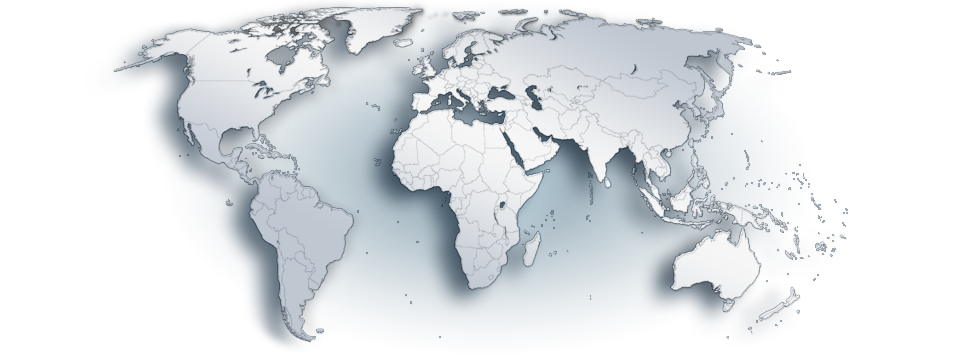
It was in 1916, in the midst of World War I, that Britain and France (pitted against the Germans, Austrians and Ottoman Turks) made their infamous Sykes-Picot agreement. In grand imperial style, they used this agreement to divide up the Middle East between them. It was a daring move, considering that the war was at a stalemate and the two allies did not know if they were going to win the struggle. Nonetheless, they went ahead with the agreement and in doing so made a number of decisions that continue to shape the region to this day.
Besides bringing traditional European imperialism forward into the twentieth century, what made Sykes-Picot infamous was the fact that it broke a significant previous promise made to the Arabs. By 1916 the Arabs had taken to the battlefield against the Turks. For their doing so, the British had promised to support the creation of a large Arab state. But this promise had always clashed with the imperial ambitions of Britain and France, and so, in the end, they secretly conspired to betray their non-Western ally. Among the eventual consequences of this betrayal, the “Arab state” was confined to what is, today, Saudi Arabia; Palestine (which originally was to be part of the Arab state) would become a “national home for the Jews”; Syria went to the French, and much of the rest of the region was given over to the British.
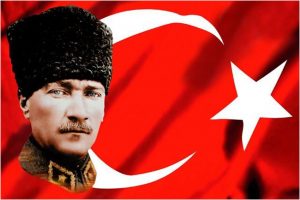
The Sykes-Picot agreement allowed for one further change. It made possible a state for the Kurds – a people who constituted the fourth largest ethnic group in the Middle East. This state, known as Kurdistan, was to be carved out of territory within the eventually defeated Ottoman Empire. This intent was publicly confirmed in the Treaty of Sevres in 1920. The Kurdish leaders, who by this time must have been aware of the Western powers’ betrayal of the Arabs, therefore should not have been surprised when, despite the treaty, the British and French betrayed them as well. The 1923 Treaty of Lucerne amended the Treaty of Sevres, and sure enough, the state of Kurdistan was omitted. The lands that would have made up the Kurdish nation instead become parts of Turkey, Syria and Iraq. Thus, the Kurds remained stateless. However, they never gave up statehood as a goal.
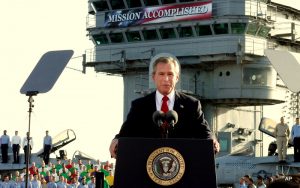
Now we can fast-forward to 20 March 2003, the date that President George W. Bush took the fateful step of invading Iraq. Bush had an array of flimsy excuses for doing this: Saddam Hussein’s non-existent nuclear weapons, Saddam’s alleged plot to assassinate Bush’s father, the dream (really the nightmare) of forceable “regime change” as a way of making the Middle East safe for the U.S. and Israel, or perhaps just the cutting loose of neoconservative bellicosity. Whatever the president’s depth of ignorance led him to anticipate, the invasion set loose forces that neither Bush, nor any subsequent U.S. president, has been able to control. Among these are the consequences that followed the falling apart of Iraq.
The Kurdish Issue Resurfaces
Like the destruction of the Ottoman Empire at the end of World War I, the destruction of Iraq that resulted from the 2003 U.S. invasion opened up a Pandora’s Box of potential territorial changes. Not the least of these was the possible creation of the state of Kurdistan.
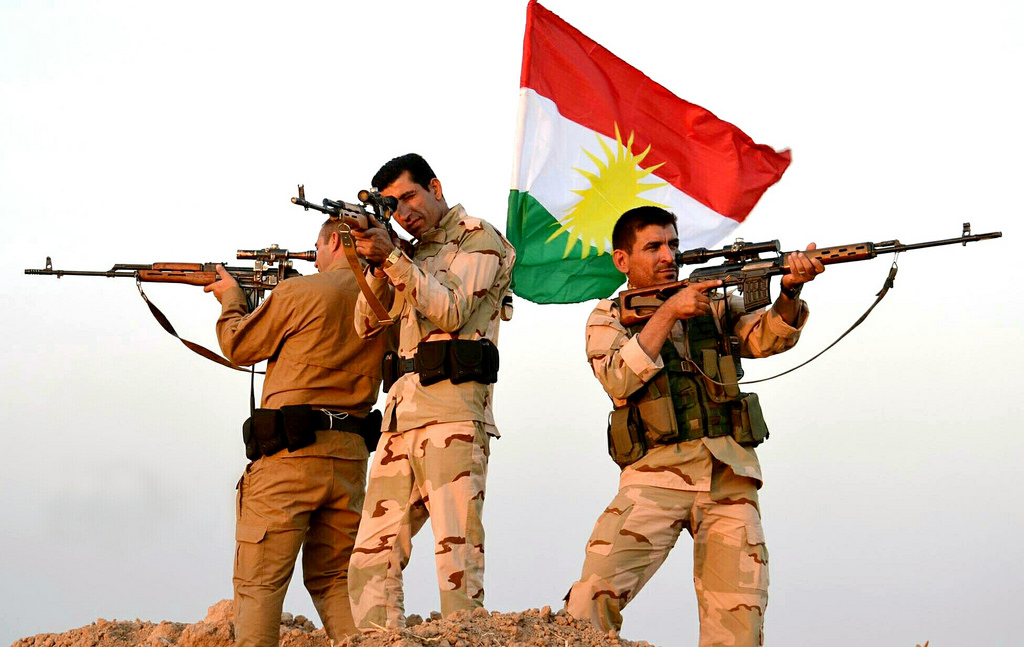
Like the Arabs in World War I, the Kurds became a fighting ally of the West in the aftermath of the invasion of Iraq and the subsequent Syrian civil war. The region’s chaos allowed for the emergence of the “Islamic State of Iraq and the Levant” (aka ISIS, ISIL, and Daesh). ISIS turned out to be a grim and brutal manifestation of religious fanaticism run amok. Its growth threatened just about every state in the region, as well as the citizens of the European Union and the U.S. If stability was to eventually prevail, ISIS had to be defeated, and the Kurds played (and continue to play) a notable role in this fight. There is little doubt that one of their goals in doing so is to create favorable conditions for a Kurdish state.
For all those powers (Turkey, Iran, Syria, Iraq) seeking to reestablish the status quo ante, the prospect of an independent Kurdish state is anathema. Each state has Kurdish minorities and is afraid that an independent Kurdistan, even one carved out of another state’s territory, would lead to or exacerbate Kurdish insurgencies in their own countries. The possibility that such a state might instead cause a lessening of minority Kurdish restiveness through voluntary immigration seems not to have occurred to the leaders of Iran, Turkey and Syria.
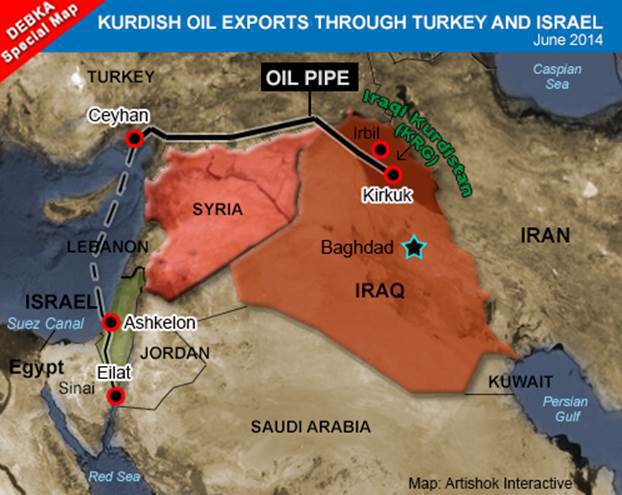
As Jonathan Cook has recently made clear, the question of Kurdish independence has been complicated by Israeli influence in this matter. The Israelis have long been keen on an independent Kurdistan not because, as some of their politicians disingenuously claim, the Kurds have a “moral right” to a state (so do the Palestinians). Rather, the Israelis have an undeclared but official policy aimed at “Balkanizing” the Arab states. They have been encouraging “sectarian and ethnic discord” in order to destabilize their neighbors. In other words, Israeli support of the Kurds is an effort to weaken primarily Iraq, and secondarily, Syria and Iran (Turkey is just “collateral damage” in this process).
Conclusion
One can hardly blame the Kurds for taking help where they can get it – in this case from Israel – in a fight for independence that has been going on for centuries. Nonetheless, one can also understand that Israeli meddling seriously frightens the other states affected.
Leaving aside the Israeli issue for a moment, the question that should guide policy here is: can Iraq be reestablished as a viable state? Putting the question more informally, in 2003 a rather stupid American president, working under the influence of Zionists, Iraqi nationalists bearing false witness, and witless neoconservatives, knocked the Iraqi Humpty Dumpty off its precarious wall. Can it be put back together again? The answer is, well, maybe – but there seems to be only two ways to do this. One is a near-genocidal war waged by regional powers against the Kurds. Alternatively, Iraq might be resurrected if the Kurds are willing to settle for half a loaf in the form of being an autonomous part of a confederated state.
Right now the future is uncertain. One has the impression that the Turks and Iraqis (whose forces assaulted the Kurdish claimed city of Kirkuk on 16 October 2017) are quite willing to try to solve the matter by prolonged war. This would be a big mistake. It would lead to an Iraq that may be technically united but in truth would be even weaker than it is now, and not really independent at all. Its northern region would probably be under the de facto control of Turkey and Iran, and the rest of the country would continue to be in a decentralized mess experiencing an ongoing sectarian civil war. On the other hand, a peaceful resolution of the Kurdish issue could lead to the stabilization of the rest of Iraq as a confederated state. Also, as part of a confederated Iraq, Kurdistan’s autonomy can preclude an independent foreign policy, thus minimizing Israeli influence.
Despite the recent Kurdish vote for independence, their leaders must know this can only be made real if they can win a prolonged war against Turkey, Iran, and Iraq. Israel is not in a geographical position to effectively help them do this. And so, the Kurds probably cannot endure such a struggle. That leaves them with only one rational choice.
The Kurds are now closer to independent status than at any time since the near-miss days of World War I. Their best strategy is to make the best (if not the most) of that status within a confederated Iraq and end their interaction with Israel. This has to be better than a near-genocidal war in which they would be the victims. However – and this is the usual question in such situations – will the emotions roiling on all sides allow sanity to prevail?
We would like to ask you to consider a small donation to help our team keep working. We accept no advertising and rely only on you, our readers, to keep us digging the truth on history, global politics and international relations.
A now-notorious list of ostensibly “fake” news sites — created by a liberal professor, seemingly out of thin air — spread like wildfire online in the past two days and was eagerly reprinted by corporate media presstitutes hoping to vindicate their own failed reporting on the 2016 election.But branding perfectly legitimate outlets with the same scarlet letter as those devoid of integrity deemed the professor’s list a spurious attempt to defame alternative and independent media — anyone dissenting from the left’s mainstream narrative — as a whole.This is, in no uncertain terms, a hit list — or, at least, a laughable attempt — and ...
During World War II, hundreds of thousands of foreign peoples joined with Hitler's legions to bring theirs people into special status in Hitler's New Order. Tens of thousands among them were Muslims, where the majority of them came from Soviet Union. Under the banner of the crescent and the swastika, these Soviet Muslims believe to become holy warriors to liberated theirs land. But the end of this unholy alliance was a disaster for them.The Pro-Nazi Soviet Muslims When the German Army invaded Soviet Russia on June 22, 1941 they saw many of their opponent inhabitants welcomed them as liberators. One ...
The superhighway to disaster is already being paved.From Donald Trump’s first days in office, news of the damage to America’s international stature has come hard and fast. As if guided by some malign design, the new president seemed to identify the key pillars that have supported U.S. global power for the past 70 years and set out to topple each of them in turn. By degrading NATO, alienating Asian allies, cancelling trade treaties, and slashing critical scientific research, the Trump White House is already in the process of demolishing the delicately balanced architecture that has sustained Washington’s world leadership since ...
Statistics from 2014Origins of images: Facebook, Twitter, Wikimedia, Wikipedia, Flickr, Google, Imageinjection, Public Domain & Pinterest.Read our Disclaimer/Legal Statement!Donate to Support UsWe would like to ask you to consider a small donation to help our team keep working. We accept no advertising and rely only on you, our readers, to keep us digging the truth on history, global politics and international relations.[wpedon id="4696" align="left"]SaveSave
Origins of images: Facebook, Twitter, Wikimedia, Wikipedia, Flickr, Google, Imageinjection & Pinterest.Read our Disclaimer/Legal Statement!Donate to Support UsWe would like to ask you to consider a small donation to help our team keep working. We accept no advertising and rely only on you, our readers, to keep us digging the truth on history, global politics, and international relations.
The two most militarily powerful nations in the West, both free to project naval power and maritime domination anywhere in the world, get together to punish and overthrow regimes they find guilty of human rights abuses and political repression in the name of human rights and promoting democracy: What could possibly go wrong?It is of course NATO Secretary-General Jens Stoltenberg’s new call for NATO, which has already over the past decade exercised its nation-building and promotion of enlightened regime policies with such brilliant success in Ukraine, Libya, Syria and Afghanistan to spread its mantle of protection, enlightenment and peace over ...
Source: Rich WhitneyAbout the author: Rich Whitney is an attorney, actor, radio commentator and disk jockey, Illinois Green Party activist and former Green Party candidate for governor.Origins of images: Facebook, Twitter, Wikimedia, Wikipedia, Flickr, Google, Imageinjection & Pinterest.Read our Disclaimer/Legal Statement!Donate to Support UsWe would like to ask you to consider a small donation to help our team keep working. We accept no advertising and rely only on you, our readers, to keep us digging the truth on history, global politics and international relations.[wpedon id="4696" align="left"]
The United States, Germany, Canada, Israel and the United Kingdom launched "Operation Jericho"Once again, the Obama administration has tried to force the change of a political regime that resists it. On February 12, an Academi (formerly Blackwater) plane disguised as an aircraft of the Venezuelan army was supposed to bomb the presidential palace and kill President Nicolas Maduro. The plotters had planned to place former MP María Corina Machado in power and have her immediately acclaimed by former Latin American presidents. President Obama had given a warning. In his new doctrine of Defence (National Security Strategy), he wrote: "We ...
Editor’s note:This article by Michel Collon was first published by Global Research in December 2003. It outlines with foresight the strategy of the US, through covert intelligence operations, of breaking up Iraq into a number of separate states. The unleashing of a civil war with a view to deliberately breaking up Iraq was part of the US war agenda from the outset.They have found the solution! Divide Iraq into three mini-states and then pit them against one another. Does that remind you of something else? Oh, yes! It’s not the first time something like this happened….The New York Times published ...
The Axis powers invaded Yugoslavia on 6 April 1941. Vladko Maček, the leader of the Croatian Peasant Party (HSS) which was the most influential party in Croatia at the time, rejected offers by the Nazi Germany to lead the new government. On 10 April the most senior home-based Ustaša, Slavko Kvaternik, took control of the police in Zagreb and in a radio broadcast that day proclaimed the formation of the Independent State of Croatia (Nezavisna Država Hrvatska, NDH). The new Independent State of Croatia" was established as a pro-Nazi government. It was dedicated to a clerical-fascist ideology influenced both by ...
The wicked social control experiment using virus as the pretext for further enslavement is performing magnificently by implanting a sense of helplessness, dependence, and blind conformism. It should be noted that the favorable atmosphere enabling Them (whoever they are) to accomplish just that was contrived by the controlled and unscrupulous media in under a month of intense, coordinated, global brainwashing. Praise is in order, not for the obviously immoral master plan but for the technical excellence of its execution. In the subservient Balkans, local quislings have expectedly introduced a practically region-wide state of emergency, giving that ignoble set of local ...
The U.S. Government certainly leads the world in invasions and coups.In recent years, it has invaded and occupied — either by military assault or by coup, but in either case followed by installing (or trying to install) a new regime there — a number of countries, especially Afghanistan, Iraq, Libya, Syria, Ukraine, and Yemen. U.S. propaganda says that its invasions and military occupations (and it denies its coups) are to benefit the people in the invaded and militarily occupied countries, or to bring them ‘democracy’, and are not done merely to benefit the people who control the U.S. Government (which itself is not a ...
The internal and much more external destruction of the former Yugoslavia in the 1990s was celebrating in 2015 its 20th year of anniversary. However, this historical and much more geopolitical event still needs a satisfactory research approach in regard to the true geopolitical reasons and political-military course of the destruction of this South Slavic and Balkan state. During the last quarter of century, the (western) global mainstream media unanimously accused Serbia and the Serbs of the national chauvinism as the main cause of the bloody wars on the territory of ex-Yugoslavia in the 1990s. However, the role and direct impact ...
With a general election looming in the United Kingdom and Spain possibly following Greece’s revolt against austerity later this year, we need to think, not just who or what we are voting for, but why we should vote at all.People are suffering from a deficiency which is as unbalancing as a hormone or vitamin deficiency. What we are severely lacking in is democracy. Many of those pondering on the state of politics feel unhappy and somehow depleted. They haven’t yet realised it is democracy that’s lacking because they have believed what so many politicians have told them, over and over ...
Hypocrisy may be the only consistent guiding principle of US foreign policy. Here's a prime example of the "do as we say, not as we do" that is the core of how Washington does business overseas: In the same week that the the US Justice Department demanded that the Russian-backed RT America network register as a foreign propaganda entity or face arrest, the US State Department's Bureau of Democracy, Human Rights and Labor (DNL) has announced that it is launching a program to massively interfere in NATO-partner Hungary's internal media.So the US Justice Department is cracking down on RT America for what ...
Origins of images: Facebook, Twitter, Wikimedia, Wikipedia, Flickr, Google, Imageinjection, Public Domain & Pinterest.Read our Disclaimer/Legal Statement!Donate to Support UsWe would like to ask you to consider a small donation to help our team keep working. We accept no advertising and rely only on you, our readers, to keep us digging the truth on history, global politics, and international relations.[wpedon id="4696" align="left"]Save
The US, France, Saudi Arabia, Turkey, Qatar, and the Gulf monarchies have all in the recent past supported al Qaeda and/or the Islamic State (ISIS) with arms, money, and/or manpower.The first example of this was in 1979 when the United States began covert operations in Afghanistan, six months before the Russians arrived, promoting Islamic fundamentalism across the southern tier of the Soviet Union against “godless communism”. All the al-Qaeda/Taliban shit then followed.In addition to Afghanistan, the United States has provided support to Islamic militants in Bosnia, Kosovo, Libya, the Caucasus, and Syria.The United States overthrew the secular governments of Afghanistan, ...
From the very historical perspective, the Middle East has been marked by diversity being a crossroads of civilizations. Nevertheless, at the time of Antique, the region was referred to as Mesopotamia (in Greek, the land between, i.e. between two rivers: Tigris and Euphrates), the Fertile Crescent (from Egypt via Palestine to Mesopotamia) where from originally both agriculture and rural/urban settlements started to be developed. At that time, what is today known as Libya, the land was rich in olives, wine, and livestock, and neighboring Egypt was a marshland with wildlife and cane forests. The farming and techniques of irrigation systems ...
Is your money that good? Will it buy you forgiveness? Do you think that it could?” (Bob Dylan, b. 1941, Masters of War)On Tuesday 6th of September, twenty-four hour monitoring by Yemen’s Legal Centre for Rights and Development (LCRD) recorded the bombings by the Saudi led “coalition”, armed by the US and UK and advised by their military specialists, thus collusion and co-operation of both countries render them equally culpable for the carnage.Yemen has a population of just 24.41 million (2013 figure) and according to the Rural Poverty Portal:“ … is one of the driest, poorest and least developed countries in ...
The magazine is covering the research gaps uncovered by global Western hoax mainstream media platforms and academic teaching & research institutions.
This is an alternative information & academic research digest platform with the purpose to offer an alternative “another side of the truth”.
The magazine is independent, private, and free of any influence by any institution, organization, government, or pressure group. URL: www.global-politics.eu