
The Tragic Declaration: Colonial Legacies, Balfour and Israel
Indeed, the paper went on to suggest a reassurance: that the Declaration had not envisaged that “Palestine as a whole should be converted into a Jewish National Home, but that such a Home should be found in Palestine.” A home, as it were, within a home – or perhaps a spacious room in a large abode [...]
So much after the fact; so much in terms of opportunism gone to seed and destruction. But planned historical calamities tend to be rare. There are only absurd moments, dastardly opportunities, and tragic convergences. History is less the outcome of wise deliberation than folly dressed up as reason, occasionally tinged by a touch of malice.
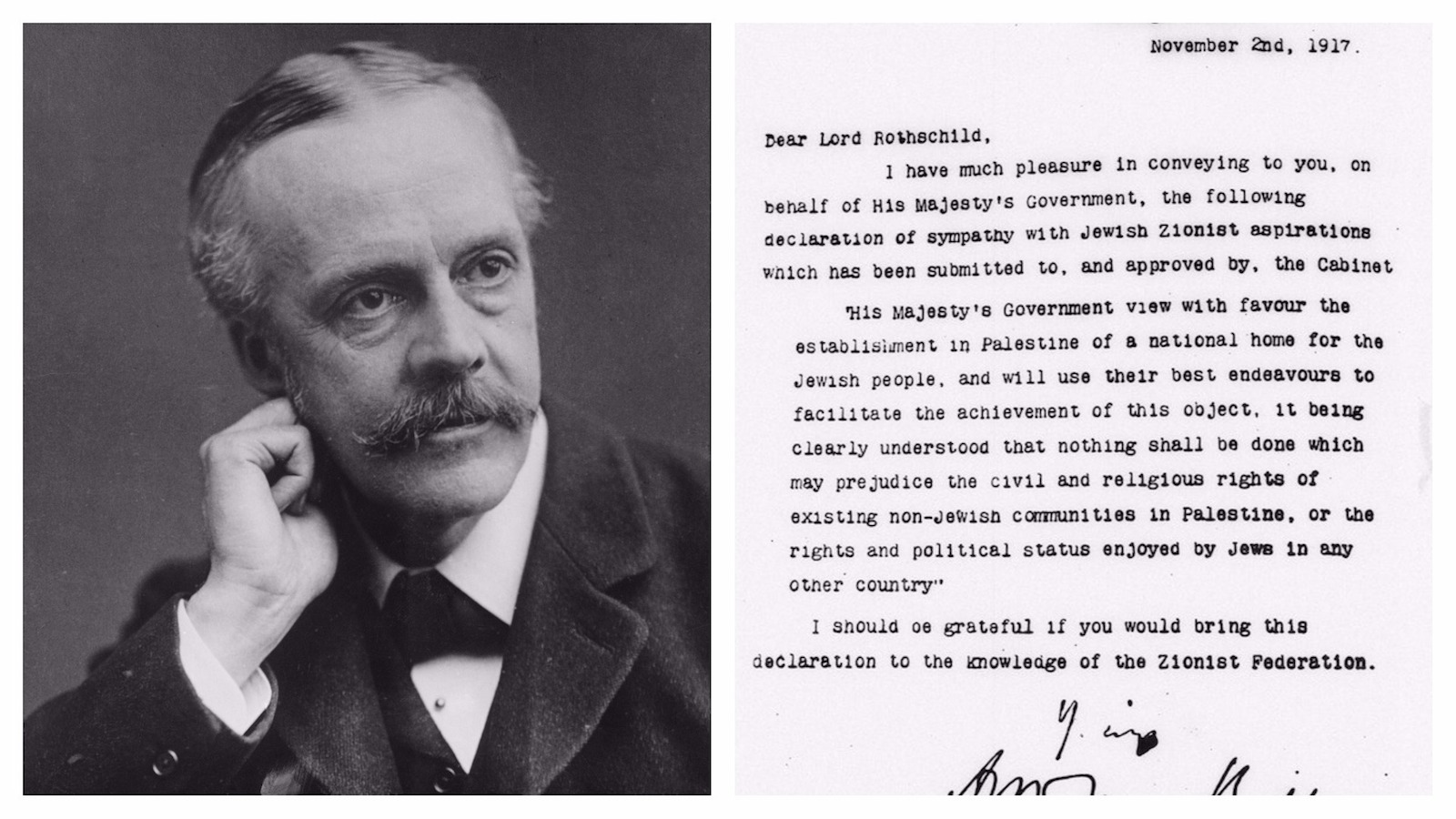
On November 2, 1917, the British government published the Balfour Declaration (one of “sympathy with Jewish Zionist aspirations”) by means of a letter written by Foreign Secretary Lord Arthur James Balfour to Lord Walter Rothschild. It suggested forthcoming British assistance for the establishment of a Jewish National Home in Palestine.
Problems soon emerged, showing what Arthur Koestler would suggest as the solemn promising of one nation to a second the country of a third, all happening even before the Ottoman Empire had ceased to exist.
This was British imperial opportunism at its worst, or, if you fancy that sort of pluck, best. It played on the aspirations of Zionists; it also went counter to the promise of liberation for Arabs in the event they overthrew their Ottoman overlords. The moral tic only came later, a sort of retrospective imposition.
Submerged in the Declaration are a series of questions writ large. There is the Eastern Question – one of Ottoman-eastern influences on Europe and more broadly, the Occident. Then there was that overall niggling problem of where European Jewry persisted as carriers of an eastern legacy in Europe, “which Enlightened and un-Enlightened European Christians,” poses Joseph Massad, “found intolerable.”[1]
This became, with all its paranoid fixations, cultural mania and concern, the “Jewish question”, an absurdist fantasy that attempted to press Jewish influence in Europe as a matter of unreformed, eastern practice. How much better, then, to have that influence exiled altogether?
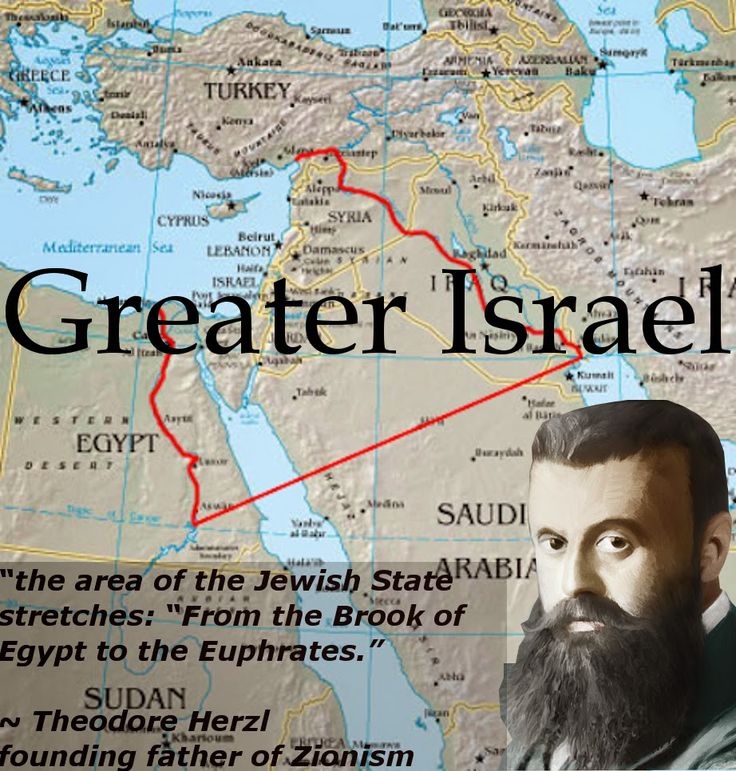
This task also assumed the oddest of forms, and the creation of uncomfortable bed fellows in what effectively became a colonial project of collusion and complicity. Theodor Herzl, founder of the First Zionist Congress in August 1897, revealed the realpolitik caste of mind that would also be mirrored by the politics behind Balfour.
Those “anti-Semites,” he proclaimed, “will become our most dependable friends, the anti-Semitic countries our allies.”
The Balfour letter itself retained those various contradictions. Having pitched for a Jewish state, it then went on to suggest that “nothing shall be done which may prejudice the civil and religious rights of existing non-Jewish communities in Palestine or the rights and political status of Jews in any other country.” This was imperial parcelling of the worst sort, making claims about racial, religious and ethnic reordering without a mind to consequence.
Over time, reading the Declaration suggested the workings of a psychodrama, teasing historians into adventurous analyses. Historian Barbara Tuchman in her classic Bible and Sword, England and Palestine from the Bronze Age to Balfour (1956) imputed to Lord Balfour a religious motive, morally biblical more than realpolitik imperial. The Jews, went this line, needed repaying in some form, a gesture of historical recompense.
Tuchman, it must be said, then proceeded to acknowledge good old little Englander power plays at work. It was Britain’s intention “to take Palestine anyway for its strategic value; but they had to have a good moral case”. By proclaiming “that Britain would enter Palestine as trustee for its Old Testament proprietors would fulfil this purpose admirably and above all would quiet the British conscience in advance.”
As appropriately noted by Michael J. Cohen, reading the British response here requires an understanding of public show and private intimations.[2] A degree of duplicity in diplomacy – the public self adorned differently to the private – is always demanded.
Take, as an example, the meeting between Prime Minister Lloyd George and Chaim Weizmann held on July 21, 1921 at Lord Balfour’s home, with the Colonial Secretary Churchill present. Weizmann, it is noted, was reassured that the British “had always understood and meant the eventual possibility of a Jewish state.”
The 1922 Churchill White Paper supplies an example of the public show, a case of hedging, avoidance, and qualification as to what the intention of the Declaration had been. There was, for instance, never an intention to create “a wholly Jewish Palestine”. To think so was to sport an “impracticable” expectation.
Indeed, the paper went on to suggest a reassurance: that the Declaration had not envisaged that “Palestine as a whole should be converted into a Jewish National Home, but that such a Home should be found in Palestine.” A home, as it were, within a home – or perhaps a spacious room in a large abode.
The terminology “National Home” was picked up by the Peel Royal Commission in 1936 as a problematic formulation, having caused “unrest and hostility between Arabs and Jews”. That term, it is also worth noting, was a confection, less of British foreign policy than that of the First Zionist Congress in 1897.
The language does not suggest promise, but a degree of wooliness. But there was enough certainty to propel modern relevance. It has encouraged urgings on the part of the Palestinian Authority’s Foreign Minister, Riyad al-Maliki, to press for an international law suit fronted by Arab states against the United Kingdom citing the Declaration as the cause of the mass Palestinian eviction in 1948 that became the Nakba.
The complexity behind the machinations of Balfour have now been washed away by moral absolutes and declarations. The gala dinner on November 2 saw British Prime Minister Theresa May speak of British pride in “our pioneering role in the creation of the state of Israel” yet careful to insist on a two-state solution negotiated by fictionally equivalent partners.
Israel’s Prime Minister Benjamin Netanyahu also afforded thanks, and suggested with force the ultimate triumph of a colonial venture that had to be swallowed, consequence and whole.
“A hundred years after Balfour, the Palestinians should finally accept a Jewish national home and finally accept a Jewish state. And when they do, the road to peace will be infinitely closer.”[3]
A picture taken on July 4, 2018 from the Israeli-annexed Syrian Golan Heights shows displaced Syrians from the province of Daraa staging a protest (top L) calling for international protection, in the Syrian the village of al-Rafid, near the border fence with Israel. / AFP PHOTO / JALAA MAREY
Originally published on 2017-11-10
About the author: Dr. Binoy Kampmark was a Commonwealth Scholar at Selwyn College, Cambridge and lectures at RMIT University, Melbourne. Email: bkampmark@gmail.com
We would like to ask you to consider a small donation to help our team keep working. We accept no advertising and rely only on you, our readers, to keep us digging the truth on history, global politics and international relations.Save
Government propaganda and NGO misinformation have coloured the story of the war on Syria from its inception. Stepping in to set the record straight, Dr. Tim Anderson explores the real beginnings of the conflict, the players behind it, and their agenda in his new book, “The Dirty War on Syria: Washington, Regime Change and Resistance.”The Dirty War on Syria has relied on a level of mass disinformation not seen in living memory. In seeking ‘regime change’ the big powers sought to hide their hand, using proxy armies of ‘Islamists’, demonising the Syrian Government and constantly accusing it of atrocities. In ...
The so called "Croatian scenario", is something that has been periodically brought up after the start of the armed conflict in Donbass. (Among other instances, yours truly noted this in articles from this past December 17 and August 24, 2015.) Promoted at Johnson's Russia List, the December 28 Euromaidan Press article "What Ukraine Can Take from the 'Croatian Scenario' of Conflict Resolution", omits some key factors for being apprehensive about the probability for success of an Operation Storm like strike against the Donbass rebels.In 1995, the Serb Yugoslav leader Slobodan Milosevic, had essentially dropped the Krajina Serbs, with the hope that he could improve his relationship with the West. At ...
President Bill Clinton’s favorite freedom fighter just got indicted for mass murder, torture, kidnapping, and other crimes against humanity. In 1999, the Clinton administration launched a 78-day bombing campaign that killed up to 1500 civilians in Serbia and Kosovo in what the American media proudly portrayed as a crusade against ethnic bias. That war, like most of the pretenses of U.S. foreign policy, was always a sham.Kosovo President Hashim Thaci was charged with ten counts of war crimes and crimes against humanity by an international tribunal in The Hague in the Netherlands. It charged Thaci and nine other men with ...
While the numbers are not as high as Auschwitz or Treblinka, Jasenovac was notorious for its cruelty and the high number of young children who were victims.April 22 is a date that binds two groups of people who shared the same tragic fate. It is the date that commemorates the revolt of the prisoners of Jasenovac, the death camp that claimed the lives of hundreds of thousands of Jews, Serbs and Roma.While the numbers are not as high as Auschwitz or Treblinka, Jasenovac was notorious for its cruelty and the high number of young children who were victims. The saddest ...
The U.S. Government certainly leads the world in invasions and coups.In recent years, it has invaded and occupied — either by military assault or by coup, but in either case followed by installing (or trying to install) a new regime there — a number of countries, especially Afghanistan, Iraq, Libya, Syria, Ukraine, and Yemen. U.S. propaganda says that its invasions and military occupations (and it denies its coups) are to benefit the people in the invaded and militarily occupied countries, or to bring them ‘democracy’, and are not done merely to benefit the people who control the U.S. Government (which itself is not a ...
The historical background of the Israeli-Palestinian conflict goes back to 1917 (the Balfour Declaration) and the establishment of the British protectorate over Palestine (the Palestine Mandate) after WWI with its provision for a national home for the Jews, although formally not to be at the expense of the local inhabitants – the Palestinians. Nevertheless, it became in practice the focal problem to keep an appropriate balance between these stipulations to be acceptable to both sides – the Jews and the Palestinians.The people and the land Since the time of the Enlightenment followed by Romanticism, in Western Europe emerged a new trend ...
The WarmongersThe war, which began in August 1914 – to contemporaries the Great War, to posterity the First World War – marked the end of one period of history and the beginning of another. Starting as a European war, it turned in 1917, with the entrance of the US into a world war. The spark that triggered it off was the assassination of the Austrian heir-presumptive, Archduke Franz Ferdinand (1864−1914), by a Bosnian nationalist of Serb origin – Gavrilo Princip[1], a member of the Young Bosnia (Mlada Bosna) movement, in Sarajevo on June 28th, 1914 on his official visit to ...
US-installed Ukrainian fascists commemorated Poroshenko’s established victory in Europe Day of Remembrance by vowing to “destroy Moscow,” free its people, and let them “shape their own future.”Ukrainian ultranationalists attending a May 8 commemoration included 14th SS Waffen Grenadier division veterans, Ukrainian Insurgent Army (UPA) members, and Nazi-infested volunteer battalions involved in what they call “the Russian-Ukrainian war.”Svoboda party overt Nazis participated. Their slogan is “Ukraine for the Ukrainians” – meaning ethnically pure, free of Jews, Russians and others not wanted, by extermination or other means.Party member Yuri Sirotyuk called war on Russia Ukraine’s historic mission. “I believe that if we ...
The massive artillery bombardment of the peoples of the Donbass, that has been raining down shells and fire on them since Christmas, is a war crime of horrific proportions designed to terrorise the people and bring their refusal to be subject to the NATO-installed regime in Kiev to an end. It is also becoming clear that it has a political purpose, which is to increase anti-Russian, pro-NATO propaganda among the Ukrainian people to influence them to vote to join NATO in a referendum, the consequences of which will be dramatic because a vote for NATO will be a vote for ...
March 2018 marks the 19th anniversary of NATO’s bombing of Yugoslavia.For over a month Canada has been bombing Yugoslavia. Without a parliamentary resolution, without a declaration of war and without a shred of legality Canadian war planes are attacking the nation that stood at the forefront of the fight against both Hitler’s Nazis and Mussolini’s fascists during World War II.The Nuremberg trial ruled that “to initiate a war of aggression… is not only an international crime, it is the supreme international crime.” Yet this is precisely what Canada and its NATO allies have done.The Canadian government said it was bombing ...
The German occupation forces were those who have been the first to create and recognize a short-lived state’s independence of Ukraine in January 1918 during the time of their-own inspired and supported anti-Russian Bolshevik Revolution of 1917−1921. As reoccupied by the Bolshevik Red Army, the eastern and southern parts of the present-day territory of (a Greater) Ukraine joined in 1922 the USSR as a separate Soviet Socialist Republic (without Crimea). According to the 1926 Soviet census of Crimea, the majority of its population were the Russians (382.645). The second-largest ethnic group were the Tartars (179.094). Therefore, a Jew V. I. ...
Last movie by famous French movie maker Paul Moreira on Canal+ (France) broadcasted 01/02/2016.Some French citizens are now shocked after discovering the truth about the Odessa massacre and the Euromaidan bloody coup in 2013/2014.Interview to Paul Moreira:http://www.humanite.fr/derriere-les-masques-de-la-revolution-ukrainienne-597568Preview screening on January, 20th 2016 at FIPA Biarritz 29th edition, selected out of competition in Reportages and Investigation – Panorama of Creation category.Without them, there would have been no Ukrainian revolution.In February 2014, paramilitary groups fought against the police in the streets of Kyev and ousted President Yanukovych. They settled a new government.According to the western media, they were the revolution heroes. They ...
In Kukavica village near Rogatica (nowadays Bosnia and Herzegovina), today was marked 27 years since crimes against Serbian civilians committed by Bosnian Muslims, members of the so-called Army of Bosnia and Herzegovina on August 27, 1992.In an attack on a column of Serbian civilians, involving about 1,000 elderly people, women and children on tractors and passenger vehicles, Bosnian Muslim extremists killed 26 and injured 80 Serbs.Rogatica Mayor Milorad Jagodic called this a monstrous crime as among the victims are a child of 11 and 82 years old man.“This was a column of innocent people who were looking for refuge and ...
Kosovo(stan) Parliament announced "independent" state of the "Republic of Kosovo" on February 17th, 2008 as a democratic and multicultural political community.Here we present two photos from November 2015 on which you can see heavily damaged Serbian Orthodox church and totally destroyed Serbian Orthodox tombstones in the southern part of the town of Kosovska Mitrovica inhabited by the Muslim Albanians. Kosovo(stan) ISIS is doing its job profoundly.Enjoy Kosovo(stan) "independence"!P.S. Today (February 17th, 2018) on the 10-years anniversary of Kosovo(stan) "independence", Burundi canceled its previous recognition of it. Just guess why?Read our Disclaimer/Legal Statement!Donate to Support UsWe would like to ask you ...
The wicked social control experiment using virus as the pretext for further enslavement is performing magnificently by implanting a sense of helplessness, dependence, and blind conformism. It should be noted that the favorable atmosphere enabling Them (whoever they are) to accomplish just that was contrived by the controlled and unscrupulous media in under a month of intense, coordinated, global brainwashing. Praise is in order, not for the obviously immoral master plan but for the technical excellence of its execution. In the subservient Balkans, local quislings have expectedly introduced a practically region-wide state of emergency, giving that ignoble set of local ...
Serbs: Basic factsEthnic location: Central and western part of the Balkan Peninsula (South-East Europe)Population: 10.2 million (1.8 million Serbs live outside their ethnic location)Language: SerbianReligion: Eastern Orthodox Christians1 Introduction Serbs belong to the Southslavonic group of Indo-European peoples. As their tradition, culture, language, beliefs, and customs show, the ethnogenesis of Serbs goes far back into the past. Serbian ancestors, Protoslavs and Old Serbs, were described in the 5th century BC by Herodotus, under the names of Neuri and Budini, living north of the Danube in the region between Dniepar and north-eastern Carpathian Mountains.The first mention of the name “Serbs” appears ...
The contemporary Lithuania uses the official interpretation of bloody events that took place in Vilnius on January 13, 1991 as an ideological foundation for Russophobia-based confrontation with its eastern neighbor. It says “the Soviet soldiers committed an intentional murder of 13 unarmed people and one special operations serviceman”. The truth about what really happened, as well as the doubts over the official interpretation, are punishable crimes.The Lithuanian authorities have been trying to get Algirdas Paleckis condemned by court for some years. He is a young politician and a diplomat, the leader of Lithuanian Socialist People’s Front (SPF), a holder of ...
Professor Vladislav B. Sotirović, Ph.D. is a Senior Lecturer of: “Middle East Studies” at the Mykolas Romeris University, Vilnius, Lithuania; “Mediterranean Studies;” “Ethnicity, Multiculturalism and Globalisation;” “Balkan Nationalism and Ethnic Conflicts” and “Europeanisation: Process and Results.”Prof. Dr. Sotirović is a distinguished expert on the History of the Early Byzantine Empire, 330–846”, Comparative History of Central and South-Eastern Europe and Ottoman History, History of Lithuania and Ukraine. He is well known abroad for his influential books and popular lectures about Lithuania, the Russian Federation, the Balkans, and Baltic Nations, and Multiculturalism.Professor Sotirović has studied at the Central European Summer University, Budapest, ...
Seventeen years ago today, on March 24, 1999, NATO began a 78-day deadly and devastating U.S.-backed intervention of Yugoslavia. It was the first time in history that the North Atlantic Treaty Organization decided they would attack a country without the approval of the U.N. Security Council.Nineteen countries took part in the aggression led by the United States that was supposed to stop the repressive activities of the Slobodan Milosevic government and to establish a framework for its Southern province, Kosovo, under international law. Milosevic was president of Serbia from 1989 to 1997, and of Yugoslavia from 1997 to 2000.The attack was ...
Origins of images: Facebook, Twitter, Wikimedia, Wikipedia, Flickr, Google, Imageinjection, Public Domain & Pinterest.Read our Disclaimer/Legal Statement!Donate to Support UsWe would like to ask you to consider a small donation to help our team keep working. We accept no advertising and rely only on you, our readers, to keep us digging the truth on history, global politics and international relations.[wpedon id="4696" align="left"]SaveSave