
America’s War for the Greater Middle East – A Military History
An interesting start to a military history. In the prologue he dates the start of the GME War with Operation Eagle Claw from April 24-25, 1980. In the opening chapter he pushes it back to the 1973 oil embargo as a consequence of the Yom Kippur War in Israel [...]
Andrew Bacevich has written a series of books on the topic of U.S. imperialism and U.S. military power. His latest work, America’s War for the Greater Middle East [the GME War] is the latest in this series and as with the previous works is clearly written and logically presented. It covers more narrowly than the previous works the military aspects of U.S. military endeavours in the Middle East (greater – as in including East Africa and Afghanistan et al). Generally he succeeds well and this work is a good ‘primer’ for anyone interested in a quick historical overview of U.S. military actions in the region.
However it is not one of his better works, and perhaps that is because of the narrowness of focus and the resulting tie ins that could have been made and that without do not provide a perspective of this war amongst all the other wars instigated by the U.S. I had to keep reminding myself that this is a “military” history, focused on the Middle East, which kept reminding myself about the missing links.
In general, his overall thesis is well presented. His relating of the sequence of events is strong and the critical analysis is good, until he arrives at the most recent events.
Early beginnings
He starts off saying the GME War “was a war to preserve the American way of life, rooted in a specific understanding of freedom and requiring an abundance of cheap energy” noting also that “oil as a prerequisite for freedom,” a rather telling prerequisite. Describing his own youthful times he recognizes “The American way of life may have been shallow and materialistic, its foundation a bland conformity.” Yes it had “pleasures and satisfactions” which “tended to be transitory” but disguised as to “how precarious such expectations might be.”
An interesting start to a military history. In the prologue he dates the start of the GME War with Operation Eagle Claw from April 24-25, 1980. In the opening chapter he pushes it back to the 1973 oil embargo as a consequence of the Yom Kippur War in Israel. One of the political philosophies of the time recognized that
“Middle East oil properly belonged to those who had discovered, developed, and actually needed it. By all rights, therefore it was “ours”, a perspective that resonated with many ordinary Americans. All that was required to affirm those rights was the vigorous use of U.S. military power.”
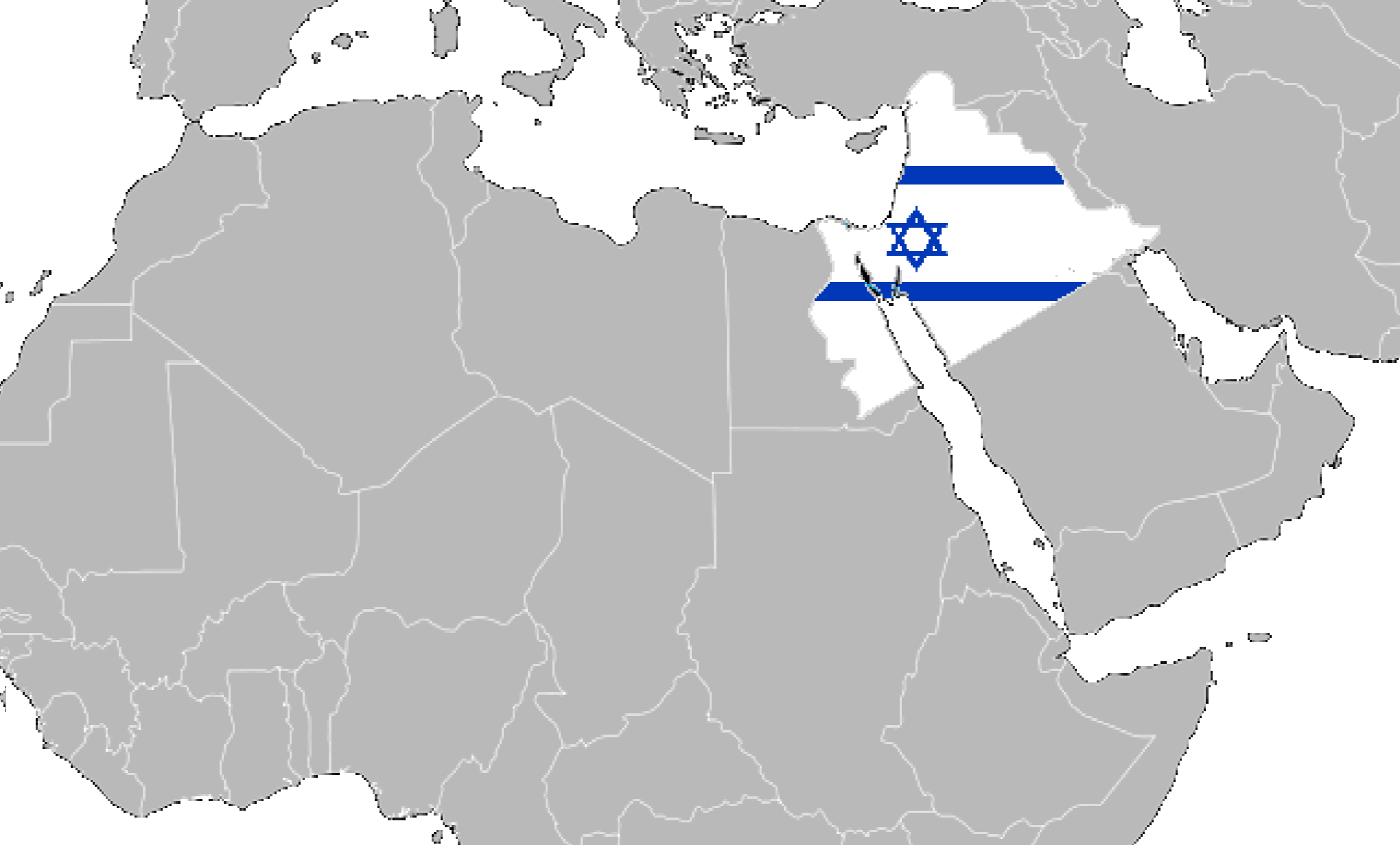
Having started that way philosophically creates in my mind the longer view back as far as World War I and its outcomes concerning the fallen Ottoman empire. This saw the Sykes-Picot agreement dividing the spoils of empire and the Balfour letter envisioning the creation of a Jewish state. The former entangled religions, tribes, and ethnic groups; the latter, in part and in particular to this history, Israel was viewed as an ‘outpost’ of western/European control of the region – for transportations via the Suez canal, but more importantly for the newly discovered oil resources.
However, from where it does start the work progresses quickly and probably for many, very thought provokingly through the Nixon/Carter years and on through the various military enterprises of the GME War.
The Carter years involved the apparent involvement with the Iranian revolution; fortunately Bacevich recognizes that the real involvement began with the 1953 CIA/MI6 overthrow of the democratic Mossadegh Iranian government. The book continues through the years, including the shift from Carter’s “Unreasoned anticommunism had made Americans stupid and distorted U.S. policy; ” through the “end of history” according to Fukuyama “the end point of mankind’s ideological evolution and the universalization of Western liberal democracy as final form of human democracy;” and closing out with the current ‘long war’ or ‘global war on terror’, now just mostly generalized globally as anti-terrorism.
Never endings
I read the book on Kindle using pink highlights for subject ‘titles’ and blue for the actual commentary pertaining to that person or idea. Eventually I ended up using yellow to indicate passages where Bacevich’s analysis or perspective appeared to be much less clear. Given how well the majority of his writing is well founded and documented it could be that the proximity in time to some of the more recent events has not allowed the filter of time to fulfill informational bias and/or create a fuller context for viewing these incidents. These moments occurred only in the last two chapters, mainly the latter part of the Obama years, concerning: Gaddafi in Libya, Assad in Syria, discussion of Obama’s policies, the renewed anti-Putin, anti-Russian scenarios, a supposed ambivalence towards al-Qaeda cured by 9-11 (yet part of the moderates in Syria?).
Most currently Bacevich describes ISIS in part as having “neither allies nor patrons” a rather disconcerting statement in consideration of recent documentation of support from Turkey (a NATO ally) and Saudi Arabia (an oil/US$ ally) and other non-democratic Middle East supporters.
One of my final highlights was, “The root of the problem was obvious: “perhaps there is no strategy to contain the destabilization of the Middle East.” I noted – and this is quite important in a larger context – perhaps that is the strategy – chaos. Chaos serves Israel very well as they can then operate internally ‘under the radar’ while the world is entertained by U.S. double dealings and Russian military successes within the GME War.
For a book that begins with a biblical quote (Numbers 32: 13: “The Lord’s anger burned against Israel….”) there is very little said about Israel throughout. Considering how important AIPAC is to the U.S. election/legislative procedures, and how militarized Israel is, this is a significant omission.
Another significant omission, and this is surprising considering how the first chapter started with a description of the importance of oil to the American way of life, is how since those same Nixon/Carter years the US$ has been the global fiat currency backed mainly by its use as the reserve currency for all global oil transactions – now a fading proposition, another reason to create chaos. It is implied at the outset, but is never discussed as the GME War continues its depredations in the region and its blowback consequences within the United States (yes, I remind myself, this is a military history but ….).
Finally, but not over
Bacevich’s closing positions are clearly stated and supported by what he has presented beforehand. He almost disqualifies himself with a ‘yellow‘ note stating the creations of “a permanent footing large-scale, heavily armed forces designed for global power projection” serves as “the principal functions of these forces was not to wage war but to avert it.”
This is not a minor misstatement as the history and writings of all those concerned within the neocon cabal and the PNAC group considered ‘full spectrum dominance’ to be their end goal, with the inclusion of first strike capabilities for the use of nuclear weapons. Okay in a very sick sense they were trying to avert war by saying we will bludgeon and kill anyone who stands in our way of the “American way” of freedom. I just don’t buy into its pacifist intentions.
However, the overall conclusion is perfectly valid,
Time and again, from the 1980s to the present, U.S. military power, unleashed rather than held in abeyance, has met outright failure, produced results other than those intended, [note: see chaos, above] or proved to be largely irrelevant. The Greater Middle East remains defiantly resistant to shaping.
When discussing why the U.S. cannot “get out” Bacevich identifies “several assumptions that promote in Washington a deeply pernicious collective naiveté.” They could be summarized as ignorance (wilful or otherwise), hubris, arrogance, and stereotyped thought processes (i.e. a lack of the ability to critically analyse anything).
The concluding section continues along the parameters of the GME War’s permanence, which including the above, also includes the militarized meme of supporting the troops, the benefits that accrue to certain individuals, and most importantly to Bacevich is that “Americans themselves appear oblivious to what is occurring” without stating the obvious about the control of the media and the message by corporate-political America.
He concludes, finally and ultimately, that until Americans awaken to the reality that they need to reshape themselves first, “Then and only then will the war end.”
Or perhaps they will, one day, never wake up – period.
Origins of images: Facebook, Twitter, Wikimedia, Wikipedia, Flickr, Google, Imageinjection, Public Domain & Pinterest.
Read our Disclaimer/Legal Statement!
Donate to Support Us
We would like to ask you to consider a small donation to help our team keep working. We accept no advertising and rely only on you, our readers, to keep us digging the truth on history, global politics and international relations.
The June 20 Gray Falcon commentary “Failure to Communicate” has this excerpt, that led me to an extremely anti-Russian and anti-Serb article, from a venue which has previously slanted in that direction:“The latest example of this ‘flipping the script’ is a New Republic feature comparing Putin to Milosevic. In reality, it is the West acting towards Russia the same way they acted towards the Serbs two decades ago. I’ve argued before that Putin is aware of this, though the Russian public and media in general may not be.”Whether the issue is the Caucasus or Ukraine, bombing Russia hasn’t been considered, unlike ...
Over the past 50 years the US and European powers have engaged in countless imperial wars throughout the world. The drive for world supremacy has been clothed in the rhetoric of “world leadership”, the consequences have been devastating for the peoples targeted. The biggest, longest and most numerous wars have been carried out by the United States. Presidents from both parties direct and preside over this quest for world power. The ideology which informs imperialism varies from “anti-communism”in the past to “anti-terrorism”today.Washington’s drive for world domination has used and combined many forms of warfare, including military invasions and occupations; proxy ...
A project for Greater Albania – conspiracy or legitimate? According to a 2010 Gallup Balkan Monitor report, 83% of Albanians in Albania supported the idea of a Greater Albania, with 81% and 53% of Albanians in Kosovo and North Macedonia respectively supporting such an ambition.The ultimate goal? To have Kosovo and the Preševo Valley in Serbia, southern Montenegro, Epirus in Greece and western North Macedonia into a single Greater Albanian state. Although this may not be official policy of the Albanian Republic, it is ingrained into the Albanian mythos. The very idea of a Greater Albania has roots in the 1913 Treaty of London that left roughly 40% ...
May 19, 1919 has different and even opposing meanings in Turkey and Greece, just as May 15, 1948, marks both the establishment of Israel and, for Palestinians, the start of the Nakba (“catastrophe”).In Turkey, this date marks the first step that led to the establishment of the Turkish Republic, while for descendants of Ottoman Greeks and Greece it marks the end of the centuries-long Pontic Greek presence on the shores of the Black Sea. Whereas Turks celebrate May 19, Greeks mourn it. Researcher Tamer Çilingir summarised the issue in a 2016 interview with the Turkish-Armenian daily Agos:“The Pontic Genocide is the ...
“Show me bodies floating in water, play violins and show me skinny people looking sad. I still don’t care.” – Popular conservative Sun (a British daily newspaper) commenting on the homeless war refugees from war-torn Syria, Afghanistan, Iraq, Libya, etc. who are fleeing their militarily de-stabilized and devastated countries after their homes and homelands had been reduced to bloody rubble by soldiers obeying orders from their commanders (including NATO and American “interventionism” in Afghanistan, Iraq, Libya, etc, etc).Hopkins appears to be in good company. But she was probably just paraphrasing what she had been hearing from a multitude of ultra-nationalist ...
Recapitulation of the Facts of the Korean WarNovember 7, 1950: “Just when there was a lull in the fighting and it looked as if peace were possible, MacArthur staged a gigantic and murderous raid directly across from the Chinese frontier, destroying most of a city in an area where bombings had been forbidden to prevent border violations.” “There were reports,” The New York Times said October 15, that General MacArthur had ordered the first bombings of North Korean cities without authorization from Washington.” “General Stratemeyer, commander of the Far East Air Forces described the attack: ‘when fighter planes swept the ...
Professor Vladislav B. Sotirović, Ph.D. is a Senior Lecturer of: “Middle East Studies” at the Mykolas Romeris University, Vilnius, Lithuania; “Mediterranean Studies;” “Ethnicity, Multiculturalism and Globalisation;” “Balkan Nationalism and Ethnic Conflicts” and “Europeanisation: Process and Results.”Prof. Dr. Sotirović is a distinguished expert on the History of the Early Byzantine Empire, 330–846”, Comparative History of Central and South-Eastern Europe and Ottoman History, History of Lithuania and Ukraine. He is well known abroad for his influential books and popular lectures about Lithuania, the Russian Federation, the Balkans, and Baltic Nations, and Multiculturalism.Professor Sotirović has studied at the Central European Summer University, Budapest, ...
Author’s Introduction and UpdateFirst published by GR on June 14, 2014, updated in August 2014, this article reveals how the US and its allies facilitated the incursion of Islamic State (ISIS) convoys into Iraq in June 2014 prior to the onset of the counter-terrorism bombing campaign launched by Obama in August 2014. It is worth recalling the history of the initial incursion of ISIS forces (Summer 2014) and the timeline extending from the occupation of Mosul in Summer of 2014 which was covertly supported by the US, to the “Liberation” of Mosul three years later which was also supported by ...
Compare Donald Trump and Barack Obama: Trump bans people from Syria, Iraq, Libya, Yemen and Somalia but Obama bombed people from Syria, Iraq, Libya, Yemen and Somalia! The question is: Who is a bigger racist?Origins of images: Facebook, Twitter, Wikimedia, Wikipedia, Flickr, Google, Imageinjection, Public Domain & Pinterest.Read our Disclaimer/Legal Statement!Donate to Support UsWe would like to ask you to consider a small donation to help our team keep working. We accept no advertising and rely only on you, our readers, to keep us digging the truth on history, global politics and international relations.[wpedon id="4696" align="left"]
America is coming to the rescue of Al Qaeda under a humanitarian mandate. The unspoken agenda is to undermine the Liberation of Aleppo. The pretext and justification for these actions are based on America’s “responsibility to protect” (R2P) the “moderates” in Aleppo from Syrian and Russian attacks and bombing raids.On October 3, the US State Department announced the suspension of bilateral relations with Russia pertaining to Syria (see document below), in response to which, France’s foreign Minister Jean Marc Ayrault was called upon to intermediate at the diplomatic level. Pointing his finger at Russia’s Foreign Minister Sergei Lavrov, Jean Marc Ayrault casually accused Moscow ...
Stalinist “Land of Eagles” As in neighboring Yugoslavia, the communist revolutionary guerrilla forces, established by the aid and crucially supported by the Yugoslav communists led by local Albanian communist leader Enver Hoxha, took over the power in Albania in 1944.[1] From 1945 to 1948 Albania was under the strong influence of Titoist Yugoslavia and both counties being under the hand of J. V. Stalin. Yugoslavia lavishly supplied Albania with deficient material, mainly nutritious ones, like wheat, etc. As testified by the Montenegrin zealot communist and revolutionist Milovan Đilas, one of the leading Yugoslav politicians at the time, and a member ...
“Just rubble, a ruin, completely destroyed.” - @lindseyhilsum reveals the full scale of destruction in Palmyra.— Channel 4 News (@Channel4News)Video: April 2, 2016Read our Disclaimer/Legal Statement!Donate to Support UsWe would like to ask you to consider a small donation to help our team keep working. We accept no advertising and rely only on you, our readers, to keep us digging the truth on history, global politics and international relations.[wpedon id="4696" align="left"]
Should anyone have had any doubts, the barbaric murder of US photojournalist James Foley fully exposes the true nature of the Islamist terrorists menacing the Middle East. Unfortunately, the savagery exhibited in what happened to James Foley was not unique—beheadings and suicide bombings have become standard tactics in the Islamist terrorists’ way of war. Just weeks before Foley’s murder Kosovo jihadi Lavdrim Muhaxheri posted similar photos of himself “in action” in Iraq. Such Islamist-terrorist ritual beheadings were seen during the Bosnian jihad as well, when extremists would produce “promotional videos” of their efforts showing the decapitation of Serb prisoners, or, in another case, ...
“Fool me once, shame on you; but fool me twice, shame on me.”Ancient proverb, (sometimes attributed to an Italian, Russian or Chinese proverb) “Any intelligent fool can make things bigger, more complex, and more violent. It takes a touch of genius, and a lot of courage to move in the opposite direction.” Ernst F. Schumacher (1911-1977) (in ‘Small is Beautiful’, an essay, in The Radical Humanist, Aug. 1973, p. 22). “The powers-that-be understand that to create the appropriate atmosphere for war, it’s necessary to create within the general populace a hatred, fear or mistrust of others regardless of whether those others belong ...
Greater Albania under Nazi GermanyDuring World War II, 35,000 to 40,000 Kosovo Albanians were recruited by Nazi Germany as part of the German occupation forces and security formations in Greater Albania, a state created by Adolf Hitler and Benito Mussolini that included Kosovo-Metohija, western Macedonia, and territory from Serbia and Montenegro. In Albania, there were 30,000 Albanians who were in the German occupation forces. In 1941, the German occupation forces created a Kosovo Albanian Gendarmerie with headquarters in Kosovska Mitrovica. In 1944, these forces were incorporated into the Skanderbeg Nazi SS Division. In 1942, Balli Kombetar organization battalions were established ...
Donald Franciszek Tusk, (born 22 April 1957) is a Polish politician and historian. He has been President of the European Council since 1 December 2014. Previously he was Prime Minister of Poland (2007–2014) and a co-founder and chairman of the Civic Platform (Platforma Obywatelska) party.Tusk began his public career as an activist in his home town of Gdańsk, supporting Solidarity and organizing his fellow university students. With the exception of one four-year stretch, Tusk has served in the Third Republic Sejm (parliament) continuously since its first elections in 1991. He was Vice Marshal (deputy speaker) of the Senate from 1997 ...
Introduction – Nothing is More Dangerous than a Discreet NaziPeople have been digesting the appointment of Stephen Bannon as Trump’s chief strategist and the sudden rise in overt racism and Nazi symbology. There are people saying “Heil Trump”, giving Nazi salutes, and spray-painting swastikas in alarming numbers. The US is a large, populous, diverse country, but there is clearly something of significance here beyond just a few ignorant teenagers with spraycans and emotional issues.The overt Nazism is very disturbing. It was less than reassuring when Anne Coulter sought to tweet some perspective “Rachel shows FIVE PEOPLE at Richard Spencer meeting ...
On November 26 the New York Times asserted that “Russia’s seizure [on November 25] of three Ukrainian naval vessels was the first overt armed conflict between the two since 2014, when Russian forces occupied Crimea.”There was no armed conflict in Crimea and not a drop of blood was spilled. There was no “occupation” because, under treaty, over 20,000 Russian troops were stationed there.Crimea’s citizens have always been Russian-speaking, Russian-cultured and in general pro-Russia. Following the US-sponsored rebellion in Ukraine that went the way the US intended it to go, there was the awkward matter of Crimea which had been part of Russia until, as noted ...
A Serb from Bosnia, General Mladic, protected Muslim civilians and gave them buses, food, and water to leave fighting zones. There was no genocide over the Muslim population in Srebrenica like mainstream media want you to believe – there was no genocide over Bosniaks because all Bosnian Muslims victims were jihad fighters who had been killed during fight (in war). Even the so-called „tribunal“ in The Hague for ex-Yugoslavia admitted that there was no genocide!The President of Bosnia-Herzegovina in the 1990s, Alija IzetbegovićIn Srebrenica, there was a massacre over Serbian civilians: the youngest victim was a 4 years old boy ...
Tito’s policy in the 1970s of the so-called “encourage and suppress” for the sake to struggle against politically undesirable and threatening ethnic nationalisms especially the Croat and the Serb ones appeared to be incoherent one. In another words, while some ethnic nationalisms and their ideologies were considered to be dangerous to the system and, therefore, were suppressed and their advocates were jailed or banned from employment[i] (the case, for instance, of the Serbian dissident professors from Belgrade University), other nationalisms, supposed to be non-dangerous for the regime were encouraged by the local Communist elites (for instance, the Albanian nationalism in ...