

This article extends from a longer piece, entitled “Remembering Balfour: Empire, Race and Propaganda,” which the journal Race & Class is publishing to mark the centennial of the Balfour Declaration [...]
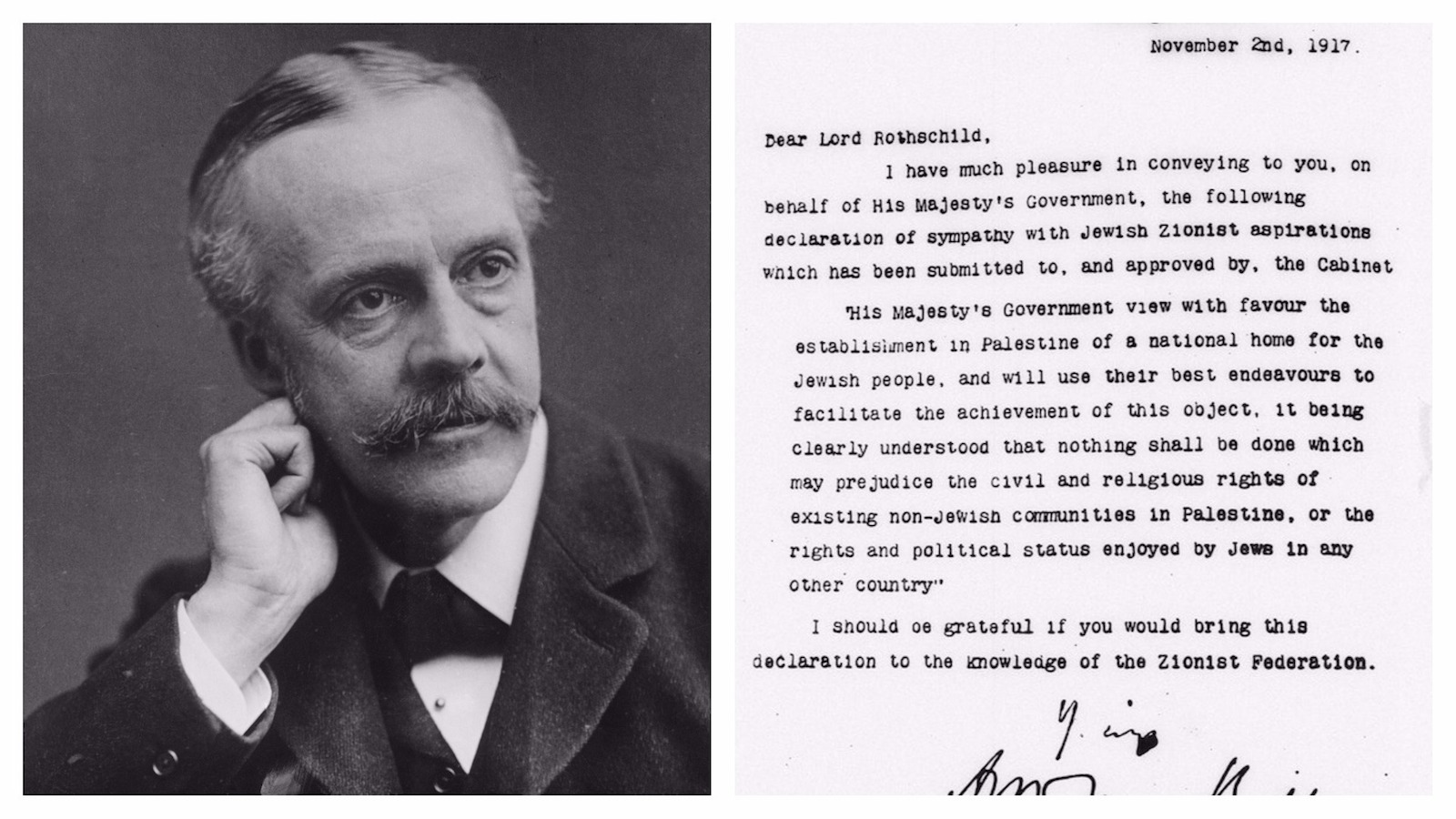
The coming months mark the centennial of Palestine’s forcible incorporation into the British Empire. In November 1917, British foreign secretary Lord Arthur Balfour declared his government’s support for “the establishment in Palestine of a national home for the Jewish people”; in December, Jerusalem fell to British troops. One hundred years later, the effects of these events continue to reverberate. This should be a time of sombre reflection about international responsibility for the unfolding tragedy in Palestine.
This responsibility should weigh heavily on the West. Walid Khalidi put it well: “The Zionists were the initiators. But they were also, as they still are, the protégés of their Anglo–American sponsors and the emanations of their power, resources, and will.” The fact is that the Israeli state can’t be credited for much originality – either in its brutality or in the hypocrisy deployed to cover it. And it is all too fitting that it was British imperialism that propelled the Zionist movement onto the world stage.
Palestine was occupied, after all, amid one of the British Empire’s last great scrambles for territory in the Afro–Asian world. The scramble was pursued amid an outpouring of imperial self-adoration. Balfour was not alone in proclaiming, wherever and whenever he could, “the extraordinary novelty, the extraordinary greatness, and the extraordinary success” of the British Empire, a system drawn together, he insisted, not by “the bonds merely of crude self-interest, but the bonds of a common belief in a great ideal.” Freedom and justice marched with British troops. These may seem the banal platitudes of an imperial state. But during its “Great War,” the British state deployed them as never before. Its propaganda set a new world standard in its scale, its organization, and its impact.
This is an appropriate time to look back to that propaganda and all that it revealed. The aspect of Britain’s wartime propaganda that has been most widely criticized is the manipulation of atrocity stories coming out of Belgium. That’s a reasonable place to start. The centerpiece of British atrocity propaganda was the “Bryce Report” of 1915, named after Viscount James Bryce. Bryce was chair of the Committee on Alleged German Outrages. As it happens, he was also a leading white supremacist and a pioneer of the kind of democracy that Britain helped Israel bring to the Middle East.
Those who know Israeli politics will find Bryce’s theories familiar. Democracy and self-government were, he insisted, the rightful preserve of civilized and conquering peoples. The key to democracy was therefore the establishment of a demographic basis for it. Africans, Asians, Indigenous peoples the world over – all were in Bryce’s judgement “subject races,” unfit for self-government. Only through colonial settlement and a restricted franchise could democracy flourish. Bryce lectured and wrote incessantly about “the risks a democracy runs when the suffrage is granted to a large mass of half-civilized men.” This great liberal’s theories were influential from Australia to the United States, and they attained near-biblical authority amongst settlers in South Africa.
Their application in Palestine, in turn, was made possible thanks to British power. This history was from the beginning steeped in propaganda. As the British war effort turned east, the Holy Land was a potent symbol. In the first instance it conjured images of the Crusades. Howevever, if the goal of Allied conquests was the defence of Christendom in the Levant, France had the stronger claim. British propaganda found a convenient alternative in support for Zionism. As Herbert Sidebotham, the Manchester Guardian’s military correspondent, explained, the Bryce Report didn’t have to do its work alone: “great as the ideal of relieving Belgium from the invader may be, the ideal of restoring the Jewish State to Palestine is comparably greater.” This could tap into deep public emotions, Sidebotham argued, and was another opportunity for Britain to deploy “ideal considerations as the allies of our military and political interests.”
No one did so with greater gusto than the Scottish writer John Buchan. Buchan is best remembered as the author of adventure novels, one of which, The Thirty-Nine Steps, was readapted for the screen in a feature film directed by Alfred Hitchcock. But he was also an accomplished propagandist. More even than Bryce, Buchan had built his public service around the imposition of white rule in South Africa. In early 1917 Britain’s Imperial War Cabinet selected him to direct the wartime propaganda service, with instructions to whip up public support for British war aims in the Middle East.
Buchan spun Britain’s eastern war as “the Last Crusade.” Tolerance and secular justice, oddly, were its supposed hallmarks. He assured his readers that the capture of Jerusalem by Allied troops was nothing less than “a parable of the cause for which fought. They would recover and make free the sacred places of the human spirit which their enemies sought to profane and enslave, and in this task they walked reverently, as on hallowed ground.” Today we see what this freedom has brought to Jerusalem. Buchan’s propaganda itself suggested a politics that was far from ecumenical.
Where Buchan excelled, after all, was in channeling racism in service of state. This is what he had done for the Empire’s cause in South Africa, using a combination of nonfiction studies and novels. And it is what he did for the Great War. Some of his bigotry will ring familiar. So it is with his description of the menace of Islam, “a fighting creed,” Buchan warned, its fanatics taking to “the pulpit with the Koran in one hand and a drawn sword in the other.” Buchan’s racist depiction of Jews, on the other hand, have fallen out of favor in polite Western society. Here, for example, is his fictionalized image of who was pulling the strings in Germany: “a little white-faced Jew in a bath-chair with an eye like a rattlesnake. Yes, Sir, he is the man who is ruling the world just now, and he has his knife in the Empire of the Tzar, because his aunt was outraged and his father flogged in some one-horse location on the Volga.”
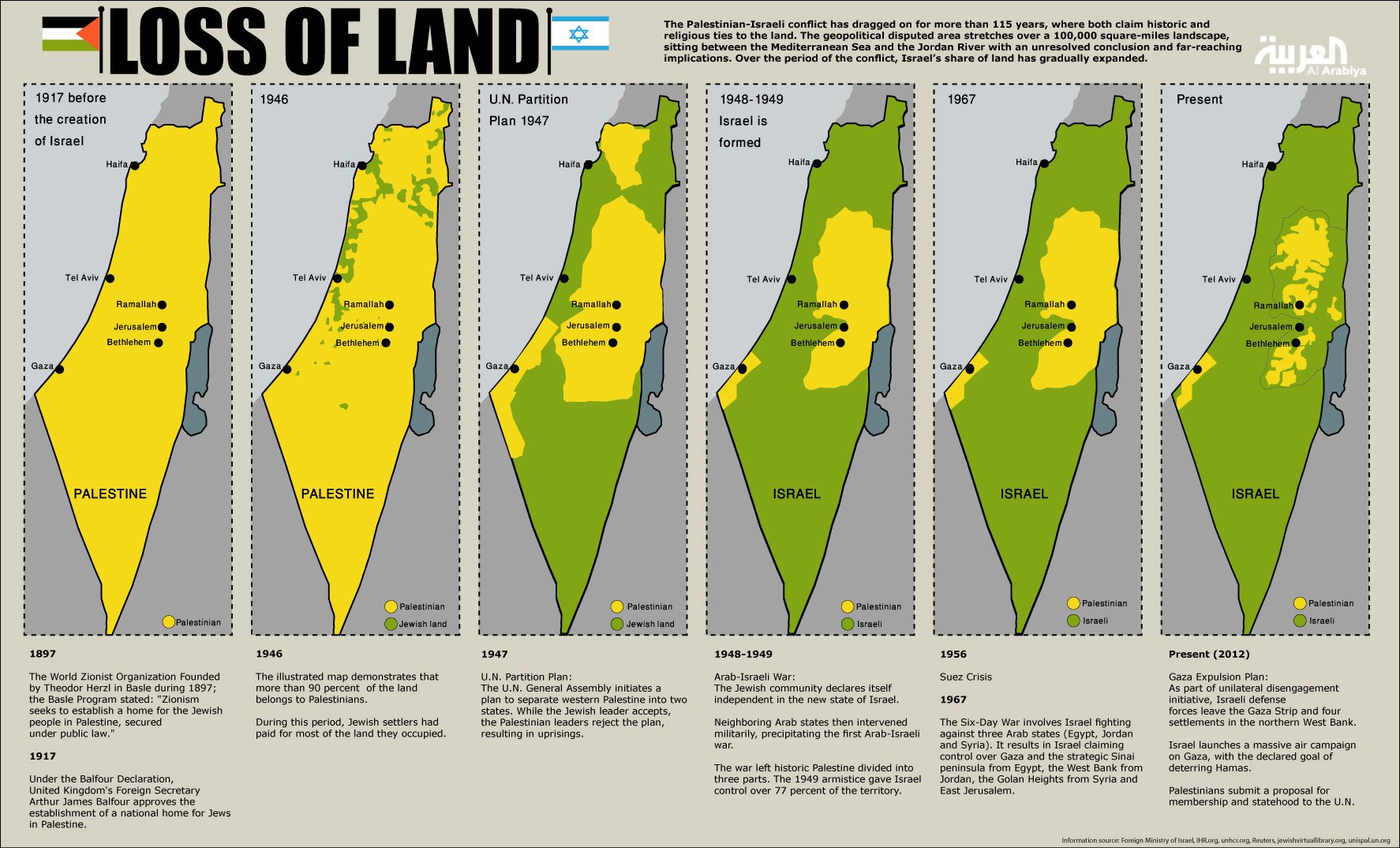
The antisemitism expressed by Buchan, and by the imperial establishment for which he acted as mouthpiece, squared more easily with support for Zionism than one might think. Jews were cast in various roles: as a subversive threat in Europe (Buchan did not forget the “Jew-anarchists”!); as a justification for Britain to hold Palestine; and as potential settlers, allies of the Empire in the east. These were not contradictions so much as a faithful expression of British settler colonialism. For Britain, colonial settlement was indeed a means of territorial expansion; but it was also a means of offloading the contradictions of industrial capitalism onto distant frontiers. Empire, as the Marxist literary critic Raymond Williams remarked, was represented in British culture as an “escape-route,” to which the ruined, the misunderstood, “the weak of every kind could be transferred.” This theme dovetailed with straight imperial calculations to structure British support for Zionism. A Jew settled in Palestine was a Jew not knocking on Britain’s doors. We would do well to remember that the first modern British statesman to clamp down on Jewish immigration, imposing the Aliens Act of 1905, was none other than Lord Balfour himself.
The worsening crisis in Palestine reflects more than a local record of colonial crimes, severe as these have been. Responsibility for it is global. Arundhati Roy was right to describe the Palestine tragedy as one of “imperial Britain’s festering, blood-drenched gifts to the modern world.” It is also a product of a history of racism and empire that extended across most of the West. On this centennial of the Balfour Declaration, reflection on this shared culpability should serve as a reminder of the responsibility for the political action that comes with it.
Originally published on 2017-10-16
About the author: Dan Freeman-Maloy is an activist and writer based in Montreal. He holds a Ph.D. from the University of Exeter, completed through its European Centre for Palestine Studies, and can be contacted at dfm@notesonhypocrisy.com.
This article extends from a longer piece, entitled “Remembering Balfour: Empire, Race and Propaganda,” which the journal Race & Class is publishing to mark the centennial of the Balfour Declaration. The journal’s editors have lifted paywall restrictions to make that article widely accessible for the centennial, and it is available in full here.
We would like to ask you to consider a small donation to help our team keep working. We accept no advertising and rely only on you, our readers, to keep us digging the truth on history, global politics, and international relations.
The "Nakba" day (or “catastrophe”) is commemorated on every 15 May by Palestinians and their families who were ethnically cleansed by Israel from their ancestral lands and homes in 1948. The ethnic cleansing of 750,000 Palestinians was accompanied by widespread massacres and looting. The biggest misconception about the “Nakba” was that it was due to the fighting that broke out in 1948 between the Zionist/Israeli forces and the Palestinians/Arab armies. This has been proven by many historian to be false. In reality the ethnic cleansing was not due to the 1948 war, but was actually a well planned Zionist operation ...
The WarmongersThe war, which began in August 1914 – to contemporaries the Great War, to posterity the First World War – marked the end of one period of history and the beginning of another. Starting as a European war, it turned in 1917, with the entrance of the US into a world war. The spark that triggered it off was the assassination of the Austrian heir-presumptive, Archduke Franz Ferdinand (1864−1914), by a Bosnian nationalist of Serb origin – Gavrilo Princip[1], a member of the Young Bosnia (Mlada Bosna) movement, in Sarajevo on June 28th, 1914 on his official visit to ...
A decade ago I published a book, Israel and the Clash of Civilisations, that examined Israel’s desire to Balkanize the Middle East, using methods it had refined over many decades in the occupied Palestinian territories. The goal was to unleash anarchy across much of the region, destabilising key enemy states: Iran, Iraq, Syria and Lebanon.The book further noted how Israel’s strategy had influenced the neoconservative agenda in Washington that found favour under George Bush’s administration. The neocons’ destabilisation campaign started in Iraq, with consequences that are only too apparent today.My book was published when efforts by Israel and the neocons to move ...
Secretary of State Hillary Clinton (and President Obama — and some NATO partners) did it previously to Libya, and here was the result (as discussed by the retired British career diplomat Craig Murray, at his craigmurray.org.uk, who has kindly allowed me to distribute it to other newsmedia) [and I as editor will add a few clarifiers and questions in brackets] (and then afterward, I shall add my own comments); so, here is Craig Murray:This is the result of NATO bombing of Sirte to “enforce the no-fly zone” in Libya.When the neo-cons in the UK parliament and the serial warmonger Hillary Clinton call for a ...
The ongoing crisis in Ukraine and unseemly role of Poland in its instigation and development makes us take another look at the historical context of the Polish-Ukrainian relations. We will focus on dramatic repressions of the Ukrainian minorities in Eastern Poland in 1921-1939 at the territories annexed by Jozef Piłsudski’s government from the Soviet Russia according to Peace of Riga 1921, which eventually triggered ultra-Nationalist Ukrainian terror against the Poles during the WWII (culminating in massacres in Volhynia and Eastern Galicia in 1943-1944).Poland, which used to be a part of the Russian Empire, emerged at the European political map in November ...
So the moment we’ve been holding our breaths for a week finally came. In the end, I am mighty glad that this particular strike seems more like the impotent thrashing of the neocon snake that didn’t dare to attack places where Russian servicemen were likely to be killed, than it does the start of World War III. For the moment, at least, thank God.But the fact that it was a fairly limited strike — compared to what it might have been — in which the majority of missiles failed to hit their targets, having been eliminated by Soviet-era air defences, ...
The main church of the Serbian Orthodox Patriarchate in Kosovo in PećThe series of long-scale Christian national movements in the Balkans, triggered off by 1804 Serbian revolution, decided more than in the earlier centuries, the fate of Serbs and made ethnic Albanians (about 70% of whom were Muslims) the main guardians of Turkish order in the European provinces of Ottoman Empire. At a time when the Eastern question was again being raised, particularly in the final quarter of the 19th and the first decade of the 20th century, Islamic Albanians were the chief instrument of Turkey’s policy in crushing the ...
One of the most hyped “events” of American television, The Vietnam War, has started on the PBS network. The directors are Ken Burns and Lynn Novick. Acclaimed for his documentaries on the Civil War, the Great Depression and the history of jazz, Burns says of his Vietnam films, “They will inspire our country to begin to talk and think about the Vietnam war in an entirely new way”.In a society often bereft of historical memory and in thrall to the propaganda of its “exceptionalism”, Burns’ “entirely new” Vietnam war is presented as “epic, historic work”. Its lavish advertising campaign promotes its ...
The U.S. State Department annually publishes an extremely biased report on human rights around the world. Conveniently, the report omits one of the most systemic violators of human rights on the planet. Under Donald Trump, the United States has graduated from systemic human rights violator to human rights pariah, as witnessed by recent murders and assaults by police of innocent people on the streets of America. Although the United States has historically been more than willing to criticize the human rights policies of other countries, including in the venue of the United Nations, it has bristled at attempts to have ...
The UK Parliament just confirmed what the alternative media has been saying for years.Specifically, a new report from the bipartisan House of Commons Foreign Affairs Committee – based on interviews with all of the key British decision-makers, review of documents, and on-the-ground investigations in Africa – found that the Libyan war was based on lies, that it destroyed the country, and that it spread terrorism far and wide.The War Based On Bogus Intelligence … Like the Iraq WarInitially, the report finds that the threat to civilians from Libyan government forces was dramatically overstated:Former French Foreign Minister Alain Juppé, who introduced ...
As President Trump affirms publicly his commitment to friendly relations with Russia at an economic summit in Hanoi, (the first President since Franklin Roosevelt to do so), the press backs the special prosecutor seeking to indict him, while NATO continues to ramp up its forces on Russia’s borders with Europe by bringing in tanks and other ‘defensive’ weapons. Although the United States was founded on Christian principles, and has one of the highest percentages of people practicing a religion of any Western country, most Americans seem not to realize that their country is building a case for nuclear war with the ...
How incredible is this...The United States is technically not at war with any country right now but dropped more than 26,000 bombs in just 2016 and this under an "anti-war" President.We have an entire generation of Americans who have lived only under a system of "perpetual war".The time is long overdue to redefine these issues.Map of the US bombed states in 2016 with the number of dropped bombsOriginally published on 2017-01-06Author: Ben SwannSource: Ben Swann FBOrigins of images: Facebook, Twitter, Wikimedia, Wikipedia, Flickr, Google, Imageinjection & Pinterest.Read our Disclaimer/Legal Statement!Donate to Support UsWe would like to ask you to consider ...
The American political theorist and Sterling Professor of Political Science at Yale University, Robert A. Dahl (1917−2014) left in his immense scientific writing opus considerable remarks on democracy. Here, I would like to summarize his theoretical approaches to democracy.Historical development of democracyAccording to him, democracy was created there, where existed the best conditions for its development. R. A. Dahl assumes, that this happened already in the time when people lived in a system of tribal bonds. He thinks, that democracy was the standard and universal form of the government in prehistoric society. Later, democracy was replaced by other political systems and ...
The Axis powers invaded Yugoslavia on 6 April 1941. Vladko Maček, the leader of the Croatian Peasant Party (HSS) which was the most influential party in Croatia at the time, rejected offers by the Nazi Germany to lead the new government. On 10 April the most senior home-based Ustaša, Slavko Kvaternik, took control of the police in Zagreb and in a radio broadcast that day proclaimed the formation of the Independent State of Croatia (Nezavisna Država Hrvatska, NDH). The new Independent State of Croatia" was established as a pro-Nazi government. It was dedicated to a clerical-fascist ideology influenced both by ...
Because the request for its membership is a serious breach of the international law, the Constitution of UNESCO, the legally binding UN Security Council resolution 1244 (1999) and the Charter of the UN whose Article 25 says that „The Members of the UN agree to accept and carry out the decisions of the Security Council in accordance with the present Charter”.Because according to the UN Security Council resolution 1244, which reaffirms the sovereignty and territorial integrity of the Federal Republic of Yugoslavia (now Serbia), Kosovo and Metohija is an integral part of the Republic of Serbia, under the administration of ...
This article about the United States bearing the burden with allies first appeared in the Fall 2016 issue of Providence‘s print edition that was released last December. To read the original in a PDF format, here. To receive a complete copy of future issues as they are published, subscribe here.“It’s important to make sure our alliances are as strong as they possibly can be,” a presidential candidate declared not long ago. He promised to “work with our European friends” and explained that “building a durable peace will require strong alliances.”[i]Striking a similar theme, another candidate promised “to work in concert with ...
Russia and its President, Vladimir Putin, a little more than a year ago, in July 2014 were the focus of attention in Europe and North America, accused, without a shred of forensic evidence, of shooting down an unarmed civilian Malaysian airliner over eastern Ukraine. The Russians were deemed out to restore the Soviet Union with their agreement to the popular referendum of Crimean citizens to annex into the Russian Federation and not Ukraine. Western sanctions were being thrown at Russia by both Washington and the EU. People spoke of a new Cold War. Today the picture is changing, and profoundly. ...
When most people think of Sweden, they think of IKEA furniture, depressing murder mysteries and a foreign policy of strict neutrality.Yet 400 years ago, Sweden was a major military power. Indeed, it was even an empire, a fact that must make today's Swedish leftists cringe.Under young King Gustavus Adolphus, a brilliant and innovative military commander, Sweden in the early 1600s became a sort of Nordic Israel (which must also make Swedish leftists cringe). Sweden was a poor, thinly populated nation that couldn't match the resources of larger rivals such as France and Russia.So, Gustavus Adolphus had to devise a more flexible, mobile ...
“What Russia is sponsoring and doing [in Syria] is not counter-terrorism it is barbarism”Samantha Power, US Representative to the United NationsThe US representative to the United Nations, Ambassador ‘Ranting Sam’ Samantha Power, accused the Russian and Syrian governments of ‘barbarism’, claiming Moscow or Damascus had attacked an unarmed United Nations humanitarian convoy delivering aid to civilians in Aleppo. No evidence was presented. Rants and threats do not require facts or proof; they only require vehement emotional ejaculations and compliant mass propaganda organs.‘Barbarians’, to be clear, evoke images of leaders and groups, which abjure all civilized norms and laws. They only ...
The following text is the introductory chapter of Professor Tim Anderson’s forthcoming book entitled The Dirty War on Syria.Although every war makes ample use of lies and deception, the dirty war on Syria has relied on a level of mass disinformation not seen in living memory. The British-Australian journalist Philip Knightley pointed out that war propaganda typically involves ‘a depressingly predictable pattern’ of demonising the enemy leader, then demonising the enemy people through atrocity stories, real or imagined (Knightley 2001). Accordingly, a mild-mannered eye doctor called Bashar al Assad became the new evil in the world and, according to consistent ...