
United States Imperialism Continues War in Afghanistan and the Destabilization of Africa
The war in Afghanistan continued through the 1980s into the early 1990s, when the Soviet Union withdrew its support for the government of Najibullah. By 1992, the Mujahideen had taken over the capital. In later years, the Taliban became dominant soon establishing another regime in Kabul [...]
In just one week the United States government will commemorate its 16th anniversary in the bombing and occupation of Afghanistan.
This war did not really begin in 2001 resulting from the attacks on September 11 where planes were hijacked and flown into the World Trade Center in New York City and the Pentagon headquartered right outside of Washington, D.C.
U.S. involvement in the destabilization of Afghanistan goes back to the late 1970s when the People’s Democratic Party of Afghanistan (PDP) led a socialist-oriented administration which advanced the cause of working people and farmers as well as providing fundamental civil rights to women. During this period Afghanistan was aligned with the Soviet Union and other progressive and non-capitalist states. Modernization programs were underway aimed at enhancing the standard of living and educational levels of the masses of people.
The PDPA was formed in 1965 by uniting several factions within the Socialist Party of Afghanistan. Later in 1973, the party assisted in the overthrow of the monarchy and the establishment of the Republic of Afghanistan.
Factional disputes within the PDPA led to the ascendancy of Barbrak Kamal as head-of-state in Afghanistan in December 1979. This move was supported by the Soviet leadership which deployed military forces into Afghanistan to ensure the stability of the new government.
Taking advantage of the discontent among feudal, monarchist and other counter-revolutionary elements in the country, the U.S. through the Central Intelligence Agency (CIA) and the Pentagon armed rebels with specific aim of derailing the revolutionary process. The formation of al-Qaeda occurred in these years while thousands of fighters were recruited within Afghanistan and abroad to join the campaign against the socialist government.
This war of destabilization was coordinated at the highest levels of the U.S. government under the administrations of both Jimmy Carter and Ronald Reagan. The anti-communist rebels were promoted in the U.S. as freedom fighters seeking to reclaim the historical traditions of Afghan people. Much was made of the presence of Soviet troops in Afghanistan evoking the notion of the red menace and overtaking of states by Communism.
The war in Afghanistan continued through the 1980s into the early 1990s, when the Soviet Union withdrew its support for the government of Najibullah. By 1992, the Mujahideen had taken over the capital. In later years, the Taliban became dominant soon establishing another regime in Kabul.
From the mid-to-late 1990s, al-Qaeda was considered to be more of an adversary to the U.S. resulting in it being projected through the corporate media as a major threat. The August 1998 bombing of U.S. embassy buildings in Nairobi, Kenya and Dar es Salaam, Tanzania prompted the Bill Clinton administration to bomb Afghanistan and the Republic of Sudan under the guise of both states serving as a base for Osama bin Laden.
Since 2001, the Pentagon under purported NATO command has been bombing and conducting ground operations in Afghanistan and neighboring Pakistan. As of one year ago, the official statistics supplied by the U.S. military says 2,386 U.S. troops have been killed and over 20,000 wounded. Also 1,173 U.S. civilian contractors have been killed in the theater of war.
Troops from other NATO states account for another 1,000 or more deaths. Other casualties such as closed head injuries, psychological disorders, etc. extend into the hundreds of thousands. In regard to the number of Afghans and Pakistanis killed, the numbers are largely incalculable.
In what I consider to be a conservative estimate, the Washington Post reported in 2015 that:
“War has directly resulted in the deaths of 149,000 people in Afghanistan and Pakistan between 2001 and 2014, according to estimates in a new report released by the Costs of War project at Brown University’s Watson Institute. That figure includes U.S. military members, contractors, and opposition fighters – as well as at least 26,270 civilians in Afghanistan, and 21,500 in Pakistan.” (June 3)
This same article carries a quote from the study’s author, Boston University professor Neta Crawford which says:
“While the U.S. formally ended combat operations in Afghanistan in December 2014, U.S. uniformed troops remain advising the Afghan security forces and engaging in combat. The war has not diminished in intensity. Rather, in several ways, most notably, in the numbers of civilians and Afghan military and police killed, the war has escalated.”
Figures included in the report show that civilian deaths in Afghanistan appear to have grown over the past few years. Bombings, drone attacks and ground operations have continued under the administrations of George W. Bush, Barack Obama and now Donald Trump.
Another article from the New York Times dated June 11, 2017 indicates that all of the reported U.S. combat deaths in Afghanistan this year were related to military engagements with the Islamic State of Iraq and Syria (ISIS) local affiliate called the Islamic State of Khorasan. Therefore, the principal enemy of U.S. forces has gone from al-Qaeda to the Taliban and the Haqqani Network to now ISIS.
President Trump recently announced that he is deploying an additional 4,000 Pentagon troops to the country. At his infamous United Nations speech last week he attacked Pakistan as well for being partly responsible for the problems Washington is having in the region. Pakistan has denied the allegations from the U.S. leader.
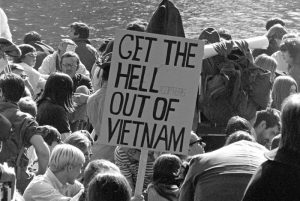
Consequently, the war in Afghanistan and Pakistan will continue until the U.S. suffers an outright military defeat or is forced to withdraw by the people in this country. The Vietnam War, which is the subject of a controversial documentary by Ken Burns now being shown over PBS, ended as a result of the combined revolutionary military resistance of the Democratic Republic in the North and the National Liberation Front in the occupied South.
Reflections on Imperialist Militarism and the African Crisis: The Cases of Chad, Togo and Libya
In closing I want to make a few remarks on some aspects of the political and security situation in Africa. Although not routinely addressed by the antiwar and peace movements in the U.S., the imperialists are continuing their efforts to halt development and exert total control over African Union (AU) member-states.
Chad, an oil-producing former French colony in western Central Africa, has been placed by Trump on the list of countries whose nationals are banned from entering the U.S. This came as a surprise for some considering the pro-Washington and Paris stance of successive Chadian governments.
An article published by Africa News noted:
“The inclusion of Chad is hinged on the failure of Ndjamena to share terrorism-related and other crucial information the U.S. required, the White House confirmed. Trump signed the order on March 6 banning travelers from six Muslim-majority countries – Iran, Libya, Somalia, Sudan, Syria and Yemen – for 90 days and locked out most aspiring refugees for 120 days.” (Sept. 25)
Only Iraq has been removed so far from the list in exchange for the targeting of Chaldean and other nationals from the country in the U.S. The Democratic People’s Republic of Korea (DPRK) and the Bolivarian Republic of Venezuela were added to the latest list issued by Trump.
Newsweek magazine said in a report published on September 25, that:
“Given Chad’s long history of cooperation with the United States and other Western powers—such as France—on counterterrorism, it appears strange that Chadian President Idriss Déby would withhold information from his counterpart in Washington. After 9/11, the State Department set up a counterterrorism program to assist Chad, Mali, Mauritania and Niger in monitoring the movement of people and goods. This initiative was succeed in 2005 by the Trans-Saharan Counterterrorism Initiative, of which Chad remains a member. U.S. troops have also engaged in training their Chadian counterparts, and President Barack Obama sent 80 troops to the region in 2014 to help in the search for the almost 300 schoolgirls kidnapped by Boko Haram. The troops operated surveillance flights and drones from Chad.”
The West African state of Togo has been rocked in recent months by mass demonstrations demanding the resignation of longtime President Faure Gnassingbe. The Gnassingbe family has ruled this nation since 1967, when Eyadema Gnassingbe engineered a military coup on behalf of France.
These demonstrations and strikes in Togo have been attacked by the government in Lome. Last month 15 leading members of the Pan-African National Party (PNP) were arrested and quickly prosecuted.
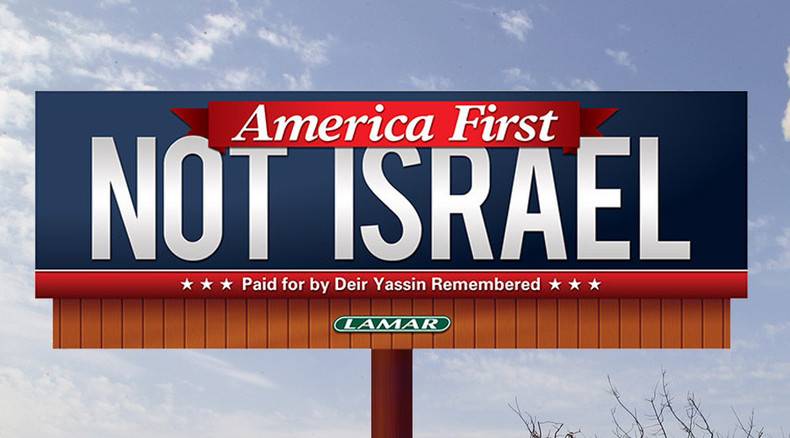
Togo’s parliament dominated by the Gnassingbe-allied party has attempted to pass legislation to liberalize the political system. Moreover, one of the most significant aspects of these developments is that the state of Israel was forced to postpone a planned summit meeting between Prime Minister Benjamin Netanyahu and numerous African states. Several of the AU member states have rejected the summit in solidarity with the Palestinians and other peoples of the region.
Finally, the North African state of Libya is being subjected to yet another United Nations plan to bring stability to the oil-rich nation, which prior to the intervention by the Pentagon and NATO in 2011, was the most prosperous nation on the continent. Hundreds of thousands of people have been killed and wounded in Libya over the last six years.
The country is now a source of instability and human trafficking throughout North and West Africa along with the Mediterranean regions in southern Europe. Dozens have died in recent weeks in failed attempts to flee to the European Union states.
Libya can never know peace until the people unite behind a national program of reconstruction. Pentagon and NATO troops as well as Western advisers should be forced to leave the country since they are the source of the ongoing crises. It will only be under such a movement towards unification and renewal that genuine peace, security and development will be realized in the country and region.
Originally published on 2017-10-04
Note: The above text was presented at a public meeting entitled “Stop Imperialist War at Home and Abroad!” organized by Workers World Party Detroit branch on Saturday, September 30, 2017.
Origins of images: Facebook, Twitter, Wikimedia, Wikipedia, Flickr, Google, Imageinjection, Public Domain & Pinterest.
Read our Disclaimer/LegalStatement!
DonatetoSupportUs
We would like to ask you to consider a small donation to help our team keep working. We accept no advertising and rely only on you, our readers, to keep us digging the truth on history, global politics and international relations.
Yada…yada…yada. The discussion on the unprovoked and planned aggression by Georgia on South Ossetia is futile and moot because Russian President Dmitry Medvedev announced last week that the Russian Government would recognize the independence and freedom of South Ossetia and Abkhazia. On August 25, 2008, both houses of the Russian Parliament or Duma voted unanimously to recognize the independence of both South Ossetia and Abkhazia. On August 26, 2008, Russian President Dmitry Medvedev announced that the government of the Russian Federation officially recognized the independence of South Ossetia and Abkhazia.Save your rhetoric. Georgia has lost those areas permanently. Ossetians and ...
Origins of images: Facebook, Twitter, Wikimedia, Wikipedia, Flickr, Google, Imageinjection, Public Domain & Pinterest.Read our Disclaimer/Legal Statement!Donate to Support UsWe would like to ask you to consider a small donation to help our team keep working. We accept no advertising and rely only on you, our readers, to keep us digging the truth on history, global politics and international relations.[wpedon id="4696" align="left"]SaveSave
US-backed forces overthrow Goulart in Brazil (1964) Left-wing nationalist Joao Goulart became the democratically elected president of Brazil in September 1961, setting alarm bells clattering in the liberal Kennedy administration. Goulart began implementing structural reforms in the massive resource-rich South American country, that would help integrate the general population into society. (1) The United States was loathe to sit helplessly by as this movement came within “our hemisphere”, as President John F. Kennedy described it. Goulart, also known as “Jango”, was hostile toward US capitalist democracy that seeks to primarily serve elite powers.Shortly before his death, Kennedy had been preparing the groundwork to oust Goulart, ...
TRANSCRIPT:Harold Channer (HC): Good evening and welcome very, very much to the conversation. We’re pleased to welcome to the program, Sean Gervasi. He is a professor and academic who is concerned with economics and particularly with what is relevant to what we want to talk about tonight. He has just returned from a long stay in Belgrade, Yugoslavia, and knows something of that situation. Sean Gervasi, welcome very, very much to the conversation, and back to New York. Before we go into some detail about what in the world is going on in terms of the Balkans, from your experience ...
The European Union (the EU) is officially characterized by a purposeful diffusion of political authority between supranational and intergovernmental institutions. Based on the idea of (quasi)shared leadership, it formally relies on a delicate institutional balance guarding declared equality between its ever more diverse members and managing potential and real tensions between the more and less populated and developed states. Such tensions are present in any federal construct and have been a key concern since the “original six” (EU6) founded the (West) European Coal and Steel Community (the ECSC) in 1951 (the Benelux, West Germany, France, and Italy).The formal facts and ...
Origins of images: Facebook, Twitter, Wikimedia, Wikipedia, Flickr, Google, Imageinjection, Public Domain & Pinterest.Read our Disclaimer/Legal Statement!Donate to Support UsWe would like to ask you to consider a small donation to help our team keep working. We accept no advertising and rely only on you, our readers, to keep us digging the truth on history, global politics, and international relations.[wpedon id="4696" align="left"]
The official end of the Cold War era in 1989 brought during the first coming years a kind of international optimism that the idea of the „end of history“ really could be realized as it was a belief in no reason for the geopolitical struggles between the most powerful states. The New World Order, spoken out firstly by M. Gorbachev in his address to the UN on December 7th, 1988 was originally seen as the order of equal partnership in world politics reflecting „radically different international circumstances after the Cold War“.[1]Unfortunately, the Cold War era finished without the „end of ...
US foreign policy has nurtured Al Qaeda, a creation of the CIA for more than 35 years, with the support of Pakistan’s Inter Services Intelligence (ISI) and Saudi Arabia’s infamous General Intelligence Presidency (GIP). Lest we forget Osama bin Laden was recruited in 1979 by the CIA at the outset of the Soviet- Afghan war.A complex network of Al Qaeda affiliated terrorist organizations overseen by US and allied intelligence agencies has unfolded, extending across the Middle East, North Africa, sub-Saharan Africa, Central Asia, Western China, South and South East Asia.Rand Corporation Report 2012While mainstream analysis regarding CIA covert support of “jihadist” terrorist entities is a ...
Rising tensions in the global relations and hotbeds of old and new crises call for unity and efforts of all peace forces for closing foreign military bases, particularly U.S. and NATO foreign military bases, around the globe. The peace forces are obligated to send a clear message that U.S. and NATO foreign military bases represent the tools of hegemonism, aggression, occupation and that as such must be closed.Peace and inclusive development, elimination of hunger and misery require redistribution of spending for maintenance of military bases in favor of development needs, education, and health services. After the end of the Cold ...
The reason Hillary Clinton was crushed in the electoral college during this election is because she lost Wisconsin, Michigan, and Pennsylvania . The reason behind the unprecedented loss can be summed up in two sentences. We will not forget. We will not forgive.These three states are home to the Serbian-American community. For most of them, their traditionally Democratic ticket vote turning Republican was a clear repudiation of Hillary Clinton's role in the Balkan genocide."An American Serb generally doesn't vote FOR anyone, but AGAINST a Biden, a Clinton, a McCain, against whoever Madeleine Albright supports, against whoever bombed Serbia, recognized Kosovo... Wait, was Dubya a ...
Seventy-five years ago Adolf Hitler launched the biggest and most destructive military campaign in history when three million German and allied troops invaded the Soviet Union along a 1,000-mile front.Operation Barbarossa – the codename for the German invasion of Russia - was no ordinary military campaign: it was an ideological and racist war, a war of destruction and extermination that aimed to kill Jews, enslave the Slavic peoples and destroy communism. The result was a war in which 25 million Soviet citizens died, including a million Jews, executed by the SS in 1941-1942 – an action which became the template ...
The U.N. Organization was established in 1945 for the very security reason – to preserve the peace in the world. We believe that the governmental bodies and administrative structures of the U.N. have to be composed by the proved democratically oriented politicians and magistrates but above all this requirement has to be applied to the post and function of the U.N. Secretary-General. Nevertheless, in the history of the U.N. there is at least one (extremely) problematic appointment to the post of the U.N. Secretary-General: Kurt Waldheim from Austria.On the official website of the U.N. about its fourth Secretary-General one can ...
Kosovo is to set up a regular standing army, officially defying everyone, including NATO, although the bloc’s objections are only half-hearted. The alliance would prefer that the illegal entity of Kosovo change its constitution in order to create an army. Just amend it, and then you’re free to have one. This stance looks more like connivance than any real opposition to the move.Washington’s position is more or less the same. It supports "the gradual, transparent transformation of the Kosovo Security Force into a multiethnic force in line with NATO standards" as long as it complies with the provisions of Kosovo’s constitution, reflecting that “entity’s multiethnic ...
The North Atlantic Treaty Organization was formed in 1949. According to its website, NATO was the first peacetime military alliance the United States entered into outside of the Western Hemisphere. Its original intent was to maintain a military line of defense against the USSR, which Washington considered the primary threat to its newfound dominance of Europe and much of the rest of the world, including many former colonies of European nations. Seen from another perspective, Washington wanted to expand its imperial reach. Given the physical and economic destruction suffered by most European nations during World War Two—and the relative lack ...
On March 23rd, Gallup headlined “South Sudan, Haiti and Ukraine Lead World in Suffering”, and the Ukrainian part of that can unquestionably be laid at the feet of U.S. President Barack Obama, who in February 2014 imposed upon Ukraine a very bloody coup (see it here), which he and his press misrepresented (and still misrepresent) as being (and still represent as having been) a ‘democratic revolution’, but was nothing of the sort, and actually was instead the start of the Ukrainian dictatorship and the hell that has since destroyed that country, and brought the people there into such misery, it’s now by far ...
During the early 1960s, apartheid South African diplomats were increasingly concerned their country’s plummeting reputation would affect relations with America. In one notorious incident, of March 1960, South African police shot dead 69 black protesters in Sharpeville, a township about 40 miles from Johannesburg.Such atrocities sparked protests against the racist regime on the streets of England, America’s great ally, which surely did not go unnoticed in Washington. Aware of the changing climate, South Africa’s dignitaries pleaded with their American counterparts for continued assistance. They need not have worried that the earth’s dominant power would desert them.As long as the United ...
After 17 bloody years, the longest war in US history continues without relent or purpose in Afghanistan.There, a valiant, fiercely-independent people, the Pashtun (Pathan) mountain tribes, have battled the full might of the US Empire to a stalemate that has so far cost American taxpayers $4 trillion, and 2,371 dead and 20,320 wounded soldiers. No one knows how many Afghans have died. The number is kept secret.Pashtun tribesmen in the Taliban alliance and their allies are fighting to oust all foreign troops from Afghanistan and evict the western-imposed and backed puppet regime in Kabul that pretends to be the nation’s ...
What do you think of when you hear the name Colonel Gaddafi? Tyrant? Dictator? Terrorist? Well, a national citizen of Libya may disagree but we want you to decide.For 41 years until his demise in October 2011, Muammar Gaddafi did some truly amazing things for his country and repeatedly tried to unite and empower the whole of Africa.So despite what you’ve heard on the radio, seen in the media or on the TV, Gaddafi did some powerful things that are not characteristic of a “vicious dictator” as portrayed by the western media.Here are ten things Gaddafi did for Libya that you may not know about…1. In Libya a home is ...
Chris Deliso of Balkanalysis points out the latest travesty of the Western media: 59,000 stories on Auschwitz, three on Jasenovac. As if the third-largest death camp in Nazi-occupied Europe simply never existed. Franjo Tudjman certainly thought so, and it appears the current Croatian leadership shares his "historical" perspective.Contemporary German estimates of Serbs murdered by the Ustasha (in Jasenovac and elsewhere) ranged as high as 750,000. Wiesenthal center uses the number of 600,000. Serbian researchers have spoken of up to 700,000 victims. Modern revisionists, Croat and otherwise, talk of 30-100,000, at most. Among them is the U.S. Holocaust Memorial Museum, which ...
General Adolf Heusinger (August 4, 1897 – November 30, 1982) was a German general officer who briefly served as Adolf Hitler’s Chief of the General Staff of the Army during World War II and served as the first Inspector General of the Bundeswehr, the West German armed forces, from 1957 to 1961. Heusinger served as Chairman of the NATO Military Committee from 1961 to 1964.Heusinger was born in Holzminden, in the Duchy of Brunswick, German Empire. He entered the Imperial German Army on June 17, 1915, and was assigned to 7. Thüringisches Infanterie-Regiment Nr. 96, an infantry regiment raised in ...