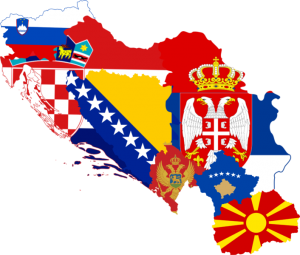

November 1991 is a month and year that will forever live in infamy when it comes to one of the most grievous crimes committed under the rubric of Western foreign policy, as it was on this month in this year that the break-up and destruction of the Socialist Federal Republic of Yugoslavia (SFRY) was set in train.
The Arbitration Commission of the Peace Conference on Yugoslavia was a body set up in 1991 by the Council of Ministers of the European Economic Community (EEC) in response to the conflict that had broken out between separatists in Slovenia and Croatia and the Yugoslav People’s Army (JNA) earlier that year. It was tasked with providing the peace conference with legal advice and on 21 November, in the first of its legal opinions on the crisis, it determined that Yugoslavia was “in the process of dissolution.”
Just four simple words, yet taken together they constituted a blatant violation of the Yugoslav constitution. They are words which still today call to mind Rome adjudicating on the destruction of Carthage.
From that moment on Yugoslavia’s fate was sealed, though it would take a protracted and bloody civil war before it was finally consigned to history, ending a multiethnic state founded on the principle of international brotherhood and solidarity that had emerged from the ashes of a central European continent devastated by the 1936-45 war against fascism.
The Western depiction of the break-up of Yugoslavia would have us believe that it was down to the inherent barbarity and cruelty of the Serbs, the largest ethnic group in the former SFRY, in attempting to suppress the legitimate right of the other constituent Yugoslav peoples – Slovenes, Croats, Kosovan Albanians, etc. – to self-determination. In this narrative the Serbs – a people who numbered among the most of any single ethnic group killed by the Nazis and their collaborators in the Second World War – were summarily and disgracefully demonized to an extent unparalleled in the postwar period.
In order to understand the break-up of Yugoslavia it is important to understand something of its history. The six Balkan republics of Bosnia and Herzegovina, Croatia, Macedonia, Montenegro, Serbia, and Slovenia were brought together after the Second World War in 1945 to form the Socialist Federal Republic of Yugoslavia under the leadership of Josip Broz Tito, a Croat who led the Partisan resistance to the Nazi occupation of the Balkans and the old monarchist kingdom of Yugoslavia. Their resistance was so effective and determined that the Germans were forced to divert considerable men and resources in order to meet it.
Between 1960 and 1980 Yugoslavia enjoyed a period of sustained economic growth that funded its commitment to social and economic justice. Free health care and education was provided as a right for all its citizens regardless of ethnicity, as was the right to work, a living wage, affordable housing and utilities, while most of its economy came under state ownership.
As a founding member of the Non-Aligned Movement of nations that refused to be subsumed into either the Soviet or Western blocs during the Cold War, Yugoslavia enjoyed considerable influence and prestige on the international stage.
Yet despite Tito’s refusal to be subsumed into the Soviet Bloc, Yugoslavia remained safe from capitalist penetration while the Soviet Union existed as a countervailing force to US-led western imperialism. As soon as the Soviet Union collapsed, however, this protective cloak was removed and the die was cast.
Fuelling the economic growth enjoyed by Yugoslavia during the ‘60s and ‘70s was its decision to borrow heavily from the West in order to invest in industry and the production of both export and consumer goods. This rendered the Yugoslav economy vulnerable to the fluctuations of global capitalism. And so it proved, when as a result of the world recession of the 1970s export markets contracted with the result that Yugoslavia’s export production dried up along with its ability to service its debts. In response the IMF demanded a restructuring of the state’s economy in order to prioritize debt repayment. Stuck between the hammer of indebtedness and the anvil of continued borrowing in order to subsidize its commitment to the provision of education, health care, housing and social security for its citizens, by the late 1980s the Yugoslav economy was in free fall.
It was at this point that central banks moved in at the behest of policy-makers in Washington, London and Bonn. Determined to break up the last socialist country in Europe, they threatened to institute an economic blockade unless the Yugoslav government agreed to hold separate elections in each of its six republics. The passing of the US Foreign Operations Appropriations law 101-513 in 1991 contained a section relating specifically to Yugoslavia, stipulating that all loans, aid and credits would be cut off within six months unless elections were held.
The most devastating provision of the law stipulated that only the forces within Yugoslavia deemed democratic by Washington would now receive loans from the US. Various right-wing factions in each of the six republics benefited directly from this provision and became the recipients of US largesse. In a climate of growing economic crisis it was a measure guaranteed to exacerbate ethnic tensions and give succor to centrifugal and separatist forces within SFRY.
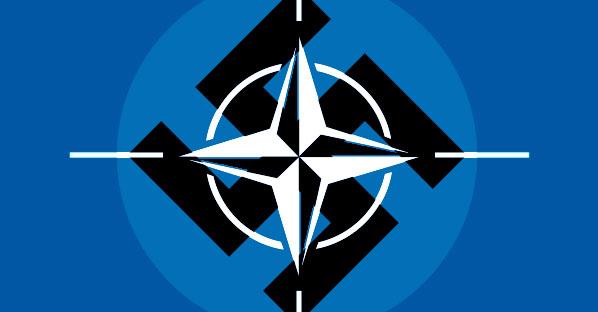
Germany recognized the secession of first Slovenia and Croatia in December 1991, whereupon civil war ensued. It lasted for the next eight years until a three-month NATO air war unleashed against the Serbs, who had refused to acquiesce in the break-up of the federal republic, brought it to an end.
As Tariq Ali observed at the time, “American strategists, desperate to retain NATO as their battering-ram in new Europe, maneuvered Europe into a war in order to prove that NATO had a permanent function, that it was the ultimate arbiter and could act alone, presenting the rest of the world with a fait accompli.”
Atrocities were committed by all sides in the conflict, yet it was the Serbs who carried the can. During the trial of Serbian President Slobodan Milosevic’s in The Hague evidence of genocide against his government was never produced. Yet the former Serb leader was only personally exonerated in March of this year in a five-volume ruling of the International Criminal Tribunal for the former Yugoslavia (ICTY) in the prosecution of Bosnian Serb leader Radovan Karadžić.
NATO’s relevancy and continued purpose was affirmed with its role in the break-up of Yugoslavia, the last socialist state and economy left in the heart of Europe, which for obvious reasons could not be allowed to survive. Its descent into the ugly swamp of ethnic conflict came as a result of economic crisis, creating a political crisis that was exploited by the West in the interests of securing new markets and sources of raw materials in service to western neoliberalism.
Originally published 2016-11-18
About the author: John Wight is the author of a politically incorrect and irreverent Hollywood memoir – Dreams That Die – published by Zero Books. He’s also written five novels, which are available as Kindle eBooks. You can follow him on Twitter at @JohnWight1
Source: CounterPunch
Origins of images: Facebook, Twitter, Wikimedia, Wikipedia, Flickr, Google, Imageinjection, Public Domain & Pinterest.
Read our Disclaimer/Legal Statement!
Donate to Support Us
We would like to ask you to consider a small donation to help our team keep working. We accept no advertising and rely only on you, our readers, to keep us digging the truth on history, global politics, and international relations.
Saudi Foreign Minister Adel Al-Jubeir currently stated that the Syrian talks in Astana would lead to ceasefire in the country.However, in this context, the minister’s statement sounds a little bit strange as throughout the Syrian conflict, Saudi Arabia and other Gulf states have been providing comprehensive assistance to Islamic State terrorists, supplying weapons, equipment and mercenaries to overthrow Syrian President Bashar al-Assad. There are undeniable proofs of these “acts of good will” on behalf of Saudi Arabia.Large chemical reserves seized by the Syrian army last week in eastern Aleppo destined for the manufacture of explosives can be characterized as striking ...
South-East Europe, and especially the Balkan Peninsula as the main part of it, have traditionally been the object of numerous geopolitical, geostrategic, and publicist analyses, as well as the subject of debates among the Balkan, European, and global experts in international relations. The new Iron Curtain or the Cold War 2.0 between western and eastern Europe was not the end of the Balkan’s importance for the US administration and NATO as well. At present, along with the Serbian and Macedonian national questions, the most controversial issue is the Albanian national question or, more precisely, the question of the Kosovo knot.[1] ...
Why, after almost fifty years, should there be a reprint of Karlheinz Deschner’s work God and the Fascists (Mit Gott und den Faschisten)? Because it is very topical. Because it is, fully unfairly, in danger of being forgotten. Because it disrupts a process of suppression, or better, indeed the deliberate policy of disinformation, pursued by the Vatican. It reminds us of the Vatican’s collaboration not only with Hitler, the greatest criminal of all time, but also with Mussolini, Franco, and the little-known Pavelić, the Fascist leader in Croatia who, along with Cardinal Stepinac, was responsible for the concentration and death ...
Imagine that Vladimir Putin were not a murderous autocrat and kleptocrat who has spent his fourteen years in power living up to his KGB past and dragging Russia ever back towards Communist autocracy, illiberalism, and expansionism. Imagine that instead he were one of the greatest leaders that Russia has had, whose policies have helped produce a massive rise in living standards and life expectancy, recuperation of national pride, and enforcement of the rule of law, who has tackled kleptocrats and gangsters wisely and well, whose foreign policy has on balance been realistic, diplomatic, and conducive to peace, who has presided ...
As was expected, President Trump has decertified Iran’s compliance with the nuclear deal or, to give it its full name, the Joint Comprehensive Plan of Action (JCPOA), despite the fact that he certified it twice before. As recently as 14 September 2017, Trump also waived certain sanctions against Iran as required under the terms of the deal. Yet, in an extremely belligerent and hostile speech, he put out his new policy towards Iran.The certification of the deal is not part of the agreement, but as anti-Iranian hawks in both parties wanted to undermine President Barrack Obama and create obstacles on ...
Here it is, that time of year (the fourth Thursday in November) when we are all beseeched to consider “what we are thankful for.” This invitation to a mass cultural ritual targets everyone regardless of race, creed or sex (or these days, gender). The conformity of thought it reinforces does not discriminate among such superficial characteristics; it goes way deeper. The fundamentals (literally, the foundational elements) of the “American” mind are laid each year at this time.Those fundamentals hold that we are a strong, brave, resourceful people – whether by our evolved nature or by the grant of a deity ...
The UK Parliament just confirmed what the alternative media has been saying for years.Specifically, a new report from the bipartisan House of Commons Foreign Affairs Committee – based on interviews with all of the key British decision-makers, review of documents, and on-the-ground investigations in Africa – found that the Libyan war was based on lies, that it destroyed the country, and that it spread terrorism far and wide.The War Based On Bogus Intelligence … Like the Iraq WarInitially, the report finds that the threat to civilians from Libyan government forces was dramatically overstated:Former French Foreign Minister Alain Juppé, who introduced ...
Noel Malcolm – Kosovo – A Short HistoryA history written with an attempt to support Albanian territorial claims in the BalkansHistorical Institute of the Serbian Academy ofSciences and ArtBelgrade, 2000Response to the Book of Noel MalcolmKosovo – A Short HistoryMilorad Ekmecic, AcademicianSerbian Academy of Sciences and ArtsBelgradeHistoriography By the Garb OnlyReading, from necessity, the books by some Western, particularly American scholars, dealing with the past of the Serbs and the Balkans, I recall the impressions that are in my memory, for some reason, related to the socially committed painter Georg Grosz. Today the flashes of those recollections of my college ...
PrefaceIn the area where the multilingual state of Belgium is located, the main political mark today is the general openness for the expression of different attitudes and policies. Therefore, there are almost unlimited options in drawing political boundaries. That is unlike, for example, as well as with multilingual Switzerland, where the mountains create natural areas for the four different language districts and many political-administrative cantons. The physical openness of the area also causes Belgium to be more open for influences from outside and therefore sensitive to changes in the European policies.One way to look at the situation in Belgium is ...
September 17, 2015 “Information Clearing House” – Over recent months the situation in the Mediterranean has served as a dramatic reminder of what the leaders of Europe have tried hard to forget. The Syrian crisis has reached Europe. Although a lot of talk has been made over numbers and percentages of refugees that every country may or may not accept, let’s not forget that behind those numbers and the showy emotionalism of the politicians hides the ugly side of world politics.The plans to overthrow the “annoying” regimes in the Middle East began at the time when the war hawks of ...
Paris vs. DonbassOrigins of images: Facebook, Twitter, Wikimedia, Wikipedia, Flickr, Google, Imageinjection, Public Domain & Pinterest.Read our Disclaimer/Legal Statement!Donate to Support UsWe would like to ask you to consider a small donation to help our team keep working. We accept no advertising and rely only on you, our readers, to keep us digging the truth on history, global politics and international relations.[wpedon id="4696" align="left"]Save
“Now that the global circumstances have changed, and when the United States and NATO are losing their influence, and while the powers that are in favor of preserving Kosovo and Metohija – such as Russia and China – are strengthening, we are nevertheless pursuing a policy of complete surrender.”The aim of the internal dialogue conducted by the Serbian President Aleksandar Vucic, should be to distribute responsibilities and to be the cover for the final surrender of Kosovo and Metohija.The government constantly assures us that it will never recognize Kosovo as an independent State, but here we must point out the ...
While it is certainly true that the Jewish people have relatively deep roots in the land that is today known as Palestine and Israel, this area has been a crossroads since the origins of the human species. In fact the oldest known Homo sapiens fossil outside of Africa was recently found in modern-day Israel, dated at approximately 180,000 years old. Neanderthal bones have also been found in the Levant.In historical times the Palestine region or parts of it have been controlled by numerous different peoples and regional powers, including the Canaanites, Amorites, Ancient Egyptians, Israelites, Moabites, Ammonites, Philistines, Assyrians, Babylonians, ...
The coming months mark the centennial of Palestine’s forcible incorporation into the British Empire. In November 1917, British foreign secretary Lord Arthur Balfour declared his government’s support for “the establishment in Palestine of a national home for the Jewish people”; in December, Jerusalem fell to British troops. One hundred years later, the effects of these events continue to reverberate. This should be a time of sombre reflection about international responsibility for the unfolding tragedy in Palestine.This responsibility should weigh heavily on the West. Walid Khalidi put it well: “The Zionists were the initiators. But they were also, as they still ...
There is one thing that Israel fears more than anything else in Syria. The loss of its ability to fly its F-16’s with impunity and hit whatever targets it wants claiming defensive measures to stop Iran, their existential enemy.Israel finally admitted to carrying out over 200 such missions over the past 18 months, only a few of which ever made any kind of international media, recently.And with the sneak attack on Latakia which involved using a Russian IL-20 ELINT war plane as radar cover Israel has now not only raised the stakes to an unacceptable level, it has also ensured ...
Origins of images: Facebook, Twitter, Wikimedia, Wikipedia, Flickr, Google, Imageinjection & Pinterest.Read our Disclaimer/Legal Statement!Donate to Support UsWe would like to ask you to consider a small donation to help our team keep working. We accept no advertising and rely only on you, our readers, to keep us digging the truth on history, global politics and international relations.
On Monday, February 8 (2016), the human rights organization Amnesty International published a 48-page report accusing the Syrian government of mass executions and tortures in Saydnaya prison. According to the watchdog, between September 2011 and December 2015, an estimated 5,000 and 13,000 people were extrajudicially executed.The methods used by the report to count the alleged ‘victims’ is quite contradictory. Amnesty International admits it had little direct evidence for its claims. Instead, the report was based on conjectures and the words of former prison detainees and commentators who are linked to the Syrian opposition and have lived outside the country for ...
The Middle East was the home of the earliest civilizations in the world’s history. The first urbanizations and literacy started there. The region of the Middle East usually covers the territories from the eastern littoral of the Mediterranean Sea up to India in the East. In a broader sense, geographically, the region encompasses territories of the East Mediterranean and Central Asia but many Americans followed by other Western academicians, politicians, and journalists regard as a single region the Middle East and North Africa (MENA).The majority of the inhabitants of MENA have many things in common like the Arab language and ...
Throughout its long history, the Catholic Church has been rocked by scandals ranging from the dissolution of the Knights Templar to Galileo’s trial to Mother Theresa’s questionable donors. Over the course of the 20th century, many more scandals have come to light—no matter how much the Church would like to keep them secret.10. The Duplessis OrphansIn the 1930s and 1940s, a conservative revolution ushered in an era in Quebec now known as “The Great Darkness.” Led by Premier Maurice Duplessis, the period was characterized by unprecedented corruption and repression, much of which involved the Catholic Church. After Duplessis received the ...
June 5 marks the 50th anniversary of Israel’s Six-Day War of conquest. Any objective examination of that war, and the events leading to and following it, make clear that the dominant narrative in the United States is reality turned upside down. It is “fake news” that is perpetrated on the public by the corporate media continually, right up to the present day.The Six Day War began on June 5, 1967. Israel launched the war against Egypt, Syria and Jordan with what could correctly called a “sneak attack,” although it is never referred to that way here. In the vocabulary of ...