‘Croatian Scenario’ Shortcomings for Ending the Donbass Conflict
The so called "Croatian scenario", is something that has been periodically brought up after the start of the armed conflict in Donbass. (Among other instances, yours truly noted this in articles from this past December 17 and August 24, 2015) [...]
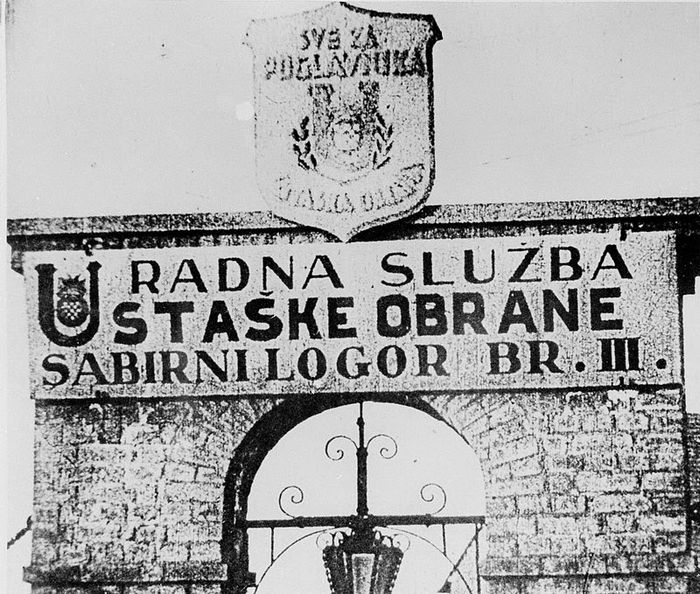
The entrance-gate to the death camp of Jasenovac in Croatia

Views: 3788
The so called “Croatian scenario“, is something that has been periodically brought up after the start of the armed conflict in Donbass. (Among other instances, yours truly noted this in articles from this past December 17 and August 24, 2015.) Promoted at Johnson’s Russia List, the December 28 Euromaidan Press article “What Ukraine Can Take from the ‘Croatian Scenario’ of Conflict Resolution“, omits some key factors for being apprehensive about the probability for success of an Operation Storm like strike against the Donbass rebels.
In 1995, the Serb Yugoslav leader Slobodan Milosevic, had essentially dropped the Krajina Serbs, with the hope that he could improve his relationship with the West. At the time, Russia was weak and Yugoslavia (then consisting of Serbia and Montenegro) was somewhat war weary and faced with a good degree of international isolation through hypocritically applied sanctions against it.
Going into Operation Storm, the Croat government likely knew that Yugoslavia wouldn’t give any military support to the Krajina Serb leadership – something which proved to be correct. Thereafter, Yugoslavia saw some easing of hostility against it. This changed a few years later when events in Kosovo became increasingly more violent – thereafter prompting another hypocritical Western led condemnation of Belgrade.
The Donbass rebels and Russian government are fully aware of this. Hence, they’ve good reason to be on guard against a Kiev regime advance on the rebel held territory. A successful military attack on the Donbass rebels puts their position as a political factor in jeopardy. In turn, Russia will be seen as weak. As is, the Russian government has faced some criticism for not doing enough to support the counter Euromaidan opposition in the former Ukrainian SSR.
In any event, as a major power, Russia isn’t in as much a vulnerable predicament as Yugoslavia. This reality lessens the chance of the Kremlin feeling a need to go against its interests. Analytical omissions aside, the aforementioned December 28 Euromaidan piece, acknowledges some potential problems with implementing a victorious attack against the Donbass rebels.
This can change if the Kremlin were to become extremely annoyed with the rebels and cheery with the Kiev leadership and its Western backers. For now, this appears unlikely. Furthermore, there’s division within Western and pro-Kiev regime circles. The support for increased US military aid to the Kiev regime has been met with some reasoned second guessing that’s worth notice.
Among other things, US Naval War College academic Lyle Goldstein’s November 30 National Interest article, pointedly criticizes the hardline pro-Kiev regime stance of Kurt Volker – the Trump administration’s appointee for handling former Ukrainian SSR matters like Donbass. In a February 15, 2015 Washington Post piece, Brookings Institute analyst Fiona Hill argued against arming the Kiev regime. Hill now serves as a Trump administration adviser on Russia related matters. Over the past couple of years, City College of New York professor Rajan Menon has opposed US military aid to the Kiev regime. Menon hasn’t been sympathetic to pro-Russian concerns (which encompass a good number of folks in the former Ukrainian SSR), as is true of his Rutgers University affiliated peer Alexander Motyl.
The latter is on record for believing that Ukraine could be better off without the rebel held Donbass area – on the basis that its territory has become economically problematical, coupled with a population which by and large doesn’t share Motyl’s negative perception of Russia – a slant evident among many on the pro-Euromaidan side. Motyl’s opinion aside, Donbass has the potential to regain and improve upon its prior status as a key economic area, relative to the former Ukrainian SSR. Granted that much needs to be done for this to happen.
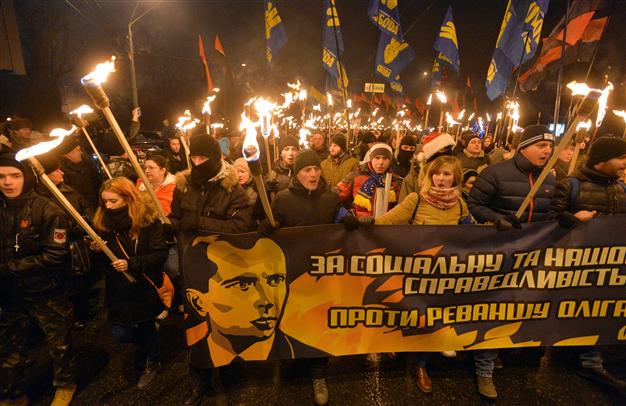
The Trump administration’s decision to provide the Kiev regime with arms represents an ongoing tug of war between the realists and hardline elements against pro-Russian sentiment. Despite their clear differences, Trump’s exhibited realism on Russia was supported by his predecessor Barack Obama in a lengthy 2016 exchange he had with Jeffrey Goldberg in The Atlantic. While being decidedly biased against Russia (as noted by yours truly), that dialogue included a realistic assessment by Obama, which noted Ukraine’s importance to Russia and how Moscow has a geographic advantage over Washington, when it comes to military action in the former Ukrainian SSR.
There’s also the matter of the US having a pecking order of other foreign policy concerns, with the former Ukrainian SSR probably not ranking in the top three or more.
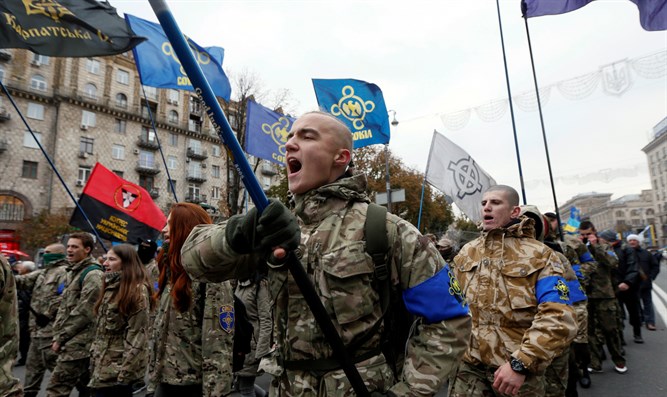
With all this in mind, a prolonged, geopolitically boring frozen conflict seems like the most probable scenario for Donbass. This possibility isn’t necessarily so bad, if the violence ends with improved socioeconomic conditions for both sides. Meantime, the Kiev regime’s ongoing economic problems, ultra-nationalist element and talk of a Croatian scenario for Donbass, might very well increase the likelihood of a skirmish – especially with the announced US military aid package.
Another trigger point could be armed conflict within Kiev regime controlled Ukraine between anti-Russian and pro-Russian groups. Such an occurrence could lead to claims of Russian meddling with Donbass potentially blamed as a base for the trouble – never minding the internal dynamic within Kiev regime controlled Ukraine.
Zagreb, Independent State of Croatia, 1941
Originally published on 2018-01-06
About the author: Michael Averko is a New York-based independent foreign policy analyst and media critic.
We would like to ask you to consider a small donation to help our team keep working. We accept no advertising and rely only on you, our readers, to keep us digging the truth on history, global politics and international relations.
George Szamuely. Bombs for Peace: NATO’s Humanitarian War on Yugoslavia. Amsterdam: Amsterdam University Press, 2013 (Distributed in the U.S. and Canada by the University of Chicago Press). Paper. Pp. 611.In Bombs for Peace, George Szamuely, a senior research fellow at the Global Policy Institute at London Metropolitan University, has produced a revealing and sharply argued analysis of Western intervention in the Balkan wars of the 1990s. The primary focus of the book is on Western diplomatic and military interventions, which played a crucial role in the breakup of Yugoslavia and the plunge into conflict. Continued intervention fueled deeper conflict, as ...
What could cause Russia to invade IsraelAt the time, Israel’s Prime Minister had flown to Washington, and was making a desperate bid to get Obama’s support for Israeli sovereignty over the Golan Heights.Only a few weeks earlier a discovery had been made that would serve to increase tensions on the question of sovereignty over the Golan – huge oil deposits were found on the Golan Heights, and verified by an Israeli company.Yet, weeks later, Benjamin Netanyahu returned to Israel having failed to secure Obamas support.It wasnt long before the United Nations – including Russia – condemned Israels “occupation” of the ...
Kacanik, KOSOVO – A plume of smoke hangs over our table in the corner of a dark, shabby café in this rugged town in southern Kosovo. The lanky 19-year-old sitting next to me is chain-smoking through half a pack of L&Ms, his hands trembling as he recalls how he joined one of the world's most brutal militant Islamist groups.Through his neatly trimmed beard, Adem, who asks me not to use his real name for fear of arrest, says he had never even left Kosovo. But two years ago, he found himself on the perilous and far-off Turkey-Syria border -- a ...
The Kosovo Question recently once again became an important issue of global politics and international relations for two reasons: 1) The Albanian “government” of the “Republic of Kosovo” announced to officially proclaim the existence of the Kosovo Army (that is a violation of the 1244 UN Resolution in 1999), and 2) The “president” of the “Republic of Kosovo”, a war criminal Hashim Tachi, participated on November 11th (2018) in Paris to the world leaders’ celebration of a centenary anniversary of the end of the WWI (the signed armistice with Germany) as the official representative of an “independent” Kosovo. He was ...
Since the disintegration of Yugoslavia in the nineties, its former constituent republics have been mired in a state of perpetual conflict.Nowhere is this more apparent than the contested state of Kosovo.In 1998, Albanian separatists in the Serbian province of Kosovo i Metohija began a campaign of attacks, with the express objective of creating a unified, ethnically homogenous, Greater Albanian state. Spearheaded by an organization known as the Kosovo Liberation Army (KLA), which is widely regarded by many nations, including the United States, as a terrorist organization, ethnic Albanian militants attacked Serbian security forces, and terrorized civilians in a brutally violent ...
A massive destruction of the Ottoman (Orthodox Christian) Armenian population in 1915−1916 is probably the greatest atrocity committed during the WWI and for sure a first 20th century case of the genocide as up to 1.500.000 ethnic Armenians were executed by the Ottoman authorities and their collaborators (the Kurds). As a consequence, the survivors are scattered across the globe. Today it is already a century old event, but the issue of the 1915−1916 Armenian Genocide is undoubtedly still alive and divisive political issue firstly between the Armenians and the Turks[1] but also and among the western “liberal democracies” on the ...
The United States approaches the November 2020 election with growing apprehension, even dread.Among the possibilities:Protracted uncertainty about the presidential contest. Think Florida 2000 but with several states’ results unresolved for weeks or even months (“Experts held ‘war games’ on the Trump vs. Biden election. Their finding? Brace for a mess”);A disputed outcome, perhaps with Donald Trump and Joe Biden both claiming victory, compounded by a “blue shift,” where states are claimed by Trump on election night but flip over to Biden as additional absentee and mail-in ballots conveniently turn up days or weeks later;Violent civil conflict, spurred on in the ...
On 23 April 1999, a NATO missile attack on Radio Television of Serbia (RTS) headquarters killed 16 employees of the state broadcaster. The forgotten war crime occurred during the Kosovo War (March 1998-June 1999), and was part of NATO’s aerial campaign alongside the US-backed Kosovo Liberation army, in opposition to the Federal Republic of Yugoslavia.In the aftermath of the attack there were no great public campaigns launched for the 16 murdered journalists and employees, no outpouring of emotion for those killed, no calls for solidarity and togetherness in the face of aggression. On the contrary the West justified this grievous ...
As some of you may remember I am compiling a criminal dossier on the western powers concerning, among other things, their preparations for Operation Barbarossa II, the term that I use for NATO’s build-up of forces in Eastern Europe threatening the security of Russia.In June, the BALTOPS 2017 NATO naval and air exercises were conducted in the Baltic Sea near Kaliningrad and the approaches to St. Petersburg simultaneously with the Saber Strike military ground exercises in Latvia and Lithuania.On July 11th NATO’s Sea Breeze naval exercises began in the Black Sea, threatening Russia’s southern flank. The NATO exercises are conducted ...
LONDON — Seventy years after he was shot by the Soviets, the reputation of Jonas Noreika goes on trial in Lithuania next week.Noreika — a hero to many in the Baltic state for resisting the Communists’ subjugation of their country — stands accused of being a Nazi collaborator who was complicit in the Holocaust.Jonas Noreika - "General Storm"The case before the Vilnius Regional Administrative Court charges the state-funded Genocide and Resistance Research Center of Lithuania with intentionally distorting the role of Noreika in the murder of Jews.It has been brought by Grant Gochin, a Lithuanian citizen living in the US, ...
The United States is immersed in a political St. Vitus’s dance typical of empires in convulsion. The confident colossus that watched its arch-rival disintegrate from 1989-1991 now has its highest office occupied by a malevolent clown enabled by supporters befitting a casting call for a Hieronymous Bosch panel. The liberal class gnashes its teeth and blames Trump, the Koch brothers, the Tea Party. But the shock is hardly credible. The current political trap befits a country that internalized its own Cold War propaganda campaign from 1945-1991. The unrelenting flow of messages aimed at keeping Americans fearful and accommodating debased our ...
The New York Times reported on October 22 that the United States has “just over 240,000 active-duty and reserve troops in at least 172 countries and territories,” which is a staggering total. But in an intriguing revelation the Times reported that there are a further 37,813 troops deployed “on presumably secret assignment in places listed simply as ‘unknown.’ The Pentagon provided no further explanation.”It is not surprising that Washington’s war-spreaders do not supply information to the American public concerning the location of soldiers, sailors, marines and airmen involved in clandestine operations around the globe, because this might bring to light the lack of justification for ...
In the last years of the Cold War (1949−1989), the Socialist Federal Republic of Yugoslavia (the SFRY) was the largest, most developed and ethnoculturally diverse country in the Balkan peninsula (South-East Europe).It was a non-aligned federation comprised of six republics: Bosnia-Herzegovina, Croatia, Macedonia, Montenegro, Serbia, and Slovenia. In addition to these six republics, two separate territories of Kosovo-Metochia and Vojvodina held the status of autonomous provinces within the Republic of Serbia. Undoubtedly, ex-Yugoslavia was a mix of ethnic groups and religions, with Orthodox Christianity, Roman Catholicism, and Islam being three main religions in the country.[i]Coinciding with the collapse of Communism ...
I travel frequently to the countries which once made up the now defunct Socialist Federal Republic of Yugoslavia, satisfying a passion of mine that stems back to my childhood days. For me, the Balkans’ history, its people and its cultures are both enigmatic and magnetic, as they have been, too, for countless others, of many nationalities, over centuries gone by. Accounting for the enchantment of the Balkans, its captivating allure, is a challenge to put into writing. Because no words can truly embellish what is one of the most absorbing parts of the world. To understand and feel what it is ...
The U.S. government’s plan to conquer Russia is based upon a belief in, and the fundamental plan to establish, “Nuclear Primacy” against Russia — an American ability to win a nuclear war against, and so conquer, Russia.This concept became respectable in U.S. academic and governmental policymaking circles when virtually simultaneously in 2006 a short-form and a long-form version of an article endorsing the concept, which the article’s two co-authors there named “nuclear primacy,” were published respectively in the world’s two most influential journals of international affairs, Foreign Affairs from the Council on Foreign Relations, and International Security from Harvard. (CFR got the more popular ...
The brutal destruction of ex-Yugoslav Federal state-system was in a form of the civil wars or, in another word, a chain of violent conflicts from 1991 to 1995. From the spring of 1992, the SFRY already did not exist as a state and, therefore, the conflicts were turned into the Wars of the Yugoslav Succession.The Yugoslav civil wars can be comprised of the three closely related armed conflicts:1) War in Slovenia in 1991.2) War in Croatia from 1991 to 1995.3) War in Bosnia-Herzegovina from 1992 to 1995.[i]In the year of 1990, the real potential for the armed conflict became quite ...
The guaranties of Ukraine's autocephaly lie not in the legal agreements between Kyiv and Constantinople but in human psychology: the status of the attacker affects the fight's outcome. Nevertheless, for a judge violence remains violence, and even the winner can be convicted.On April 28, Razumkov Center published the results of a poll on religious and confessional preferences of Ukrainians in 2010-2018. According to the report, atheists make up only 5 per cent of the country's population while 72 per cent claim to be faithful. The majority of Ukrainian citizens (67.3 per cent) belong to Orthodoxy and 9.4 per cent are ...
For many years, and despite all evidence to the contrary, the Western media has forwarded the inane idea that Vladimir Putin ranks in the same club with some of history's most loathsome creatures, up to and including Hitler.The reality is that the Russian leader has done more to promote the cause of global peace and security than any other Western leader in recent times. That explains why he is the object of such intense scorn.Putin's rise as a statesman of the first magnitude began, oddly enough, with the terror attacks of Sept. 11, 2001 on the United States. Since that day, ...
24 March 1999 was a day of gross shame and ignominy in the historical annals of Britain and America. It was the day when the North Atlantic Treaty Organisation became the North American Terrorist Organisation. NATO, for the first time since its founding in 1949, launched a vicious, unprovoked and illegal attack against the sovereign nation of Yugoslavia, in a preplanned act of aggression sponsored by US President Bill Clinton.The 78 days of NATO air strikes took place without the necessary UN Security Council authorisation. It is equally loathsome that Clinton’s violence against the Serbs, who were our gallant allies ...
IntroductionIt can be indicated from a historical viewpoint that the USA emerged on the stage of global (world) politics in 1867 (four years before Germany did the same in 1871 after the Franco−Prussian War of 1870−1871). Both these imperial states at the same time exerted extremely influential politics in the process of radical transformation of the modern world both in Europe and outside of the Old Continent. In 1867, Washington purchased Alaska from Russia (regardless of the claims that Russia just rented Alaska for 99 years), and in April 1917, the USA entered the Great War on the side of ...