
Modern-Day Croatia is a Carbon Copy of WWII Nazi-Monstrous Independent State of Croatia
The radical and revisionist messages of far-right Croatian politicians and historians find a sympathetic audience among many members of Croatia’s huge émigré community [...]
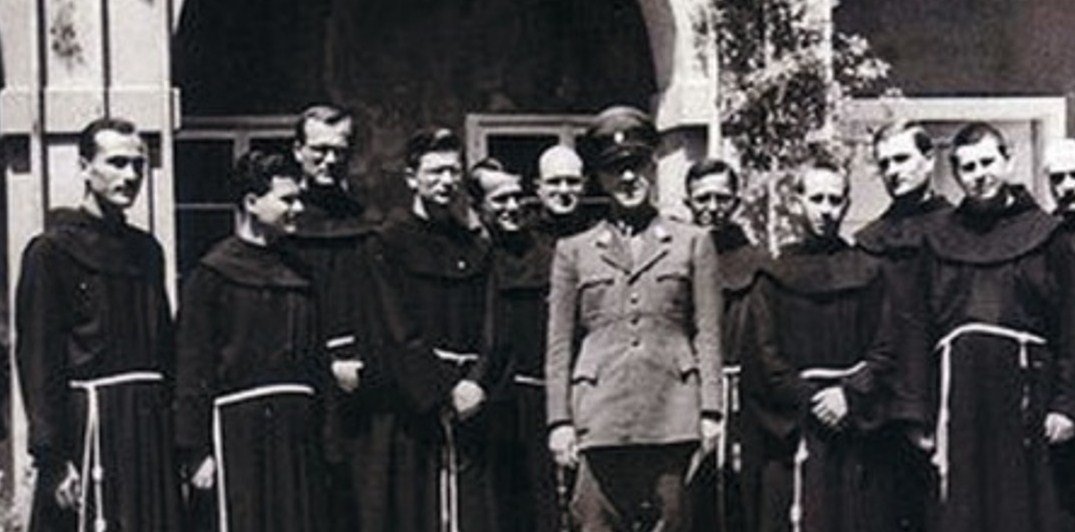
Ante Pavelic – a leader of the Independent State of Croatia with the Roman Catholic clergy
Scattered over almost two centuries across the globe – in Germany, the US, Canada, Argentina and Australia – most members of the Croatian diaspora are still closely linked to their homeland.
The Croatian state responds in kind; it pledges to take “special care” of Croats living abroad, a pledge outlined in the country’s 1990 constitution. Subsequently, Croatia has set up the Central State Office for Croats Abroad, as well as a government body, the Council for Croats Abroad.
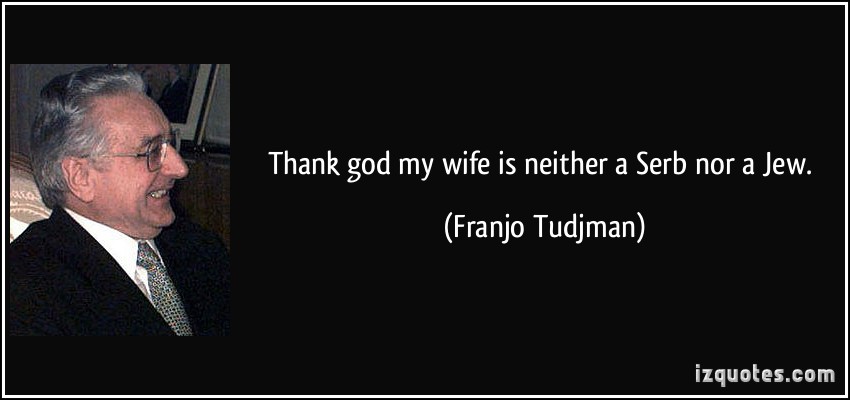
More controversially, some in the diaspora maintain close ties with the extreme right in Croatia, pushing a very sympathetic view of the Fascist Ustasa movement that ran the so-called Independent State of Croatia, NDH, under German-Italian patronage during World War II.
In late December, the appointment of Ante Juric, a prominent representative of the Croat community in Australia, to the government’s Council, attracted media attention.
Controversy arose after Juric told a Croat-language TV show on Australia’s SBS radio that the NDH was not a reviled Nazi satellite state but “a Croatian state, and I’m glad it was – while [its leader, Ante] Pavelic was for me one of the greatest Croats in history”.
Germany is home to the biggest Croat community in Europe, numbering some 440,000 people – equal to just over 10 per cent of Croatia’s total population.
Searching for better life, many Croats left what was then Yugoslavia for Germany back in the 1960s, and this trend has continued, increasing after Croatia joined the EU in 2013.
Danijel Majic, a German-Croat journalist who writes about right-wing extremism in Germany for the daily Frankfurter Rundschau, says the connections between parts of Croatian diaspora in Germany and the far right in Croatia are well established.
Croatia’s conservative Christian values NGO, “In the Name of the Family”, has a de facto branch in Germany. This was the NGO that pushed successfully for a referendum in Croatia in 2013 on marriage, defining it as an exclusively heterosexual union and effectively blocking the path to legalised gay marriage.
The NGO also helped file a successful plea for the legal rehabilitation of Filip Lukas, an intellectual close to the Ustasa regime. In July, the Zagreb County Court quashed the verdict passed decades ago by Yugoslav courts, rehabilitating him in full.
Majic says the Catholic Church provides important help for rightist movements among the émigrés.
“The only serious infrastructure among the Croat émigrés in Germany are the missions of the Catholic Church there … Since they the only ones that can offer venues for different political rallies or debates, almost exclusively for rightist politicians and NGOs,” he says.
While Majic says the German Catholic Church often “is not informed” about the activities organised within Croat Catholic missions, they are part-financed by the German Catholic Church, which is also financed partially from the German state budget.
Among those visiting these missions is Croatia’s far-right TV star Velimir Bujanec, host of the controversial TV show, Bujica, which is shown on the four biggest local TV stations in Croatia and aired abroad.
He has become increasingly influential thanks to the high-level guests appearing on his show, and his acquaintances, who include Croatia’s President, Kolinda Grabar Kitarovic.
Another controversial figure, Admiral Davor Domazet Loso, recently visited the German cities of Munich, Stuttgart and Offenbach on a mission organised by a Croatian priest.
In September, as tensions peaked between Croatia and Slovenia over the disputed waters in the Piran Gulf, Domazet Loso released an inflammatory statement declaring that the Croatian military “could be in Ljubljana in two days”.
Majic says events in the diaspora are organised also with the help of right-wing news sites, like Dnevno.hr and its weekly magazine 7 dnevno.
“It is a part of an obvious system, a political concept under which the Catholic Church, in a way, fosters far-right positions,” Majic adds.
Croat-run death camp of Jasenovac, Croatia (1941-1945): Around 700.000 killed, among them 500.000 Serbs
The film that premiered in Zagreb in April 2016, was screened also in cities across Germany, such as Berlin, Munich, Stuttgart, Frankfurt, Heidelberg, Offenbach and Darmstadt.
It has been fiercely criticised for seeming to downplay the crimes committed by the Ustasa in the camp, where over 83,000 Serbs, Roma, Jews and leftists were killed between 1941 and 1945.
Majic says the right-wing radicals in the diaspora constantly push a narrative that the Ustasa “weren’t as bad as the Communists”, and even that “the Ustasa weren’t villains at all”.
The recent verdict of the International Criminal Tribunal for former Yugoslavia, ICTY, against six Bosnian Croat officials, and the suicide in court of one of those convicted, Slobodan Praljak, resonated strongly among Croatian communities in Germany, with the Church clearly taking the side of those who claimed Praljak was innocent and blamed the ICTY for his death.
After some Croat Catholic missions announced that Church services would be held in Germany for Praljak, the German Catholic Church distanced itself with a statement noting that “pastoral staff serving the dioceses should not question the verdict of The Hague Tribunal”.
Memories of the Croatian war of independence in the 1990s also loom large among the Croatian diaspora in Germany; back then, many members of the diaspora were actively involved in it.
Croatian communities collected money to buy arms for Croatia, which was under a UN-imposed embargo on arms reaching former Yugoslavia. They also assisted the Croat side in the three-way war in Bosnia from 1992 to 1995, between Bosnian Serbs, Croats and Bosniaks.
“I remember that Croats in Frankfurt gathered money to buy a tank for the HVO [the Bosnian Croat armed force] in Kupres [in Bosnia] … I also remember how young men went to the war in Croatia as well. Some would go to fight during the vacation and then return to work in Germany,” Majic says.
Community in Latin America is in decline
Another sizeable Croat community is located in Argentina, which is home to around 250,000 of people of Croat decent.
However, many of these left what was then Austria-Hungary back in the 1900s, and have weaker ties to the country.
In Argentina, Paraguay and Uruguay, only around 5,000 of them have Croatian citizenship and can vote in the country’s elections.
The first wave of Croats reached Argentina in the later 19th and early 20th centuries. Mostly came for economic reasons, after a vine disease devastated the vineyards on which many people depended in the coastal region of Dalmatia.
The second wave of arrivals that came after World War II, were mostly affiliated to the Ustasa regime, reaching Argentina from refugee camps in Italy and Austria, after the Communists took power in Yugoslavia in 1945.
Among them were some of the highest NDH officials, including Pavelic himself, as well as Eugen “Dido” Kvaternik who was in charge of the NDH concentration camps.
Along with them came Catholic clergy and intellectuals who opposed the new Communist regime.
While the role of the Latin American diaspora was strong during Yugoslav times, when it was seen as a dissident hub, its role has declined since the 1991-95 war in Croatia.
During the 1990s, however, members of the diaspora in Argentina gathered money to buy arms for Croatian forces in both Croatia and Bosnia. Arms were bought from Argentina and the deals involved some of top Argentinean officials, including the then President, Carlos Menem.
In 2013, an Argentinean court jailed Menem for seven years for taking part in an illegal shipment of arms to Croatia defying the UN embargo. The sentence was later commuted to house arrest.
Some Croats from Argentina went to Croatia to fight during the war as volunteers. One of them, Branko “Pilino” Pilsel, who was killed by the Yugoslav army in 1991 in Dalmatia, still has a special place in the memory of the community in Argentina.
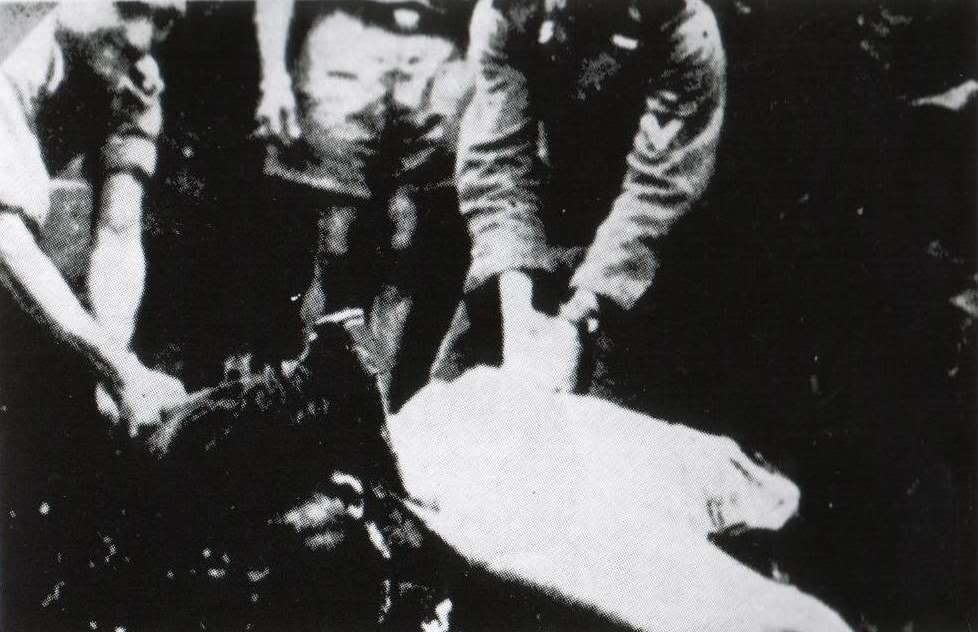
Jasenovac: “Final Solution” of the Serb Question in the Independent State of Croatia
Kazimir Katalinic, who was 18 when he left Yugoslavia in 1945, wrote a four-volume book, From Defeat to Victory, chronicling the Croatian diaspora from 1945 to 1990, which the far-right former Culture Minister of Croatia, Zlatko Hasanbegovic, helped to promote.
However, the influence of the radical diaspora in Argentina had faded, as former NDH officials or political dissidents slowly die away.
The turnout of Croat voters in Argentina in Croatia’s recent elections or referendums has been low.
Due to their lack of interest and because they can only cast votes in Buenos Aires, only 181 people voted in the second round of the Croatian presidential elections in 2015 and 130 in the parliamentary elections in 2016.
While now small in size, the diaspora in Argentina remains mostly oriented to the right. Its members voted against Croatia’s accession to the EU in 2012, and in favour of defining marriage as an exclusively heterosexual union in the 2013 referendum.
More radical elements among them also downplay the crimes committed in Jasenovac.
In 2017, at the Croat community centre in Buenos Aires and on their radio show Croacias Totales, members of a revisionist Croatian NGO, the Society for Research into the Threefold Jasenovac Camp, held lectures in which they insisted that Jasenovac had not been a concentration camp after all.
Despite much documentation and historical research to the contrary, the NGO claimed that Jasenovac was merely a labour camp under the Ustasa – and only became a death camp when the Communists took over.
Most members of the Croatian diaspora there follow the Croacias Totales radio show, which also has its website, as well as a Facebook page. These sites closely follow various events in Croatia, and replay controversial messages from Croatian clergy, among others.
Other radio shows such as Bar Croata and Croacia en mi corazon [Croatia in my heart], are all present on Facebook as well.
Some in the diaspora in Argentina keep up with the far right in Croatia by watching TV shows like Bujica and Markov trg, which was put under a temporary ban of local Z1 TV in 2016 after its host, Marko Juric, warned people in Zagreb to beware of so-called “Chetniks” lurking in the city’s Serbian Orthodox church.
Members of the diaspora in Argentina also criticised the recent verdict against six Bosnian Croat officials in the papers and radio shows.
Origins of images: Facebook, Twitter, Wikimedia, Wikipedia, Flickr, Google, Imageinjection, Public Domain & Pinterest.
Read our Disclaimer/Legal Statement!
Donate to Support Us
We would like to ask you to consider a small donation to help our team keep working. We accept no advertising and rely only on you, our readers, to keep us digging the truth on history, global politics and international relations.
[wpedon id=”4696″ align=”left”]
Modern-day Croatia is a carbon copy of WWII Nazi-monstrous Independent State of Croatia
As heavily-armed US and NATO troops enforced the peace in Bosnia, the press and politicians alike portrayed Western intervention in the former Yugoslavia as a noble, if agonizingly belated, response to an outbreak of ethnic massacres and human rights violations. In the wake of the November 1995 Dayton peace accords, the West was eager to touch up its self-portrait as savior of the Southern Slavs and get on with “the work of rebuilding” the newly “sovereign states.”But following a pattern set early on, Western public opinion had been skillfully misled. The conventional wisdom exemplified by the writings of former US ...
The guaranties of Ukraine's autocephaly lie not in the legal agreements between Kyiv and Constantinople but in human psychology: the status of the attacker affects the fight's outcome. Nevertheless, for a judge violence remains violence, and even the winner can be convicted.On April 28, Razumkov Center published the results of a poll on religious and confessional preferences of Ukrainians in 2010-2018. According to the report, atheists make up only 5 per cent of the country's population while 72 per cent claim to be faithful. The majority of Ukrainian citizens (67.3 per cent) belong to Orthodoxy and 9.4 per cent are ...
As work nears completion in the first phase of an ambitious project in Montenegro to develop a highway that will connect the Adriatic port of Bar with Serbia, Western officials and mainstream media are ramping up attacks on the endeavor. Western commentators are united in condemnation, ranging from fear-mongering over China’s role to disparaging the plan’s viability. Consistently, they dismiss it as “the highway to nowhere,” implying foolishness on the part of Montenegro and presenting it as a cautionary tale on the dangers of doing business with China. The theme fits neatly within the framework of Washington’s campaign to economically ...
In the early morning hours of April 1-2 Azerbaijan launched a major military offensive into the disputed region Nagorno-Karabakh (NK) that’s been controlled and defended by NK Armenian forces since the Russian brokered truce ended a bloody three year war in 1994. While Azeri President Ilham Aliyev was flying back to Baku after meeting 24 hours earlier with John Kerry in Washington who claimed “an ultimate resolution” had been reached, Azerbaijan was already once again at war with the NK Armenians.The surprise element combined with the full scale major military operation spearheading a three pronged attack on Nagorno-Karabakh contact line from the southern, ...
The United States approaches the November 2020 election with growing apprehension, even dread.Among the possibilities:Protracted uncertainty about the presidential contest. Think Florida 2000 but with several states’ results unresolved for weeks or even months (“Experts held ‘war games’ on the Trump vs. Biden election. Their finding? Brace for a mess”);A disputed outcome, perhaps with Donald Trump and Joe Biden both claiming victory, compounded by a “blue shift,” where states are claimed by Trump on election night but flip over to Biden as additional absentee and mail-in ballots conveniently turn up days or weeks later;Violent civil conflict, spurred on in the ...
Long before Donald Trump successfully hung the “fake news” label on CNN, more discerning observers of the wars of the Yugoslav succession of the 1990s came to similar conclusions regarding the network’s news coverage of that tragedy. Headlined by Christiane Amanpour, CNN’s reporting, especially from Bosnia-Herzegovina and Kosovo, showed a clear pro-Muslim, anti-Serbian bias, painting the conflict in stark black-and-white colors, where the Christian Serbs were always the “black hat” “aggressors,” perpetrators of “genocide” and such, while the Bosnian and Albanian Muslims were inevitably the “white hat” “victims,” in dire need of U.S. and Western “humanitarian” intervention to spare them from extermination at ...
A lot of dilemmas, lies, and misconceptions are present in Western geopolitical narratives taken without any critical approach by domestic Serbian pro-Western supporters (usually financed by Western agencies and Governments) about the war in NATO/EU-sponsored Ukraine, and Serbian position in newly geopolitical circumstances. This article aims to present the focal Western lie about Serbia trying to give some reasonable arguments regarding some open questions: Serbia must harmonize its foreign policy with the EU and the rest of the West!Serbia, in essence, must not harmonize its foreign policy with the EU for several reasons. First, not all EU Member States harmonized ...
Big Brother in the Aisles of HyVeeRepeat a lie often enough, the conventional Nazi propaganda wisdom ran, and it will become an accepted truth.This last Veterans Day weekend, I couldn’t watch a sporting event, listen to a car radio, or even go shopping at the local grocery store without hearing a Great American Lie repeated over and over.Sports announcers, radio talk-show hosts, commercials, and even a recorded voice blasted into the aisles of the HyVeee supermarket told me again and again that I owed my great American “freedom” to veterans and current enlistees of the U.S. military – in other ...
One of the West’s top points in condemning Vladimir Putin’s “regime” since 2007 has been his alleged suppression of democratic institutions, including an assault on media freedom and imposition of government-directed propaganda. This week, the accusation was repeated in a resolution of the European Parliament calling for stronger counter-measures in defense of European values against “information warfare” from Moscow.The charges — that Russian media are only an instrument of state propaganda directed at the domestic population to keep Russian citizens in line and at foreign audiences to sow dissent among Russia’s neighbors and within the European Union — are taken ...
Seeing through the Official Lies on Ukraine.“We can no longer find any willingness on the part of Poland to conduct serious negotiations with us. These proposals for mediation have failed because [of ] – – Polish mobilization.” (Adolph Hitler, 1939) These are the words of Adolph Hitler just before invading Poland and then the Soviet Union. I have replaced Poland with Russia (see below) to show the analogy of US and Nazi pretexts.“We can no longer find any willingness on the part of Russia to conduct serious negotiations with us. These proposals for mediation have failed because [of ] – – ...
Six months into 2016 and the world looks decidedly nervous and edgy from a geo-political viewpoint. A dramatic oil price plunge has pushed producing nations into near crisis as the international scrap for market share follows a bid by a collapsing OPEC cartel to fight off American production. China’s economic woes continue to destabilise markets the world over. The USA is clearly becoming more hostile, even warlike towards Russia, who in turn appears to be gearing up to defend itself from increasingly belligerent and aggressive NATO commanders who are facilitating Europe’s encirclement of Russian borders. The latest weaponry pointed directly at Moscow does not help ...
Origins of images: Facebook, Twitter, Wikimedia, Wikipedia, Flickr, Google, Imageinjection, Public Domain & Pinterest.Read our Disclaimer/Legal Statement!Donate to Support UsWe would like to ask you to consider a small donation to help our team keep working. We accept no advertising and rely only on you, our readers, to keep us digging the truth on history, global politics and international relations.[wpedon id="4696" align="left"]SaveSave
After all the initial eu(ro)phoria and hopes placed upon the original concept of a non-aligned, social-democratic Euro-bloc, the reality has turned out somewhat differently.In a pamphlet written in 2011 – Europe: The Unfinished Project – I wrote:At the present time the EU project seems to be stuck in no-man’s land, unable to press ahead with full political integration, or retreat back into a northern European protectionist Deutschmark zone, and leaving the peripheral member states to the tender mercies of unfettered, globalized capitalism. However there seems to be a sufficient residue of the original EU idealism in the present stage of ...
Originally, there were four parties involved in the Afghan conflict which are mainly responsible for the debacle in the Af-Pak region. Firstly, the former Soviet Union which invaded Afghanistan in December 1979. Secondly, Pakistan’s security agencies which nurtured the Afghan so-called “mujahideen” (freedom fighters) on the behest of Washington.Thirdly, Saudi Arabia and the rest of oil-rich Gulf states which generously funded the jihadists to promote their Wahhabi-Salafi ideology. And last but not the least, the Western capitals which funded, provided weapons and internationally legitimized the erstwhile ‘freedom fighters’ to use them against a competing ideology, global communism, which posed a ...
Because this article states so many things that might be likely to contradict what most people in Western countries have been led to believe, readers here are especially strongly encouraged to click onto any allegation which seems at all questionable, in order to get to the sources behind any given questionable allegation. And wherever a clicked-onto source turns out to be another article, one is encouraged similarly to do the same there, so that the reader will be able, in this way, to probe down to the ultimate sources, which are the sources upon which this article is finally based.After ...
The refusal of the United Nations to qualify the recent US airstrike against Syria as an act of aggression makes the Organization irrelevant – something Russia has been trying to prevent. It has become vulnerable to scathing criticism after demonstrating its impotence and inability to act. The continued paralysis is an eloquent example of the UN’s disengagement and lack of political will to fulfill its duty. The Organization’s image has suffered great damage. It still has a chance to rectify it by launching an investigation into what really happened in Syria.Article One of the UN Charter states that one of the purposes is ...
Perhaps no country on Earth is more misunderstood by Americans than North Korea. Though the country's leaders are typically portrayed as buffoonish, even silly, in fact they are deadly serious in their cruelty and skill at retaining power. Though the country is seen as Soviet-style communist, in fact it is better understood as a holdover of Japanese fascism.And there is another misconception, one that Americans might not want to hear but that is important for understanding the hermit kingdom: Yes, much of its anti-Americanism is cynically manufactured as a propaganda tool, and yes, it is often based on lies. But ...
“A battle lost or won is easily described, understood, and appreciated, but the moral growth of a great nation requires reflection, as well as observation, to appreciate it”. – Frederick Douglass (former slave who would later become a great American statesman and diplomat)It has always been an utmost necessity to exercise caution when reading the historical accounts of great periods that threatened to change the course of the world. As is widely recognised though not reflected upon enough, ‘history is written by the victors’, and if this be indeed the truth, than we must be aware of what lens we ...
The United States government is guilty of war crimes. This is the stark conclusion reached by the independent international commission of inquiry established by the United Nations in 2011 to investigate human rights violations stemming from the protracted US-backed war for regime change in Syria.The Pentagon’s relentless bombing campaign in and around the northern Syrian city of Raqqa, the so-called “capital” of the Islamic State of Iraq and Syria (ISIS), has inflicted a “staggering loss of civilian life,” while forcing over 160,000 civilians to flee their homes, Paulo Pinheiro, chairman of the UN’s commission of inquiry, said on Wednesday.US warplanes ...
All of the Balkans, legendary German Reichskanzler (Imperial Chancellor) Otto von Bismarck famously said, were not worth the bones of a single Pomeranian grenadier. And Bismarck, a Prussian landowner or junker had nothing but amused contempt for Pomeranian grenadiers who were regarded as a standing joke in the German Army.In 1890, brash, young new German Emperor Wilhelm II fired Bismarck after 28 years as minister-president of Prussia and then first Imperial Chancellor of Germany. He abandoned the priority policy of maintaining warm ties and close communications with Russia that Bismarck had always followed and scrapped the Dreikaiserbund, the League of ...