
The destruction of Hiroshima and Nagasaki announced the entry of the United States as the world’s unchallenged imperialist hegemon, bullying and dictating terms to all humanity [...]
Later this month, Barack Obama will become the first sitting US president to visit the city of Hiroshima, Japan. The dropping of an atomic bomb on Hiroshima by the American military on August 6, 1945, and the destruction three days later of the Japanese city of Nagasaki, rank among the greatest war crimes of the 20th century.
One would think that after 71 years, the United States would finally be prepared to acknowledge that the incineration of two defenseless Japanese cities, causing some 200,000 deaths, was a militarily unnecessary act.
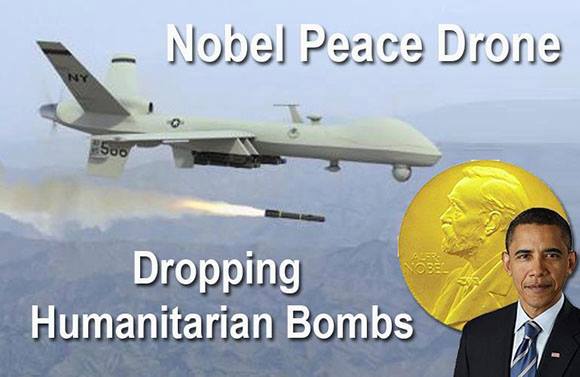
Nothing of the sort will happen. Obama “will not revisit the decision to use the atomic bomb at the end of World War II,” declared the White House. No apology will be forthcoming.
For decades, the US government has insisted that it was right to carry out the nuclear attacks on Japan, declaring that the destruction of Hiroshima and Nagasaki was the only alternative to an invasion of Japan and the ensuing loss of American lives. Every attempt to question the legitimacy of the bombings has been met with frenzied and dishonest propaganda, such as that which forced the Smithsonian Institution to shutter its exhibit commemorating the 50th anniversary of the bombing in 1995.
Typical of these apologetics is a comment published in the Wall Street Journal by the Reverend Miscamble of Notre Dame University. Miscamble declares, “There’s zero reason to apologize for the atomic bombing,” because “[President Harry S.] Truman authorized the bombing of Hiroshima and Nagasaki, both major military-industrial targets, to help win the gruesome Pacific War as quickly as possible and with the loss of the fewest American lives—and, as it turned out, the loss of the fewest Japanese lives.”
Echoing these sentiments, the New York Times this week cited those who insist that the “decision to drop the bomb saved tens of thousands of American lives that would have been lost in an invasion of Honshu, Japan’s main island.”
These claims are without all credibility. They bear no relationship to the actual content of discussions taking place in Washington and the US military high command prior to the attacks.
By early 1945, the United States had gained total air supremacy over Japan and taken numerous islands within flying range of the Japanese mainland. Around the same time, the US switched from carrying out precision bombings of specific military targets to mass incendiary raids that ultimately leveled 67 Japanese cities, including the March 9–10 firebombing of Tokyo that killed some 100,000 people.
When General Curtis Lemay, the head of the US Strategic Air Command, was asked in 1945 how long he thought the war would last, he said, “We sat down and did some thinking about it, and it indicated that we would be pretty much out of targets around September 1, and with the targets gone, we couldn’t see much of any war going on at the time.”
The rationalizations for the bombing of Hiroshima and Nagasaki were challenged within the US high command itself, which insisted that the incineration of another pair of Japanese cities had little military significance.
General Dwight D. Eisenhower said that, upon learning of President Truman’s intention to use the bomb against a civilian population, he felt a feeling of “depression” and voiced “my grave misgivings, first on the basis of my belief that Japan was already defeated and that dropping the bomb was completely unnecessary, and secondly because I thought that our country should avoid shocking world opinion by the use of a weapon whose employment was, I thought, no longer mandatory as a measure to save American lives.”
Other high-ranking military officials subsequently made similar statements. Chester W. Nimitz, Commander in Chief of the US Pacific Fleet, said after the war, “The atomic bomb played no decisive part, from a purely military point of view, in the defeat of Japan.” President Truman’s Chief of Staff Admiral William D. Leahy, acknowledged, “Hiroshima and Nagasaki was of no material assistance in our war against Japan.”
President Franklin D. Roosevelt’s death on April 12, 1945, brought Harry S. Truman to the presidency. This limited and rather ignorant man was dubbed “The Senator from Pendergast” because of his connections with the convicted felon and gambling addict who ran the Missouri Democratic Party political machine.
Truman was completely indifferent to the moral implications of the use of nuclear weapons. One of his advisers later recalled that, when Truman learned of the bombing of Hiroshima, he “was tremendously pepped up by it and spoke to me of it again and again when I saw him.”
By the time Truman decided to use the bomb, the Japanese government had for months been sending strong indications that they were seeking to surrender, insisting only that they be allowed to retain their Emperor. The White House had by this time come to favor retaining the Emperor, but was divided over whether this fact should be communicated to the Japanese. President Truman ultimately decided to drop the bomb first, then let the Japanese government know the terms.
Why, then, did the United States government embark upon a course of action that, while having no military justification, would forever brand it with infamy in the eyes of the world?
As the war was reaching its end, the conflict between the United States and the Soviet Union was intensifying. In accordance with the terms of the Yalta agreement, the Soviet Union was about to invade Japan, laying claim to territories granted to it in that accord, and was seeking to play a role in post-war Europe commensurate with the losses it had endured during the war.
The use of the atomic bomb was, as two historians recently put it, “America’s first act of the Cold War.” It was intended to send a clear signal to the Soviet Union that, despite Soviet victory over Germany, the Americans were the masters of the world.
The destruction of Hiroshima and Nagasaki announced the entry of the United States as the world’s unchallenged imperialist hegemon, bullying and dictating terms to all humanity. Behind the thin veneer of democracy, the United States was signaling that it would do whatever was necessary for the preservation and expansion of its own interests, no matter the scale of the crime or how many people had to die.
In the more than seven decades since the bombing of Hiroshima, the determination of the American ruling class to use military force to defend its interests has only grown. Obama will make his appearance in Hiroshima as part of his participation in a Group of 7 meeting where he will seek to strengthen America’s alliance with Japan against China and facilitate Prime Minister Shinzo Abe’s re-militarization of the country.
Even as it demands “nuclear non-proliferation” from every other country, the White House is spending a trillion dollars to modernize the US nuclear stockpile and engaging in a continuous series of provocations against China and Russia that threaten war between nuclear-armed states.
In other words, Obama will go to Hiroshima not to apologize for past crimes, but to prepare new ones.
How can one expect the United States government, which since Hiroshima has been responsible for the deaths of millions of people in Korea and Vietnam—and, over the past quarter century, throughout the Middle East—to apologize for mass murder when it continues to practice it to this day?
But there will come a day in a socialist America, when the atrocities committed by the ruling class will be disavowed, and the bombings of Hiroshima and Nagasaki will be acknowledged for what they were: crimes against humanity.
Origins of images: Facebook, Twitter, Wikimedia, Wikipedia, Flickr, Google, Imageinjection, Public Domain & Pinterest.
Read our Disclaimer/Legal Statement!
Donate to Support Us
We would like to ask you to consider a small donation to help our team keep working. We accept no advertising and rely only on you, our readers, to keep us digging the truth on history, global politics, and international relations.
The history behind Palestine and Israel is a history of Jewish European settler-colonialism — i.e., Zionism. And since racism is a symptom and a tool of settler-colonialism, Zionism is also viewed as anti-Semitism, and as ethno-supremacy or Jewish supremacy, Arabophobia and Islamophobia.The triangulation of anti-Semitism, Islamophobia and Arabophobia in the history of Palestine and Israel is part of the settler-colonial movement of Zionism and is not a “new history” in the sense of the term as introduced by Israeli historian Benny Morris in 1980 to humanize, in Israeli academic discourse, the victims of Zionism. It simply reflects modern terminology and ...
Years ago, the terms “false flag” and “conspiracy theory” went hand in hand. Suggesting that a government would stage an attack on its own people or attack an ally and blame it on a “third party” was unthinkable.This is despite the glaring fact that “false flags” have been going on since before biblical times and have been a part of every nation’s policy. Intelligence agencies exist to do little else, they plan and execute false flag attacks to influence policy and set the course of events, based on analysis. This is, in fact, their greatest single tool, and one used ...
As it appears Lithuania expects major changes in the near future. Lithuanian Foreign Minister Linas Linkevičius was on an official visit to the United States of America from the 20 to the 24 of February 2017. During a visit he said that Lithuania seeks the permanent presence of United States troops in its territory."We have requested stationing of military forces in our country on a more permanent basis - not only rotational but also more permanent," the minister told BNS in the telephone interview from Washington D.C.Linas Linkevicius' call for the permanent presence of United States troops in Lithuania territory ...
So the moment we’ve been holding our breaths for a week finally came. In the end, I am mighty glad that this particular strike seems more like the impotent thrashing of the neocon snake that didn’t dare to attack places where Russian servicemen were likely to be killed, than it does the start of World War III. For the moment, at least, thank God.But the fact that it was a fairly limited strike — compared to what it might have been — in which the majority of missiles failed to hit their targets, having been eliminated by Soviet-era air defences, ...
“We could become the first country to go fascist through free elections.” — William Shirer, The Rise and Fall of the Third ReichGenerally, we avoid using the word “fascism” in polite company, and until recently, a person pointing out parallels between Nazi Germany and the current United States would invite elevated eyelids along with the outworn charge of sounding like a “conspiracy theorist“. The current electoral cycle seems to be changing that, so I will trust that now is the right time to convey some ideas I’ve been marinating regarding fascism in my US Homeland. The ruling plutocrats are clearly ferrying the ...
The Democratic Party has moved from being what you might call a reluctant war party to an aggressive war party with its selection of Hillary Clinton as its presumptive presidential nominee. With minimal debate, this historic change brings full circle the arc of the party’s anti-war attitudes that began in 1968 and have now ended in 2016.Since the Vietnam War, the Democrats have been viewed as the more peaceful of the two major parties, with the Republicans often attacking Democratic candidates as “soft” regarding use of military force. But former Secretary of State Clinton has made it clear that she ...
Michigan-based filmmaker Michael Moore makes the connection between Kosovo and the Columbine shooting in his Academy Award-winning documentary Bowling for Columbine (2002). Moore puts Kosovo in the context of a broader U.S. foreign policy agenda and a domestic culture of violence. Moore asks: “Are we a nation of gun nuts or are we just nuts?”In the first scene, Moore walks into the North Country Bank in Michigan to open an account. He saw an ad in the newspaper that the bank would give out free guns to those who open accounts there. Moore walks into the bank and tells the ...
Columbus made four voyages to the New World. [1] The initial voyage reveals several important things about the man. First, he had genuine courage because few ship’s captains had ever pointed their prow toward the open ocean, the complete unknown. Secondly, from numerous of his letters and reports we learn that his overarching goal was to seize wealth that belonged to others, even his own men, by whatever means necessary.Columbus’s Spanish royal sponsors (Ferdinand and Isabella) had promised a lifetime pension to the first man who sighted land. A few hours after midnight on October 12, 1492, Juan Rodriguez Bermeo, ...
US-backed forces overthrow Goulart in Brazil (1964) Left-wing nationalist Joao Goulart became the democratically elected president of Brazil in September 1961, setting alarm bells clattering in the liberal Kennedy administration. Goulart began implementing structural reforms in the massive resource-rich South American country, that would help integrate the general population into society. (1) The United States was loathe to sit helplessly by as this movement came within “our hemisphere”, as President John F. Kennedy described it. Goulart, also known as “Jango”, was hostile toward US capitalist democracy that seeks to primarily serve elite powers.Shortly before his death, Kennedy had been preparing the groundwork to oust Goulart, ...
Origins of images: Facebook, Twitter, Wikimedia, Wikipedia, Flickr, Google, Imageinjection, Public Domain & Pinterest.Read our Disclaimer/Legal Statement!Donate to Support UsWe would like to ask you to consider a small donation to help our team keep working. We accept no advertising and rely only on you, our readers, to keep us digging the truth on history, global politics, and international relations.
America’s war of expansion over Mexico, backed by newspapers and politicians, has repercussions to the present day.Reflecting on his life while dying of throat cancer in 1885, the former US President Ulysses S. Grant said the Mexican-American War was, “the most wicked war in history. I thought so at the time, when I was a youngster, only I had not moral courage enough to resign”.Grant had first-hand experience as he himself fought in the Mexican-American War (1846-1848), then as a junior officer in his mid-20s. Less than two decades later, he rose to prominence as one of the most important ...
Origins of images: Facebook, Twitter, Wikimedia, Wikipedia, Flickr, Google, Imageinjection & Pinterest.Read our Disclaimer/Legal Statement!Donate to Support UsWe would like to ask you to consider a small donation to help our team keep working. We accept no advertising and rely only on you, our readers, to keep us digging the truth on history, global politics and international relations.
As defections continue from the Rome Statute the Netherlands-based group says Washington may have engaged in tortureA recent article published in the New York Times appears to suggest that the United States will be investigated by the Netherlands-based International Criminal Court (ICC) for committing torture against captives in Afghanistan.Surprisingly enough the ICC has almost exclusively focused its attention on alleged war crimes and acts of genocide taking place in Africa. Many of the cases have in effect served the interests of U.S. imperialism where governments which are targets for destabilization and regime-change are indicted by the prosecutorial institution in order ...
IntroductionMacedonia is a small republic,a country in Southeast Europe. It gained independence in 1991, after the fall of the former republic of Yugoslavia. Its capital is a unique city, where East meets West. Skopje has a population of around 595.000 people. Its borders are: Kosovo to the northwest, Serbia to the north, Bulgaria to the east, Greece to the south and Albania to the west. The population is estimated around 2.6 million. The majority of the population consists of ethnic Macedonians, who are a Slavic people, related to Bulgarians. The minority are Albanians, Turks, Serbs and Roma people. Albanians make ...
Missing from corporate media accounts is what causes the Democratic People’s Republic of Korea (DPRK aka North Korea) to be singled out for opprobrium for what, essentially, is developing a deterrent against any entity that would attack it.A comparison with how the United Nations deals with North Korea vis-à-vis another member state state, Israel, is instructive.Israel occupies Palestinian territory; destroys Palestinian olive groves and poisons Palestinian sheep; sprays Palestinian homes with sewage; sabotages Palestinian water supplies; cuts off power to Palestine; terrorizes Palestinians for hours at checkpoints, including the sick, infirm, and pregnant women, some who are forced to give birth ...
American capitalism is based on plunder. With the continental USA plundered, American capitalism hoped to continue enriching itself by plundering Russia as it did under Yeltsin, carefully including the Russian “Atlanticist Integrationists” in the spoils in order to have support from the liberal, progressive forces in Russia for stripping Russia of its assets. But Putin more or less put a halt to the American/Israeli rape of Russia, although it still continues through the neoliberal economics that Harvard brainwashed into the Russian central bank and economics profession. Brainwashed Russian economists are the main reason Washington is able to punish a powerful ...
The prophets and forecasters for the coming year have already set out their global vision ranging from rising economies to catastrophic global wars.I want to argue from a different perspective, focusing on the increasing subdivision of markets, the deepening autonomy of political action from economic development, the greater threat of military interventions and increasing political accommodation. I believe that we will experience a radical making and remaking of political and economic integration, East and West, within and without nations states. ‘States Rights’ will re-emerge as an antidote to globalization. Big countries will compete in regional wars with limited commitments but ...
On 23 June 2017 in the Parliament Square of Vilnius, capital of Lithuania, an official celebration of the uprising of 23 June 1943 against Soviet rule took place. The event was orchestrated mainly by veterans of the Lithuanian Freedom Fighters Association, a far-right militia group. During these celebrations an exhibit of more than 12 posters were hung which presented the anti-Soviet insurrection one that “drove terror into the Bolshevik occupying army and the lackeys of the occupation forces.”Some historical context is needed here.In June 1941, Hitler had launched a surprise attack on the Soviet Union, overrunning the Baltics in a ...
As Turkey’s President Erdogan runs out of money, he is now, more than any time before, using religion to exploit the Balkans, especially the states that are more susceptible to Islamic influence. Bosnia is at the fore of Erdogan’s ambitious Islamic agenda, where he is sparing no political capital or financial resources, even under his current economic hardship, to assert his influence and distance the country away from the EU’s reach. Obviously, the Bosnians cannot survive simply on being devout Muslims, with the youth unemployment rate at almost 60 percent. Turkey is unlikely to economically recover anytime soon, and Erdogan’s ...
Understanding soft power in politics and diplomacyFrench Emperor Napoleon I, was convinced that only two powers existed in the world: the sword and the mind. Sword can prevail over the mind in a short time but in the long run, he believed that the mind would beat the sword. As the mind is mightier than the sword is why the concept of soft power attracts very much attention across the world becoming more and more important for diplomacy and international relations. Power, in general, is a part of the relationship among and between the actors – in global politics and ...