
As 10,000 people took to the streets of Brussels on Sunday (7 June 2020) to protest as part of the Black Lives Matter movement, there was one landmark which drew their ire more than any other: the equestrian statue of King Leopold II outside Belgium’s royal palace.
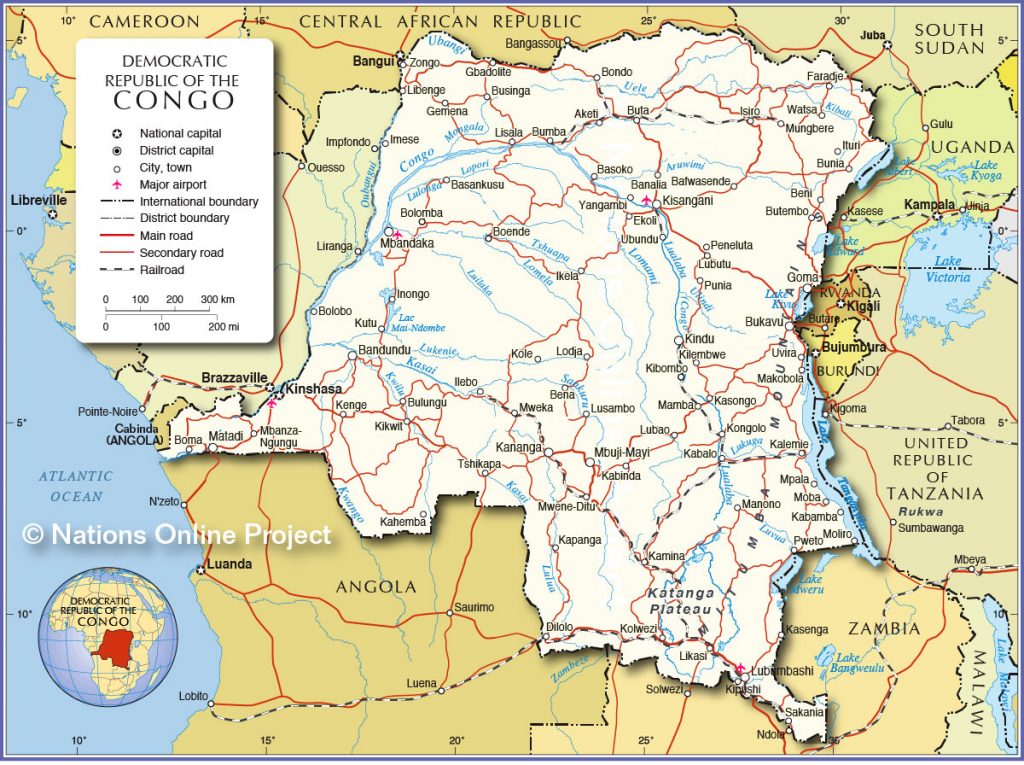
“Murderer!” the protesters cried as they climbed the statue and waved the flag of the Democratic Republic of Congo. Had the statue been flimsy enough to pull down they would have done it, just as fellow BLM protesters toppled Edward Colston’s statue across the channel in Bristol. Estimates vary, but the consensus figure is that 10 million Africans were killed during Leopold’s brutal reign (1885-1908) in his ironically named Congo Free State.
The global BLM movement has sparked renewed calls for the 14 statues of Leopold scattered throughout Belgium to be taken down (as one in Antwerp has been) and the many places named after him to be renamed. A petition to remove the most egregious monument in the seaside town of Ostende, which depicts a group of Congolese people kneeling below Leopold in “gratitude”, has attracted 65,000 signatures in a week. In 2004, activists cut off the hand of one of the Africans – the act Belgian soldiers inflicted on Africans who hadn’t met their rubber quota. (Protesters have promised to return it if the current king acknowledges the imperial atrocities.)
Leopold and Colston were not contemporaries, but they both did deep and lasting damage to Africans. And their legacy, now in focus as never before, is complicated by their pivotal role in building their modern cities and countries.
As his name might suggest, Leopold II was the second king of Belgium, and by far its most important. His 44-year reign coincided with that of his cousin, Queen Victoria. Many historians believe that without his shrewd diplomacy during the Franco-Prussian wars, Belgium would not exist today. Known as the “builder king”, Leopolad’s grand projects shape the Brussels skyline: he built the Cinquantenaire Arch next to the EU Commission building, along with the unmissable National Basilica in the west, and he put the gaudy finishing touches to the gargantuan Justice Palace, whose gold dome can be seen across the city.
The dark secret behind these buildings is that they were built with Congo blood money. Leopold II was determined to make Belgium a European power player, and he was obsessed with acquiring overseas colonies. “I do not want to miss a good chance of getting us a slice of this magnificent African cake,” he once remarked.
Leopold got his opportunity with the 1884 Berlin Conference. He promised to create a free state which improved the lives of the native inhabitants, and was awarded an area 76 times the size of Belgium as his personal property. Unlike the other African colonies, this one belonged to a man rather than a state.
Leopold quickly showed he had no intention of improving the lives of Africans and set about establishing a brutal, exploitative regime presided over by the murderous gendarmerie and military force, Force Publique (an army and police force). He amassed an exorbitant personal fortune from the exploitation of ivory and later rubber. Much of this money was used to fuel Belgium’s rapid industrialisation, but Leopold also spent plenty on himself and lavish gifts for his mistress, a 16-year-old French prostitute.
Leopold’s attitude toward Africans was little different from those of his fellow imperial rulers and family members. But his nakedly ruthless rule, and his failure to honour the artifice of “improving” the continent, risked exposing colonialism for what it was. In the early 1900s the great powers turned against him, and their newspapers began running stories about the Congo atrocities. The pressure built to such an extent that the Belgian parliament stripped the colony from the king and assumed control. Leopold died a year later, in 1909. His funeral procession was booed by the Belgian crowd, such was the outrage at the time.
But it didn’t take long for the Congo atrocities to fade from the world’s memory. For obvious reasons, the British and other colonial powers were reluctant to continue highlighting the mistreatment of Africans. The Belgian statues to Leopold were erected in the decades that followed at the instigation of his nephew King Albert I. Many were built in the 1930s, a time when the very existence of Belgium was being challenged after the country’s devastation in the First World War. The Belgian government created a mythology around Leopold II, erasing the public memory of the Congo atrocities and replacing it with a narrative of a benevolent king who brought glory to Belgium.
The subject of the Congo atrocities remained unexamined, both in Belgium and the world, until Adam Hochschild’s book King Leopold’s Ghost in 1999. Belgian politicians reacted furiously to the book, which detailed what had happened using contemporaneous accounts. In 2010, the former Belgian foreign minister Louis Michel, the father of future prime minister and present EU Council president Charles Michel, called Leopold “a hero with ambitions for a small country like Belgium” and described the Congo stories as “exaggerations”.
For the past 20 years, the debate has periodically recurred. But the statues remain, and the subject is still glossed over in Belgian schools. Many Belgians remain reluctant to confront the truth about the king that shaped their country; it would be akin to the British acknowledging the atrocities committed by Queen Victoria. And some allege that the historic accounts used for Hochschild’s book were purposefully exaggerated by British media in order to banish the Congo Free State.
As with Colston, there were two Leopolds – one at home and one abroad. There was Belgium’s “builder king” who gave the public grand buildings and a higher standard of living, and kept Belgium independent. And then there was the Congo’s “despot king” who worked Africans to death and destroyed a land he never even visited. It is unsurprising that many Belgians don’t want to contemplate how much of their wealth originated from horrific exploitation over a century ago. The same can be said of many in the UK.
Origins of images: Facebook, Twitter, Wikimedia, Wikipedia, Flickr, Google, Imageinjection, Public Domain & Pinterest.
Read our Disclaimer/LegalStatement!
DonatetoSupportUs
We would like to ask you to consider a small donation to help our team keep working. We accept no advertising and rely only on you, our readers, to keep us digging the truth on history, global politics, and international relations.
On February 17, 1941, almost 10 months before Japan’s attack on Pearl Harbor, Life magazine carried a lengthy essay by its publisher, Henry Luce, entitled “The American Century.” The son of Presbyterian missionaries, born in China in 1898 and raised there until the age of 15, Luce essentially transposed the certainty of religious dogma into the certainty of a nationalistic mission couched in the name of internationalism.Luce acknowledged that the United States could not police the whole world or attempt to impose democratic institutions on all of mankind. Nonetheless, “the world of the 20th Century,” he wrote, “if it is ...
A year or two ago, I saw the much-touted science fiction film Interstellar, and although the plot wasn’t any good, one early scene was quite amusing. For various reasons, the American government of the future claimed that our Moon Landings of the late 1960s had been faked, a trick aimed at winning the Cold War by bankrupting Russia into fruitless space efforts of its own. This inversion of historical reality was accepted as true by nearly everyone, and those few people who claimed that Neil Armstrong had indeed set foot on the Moon were universally ridiculed as “crazy conspiracy theorists.” ...
It is hardly a coincidence that the Declaration of Independence, Adam Smith’s Wealth of Nations, and Johann Friedrich Blumenbach’s On the Natural Variety of Mankind were all published within a year of one another, for each supports a necessary aspect of a larger, integrated project. Not only was the rationale for seizing political power (provided by the Declaration) supported by Smith’s popular text (which justified rule by the wealthy business class). Because this wealth and power was contingent on slavery, and territories seized by conquest, Blumenbach’s theory that the “Caucasian race” (a designation he coined, by the way) was the supreme race was ...
PrefaceA peaceful dissolution of the USSR according to the agreement between Mikhail Gorbachev and Ronald Reagan in 1988 in Reykjavik brought a new dimension of global geopolitics in which up to 2008 Russia, as a legal successor state of the USSR, was playing an inferior role in global politics when an American Neocon concept of Pax Americana became the fundamental framework in international relations. Therefore, for instance, Boris Yeltsin’s Russia capitulated in 1995 to the American design regarding a final outcome of the USA/EU policy of the destruction of ex-Yugoslavia in November 1995 (the Dayton Agreement) followed by even worse ...
There is very bad news for the US’ policymakers: Russia is back!After the end of the Soviet Union in 1991, Russia, both weakened and isolated, was becoming a less popular area of studying and dealing with in comparison before the end of the Cold War. Global imperialists in Washington strongly believed that after 1991 Russia was simply “finished” or, better to say, they “finished” the game with Russia as Moscow was not anymore the capital of a Great Power state which had an important influence in global politics and international relations. In other words, the American warmongers in Washington thought ...
After the Russian military victory over the Ottoman Empire in the 1877−1878 Russo-Ottoman War it was signed the San Stefano Treaty between these two states on March 3rd, 1878. According to the treaty, a Greater “San Stefano” Bulgaria, under the direct protection by Russia, had to be established within the borders of the Ottoman Empire. However, an idea of “San Stefano Bulgaria” directly affected three Balkan nations: the Serbs, Greeks and Albanians as some of their ethnic and historical territories had to become part of a Greater Bulgaria. The “San Stefano Bulgaria” was projected by the Russian authorities to cover ...
There is an old adage that pertains to the founding of the European Union «If at first you don’t succeed, try, try, again». And for the Nazis and Nazi collaborators of the Second World War, viewing the post-war European death and destruction brought about by Adolf Hitler and his «Third Reich» alliance of Italian fascists, French Vichy, and others, the immediate decision was to «try again» with a European Union that would establish the same European super-state envisaged by Hitler but with a decidedly «democratic» aura.What eventually became the EU, the European Coal and Steel Community, was formed by six Western European ...
SHARMINI PERIES, EXEC. PRODUCER, TRNN: Welcome to The Real News Network. I'm Sharmini Peries, coming to you from Baltimore. Prime Minister Benjamin Netanyahu is elating after his right-wing Likud Party secured a firm victory in the Israeli elections on March 17. It was a very close race against the Zionist Union Party, led by Isaac Herzog. Our next guest, Shir Hever, in an interview he did with us last month, predicted that Prime Minister Netanyahu would win in spite of many strikes against him at the time. So, defying election polls leading up to the election, Prime Minister Netanyahu has ...
Since the political change in Iraq took place in 2003 with the US-led invasion to change Saddam's regime, the Iraqi political and judicial system are unstable and very weak, even though the new regime has provided freedom and democracy to the state.The new political system is suffering from corruption and from the highest levels in the state. This led to looting the wealth of this very rich state. It also aggravated the woes of the Iraqis. There are no basic services provided by the government to the citizens. The electricity does not reach most of the citizens except for very ...
NATO was always more about offense than defense, about America controlling the policies of Alliance members, increasing their numbers, pressuring them to stress militarism more than they’d chose otherwise – and selling them lots of US weapons.When founded in April 1949, Soviet Russia was a North Atlantic Alliance enemy in name only, ravaged by WW II – needing years after Stalin’s April 1953 death to regain pre-war normality, peace essential to restore it.Washington controls NATO, covering 75% of its budget, calling the shots, installing subservient Alliance officials to serve its agenda.At a time when no US enemies exist, they’re invented ...
40 yrs after Prez Teddy Roosevelt gave Korea to brutal Jap Empire in return for its recognition of Philippines as US Territory, US invaded Korea long AFTER Jap surrender, overthrowing its Korean gov., cutting it in two parts, installing a US dictatorship in its south now documented to have murdered 100,000 of its own citizens.What Western media calls ‘Communist China,’ is a China governed by its Communist Party since 1949, and lying just across the Yalu River from a Korea, which between 1950 and 1953, was merciless bombed by the US, both north and south, all cities and towns of ...
Part IPart II Part IIIThe Croatian (Illyrian) Revival Movement until a victory of the national (South Slavic) language (1847)The Austrian Emperor, Ferdinand V (1835–1848), on January 11th, 1843 issued the order of prohibition of the use of the Illyrian name and the Illyrian coat of arms. The prohibition was officially justified with the explanation that such a measure was necessary for the purpose to restrain further political struggle and attacks from the Illyrian Party against the mađaroni and the ethnic Hungarians in Croatia-Slavonia. At the same time, the Ottoman authorities required from the Habsburg Emperor to forbid the public use of ...
Kosovo’s Prime Minister Accused of Running Human Organ, Drug Trafficking CartelIn another grim milestone for the United States and NATO, the Council of Europe (COE) released an explosive report last week, “Inhuman treatment of people and illicit trafficking in human organs in Kosovo.”The report charged that former Kosovo Liberation Army (KLA) boss and current Prime Minister, Hashim Thaçi, “is the head of a ‘mafia-like’ Albanian group responsible for smuggling weapons, drugs and human organs through eastern Europe,” The Guardian disclosed.According to a draft resolution unanimously approved December 16 in Paris, the Committee on Legal Affairs and Human Rights found compelling ...
One way to understand the effect of 9/11, in most general terms, is to see that it allowed the agenda developed in the 1990s by neoconservatives—-often called simply “neocons”—to be implemented. There is agreement on this point across the political spectrum. From the right, for example, Stefan Halper and Jonathan Clarke say that 9/11 allowed the “preexisting ideological agenda” of the neoconservatives to be “taken off the shelf . . . and relabeled as the response to terror.”1 Stephen Sniegoski, writing from the left, says that “it was only the traumatic effects of the 9/11 terrorism that enabled the agenda ...
A Serb from Bosnia, General Mladic, protected Muslim civilians and gave them buses, food, and water to leave fighting zones. There was no genocide over the Muslim population in Srebrenica like mainstream media want you to believe – there was no genocide over Bosniaks because all Bosnian Muslims victims were jihad fighters who had been killed during fight (in war). Even the so-called „tribunal“ in The Hague for ex-Yugoslavia admitted that there was no genocide!The President of Bosnia-Herzegovina in the 1990s, Alija IzetbegovićIn Srebrenica, there was a massacre over Serbian civilians: the youngest victim was a 4 years old boy ...
“If the Nuremberg Laws were applied, then every post-war American President would have been hanged” Noam ChomskyEurasiaHenry Kissinger, one of the fundamental figures in creating and maintaining the US policy of global hegemony during the Cold War,[1] was quite clear and precise in his overviewing the issue of the American geopolitical position, national goals, and foreign policy. His remarks can be summarized in the following points:The US is an island off the shores of the large landmass of Eurasia.The resources and population of Eurasia far exceed the resources and population of the US.Any domination by any single state from Eurasia (either ...
What must the world think watching the US presidential campaign? Over time US political campaigns have become more unreal and less related to voters’ concerns, but the current one is so unreal as to be absurd.The offshoring of American jobs by global corporations and the deregulation of the US financial system have resulted in American economic failure. One might think that this would be an issue in a presidential campaign.The neoconservative ideology of US world hegemony is driving the US and its vassals into conflict with Russia and China. The risks of nuclear war are higher than at any previous ...
The ongoing de-Christianization of Kosovo continues and unlike the past frenzy of the anti-Serbian mass media in the West, we mainly have a deadly silence about the reality of Kosovo and the continuing Albanianization of this land. However, how is it “just” and “moral” to persecute minorities and to alienate them from mainstream society; and then to illegally recognize this land without the full consensus of the international community?How ironic it is that the same United States of America and the United Kingdom, two nations who were in the forefront of covertly manipulating the mass media; remain mainly silent about ...
Statistics from 2014Origins of images: Facebook, Twitter, Wikimedia, Wikipedia, Flickr, Google, Imageinjection, Public Domain & Pinterest.Read our Disclaimer/Legal Statement!Donate to Support UsWe would like to ask you to consider a small donation to help our team keep working. We accept no advertising and rely only on you, our readers, to keep us digging the truth on history, global politics and international relations.[wpedon id="4696" align="left"]SaveSave
What is global politics? It is when a white man sends a black man 20.000 km. far away from home to kill a yellow man, while at home this white man is living on the land occupied from a red man From 1989 onward, as a consequence of the dissolution of the bipolar world in global politics, Security Studies as an academic discipline re-born again its political importance. From the very traditional point of view, it was only the national-state to be considered as the reference object of the security issue that was usually to be obtained by military power[1] and diplomatic ...
The magazine is covering the research gaps uncovered by global Western hoax mainstream media platforms and academic teaching & research institutions.
This is an alternative information & academic research digest platform with the purpose to offer an alternative “another side of the truth”.
The magazine is independent, private, and free of any influence by any institution, organization, government, or pressure group. URL: www.global-politics.eu